Far too often, heavy metal artists take themselves way too seriously. So it's always a pleasant surprise when you come across a band like Red Fang, who has no problem offering up videos featuring beer-guzzling zombies and LARPing to augment their glorious mega-metal, which you can hear on their three full-lengths: 2009's self-titled debut, 2011's Murder the Mountains, and 2013's Whales and Leeches.
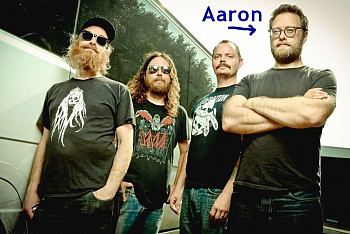
Originally formed in 2005 and hailing from Portland, Oregon, Red Fang is comprised of Aaron Beam (lead vocals, bass), David Sullivan (lead guitar), Bryan Giles (guitar, vocals), and John Sherman (drums). And with W&L having cracked the Billboard 200 (peaking at #66) and tours that have taken the band to such far away locales as Russia, Greece, and Australia, it looks like the whole world is catching on to Red Fang.
Beam chatted with us about a variety of topics: the band's interesting album cover designs, shooting videos, songwriting, and if science has any correlation to heavy metal.
Originally formed in 2005 and hailing from Portland, Oregon, Red Fang is comprised of Aaron Beam (lead vocals, bass), David Sullivan (lead guitar), Bryan Giles (guitar, vocals), and John Sherman (drums). And with W&L having cracked the Billboard 200 (peaking at #66) and tours that have taken the band to such far away locales as Russia, Greece, and Australia, it looks like the whole world is catching on to Red Fang.
Beam chatted with us about a variety of topics: the band's interesting album cover designs, shooting videos, songwriting, and if science has any correlation to heavy metal.
 Greg Prato (Songfacts): If you want to start off by talking about the new album Whales and Leeches, just as far as memories of writing and recording it and how it differs from the previous Red Fang releases.
Aaron Beam: The biggest difference in the writing is that we wrote this as a somewhat established band already, so we were really busy with our touring schedule and had to make a point of not accepting tours so we could spend time focusing on writing, since we're not capable of writing on the road, really. So we had a shorter amount of time to work on it, but we also had no other real distractions, so we were able to focus entirely on the writing.
The other big difference was that the break in between doing the basic tracks was minimal to nonexistent, so for all of the skeletal parts, like the rhythm guitars and the bass and the drums, and then going back and doing the overdubs and the vocals, we didn't have as much time to sit with the songs and think about different ways of approaching them. So it was much more instinctual this time around.
Songfacts: The album title is pretty interesting. Does it have any special meaning?
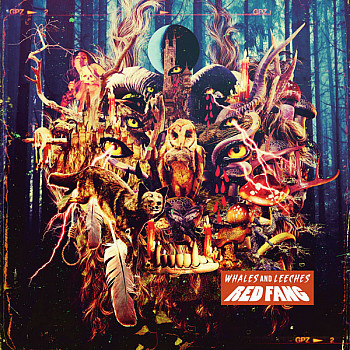 Beam: It's actually an old song title. That was a trick we'd already used with Murder the Mountains, which was also named after an old song. We were having trouble coming up with an original title that we really liked, and Orion Landau, the in-house designer at Relapse, had already gotten pretty close to finishing the album artwork. The title was sort of inspired by it. Once we saw the album artwork, we started going through some old song titles, and that was one that we've always liked. It fit with the artwork and it also reflected the mood of the record in a way.
Songfacts: As far as the album cover artwork, does the band offer any suggestions or did you leave it totally up to the designer?
Beam: He had come to us. He lives in Portland, so it's easy to meet with him. He'd come to us with some more general ideas about a more photographic-oriented cover, and also this kind of more psychedelic, black light looking artwork. We all gravitated towards the photographic cover, but he was using images that were more like motorcycles and the desert and hot skinny girls and stuff, and we thought that didn't reflect us very well.
Then we shifted it to that Natural History Museum kind of diorama, but also that mutated version of the Northwest, because I think that's what we are musically. We all live in the Northwest, but we're all transplants and we all bring a bunch of different things that aren't just native to here to create the music that we do.
Songfacts: How does the songwriting work in the band? Does the band have one primary songwriter or is it more of a collaboration?
Beam: It's definitely a collaboration. We always write the songs together. It's usually either me or Bryan, and David to some extent will come in with a kernel of an idea, maybe just one riff or two riffs that go together. We'll just mess around with that and practice, and then everybody has suggestions for bridges or for how long to do a certain part or maybe a different way of seeing one of the parts or whatever. So it's collaborative, but I guess generally the kernels come from me and Bryan, although that's definitely not 100% the case.
Songfacts: Thinking back, could you give an example of a song that was pretty easy to write and then one that was kind of a struggle?
Beam: Sure. Trying to think of which one was the easiest to write on this new record. Probably "Dawn Rising" was the easiest one to write. Bryan and I and John just kind of made that up. The middle section we just made up one day in practice. We just took a little break from whatever else we were working on, and that came about pretty quickly and easily. I added the first part, the intro, and then I was digging through some old riff archives on the computer and I found that outro one; that last riff was one that Bryan had recorded just himself on guitar and we never played it in practice before, but it just seemed to fit. So that one we just threw together pretty quickly.
One that took a lot longer was "Blood Like Cream." That was probably the most laborious. It existed in probably three or four different forms before it took the final shape that it took on the record. We actually were playing a version of that song which was combined with "Behind the Light" on a tour that we did last fall in the US, because we just couldn't figure out the main riff in that song. The main riffs in "Behind the Light" were two riffs that we really liked a lot, but we could never figure out how to fit them into their own songs, so we just stuck them in the same song.
We had an arrangement all worked out. There were vocals on it, and it just didn't feel like it was quite living up to the potential of either one of the riffs. So then we broke it apart and created two separate songs out of it.
But the introductory little lick that was on "Blood like Cream" in the first place actually isn't even in either of the songs anymore because it was a completely different song. Then it became a song combined with "Behind the Light," and then we broke them apart again and it became its own song that was even simpler than the original.
So it went through a couple of iterations. I think the final version is about as good as it's going to get.
Songfacts: I can tell that some of the band's influences aren't the ordinary influences. For instance, on YouTube I came across a cool cover of Dust's "Suicide." Are there any other bands that may have influenced the band that aren't that common?
 Beam: Oh, sure. There's a bunch of stuff. I know Bryan is musically influenced by things like Simon & Garfunkel and The Cure. I like probably the weirdest array of all. Well, I hesitate to say that it's the weirdest, but the least hard rock and heavy metal array of music. It didn't make the record, but there's a song that was inspired by Ty Segall. There's another one that I was thinking about Wire a lot when I was writing it.
 But my wife is much more diverse in her tastes than most people I know, so I pick up a lot of stuff from the different things that she listens to. She listens to a lot of music from all over the world, like a band called Los Dug Dug's from Mexico who are pretty great. Kane is a pretty big influence for John and for myself. I mean, the list could go on for a pretty long time and it would probably bore people to read all the different things that we like that aren't really necessarily heavy bands.
Songfacts: I've always found bands more interesting that don't just listen to any one style of music.
Beam: Yeah. I guess it's hard to be innovative if the ingredients that you're putting into your brain are just the same one. If you're basically just recycling the same ingredients over and over again, it's hard to start coming up with new ways to cook them.
Some people can do it, but you have to be more of a musical genius than we are. That's our trick, I guess. We benefit from listening to so many different kinds of things that there's going to be little things that trickle in that might sound kind of novel and crazy to some people, but they just seem kind of natural based on the variety of music that we listen to outside of the band.
Fighting back against a group of nerds dressed as knights and guzzling all the beer your belly can handle.
Coming up with crafty ways to film a music video on a limited budget.
Battling zombies after a warning from Fred Armisen.
All three are very different scenarios, and all three serve as the basis for very entertaining and imaginative music videos by Red Fang (the clips for "Prehistoric Dog," "Wires," and "Blood Like Cream" respectively). The man behind all these clips is Rob "Whitey" McConnaughy, who has directed music videos for everyone from Band of Horses to ZZ Top.
Songfacts: How does the band come up with the ideas for those videos?Coming up with crafty ways to film a music video on a limited budget.
Battling zombies after a warning from Fred Armisen.
All three are very different scenarios, and all three serve as the basis for very entertaining and imaginative music videos by Red Fang (the clips for "Prehistoric Dog," "Wires," and "Blood Like Cream" respectively). The man behind all these clips is Rob "Whitey" McConnaughy, who has directed music videos for everyone from Band of Horses to ZZ Top.
Beam: I wish I could take credit, but it's really Whitey McConnaughy, the guy who directs all the videos. He comes up with the ideas and then he presents them to us. And we trust him now. After the success of the first two, we have no doubt that he's going to do a good job.
Songfacts: Let's talk about the song "Blood Like Cream."
So I did that on "Wires" because that middle section, there's no way I could have been like, "Hey, dude, try playing these notes." I had to put it all together in order for them to hear it first, because I knew that it was going to be a little bit too out there.
But with "Blood Like Cream," it was a similar thing. I had some ideas for the drums, but I didn't know exactly how to explain it to John. Everybody in the band is so good at their instrument and so characteristic with their styles, it feels weird sometimes offering them suggestions for what to play, so it's easier just to record it on the computer in some form and then play the final version for them, and then they come up with whatever they want. But it can offer at least a glimpse into a different way of looking at how they might want to approach it on their instrument.
So I made a computer demo of that song. That informed the basic structure and we recorded that. We still didn't know exactly how the instrumental sections were going to go, like what the guitar solos were going to be. And we had no idea what the vocals were going to be on that bridge section that comes out to the second chorus.
I remember recording the vocals for that second chorus - I wrote some lyrics down and I recorded them, and I was like, "It sounds like Danzig to me." I like Danzig, but that's not really the style that we were going for and I'm not really influenced by Danzig. So oddly enough, that's one of those things that we put down thinking of it as a placeholder - at least I was. And then next thing you know it was stuck in all our heads, so we just went with it.
Songfacts: Before, you mentioned the song "Wires," what sticks out about that song?
The only thing I knew is what the conclusion was going to be. That outro, the last riff in the song, was one that I'd written for a different band of mine called Ancient Age, and couldn't find a home for it. It just felt like it was the right thing to do at the end of whatever else was going to happen in "Wires." So I knew that was the final destination, but I didn't know how to get there.
Other parts of the song came up in practice spontaneously. That middle section, I was listening to a song by a band called Muse, because it was right around the time that the "Prehistoric Dog" video had come out. And everybody was like, "Oh, best music video ever!" But then some people were saying, "Actually, this Muse video is maybe better than this one."
I don't remember the name of the song ["Knights of Cydonia"], but it has an Ennio Morricone kind of guitar line to it that's like a spaghetti western guitar line. And that was what inspired the middle section of "Wires." It felt like it needed a break in there somewhere, but that was what was in my mind, so that's what came out. And that was the part that I was pretty nervous about - I didn't know if it was going to work. But I'm pretty happy with the way it turned out.
Songfacts: You just mentioned the song "Prehistoric Dog." What sticks out about the writing of that, and with the video, how much beer was actually consumed by the band?
We knew almost immediately that that song was in a different league from the other things that we'd written up to that point. That was just a combination of Bryan's hyperactive writing style and me being kind of lazy and thinking, "Hey, man, let's just hang out on this other part so that people can get a little rest. Their ears can rest for a little bit after that riff."
But that song didn't have vocals on it for a pretty long time. It was not a fully realized song until we'd recorded it twice. The second time we recorded it, we tried putting some vocals on it that just weren't working, so I said, "Let me have a minute. I'm going to take it home, try to hash out something different. I have a vague idea of how to do this." That was maybe the first song that I actually came up with my own vocal part on in the band. And then the video is what started the whole band down the path of becoming professional musicians.
Songfacts: But how much beer was actually consumed for that video?
Beam: Oh, right. There was a lot. I don't really remember, because before we started shooting Whitey actually said, "Look, you guys, you're going to be drinking a lot of beer today, so whenever you crack one, just pour it mostly down the sink. I just want shots of you finishing beers and crushing them and throwing them on the ground."
We started shooting at like 9 in the morning and didn't finish till 9 at night or something. We didn't listen to him and ended up getting way more drunk than he wanted us to. We weren't taking direction very well and all that puking is very real.
Songfacts: Your dad is a scientist and you have a degree in biology. Do you see any correlation between science and heavy metal?
Beam: Maybe in a way that I approach it, but generally not. I approach it from an organized perspective. You have to be pretty organized and plan ahead when you're doing science. You have to have a theory that you're trying to test to see if it works, and I do that a lot in songwriting.
Aaron isn't fooling around when discussing science, as he does have a legit science background concerning molecular biology, and even worked in an immunology lab for a spell (not to mention also landing an early job working in the lab of his biophysicist pop).
I have a tendency to work pretty hard at trying as many different iterations as possible to see which one actually finally works. It can be tiring for people, but I like to hear a song 15 different ways to hear which one is working the best, which I guess is a non-instinctive way and more of a scientific approach to writing the songs. But it could be better. It could be more refined. It's more like a trial and error method, which is not really the best scientific method.So I should probably talk to my dad and get some tips on songwriting.
April 3, 2014. Get more at redfang.net and facebook.com/redfangband.
More Songwriter Interviews