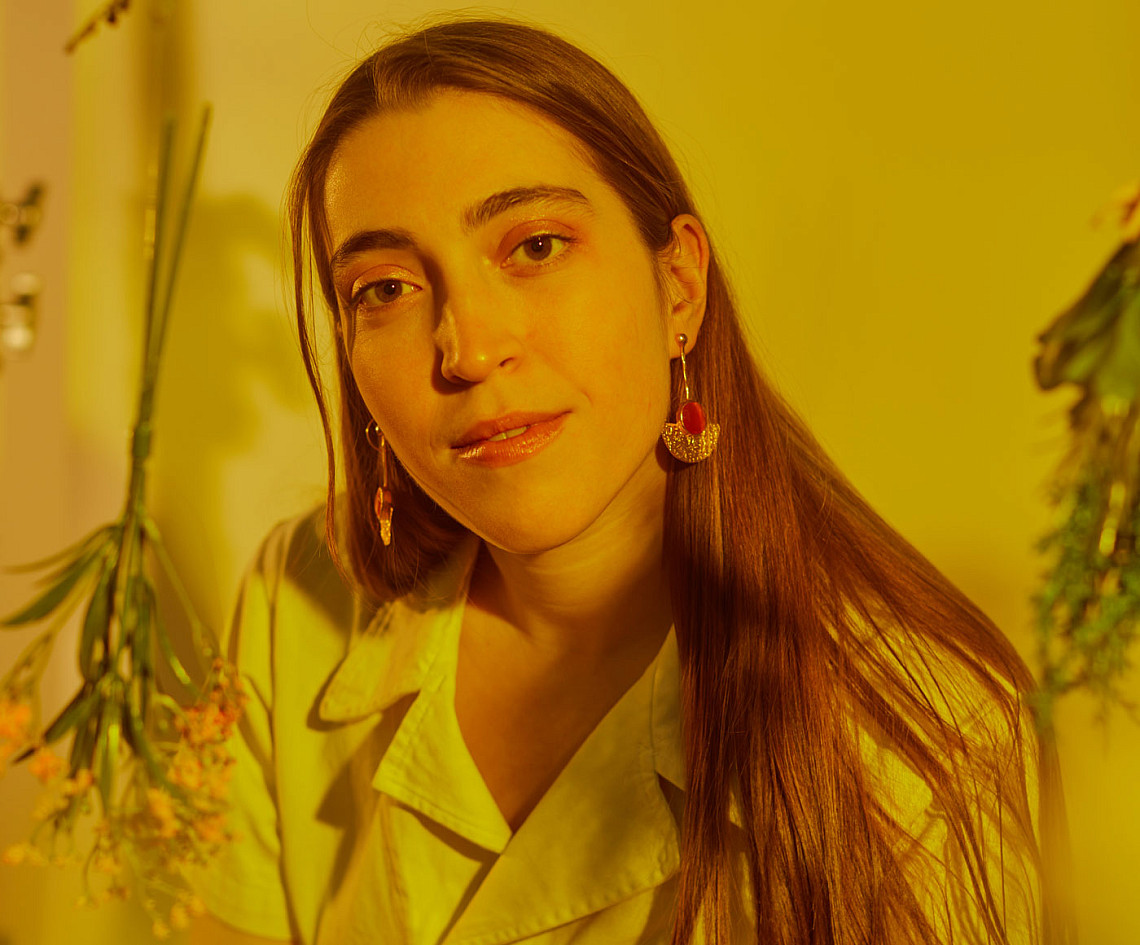
When Alisa Amador won NPR's Tiny Desk Contest in 2022, she had contemplated abandoning music altogether. It was her Spanish-language "Milonga accidental" that ultimately won the judges over - a heartfelt and emotive song that took the listener on a journey through her own examination of life. This success prompted an awakening, birthing a whole new outlook on her career and life path.
The realization that her music could appeal to people in spite of language, the barriers of words broken down, emotions filtering through music, was eye-opening for Amador, and on her 2024 album, Multitudes, she breaks down the door with her bilingual approach to songwriting. Stretching the depths of sound and imagery, Amador immerses the listener in lush melodies and varied structure, so just when you think you know her, she pulls you down another path of exploration, and you willingly travel with her. Her lyrics are evocative and charming, and never does she stand in the way of your own perception. She embraces the day-to-day human struggle, the power to overcome it, and the heart in it all.
The Boston-based singer-songwriter grew up performing with her musician parents and brother, and is no stranger to a life in music or the work ethic to get there. Today, Amador sings about finding her place to belong, yet she finds it here, on Multitudes, an album that celebrates connection.
Songfacts caught up with the singer-songwriter right before the release of her album to discuss the significance of her multidimensional music and the message she hopes listeners will find in her songs.
Nicole Roberge (Songfacts): Your album, Multitudes, is a celebration of your culture but really embraces who you are and your journey. What message were you trying to convey on this album?The realization that her music could appeal to people in spite of language, the barriers of words broken down, emotions filtering through music, was eye-opening for Amador, and on her 2024 album, Multitudes, she breaks down the door with her bilingual approach to songwriting. Stretching the depths of sound and imagery, Amador immerses the listener in lush melodies and varied structure, so just when you think you know her, she pulls you down another path of exploration, and you willingly travel with her. Her lyrics are evocative and charming, and never does she stand in the way of your own perception. She embraces the day-to-day human struggle, the power to overcome it, and the heart in it all.
The Boston-based singer-songwriter grew up performing with her musician parents and brother, and is no stranger to a life in music or the work ethic to get there. Today, Amador sings about finding her place to belong, yet she finds it here, on Multitudes, an album that celebrates connection.
Songfacts caught up with the singer-songwriter right before the release of her album to discuss the significance of her multidimensional music and the message she hopes listeners will find in her songs.
Alisa Amador: More than anything, I want people to feel less alone and to feel like they are right exactly as they are, like there's nothing wrong with you for being you. I guess that is the overall message. That's what the songs are processing.
Songfacts: What's really intriguing to me is that you open the album in Spanish, which I think is important. It draws the listener into the beauty of the language and also you as an artist and person. Why did you choose "Extraño" as the song to open the album with?
Amador: I feel like this connects to the first question really well, because "Extraño" means "strange." This song is an important part of my process of learning how to accept myself and love myself as I am, and it is a song that continues to teach me that.
So, it feels like the perfect way to set the tone for the album. As an album that is about acknowledging all of the parts of yourself that can feel like contradictions, or separate, or that they don't fit well into any box. When I play this song live, it's always in combination with "Milonga accidental," which is the last song on the record. But it felt like for the record itself, and for the sonic experience of the record, it was perfect to bookend the album with "Extraño" and "Milonga accidental" - these two songs in Spanish that grapple with identity and feeling out of place, that ultimately always come to the conclusion of loving yourself and accepting yourself exactly as you are.
Songfacts: It's intriguing and drew me in, even without speaking the language. I was immersed and the music drew me in and made me want to know it. I was right there in the song.
 Amador: Oh, I'm so glad. I used to be so afraid to play songs in Spanish live and I realize more and more that sometimes it's actually the songs in Spanish, for people who don't speak it, they still feel it, regardless of whether they understand the lyrics or not. And the feeling comes across.
Sometimes, when you don't speak the language, you can just be present with the music in a different way because you're not thinking of the words anymore, you're just experiencing the music. I'm really glad those feelings came across for you, and I think they do for a lot of people which is cool.
Songfacts: I think that's the power of music. A beautiful song is a beautiful song, and it really transcends language. How do you hope Spanish-language songs can translate to people who don't speak the language?
Amador: I guess I don't have a way of knowing what it feels like to hear my songs and not know what they mean. In the experience of the Tiny Desk Contest, the song that won was in Spanish, and the judges were not Spanish speaking. Bob Boilen spoke about how this song cut through to him as a song about longing and how he could feel the longing. And it is a song about longing. It's a song about longing to feel like you belong and fit in.
I guess I'm just learning to trust that the feeling will come across, and even if it's not what I'm feeling, the song will help people feel whatever they need to feel. That is really liberating and exciting. Once my music is out in the world, it's under my name, but the people who listen to it will feel whatever they need to feel. I'm just happy to help provide.
Songfacts: When you sit down to write a song, do you know whether it's going to be in English or Spanish, and is there a song of yours that would've turned out differently if it had been in the opposite language?
Amador: Oh my gosh, I love this question. So, no. I don't know. I honestly don't know when I sit down to write. I don't know what my songs are going to be about, and I don't know what language they're going to be in, and it really is just a total stream-of-consciousness process.
I'm trying to think if there's ever been a song that I tried to write in one language and then wrote in another. It surprises me each time. I could be playing a groove that might suggest a certain language but then I write in the other language, but I guess that really sums me up. I'm definitely just a mix and I have no idea what I'm doing. But I can promise honesty every time.
Songfacts: When you won NPR's Tiny Desk Contest, you were thinking of giving up music. Your song "Milonga accidental" was the first Spanish-language song to win, which is powerful and impressive. And interesting, because in it, you sing what translates to, "When will I feel at home in my voice?" What did it mean to you to win, as well as have that representation?
Songfacts: Relating to people is a compelling strength of yours, both personally and in your songs, and shines throughout this album. "Love Hate Song" is an example of that, being entirely relatable when you sing: "I love my life, but I hate it sometimes" and "I love my job, but I hate it sometimes." Is it easy for you to immerse yourself in human emotions when writing?
Amador: Yeah, I can't help it. I have so many feelings all the time. It's kind of a problem. Sometimes it feels like a curse, but that's what makes it possible for me to write these songs. But I'm so glad that song resonates with you. I was very excited when I stumbled upon those words and started writing that song. I needed it. I'm still finding my home in my voice.
I think that these songs and this album ends with the question of, when will I? "Love Hate Song" felt really important to me, and also, "I Need To Believe" - both of these songs are about not knowing if I'm on the right path and doing things right, and also realizing that most people don't.
Songfacts: That's exactly it, and having that courage to say you don't know, and it's okay to say that you hate it sometimes. Some people are afraid to say it, so you stepping out there helps other people have that courage. "I Need To Believe" is another one of those songs, and it sounds like a self-affirming mantra. Was writing that song as empowering for you as it is to hear it?
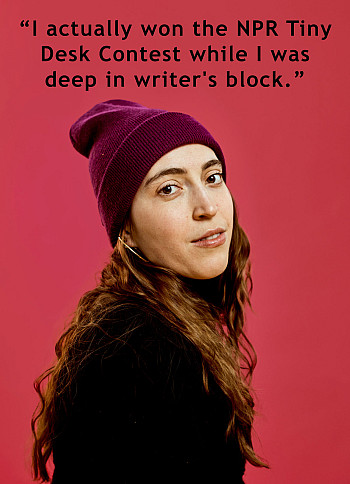
Amador: That was one of the first songs I wrote, if not the first song I wrote, coming out of a period of a writer's block. I actually won the NPR Tiny Desk Contest while I was deep in writer's block. It was very strange to be touring and getting all this recognition for my songwriting when I didn't know if I was ever going to be a songwriter again. I know you can be a songwriter and not be writing a song... I know that logically.
It's so hard to feel it when you're in writer's block. "I Need To Believe" was one of the first songs I was able to write after years of not being able to write. The way I arrived at being able to write again involved a lot of reverting to childlike ways of approaching artmaking. Because when I first started songwriting, what did I do? One, I didn't judge myself, and two, I didn't expect it to be a product or anything. I had to approach songwriting again from a place of a professional musician with childlike curiosity and wonder and no judgment.
"I Need To Believe" came from a journal entry on tour, during a particularly difficult tour period, almost verbatim what I wrote. I never before had written in that way. I had to tell myself, "It can be bad. You can write bad songs. It's OK. You write because it helps you. It helps accompany you through difficult moments, or helps you put into words what is hard to put into words. So just write even if it's bad." I thought that "I Need To Believe" was a terrible song, but thankfully, I have a manager who lets me know when it's actually good.
Songfacts: "Heartless Author" has such a vulnerable appeal to it. You brought on Madison Cunningham on guitar and vocals for this song. What was the experience of collaborating with her?
I remember my co-producer Tyler Chester told me, "Oh yeah, Maddie's coming in." And I was like, "Maddie? I know her as Madison Cunningham. Maddie!" Saying that Madison Cunningham is coming into the studio, you might as well tell me that Beyoncé is coming in to be part of my band. That is overwhelming to me in so many ways. It's great and terrifying. She's so great.
She's very real, and very polite and then she just goes into the studio and shreds. I was so amazed because in the studio, it was like, This song would sound really good with harmonies. Maddie, do you want to hop on this? She was reading the lyrics from a Google document on her phone and learning the song right then and there, and I felt she understood the song from the beginning. It was so cool to see someone learn that quickly and get themselves to a performance.
Songfacts: You've performed with a variety of incredible artists (Maggie Rogers, Brandi Carlisle, Hozier). How have those experiences shaped and enhanced you as a performer?
Amador: It's always very surreal to be supporting artists I've admired so much, but I've had the honor of doing it a bunch in the last couple of years. I try to do some big deep breaths before I go on stage, and then trust that all I have to do is be myself and it'll be fun. It's been a joy to get to play. Maggie Rogers' audience is so musical and thoughtful and caring, and Hozier's audience is like that too, and Lake Street Dive. So many music nerds in Lake Street Dive's audience. It was really fun to open for those bands and feel so seen both musically and as a songwriter. I feel like they just have audiences who care and it's a real honor to get to play in front of people and have them connect with it. Before that, I was playing a lot of DIY concerts and small venues and my audience was mostly my friends and my mom's friends. Now I stand on stage and go, "Wow, none of you know my mom. Are you sure?"
This is just a reminder and thank you to everyone who listens and presses play and cares about original music. I think that listeners in the digital age can feel that they're not important and are totally anonymous. Everyone who listens makes it possible for me to keep going. Everyone who listens and presses play, who shares music with other people and comes to concerts and brings friends. All of those things are so important. They matter. You matter to me and all the independent artists of the world.
Songfacts: What do you hope people come away with after listening to Multitudes?
Amador: I really hope they feel less alone and more right as they are. There's such a taboo talking about feeling uncomfortable or out of place or like you're full of contradictions. I think people can feel safe in this record. It is almost as if this album is a house that you love and are always safe in. I hope people find that in this record and they can come back to it again and again when they need to feel OK or good with themselves as they are. If they need to scream and dance to a song about hating your job or sometimes hating your life. Or cry and feel better after listening to "Extraño" or "Milonga," or have a moment of introspection about coming to terms with something, with a song like "Still Life." Or celebrate love in all of its forms, which I think actually pervades the entire album.
This album is called Multitudes, spelled the same way in Spanish, and this album is multitudes. I know I can't describe a specific genre or vibe. The songs come out the way they are, and I have very little control over it. I do think that everyone contains multitudes, and everyone needs a space to feel safe being all the versions of themselves. I really hope that Multitudes can be one of those spaces.
June 18, 2024
Tour dates and more info at alisaamador.com
More interviews:
Raye Zaragoza
Ayla Schafer
Liz Longley
Photos: Sasha Pedro
More Songwriter Interviews