You probably don't recognize his name, but you've likely heard Barry Louis Polisar's song "All I Want Is You." It's the one that starts:
If I was a flower growing wild and free
All I'd want is you to be my sweet honey bee
It feels like a song that's been around for 100 years, passed down in the folk tradition through generations, but Barry wrote it in 1974 and almost didn't release it. When he did, he never performed it and only the folks who bought his album My Brother Thinks He's A Banana And Other Provocative Songs For Children heard it.
How it entered our ears is a tale of extreme serendipity that involves the founder of CD Baby and the director of the movie Juno.
And yes, it's a children's song. Polisar has spent his life making music for kids without pandering to their parents, which in the early '90s got him embroiled in a censorship controversy that made national news. In this interview, Polisar tells the story of "All I Want Is You," gives his perspective on children's music, and explains how that controversy shook out.
Carl Wiser (Songfacts): What inspired the song "All I Want Is You?"If I was a flower growing wild and free
All I'd want is you to be my sweet honey bee
How it entered our ears is a tale of extreme serendipity that involves the founder of CD Baby and the director of the movie Juno.
And yes, it's a children's song. Polisar has spent his life making music for kids without pandering to their parents, which in the early '90s got him embroiled in a censorship controversy that made national news. In this interview, Polisar tells the story of "All I Want Is You," gives his perspective on children's music, and explains how that controversy shook out.
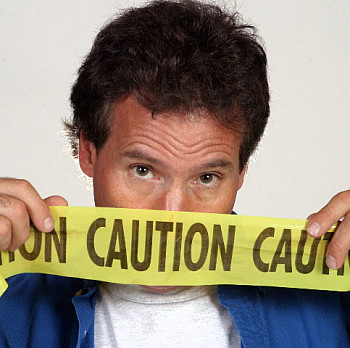 Barry Louis Polisar: I've been writing, recording, and singing for kids since 1975... 50 years now! Although most of my songs for children are slightly edgy, funny, satirical pieces, I have always recorded one or two "child-like" love songs on each of my albums ("I Need You Like A Donut Needs A Hole" and "Me And You" on my first album and "All I Want Is You" on my second album).
This was one of my earliest songs, written in 1974 but not recorded until 1977 when I thought my second album needed one more song. I threw the song on as "filler" on that second album and for 30 years no one ever asked about it and I never performed it in any of my concerts. Listening now, I can trace inspiration to both Bob Dylan's "You Ain't Goin' Nowhere" and Roger Miller's song "Reincarnation":
If I was a bird and you was a fish
What would we do... I guess we'd wish
For reincarnation
That is likely the source for the improper grammar in the song since proper grammar would be "If I were a flower growin' wild and free."
Songfacts: I didn't hear it as a children's song, but more like something John Prine would come up with.
Polisar: John Prine was another musical influence and probably the reason I picked up a guitar and taught myself how to play.
The song definitely has a crossover appeal to a wider, non-kid audience and the back story of how the song ended up in the opening credits of the film Juno is worth sharing. I recorded my early songs in the mid-'70s on a shoestring budget, never expecting this would become a 50-year career. Twenty years after recording my early albums I had the opportunity to go back into the studio with a budget and re-record many of my older songs - this time adding fiddle, mandolin, bass, slide guitar, penny whistle and other instruments on newly recorded CDs.
When I approached the then-owner and founder of CD Baby, an independent music distributor, about carrying my newer CDs, he told me that prior to forming his music distribution company, he used to work in a circus and sang my song every day for two or three years. He said he wanted to carry all my recordings - not just the newer CDs but all the older albums that he knew from the '70s. I eventually released those on CD because of his interest in distributing them. Because of that, my entire catalog was available on iTunes, Apple Music, Amazon, and all the other download and streaming services like Spotify.
Jason Reitman, the director of Juno, was searching iTunes for a song with a similar title, discovered my song, and asked if he could use it in his film. I sent him the newer polished version of my song, but he preferred the original, rougher, slightly off-key version.
Songfacts: Was the CD Baby owner at the time Derek Sivers? I met him about 25 years ago when they just did CD distribution. Real interesting guy and quite the visionary.
Polisar: Yes, it was Derek Sivers and he was GREAT! When I called CD Baby in 1993 to see what was involved in getting my newly recorded CDs distributed, he was the one who answered the phone! He was incredibly enthusiastic, telling me how much he loved all of my songs and saying he wanted to waive the set-up fees just to have my music on his platform. He urged me to digitize my older albums on CD and he'd carry them, too... which I did, and that led to my song being on iTunes, which led to Juno.
Every time I tried to credit him for being instrumental in that, he deflected the credit - a real prince of a guy. A few years before Juno came out, I was doing a school concert tour in Washington State and Oregon and stopped by the warehouse unannounced and he was gracious and friendly. I suspect when he was working at a circus singing my songs, he was still at the Berkeley School of Music, but I'm not sure.
Songfacts: How do you feel about the song now?
Polisar: I sing the song at almost every concert now. Kids in my school concerts love to sing and clap along and I have heard from hundreds of adult fans who have written to tell me they used the song at their wedding celebrations.
There is an innocent quality in the song and I guess that accounts for its popularity. It's been recorded by hundreds of other artists - including three wildly different versions on a tribute album of my songs that a fan produced a few years back called We're Not Kidding! There was even a cover version translated and sung in French by a musician from France.
I recorded my songs on my own label and spent most of my career as an "under the radar" artist. I always had work and supported my family with my concerts and album sales, but this song and the way it has been shared has clearly brought my work to people in a way I never could.
During the pandemic, I shared a song of mine a day. I had enough to last 180 days, six months.
Songfacts: What's your approach to making music for kids?
Polisar: When I began writing and singing, there weren't many people writing for kids and even fewer writing the satiric, funny songs for older kids that I was writing, performing, and recording. I don't try to write a funny song but my sense of humor - and irony - always presents itself when I write. My wife says it comes from my "basic immaturity."
Songfacts: It's interesting that you noticed the very minor grammar faux pas in "All I Want Is You." Do you try to adhere to the rules of grammar in kids' songs?
Polisar: Not necessarily, but when it is pointed out, I try to correct it. The most glaring example was my song "I Don't Want To Go To School." It turns out to be a song about a school principal and the original line had Tommy's mom cajoling him to get up, saying, "She hoped she was convincible." Of course she should have hoped she was convincing and that he was convincible. It was an easy fix on a later recording.
One of my favorite newer songs is about a slug and done in a bluesy style filled with purposeful slang and bad grammar ("I don't got no fur and I ain't no snail"). Because I mostly sing in schools I have to mention that the lyrics are purposely written that way.
Songfacts: Before Juno, what what was your most popular song? Please tell us about it.
Polisar: I had a few, and it seemed like every few years there were one or two standout songs that were the most popular. In 1975 it was clearly my song about the mean teacher, then "When The House Is Dark And Quiet" (taught at camps as "The Babysitter Song"). Later it would be "Underwear." My song "I Wanna Be A Dog" was probably my most recorded song - covered by other artists. The song that has lasted the longest is "Don't Put Your Finger Up Your Nose." I still close my shows with that one.
Songfacts: In your song "I Used To Have A Sister," the brother accidentally turns her into an apple tree that he uses to make applesauce. It's very Shel Silverstein. Please share your thoughts on that one.
Songfacts: What's a song in your catalog we haven't talked about that means a lot to you?
Polisar: I have a connection to almost all of them. I am currently going back and writing a paragraph about each of my songs and where they came from, what my influences were, etc., for a piece called "Digging Deeper." That has caused me to listen to all of my songs - even the ones from 50 years ago - and I have found myself smiling at some of the things I wrote then.
One of my worst failures was a song called "Ugly Elvin And The Witch." It was an overly long, unwieldy piece, but I liked the last line, so years later I rewrote the song as "The Witch," building the new song around the last line. It's dark and eerie and brooding but makes the point that when you shut people out and push them away, you may end up in a stew and "those that you've shut out are devouring you." It is likely not a kids song per se - way too dark - but I like the point and the way the song evolved.
Songfacts: What pop artist makes the best kids' music?
Polisar: I can't really answer that. I don't listen to much popular music and I find that most songs written for kids now are just as earnest and saccharine as they were when I first began writing for kids 50 years ago, or they give much more attention to the music than they do to the lyrics, and I've always been interested in words and what they convey in a song. I think that has been the reason my songs have resonated with people: They tend to be mostly funny songs about the human condition, holding a mirror up to the way the world is, rather than preaching. As Yeats said, he wrote poetry, not pamphlets. I've written my share on pamphlets back in the day before I began singing and writing for kids. Of course many of my songs do have a point. I just hope they are not too preachy and cloying.
In 1990 Barry was banned from the Anne Arundel County Schools when an evaluation committee found his music "not appropriate for instructional use." The banning spooked other districts, but some stood up for Barry and kept having him perform.
Songfacts: How did you handle the controversy when a school district banned you back in the early '90s? I see that story made the Baltimore Sun.Polisar: I embrace it. The story went everywhere: The Washington Post, the AP News wire, NPR's All Things Considered and Morning Edition. I saw it as a chance to talk about censorship and children and cancel culture before that was even a thing. I lost a lot of work in those years before I was finally vindicated and allowed back in the schools to sing. And it led to my TV show, so the journey was worth it and has always been fun.
What's the John Prine line?
That's the way the world goes 'round
You're up one day, the next you're down
A half an inch of water and you think you're gonna drown
That's the way the world goes 'round
 Songfacts: How has children's music evolved since you started?
Polisar: Kids react the same as they always have. I think adults react to songs and song lyrics differently now, more cautious of words and ideas in songs than they were decades ago. But my songs have changed over the decades as well. It is no small irony that the songs I am most known for now are my sweeter love songs and happy ones. We need joy and happiness (and laughter) wherever we can get it.
Songfacts: What's a song by another artist that had a big impact on you?
Polisar: Oh, where to begin? I was mostly influenced by those who came before me: Roger Miller, Johnny Cash, the Australian performer Rolf Harris. Later the singer-songwriters of the times: Tom Paxton, Phil Ochs, Mark Spoelstra, Dylan, Leonard Cohen... and then of course John Prine, Kris Kristofferson, Guy Clark, Townes Van Zandt. And especially Loudon Wainwright. I first heard his funny, sometimes heart-wrenching songs (about families, love, romance, children, dogs) when I was 15 or 16 - long before I ever thought of picking up a guitar and writing songs myself. But Wainwright and John Prine were both big influences.
February 14, 2025
Barry's website is barrylou.com
Further reading:
Interview with Loudon Wainwright III
Mitch Myers about Shel Silverstein
Interview with Laurie Berkner
Photos: Michael G. Stewart
More Songwriter Interviews