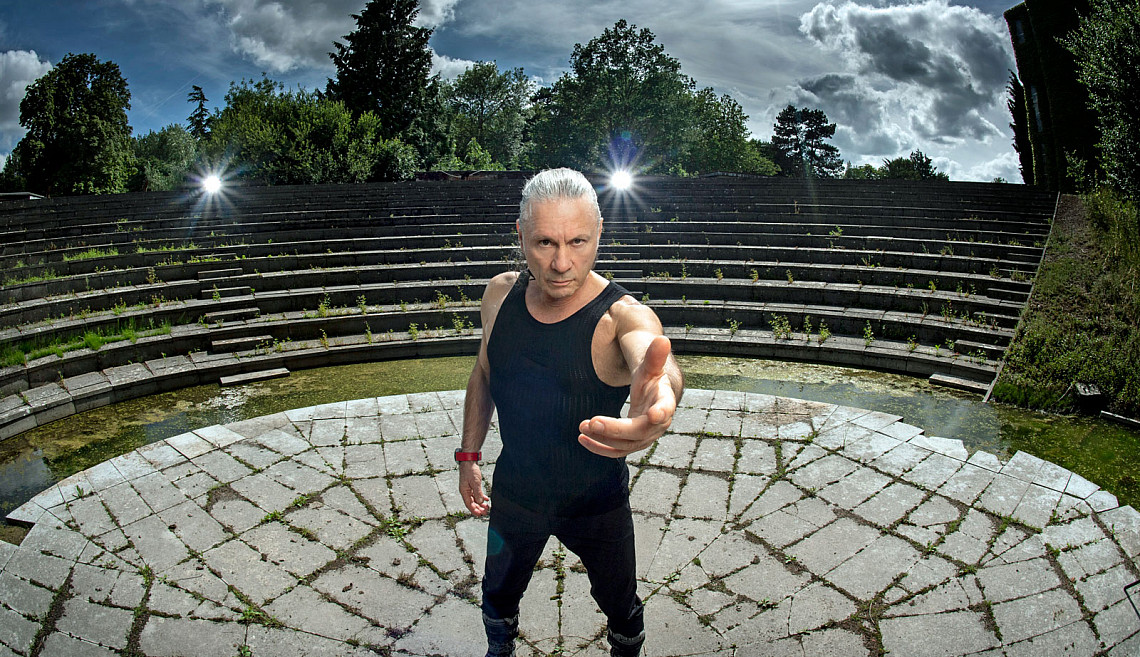
Although Bruce Dickinson will forever be best known as the lead singer of Iron Maiden - having fronted the band for two spells (1981-1993, 1999-present) and sang on what is universally considered to be one of the greatest heavy-metal albums of all time, The Number Of The Beast - he is a successful solo artist in his own right.
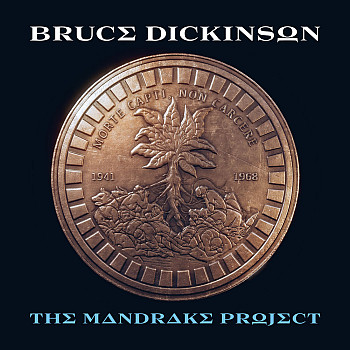
And while he regularly issued solo albums throughout the '90s, Dickinson's solo albums have been few and far between thus far in the 21st century - 2005's Tyranny Of Souls being the lone offering (no doubt due to Maiden's busy touring and recording schedule). But in 2024 that all changed with the arrival of his eighth solo effort, The Mandrake Project.
The album, which sees Dickinson united once more with his long-term co-writer and producer Roy Z, goes beyond just music, with a graphic novel of the same name released as a companion and the promise of new stories built around the project over the next few years.
Dickinson spoke with Songfacts shortly before the release of The Mandrake Project to tell us the stories behind all of the album's 10 tracks. He also discussed several aspects of singing, named his favorite vocalists, and dispelled a myth behind one of his best-known solo tracks.
Greg Prato (Songfacts): Let's discuss your new album, The Mandrake Project. How is it similar or different to your previous solo albums?And while he regularly issued solo albums throughout the '90s, Dickinson's solo albums have been few and far between thus far in the 21st century - 2005's Tyranny Of Souls being the lone offering (no doubt due to Maiden's busy touring and recording schedule). But in 2024 that all changed with the arrival of his eighth solo effort, The Mandrake Project.
The album, which sees Dickinson united once more with his long-term co-writer and producer Roy Z, goes beyond just music, with a graphic novel of the same name released as a companion and the promise of new stories built around the project over the next few years.
Dickinson spoke with Songfacts shortly before the release of The Mandrake Project to tell us the stories behind all of the album's 10 tracks. He also discussed several aspects of singing, named his favorite vocalists, and dispelled a myth behind one of his best-known solo tracks.
Bruce Dickinson: It's certainly in the same vein. You could think of it as a continuation, I suppose, of Chemical Wedding and Tyranny Of Souls fused together, but with a few extra things thrown into the pot.
The intervening years have thrown up a few opportunities, which I never expected, like having a graphic novel, 12-episode comic. And also, a bigger perspective. There are some songs on the album that I wouldn't have expected to be on the album seven years ago.
Songfacts: You just mentioned a graphic novel.
Dickinson: The Mandrake Project covers both a 12-episode comic and the album. They're not linked as in a concept album but they do share the same logo, they do share the same artwork. And they share a few links in their roots and where they both started.
The name The Mandrake Project was actually the very last thing that happened. We completely finished the album, had no idea what to call it. I was in the process of starting writing and developing this comic, and I was like, "Well, what are we going to call it? Doctor Necropolis And The House Of Death or something?"
The Mandrake Project came up, and I thought, "That works for both." It works for an album because it sounds kind of intriguing: "What the heck is that all about?" And it works for the comic because it sounds like it's some weird clandestine organization. Which, in fact, it is.
The comic was released yesterday and that will continue for about three years. It's not linked directly, but I do sometimes borrow some of my own lyrics or references from any album that I've ever done, as well as William Blake, Lord Alfred Tennyson, and kinds of weird, wonderful references I've got in there.
The album itself has one or two songs which were a throwback to a time when it was going to be a concept album - that was in 2014. But things moved on in lockdown and that intervening period, so they've separated out now.
Songfacts: Is your songwriting process any different between writing a song for a solo album or a song for an Iron Maiden album?
Dickinson: It is slightly different. Because to put it bluntly, I don't have to worry about writing something that is going to fit within Iron Maiden's specific style. I get a pretty good read on whether a song is going to be the sort of thing that everybody - in particular, Steve [Harris] - will go, "Oh yeah, that's good." And he sometimes surprises me.
But I can afford to be a bit more eccentric, certainly with a song like "Sonata" at the end of the album, which is really quite poignant and emotional. Those are not normally words you would associate with a Maiden record, although we're not completely blind to emotion. We're getting more prog-y, but I can pick from a different set of colors to paint with.
Songfacts: Let's go track by track on the album, starting with "Afterglow Of Ragnarok."
"Afterglow Of Ragnarok," I was very pleased with the song, but I was also a bit annoyed that we were stuck with Vikings! Because I didn't want people to get the impression that this was going to be some kind of cliché Viking album, and we were going to be all dressing up in bearskins and paddling longships. So, I addressed that with the video to the song.
But the idea of "Ragnarok," people who are familiar with it from movies and Thor and all the rest of it, it's actually not the end of the world. That's the whole point: Ragnarok is the end of this world, but it's the beginning of the next world. The cycle of life starts all over again. The sun will rise again over the waters and off you go. That is actually what the song is about.
Songfacts: "Many Doors To Hell."
Dickinson: "Many Doors To Hell" I suppose is the most conventional song on the album in terms of a rock song. It's got that Scorpions-type riff at the beginning. At the same time, it's got this lovely Hammond organ underpinning the whole thing in the verse, which off-sets the late '80s style big harmony chorus.
The song is about a female vampire who wants to turn back and become human again. She has to wait until the eclipse until she can get out in the world, because only when there's an eclipse can she go out in the daylight.
Songfacts: "Rain On The Graves."
I'm standing there and it was raining and it was grey and it was gloomy, and I just thought, What would happen if you met a guy here sitting on a gravestone and it just so happened to be the devil? What would you say to him? Or, what would he say to you?
It's basically the crossroads revisited. So, when we revisited the song, that's the lyric: a guy walks into a graveyard, meets the devil, and the devil says, "So, what are you here for? And don't lie, because I'll know."
Songfacts: "Resurrection Men."
Dickinson: "Resurrection Men" was written when I was thinking of the album being a concept album. So, the lyrics, there is a little bit of Hawkwind in there and things like that.
But the "Resurrection Men" are quite specifically Dr. Necropolis and Professor Lazarus, because they control the technology that will bring people back from the dead.
Songfacts: "Fingers In The Wounds."
Dickinson: What if Jesus came back and he was an internet influencer? How would we deal with that? Nobody would take him seriously as the messiah unless he had so many millions of followers. I thought that was a nice way to poke fun at internet influencers.
Hence, lines like, "There's not enough gold at the end of your rope," and things like that. "Your life is a zero, you only can be what the people they see. Put your fingers in the wounds and pray that it's God. A roll of the dice for a piece of his cloth."
"You're an internet influencer! Oh my God, you're God! I'll put my fingers through the iPhone and you can be God and we'll believe you." And it's worthless. It's junk.
Songfacts: That lyrical meaning reminds me a bit of an older Maiden song, "Holy Smoke."
Dickinson: Yeah, except "Holy Smoke" was about Jerry Falwell and those kind of preachers who all turned out to have feet of clay. But to me, the internet is far more of a threat to society. Social media is far more a threat to society and humanity than Jerry Falwell ever was.
Songfacts: "Eternity Has Failed."
Dickinson: "Eternity Has Failed" started off life being called "Eternity Should Fail." It was going to be the title of the album in 2014, and it was related to the idea that the album might be a concept album. Hence, it has this weird, spoken-word narration on the end of it, which was purely an experiment when I did a demo of it to see what it would sound like if I did my best Vincent Price imitation. Would it sound completely stupid?
So, when Maiden recorded that song [for 2015's The Book of Souls under the title "If Eternity Should Fail"], they kept all the bits in the demo. I went, "Well, that doesn't make any sense to anybody. Nobody knows who these people are." But nevertheless, that went on the album. I always thought I would repossess the song when I recorded the album for real, and by the time I did that, everything had moved on. The story had moved on, and I had the 12-episode comic
So, I repurposed the chorus and said "Eternity Has Failed," because if you read the comic, you'll figure that out. And I changed a few of the words to make it a little bit more specific to where the comic is. Miles away from a concept album, but nevertheless, you can have some fun with it.
Songfacts: "Mistress Of Mercy."
Dickinson: I wrote that on acoustic with a big drop D tuning. I wanted a really thrashy, heavy song with a big chorus. And what's the song all about? It's about music. Because she is the mistress of mercy.
Songfacts: "Face In The Mirror."
Dickinson: "Face In The Mirror" is about alcoholism, but beyond that it's about people's desire to be judgmental. It's sad that people end up lying on the floor drunk, but maybe they have more wisdom than you realize. And when they look in the mirror in the morning, what do they see? Who do they see?
The last line in the song almost, "Don't look in my mirror because you might see yourself, as well," it's kind of poignant and sad. It's not particularly a feel-good song.
Songfacts: "Shadow Of The Gods."
Dickinson: "Shadow Of The Gods" is like a cosmic Romeo and Juliet story - two star-crossed lovers who cross paths in eternity, and maybe they'll meet up somewhere else in the future.
That song was actually written back in 2005, 2006. There was a project that never happened which was myself, Rob Halford, and Ronnie James Dio. We were going to do an album together and we would go on tour and do a project, as it were. It never happened because Ronnie got sick and passed away [in 2010]. Then there was an idea of doing it with Geoff Tate, but that didn't happen, either.
But in the meantime, Roy and I were trying to write songs that would use the voices of three singers in ways that fit their particular style of singing. The first song we wrote was called "Tyranny Of Souls" - that ended up being the title track to the Tyranny Of Souls album. And the second track we wrote was "Shadow Of The Gods." At this point, we realized it was quite difficult to do this for an entire album. So "Shadow Of The Gods" was designed for three singers, but now I just have to make do with one.
Songfacts: "Sonata (Immortal Beloved)."
 Dickinson: "Sonata" is the oldest track on the record. It's probably 25 years or more old. It was not done with any intention to put it on any record ever. It was done kind of as a "What if?" thing.
Roy had come back from seeing the movie Immortal Beloved back in the day. He basically stayed up all night, suitably inspired, put down this drum machine for 10 minutes, layered guitars and these mellotrons and keyboards. And underneath it all was going this little loop of Beethoven's "Moonlight Sonata" that he had sampled.
He did that, and then he showed it to me one evening and said, "I don't know what to do with this. What do you think? Got any ideas?" And I was basically like, "No."
But after a while, I was feeling courageous, so I said, "You know what? I'm just going to go into the studio, switch the mic on, let the track roll, and I'll see what rolls out." And what fell out was the first verse.
Without any words, without anything, I just closed my eyes and thought, Where am I? So, 80% of that song - the first verse, the choruses, the spoken word, all the bits at the end - is all the first take, and it's all improv. That's pretty weird. It's unusual.
And then years later, we revisited it. I had almost forgotten we'd recorded it. Z put it on a CD for me of all the stuff that we had to work with when we got back together, saying, "OK. We're definitely going to do this album now." I heard it and I went, "Wow. What do we do with that? Does that fit on a metal record? It's kind of like Pink Floyd-y, it's ambient."
And my wife said to me, "That's amazing. I've never heard you sing like that before. That really touched me - it's really emotional." And I went, "Oh. So you think it's OK then?" She went, "What do you mean 'I think it's OK'? It's the most incredible thing I've ever heard! It's got to go on the record." And I went, "Wow. OK!"
I'm glad I did, because people check that song 50% of the time and go, "That's the most remarkable song on the record." It's the most different song on the record.
So, we went in and touched it up a little bit. We didn't touch any of the original vocal at all, but I did have to write and sing a second verse because there wasn't one. We had to rationalize a couple bits, but the rest is all exactly as it was: stream of consciousness.
What's it about? To put it bluntly, it's a very twisted version of "Sleeping Beauty."
Songfacts: To go back a ways in your solo career, was the song "Tattooed Millionaire" written about anyone in particular? Or was it an amalgamation of people?
Dickinson: Everybody likes to think it was all about Nikki Sixx. And whilst he was kind of the frame, it was actually an amalgamation of a whole generation of stuff. Of course now, tattooed millionaires are absolutely the mainstream. Nothing to do with music.
Songfacts: What song is the most challenging to sing live?
Dickinson: The song I find the most challenging to sing in the Maiden repertoire would be "Aces High." That's not just because I'm 60-something years old. Trust me, when I was 26, it was equally challenging. I always said, "If we're going to do 'Aces High,' can we put it towards the front of the set please?"
Solo-wise, I don't know. Because I wrote the vocal parts, I'm pretty comfortable with it all. It's not that the songs are necessarily difficult to sing. I think if you've got a good, decent sound, and decent monitors, then you can pretty much pull off all the solo catalog. If you've got crappy sound, you've got to be a little careful when you start doing things like "Darkside Of Aquarius" and "Book Of Thel" so you don't blow your voice out if you're not getting all the required feedback from the monitors.
Songfacts: How would you compare your singing voice today to earlier in your career?
Dickinson: The large parts of it are surprisingly intact, especially at the top end. Because typically, it's the high notes that go.
I've always been quite a loud singer. Some singers have the ability to sound like they're singing really loud, and actually they're not. It's relatively quiet and all terribly under control. I'm not that singer. I open my gob and it comes out, and it has to shake my body down to my boots. I sing with my entire body pushing out that sound. I think that's one reason why my voice has lasted - because my voice gets a huge amount of support from my lungs and my diaphragm, and all the rest of it.
How has it changed over the years? Well, after throat cancer, my top end got a bit of a new lease on life because somebody took a three-and-a-half-centimeter golf ball out of my windpipe, to make the cancer disappear. I've got more bottom end now. There's a bit more growl to the voice, which I really like. When I was 18, 19 years old, I could squeak like a banshee but I couldn't do more looser, bluesy stuff because you need a kind of weight to your voice to do that. I had all the top-end stuff I could do. But now I'm in kind of a happy medium where I can do a lot more of that low-end stuff.
A song like "Rain On The Graves," for example, I couldn't have sung that song 20 years ago. Not because it's such a vocal challenge, just my voice wouldn't carry the weight the way it does now.
Songfacts: Which modern-day metal singers do you admire, or singers overall?
Dickinson: Singers overall, one who is unfortunately no longer with us, Chris Cornell, was one of the finest voices I've ever heard of any generation. And sadly, he's gone. The guy from Angra [Andre Matos], he's also gone. So, all of these guys have gone, and they had the ability to really move people. They could yell and scream like the best, but they had the ability to move people with their voices.
One of my favorite performances of Chris Cornell, to show just how damn good he was, was doing the James Bond Theme ["You Know My Name" from the 2006 film Casino Royale]. That's a great vocal performance. And funny enough, he shares that honor of great vocal performances with Tom Jones, who did "Thunderball."
If anybody wants to hear an amazing, balls-out metal voice, go have a listen to Tom Jones and imagine if that voice was doing metal or rock. Obviously back in the day, he wasn't. But oh my God, he's just awesome. Power, resonance, tone... fabulous.
Songfacts: Did you ever get the opportunity to meet Chris Cornell?
Dickinson: Not in any meaningful sense, no. Not "sit down and have a nice chat with him." I mean obviously, Ronnie Dio... there must be something wrong with me that all the singers that I love unfortunately are not on the planet anymore. I also have grown into loving Johnny Cash and his delivery as well. He's just something extraordinary, the way he delivers lines and stuff like that. That version that he did of "Hurt" - he owns that song. It's the most extraordinary performance.
Songfacts: You just mentioned Ronnie James Dio, and I sometimes hear a correlation between Chris Cornell and Dio's singing with Black Sabbath and Rainbow.
Dickinson: Yeah. The thing about Chris, for me, was that he had a greater emotional range than Ronnie, if I'm honest. Ronnie did the "Stargazer"-type thing really beautifully, and then he did these medieval-type things like "Temple Of The King," which is just gorgeous, to die for. That's just lovely.
One of my favorite Ronnie Dio performances is on The Butterfly Ball: "Love Is All." God. You can hear that is the younger-voice version of Ronnie, because Ronnie's voice got darker over the years, but all the power was still there. I remember listening to "Love Is All" and going, "Oh my God, his voice is like crystalline. Crystalline with this furry bit underneath." It was gorgeous. I'm a huge Ronnie fan.
And Chris Cornell was taken away from us before he'd even begun to give his best, I think. Very sad.
February 26, 2024
For more Bruce, visit themandrakeproject.com.
Further reading:
Interview with Paul Di'Anno
Interview with Blaze Bayley
Interview with Rob Halford
Interview with Ian Gillan
Dark Black and Blue: The Soundgarden Story - An Excerpt
Interview with Tom Jones
Photo: John McMurtrie
More Songwriter Interviews