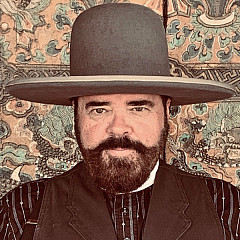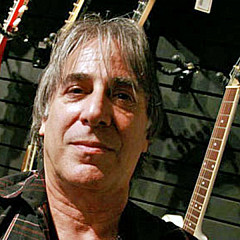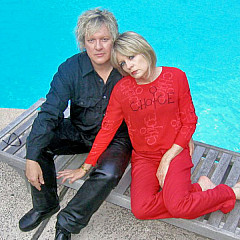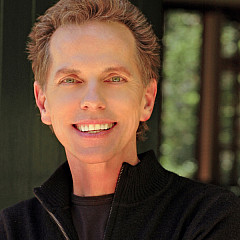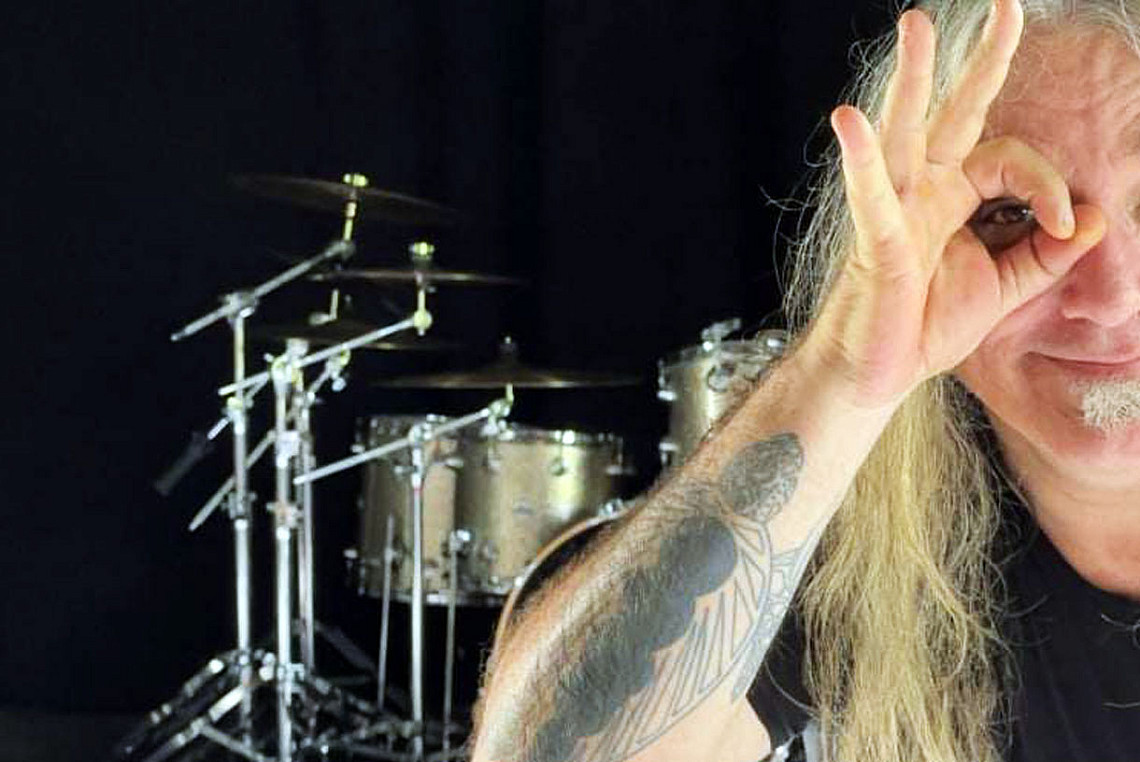
Matt Cameron is the longest-tenured drummer in Pearl Jam's long and winding history, but to many, their best drummer was the one who was spotted in the band during the peak of Pearl Jam mania, Dave Abbruzzese. From 1991-1994, Abbruzzese manned the kit for the albums Vs. and Vitalogy. He joined the band in August 1991 just days before their debut album, Ten, was released, replacing Matt Chamberlain, who filled in after original PJ drummer Dave Krusen bowed out to deal with his alcoholism. Chamberlain wasn't ready to commit to Pearl Jam, which was still traveling by van on the club circuit, but he recommended Abbruzzese, a fellow Texan he had seen perform.
"This guy has this John Bonham thing going on, but also this great feel," Chamberlain explained in Pearl Jam's Twenty chronology (Abbruzzese is easy to look up, the first entry in the index). Abbruzzese quickly relocated to Seattle, got a Stickman tattoo and joined the wild ride as Pearl Jam rose to unimaginable heights.
Abbruzzese was fired from the band in August 1994. "Anyone who listens to those records realizes he is a great drummer," Pearl Jam guitarist Stone Gossard said in Twenty. "It wasn't his drumming that was the problem. The problem was that he needed to fit in with a group of five very different, strong personalities."
Abbruzzese went on to play with a variety of renowned musicians, including Stevie Salas, TM Stevens, and Bernard Fowler. Pearl Jam moved on with drummer Jack Irons, who lasted until 1998 when Cameron took over - he's been there ever since.
Speaking to Songfacts just before the close of 2023, Abbruzzese was down to discuss drumming in the grunge era, the stories behind several Pearl Jam classics he co-wrote, and the time he almost joined Guns N' Roses.
Greg Prato (Songfacts): What's the best drumming on a song from the grunge era?"This guy has this John Bonham thing going on, but also this great feel," Chamberlain explained in Pearl Jam's Twenty chronology (Abbruzzese is easy to look up, the first entry in the index). Abbruzzese quickly relocated to Seattle, got a Stickman tattoo and joined the wild ride as Pearl Jam rose to unimaginable heights.
Abbruzzese was fired from the band in August 1994. "Anyone who listens to those records realizes he is a great drummer," Pearl Jam guitarist Stone Gossard said in Twenty. "It wasn't his drumming that was the problem. The problem was that he needed to fit in with a group of five very different, strong personalities."
Abbruzzese went on to play with a variety of renowned musicians, including Stevie Salas, TM Stevens, and Bernard Fowler. Pearl Jam moved on with drummer Jack Irons, who lasted until 1998 when Cameron took over - he's been there ever since.
Speaking to Songfacts just before the close of 2023, Abbruzzese was down to discuss drumming in the grunge era, the stories behind several Pearl Jam classics he co-wrote, and the time he almost joined Guns N' Roses.
Dave Abbruzzese: I'd have to be biased and say it was something of mine, because that's what I paid the most attention to. But Dan Peters from Mudhoney is fantastic, Sean Kinney [Alice In Chains] always delivered, Dave Grohl with Nirvana – his drumming was multi-dimensional for that band but kind of one-dimensional in the grand scheme of drumming. He was powerhouse.
I look at the grunge-era drummers as the unsung heroes of that genre, because in the "hair rock" that was going on, it was the guitars that were driving the band. And then when grunge came around, it went back to good old rock n' roll where the drums drove the band. Bands like The Guess Who and Zeppelin who were just considered rock, to me the drums drove those bands. The push and the pull and the tension that was created by the drum parts is what defined the music, what supported all the riffs.
And then when it got into Metallica, it was guitar stuff. Then bands like Mötley Crüe, even though Tommy [Lee] was flashy, it was still a guitar-rock band in my opinion. In grunge or alternative music, Jimmy Chamberlin [Smashing Pumpkins], Dave Grohl, myself, Matt Cameron [Soundgarden, later Pearl Jam], and even Jack Irons – the way he played with the band Eleven, the drums really drove the music. Even live, the drums were so vital to that sound. So it's hard to pick one. But I know how much work I put into various songs, so those are really the only ones I judge the drums on. [Laughs]
Songfacts: What about as far as Pearl Jam – which song are you most proud of from a drum point of view?
Abbruzzese: Well, all of them took an equal amount of attention to detail. Some of them were one and done, like "Not For You" and "Tremor Christ" and things like that... "Spin The Black Circle." Those songs, the idea came about and the drums were recorded as I was creating them in the instant. But then there were songs like "Immortality" that I put a whole lot of thought into the arrangement of that drum part.
But in that band, my deciding factor in how to approach a song on Vs. was the way that Stone [Gossard] moved when he had the riff – watching the way he moved. If his head went side to side, then I wanted to create a groove that would support that movement. If I started playing and his body movement changed, then I would take a different approach until I got to a groove that kept him moving the same way he was moving before I played. Then I would take the practice tapes home and just listen and feel out something that would make my part important to the song.
"Immortality," the song off Vitalogy, is one that when I hear it, I'm really proud of what I pulled off because of all the subtleties in the track. To me, a good drum part is like a good movie soundtrack. I didn't want to do things that stood out and sounded flashy or unnecessary. In that song, there are so many intricate parts within each phrase and I'm really proud that they don't leap out – they sit right where they're supposed to, supporting the song.
Songfacts: Speaking of subtleties, what's a subtlety you love in a song from a different drummer?
Abbruzzese: Jimmy Chamberlin did a lot of subtle things, but the way they were presented in a song with the Smashing Pumpkins, they were really up front so they weren't really subtle – they were intricate. I'd have to say Dave Grohl on the song "All Apologies." There are some things he did in that song with his hi-hat foot and with flams and some ghost note stuff. Those records were so masterfully mixed. If you're listening for them you can hear the subtleties, but overall when you've got it cranked up they just blend to the momentum versus standing out.
That's one of the things that makes Dave Grohl a legacy drummer – he was able to really drive a song and beat the shit out of his drum set, but still include those little subtle drags. The way he moved his hi-hat when he was bashing on his ride, things like that you don't really hear but you feel when you're listening to the track. It's a nice thing. It just adds an element of almost disco to the punk-rock aspect of it.
I was a big fan of Tony Thompson with Chic, and Tony played with Robert Palmer [in Power Station] and did great things on the Bowie stuff – "Let's Dance" and all that. He just had that [voices a steady drum beat] – and Dave did that a lot on those records - I really like that. There was a funk to his punk rock that I appreciated. It reminded me of Greg Errico, the drummer for Sly & The Family Stone. The tension he created by pushing his hi-hat and the rest of it still pulling back. He was the right drummer for the band. With Krist [Novoselic] pulling back and Kurt [Cobain] always on top of the beat, Dave was able to support both but define it at the same time.
Songfacts: What do you recall about the writing of the Pearl Jam song "Go"? You wrote the song's guitar riff, right?
Abbruzzese: Yeah. That was in Kristen Barry's apartment. I had just gotten up to Seattle. I was in a five-story walk-up single room, which was a pain in the ass. And then Kristen went on tour. Kristen's place was I think Bridget Fonda's place in the Singles movie – they used her apartment. But Kristen Barry had just went on tour, so she was kind enough to let me stay in her apartment so I could get out of the five-story hotel room with the walk-up. She had an Ovation acoustic, and one of the first nights there I picked it up. This riff started there and it turned into a song I wrote called "Angel."
Fast-forward a few months later, I had my guitar – an acoustic guitar – and I was messing around with alternate tunings because that was Stone's big thing that I'd never really been around. I started playing this thing, originally it was [sings slower tempo - play the clip to hear it], and to me it was a stomp.
I liked it - it was a slinky little thing. Then I went down to the rehearsal space, the basement of the Galleria Potato Head with a little seven-foot ceiling, terrible rehearsal space. That's where we rehearsed. I went down there and Stone had just gotten a new bunch of amps. They were all plugged in and really loud. I picked up his guitar, no one was there, and I started playing this riff, but on his double-stack amps. I think they were Peavys – Peavy had come out with this new head and this new amp. It was crunchy as hell.
I just started playing it fast. Stone came in and was like, "Hey, what's that?" I showed it to him, we started messing with it, then Jeff [Ament, bassist] and Mike [McCready, guitarist] ambled in and they started playing along to it.
I had tried to introduce it a few times but it just didn't catch. I would pick up a guitar, start playing it, and no one said anything, so I just left it alone, because as soon as you get a no, it's never going to be looked into. But this one day, they all started messing with it and then all of a sudden it was like, Wow! I got on the kit and I was like, "What am I going to do to this thing?" I just started playing, and Eddie [Vedder, lead singer] came in and he started syllabizing over it, and everyone liked it.
The way we were working for the Vs. record, we really weren't cementing songs, we were cementing ideas. We knew we had a song, but we didn't polish it up – we kept it loose and everyone had the room to search and meander around for different things that they were looking for. And then once we got to The Site in Nicasio [California], the recording studio, it had become one on the list. And once we got to the studio, we'd get up and have breakfast and start tracking a song at 10 in the morning or whatever. Typically, if Eddie already had the words, Brendan [O'Brien, producer] would be mixing it right before dinner, and after dinner we'd listen to it. We just worked that hard.
Making that record, from what I've read it was difficult for Eddie to make but it was really an easy record to make – everything worked really well. I remember being excited about the song. Until we were filling out publishing and copyright paperwork, I never even considered it "my song." I never looked at a band that way. I just looked at it like it was an idea that I had that then the band turned into the song it was.
When Stone said, "How does it feel to have your song on a record?" I was like, "I never thought of it. That's not really my song – that was an idea I had. But we made it a song." And that discussion is why on the first Pearl Jam record, Ten, underneath each song it said like, "Vedder/Gossard" or "Vedder/Gossard/Ament" – it had everyone's names separately. But on the Vs. record, it said everyone's name because of that conversation we had where to me, it was just an idea until the band made it a song, so we kind of adopted that attitude for the entire album so everyone was a writer on the record.1
Songfacts: As far as the song's lyrics, was it about Eddie's truck?
Abbruzzese: Yeah. We all drove down to Nicasio from Seattle to Marin County. It was basically a lament to his truck: "Don't go out on me, don't go on me now. Never acted up before, Don't go on me now." Because his truck was running rough on the way down there. [Laughs]
Starting in 1991, Pearl Jam sent out singles to their fan club members every December as a holiday gift, a tradition they discontinued in 2019. In 1993, that single was "Angel," written by Abbruzzese and Eddie Vedder, with a B-side called "Ramblings," a noisy live cut.
Songfacts: Before, you mentioned the song "Angel." What do you recall about the writing of that one?Abbruzzese: That was when I first got to Seattle and we were just starting to work together. I went up and Matt Chamberlain's drums were there and I played on those for the week-long audition. And then when I came back up with my drums, it was when I had moved out of that five-story walk-up and into Kristen's place. I came up with this little thing on guitar. I had a cassette recorder, Kristen's cassette jam box, and I recorded the guitar part onto that. And then I played that cassette through another jam box, played to it, and recorded it to another jam box, so it was two guitar parts. Then at the next rehearsal I said, "Hey Ed, I have this idea," and I handed him the tape. The next morning, he handed me a cassette back and it had his vocal lines on it. It was incredible.
Then when we were in London Bridge recording the re-recorded version of "Even Flow" and we ran through the songs from Ten so we could hear how they were sitting, we recorded "Breath" and "Alone" and a couple of other things. There was some time and someone's guitar was sitting there, so I recorded the guitar part and Eddie recorded the vocals. The song blew everybody away.
Then when we were putting out a Christmas single for our fan club, it was all of us talking on one side, and if you flipped it over, all of a sudden there was this song "Angel." Mike [McCready] and I were kind of taken aback at the time because we thought it was strong enough to be on an album. At first it was just like giving it away on an obscure Christmas single. I thought it deserved more respect than that.
But then a few days later, I thought, "Wow. That is kind of cool that it's going to be an obscure thing." Just like everything else back then it came together really quickly and was just a beautiful song.
Songfacts: And what about "Dirty Frank"? Did you have a hand in writing that too?
Abbruzzese: Yeah. We only played the thing twice, and one of those two times ended up being the recording. We didn't work on it – it just happened. That was the aspect of the band that was so exciting back then. It was "jam" – that word and that action.
We wrote a lot of songs on stage. We had no problem improvising in front of 10,000 people. If Stone felt inspired and just started playing something, he would. If I felt inspired and started playing something, I would. And then Eddie would start singing and it would take on its life.
There was a bus driver that we got – our first bus, our first driver. It was a discount bus, to say the least, and it came with a discount driver. The driver's name was Frank, and he was from Great Kill, Long Island [David probably means Great Kills, Staten Island]. He was small in size but big in words. He'd talk like a tough guy but he was a little guy, maybe a buck thirty wet. His first introduction to the band was, "Alright. I'm going to do your laundry," and this and that. He would say things like, "Copacetically speaking," and, "I will clean the bathroom per se, but I won't clean the toilet." He was that kind of guy.
But he had this one rule. He pointed at this bay under the bus and said, "That's my bay. Nobody opens it, nobody goes in it. That's mine. That's my space." So, slowly it turned into this theory we all had that that's where he kept his cauldron of "groupie soup" where he would lure unsuspecting fans to the bus and he would kill them and throw them in the cauldron. So, "I got a recipe for anus ankle soup," that's one of the lyrics. You know:
Wanted a pass so she relaxed
Now the little groupie's getting chopped up in the back
"Where's Mike McCready? My God, he's been ate!"
And then when we were in the studio that was something we all laughed about. Stone started playing this riff, everybody joined in, and then Eddie started singing the tale of "Dirty Frank." The first line is, "Dirty Frank Dahmer he's a gourmet cook."
Songfacts: Is it true that Eddie wrote the lyrics to "Glorified G" after a conversation he had with you?
Abbruzzese: It wasn't with me. Those guys, their memories have gotten pretty selective in some ways. I guess it's more like they haven't discounted rumors to certain things. But the story behind "Glorified G" was that my dear friend, the artist Jon Anderson, was visiting. He lived in Indonesia, and I used to love to fuck with his head. When he'd show up, he'd arrive at the airport from his tropical island and I would pick him up in a '57 Chevy. We would go straight up to 7,000 feet in 20 feet of snow and I'd smoke a big joint with him. He was completely culture shocked and out of his element. Like, woozy. So, I took great pride in messing with his head when he came back, and he loved it, too.
But this one particular trip we were going camping, and both of us weren't stupid – there are animals that are not necessarily friendly. Going camping on Mount Rainier, on the way up we would pass a gun shop, and it was like, "It's probably best to have something, even if it's something to make noise." So I bought a couple of throwaway .22 caliber rifles for each of us to have in our tent. And the band's manager, Kelly Curtis, there's no other way to say it, he liked to stir the shit sometimes. He was kind of a drama queen in some ways. I told him that I was going camping, and I said, "Don't worry, I've got a couple of guns to take up." Thinking that would be something that would let him know he didn't have to worry about me getting in trouble while I was camping.
I show up for rehearsal after that weekend. I walk in and there's an attitude already. It happened a lot – there was a little cattiness that went down in that band sometimes, mostly between Jeff and Eddie. They're pretty judgy folks. Someone said, "Hey. I heard you bought a gun." This was after minutes of no one saying anything, just this weird tension. And it was presented like looking down on me like I'd done something wrong. So, my response was, "No. In fact, I got two." [Laughs] And that started this whole conversation about guns. At one point I said, "I bought a couple of .22's. Big deal. They're just like glorified pellet guns. I'm not going on a shooting spree." A glorified pellet gun is all I saw it as.
I'm from Texas. A .22 is something a 10-year-old kid gets on Christmas and goes plinking cans.
But then it turned into this bigger conversation about guns, and Jeff mentioned how when he grew up, there were guns around everywhere. It's Montana, and one of the rules was, "You always keep it loaded." That's the way to have a gun be the safest – to keep it loaded and blah blah blah. So essentially, it was a conversation that we were all having about our opinions and our experiences with guns. It wasn't necessarily negative at all, and nobody said that they "felt manly when armed." That was a thing that Eddie took when he was penning it into a lyric. He was just taking copious notes on the conversation.
But back then, there was this strange period when things were blowing up and there was a lot of passive-aggressiveness. Eddie was a pretty passive-aggressive guy. It led to a dynamic that I think helped the music in a strange way but ultimately hurt the band.
But I never felt offended or took any offense to the words because I thought it was cool that Eddie was able to take that conversation, and I admired the fact that it was a real creative way to pen a lyric, to take notes of a conversation we were all having about something. And then he turned it into an anthem to the anti-gun, in a weird way. It was tongue-in-cheek, kind of making fun of gun ownership: "Always keep it loaded" and "Feel so manly when armed" and all that sort of shit. "Cause I love God" and "Feel so manly when armed" – those were things he put in to make it that pointed poke at the whole gun thing, but that wasn't part of our conversation at all.
I remember I was pretty offended by being attacked about it, because I really thought it was pretty candyass. I went camping and bought a couple of .22s. To me, a .22 rifle wasn't a dangerous thing – it's something that everyone gets when they're a kid. It was to Jeff, too. But over the years, it's turned into that Eddie wrote the lyrics because he was offended, or based on me. But it's not. It's just a loose conversation.
Songfacts: Are you still in touch with any of your former Pearl Jam bandmates?
Abbruzzese: It's strange – I'm actually in contact with Dave Krusen, Jack Irons, and Matt Cameron, but I haven't spoken to or heard from any of the other band members since I got fired. Not one thing. I had spoken to Kelly, our old manager, quite a bit over the years, and then reached out to him and found out that he had retired and Smitty [Mark Smith], who used to work for Rat Sound, has become the band's manager, which is great. Smitty and I always had a good rapport, so that's nice.
So I'm in touch with Smitty and the other drummers, but no, I haven't heard from or spoken to any of the other guys since '95, '96 when we were working out settlement stuff on the business side of things.
Songfacts: If the opportunity ever presented itself, would you like to speak to and/or play with them again?
Abbruzzese: Yeah, absolutely. To me, there's been a lot of shady things that have happened business-wise, but I never felt that was their doing. The band turned into such a big machine that the powers that be had to protect their machine from me putting out a record with the Green Romance Orchestra [1997's Play Parts I & V]. Everything was looking good and then all of a sudden it got squashed by the machine. Things like that. I don't think any of that was due to the band members. So I don't have any hard feelings all these years later towards the guys.
And if the opportunity arose to get on stage and play the songs from those two records, I would love it. But it would be self-indulgent, more to kick ass on stage and drive the songs again. Because I really feel like that would be something special for the fans of the band. It was the biggest time for the band and it ended so abruptly, and it's been non-heralded by the band ever since. It's one of those strange things.
Appreciation for Abbruzzese's drumming with Pearl Jam continued long after his exit. In my 2018 book, 100 Things Pearl Jam Fans Should Know & Do Before They Die, Anthrax drummer Charlie Benante offered praise for Abbruzzese. "I think the drumming on [Vs.] is really done well, too – and that's from Dave Abbruzzese. I thought he fit the band perfectly. He just looked good in the role and played really well, too. I was like, 'Wow... they got rid of him?' I thought he was like, the guy."
Songfacts: What do you recall about your experience working with Guns N' Roses?Abbruzzese: The Guns thing was tough. Axl [Rose] and I became familiar with one another through nightly phone calls for months before we actually met and played music together. It was a tough time for me because I had quite a bit of soul poisoning from the way my manager handled my termination from Pearl Jam. I was leery of entering the big machine again because of it. Things were moving along well until I spoke to the G n' R management regarding my opinion that the new music might be better suited to an Axl solo album rather than a G n' R album.
Doug Smith [David probably means Doug Goldstein], the Guns' manager at the time, told me that the management and the label had a plan of letting the album we were making be the catalyst for getting Axl to reunite with Slash. The plan was to let him fail and the hope was that this failure would inspire him to reunite with Slash and get the big train back on the tracks. When I heard this I was forced to choose between informing Axl about it or just bowing out. I felt that if I told him of their plan it would destroy what little faith he had in the machine.
So I opted to take one on the chin and sacrifice my new friendship for the sake of Axl's ability to continue to be a creative force. It was a difficult decision but ultimately one that I am glad I made. I love that guy and I didn't want to be responsible for ruining the chance of him and the band continuing to make music for their fans that had waited so patiently for so long for G n' R to get back to it.
Songfacts: What are you currently up to musically?
Abbruzzese: I've been enjoying the process of music again. From lending my talents behind the kit to mixing and production. My love for music and the process of contributing to songwriting and recording is as strong as ever. Owning and operating a full-blown analog facility taught me so much about the process. Having contributed my drums to hundreds of songs of various styles has truly matured me as a player.
Working with various artists such as Roger Hodgson of Supertramp, Carmine Rojas (Bowie, Rod Stewart) Bernard Fowler (Herbie Hancock, Tackhead, Rolling Stones), Eric Schenkman (Spin Doctors), my band of talented gentlemen the Green Romance Orchestra, Mike Dillon (Rickie Lee Jones, HABMX), as well as contributing drum tracks to dozens of other bands over the last few years... it's been a fantastic time of work for me.
I am a player that finds my main inspiration to be my emotional state of being. As I have matured as a person so have I matured as a player. My decisions and opinions are much more grounded and I feel my musical decisions are better now than ever. That being said, I don't feel as though I will be stopping anytime soon. There is quite a lot left in my tank! In the near future I am planning to open myself up to the idea of getting back out on the road and performing again.
January 8, 2024
You can find Dave Abbruzzese on Facebook.
Further reading:
Interview with Jeff Ament
100 Things Pearl Jam Fans Should Know And Do Before They Die
Interview with Chad Channing
Truly: The Hidden Gem Of Grunge
Dark Black And Blue - The Soundgarden Story
Photos courtesy of FreeAssRecords
Footnotes:
- 1] Songwriting credits are a thorny subject for many bands. Does the guitarist get a credit for coming up with the riff? Do we give the drummer some if he has the idea for the bridge? It matters not just for pride but because the writers get royalties that can be quite substantial. On the Vs. album, Vedder is credited with writing the lyrics and the entire band with the music on every track. They did this on their next album, Vitalogy, as well, but went back to selecting individual credits on No Code in 1996. By this time, the band wasn't always together when they worked up the songs, so the system made sense, but it created some tension over whose songs got picked for the albums. (back)
- 2] This was 1991, soon after Pearl Jam released their debut album, Ten, that they toured as RHCP's opening act. The Chilis treated them very well, a tradition Pearl Jam passed on to their own opening acts when they became headliners a short time later. (back)
More Songwriter Interviews