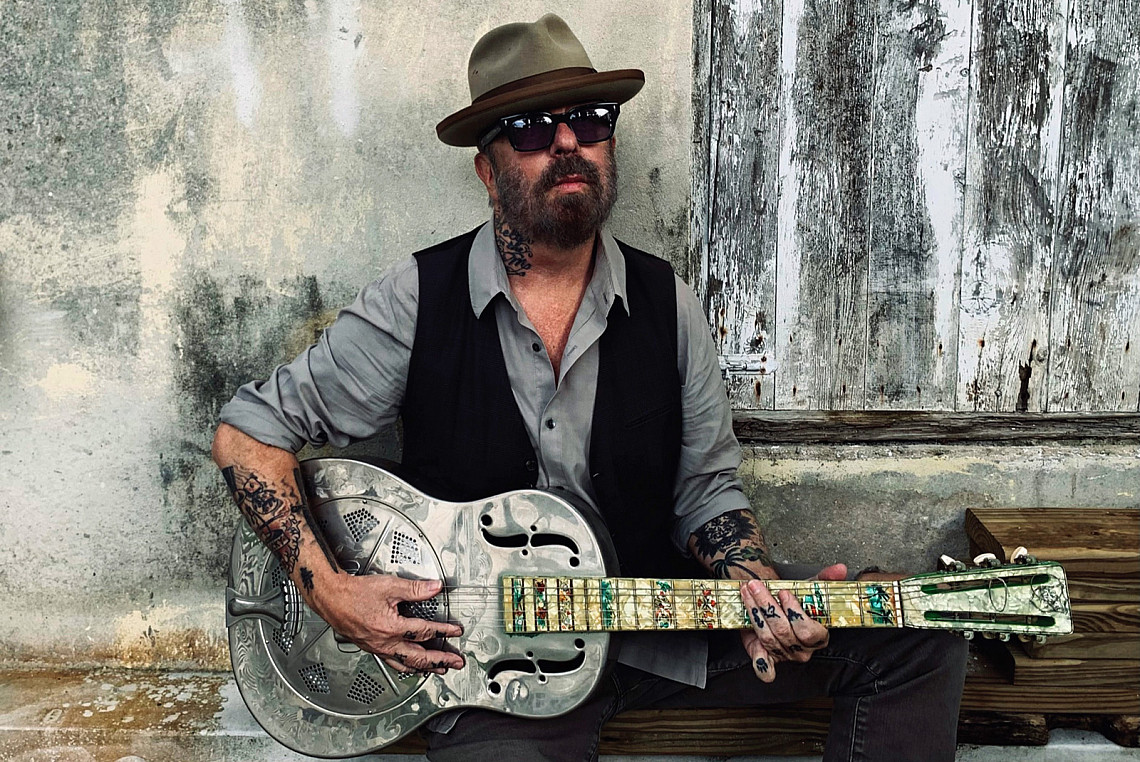
In 2022, Dave Stewart was inducted into both the Rock And Roll Hall Of Fame and Songwriters Hall Of Fame. In both of these hallowed halls, he's entering with Annie Lennox, his musical (and for a few years, romantic) partner in Eurythmics. Lennox, one of the most imaginative songwriters and expressive vocalists of her time, was also well-suited for the music video era, able to command the camera in an array of personas for their wildly innovative videos, many of which were conceived by Stewart.
Outside of Eurythmics, Lennox embarked on a brilliant solo career. Stewart found himself collaborating on songs with a bevy of very big names: U2 ("American Prayer"), Mick Jagger ("Old Habits Die Hard"), No Doubt ("Underneath It All") and Katy Perry ("I'm Still Breathing") among them. He also teamed with Tom Petty at an inflection point for the Heartbreakers: the 1985 Southern Accents album. Stewart co-wrote "Don't Come Around Here No More" and came up with the concept for the Alice In Wonderland-themed video (he's also in it, playing sitar on a magic mushroom). He co-wrote the follow-up single as well, a great song with another Wonderland video called "Make It Better (Forget About Me)."
Stewart carries a great deal of forward momentum. In the weeks before we spoke, he released an album for a new artist named Iris Gold on his Bay Street Records label, teamed with Amy Lee of Evanescence to cover "Love Hurts," and issued a 26(!)-song album called Ebony McQueen that tells the tale of his musical journey growing up in Sunderland, England. Be warned: the title track is a Beatles-grade earworm. You'll be singing it for days.
Speaking from his studio in the Bahamas, Stewart talked about some of his most famous and innovative songs, including "Sweet Dreams (Are Made Of This)" and "Beethoven (I Love to Listen To)." He also offered details on that Tom Petty collaboration and took us back to a time when Petty, Jeff Lynne, Bob Dylan and George Harrison were all in his garden just before forming the Traveling Wilburys.
Carl Wiser (Songfacts): Ebony McQueen tells the story of your formative years discovering music. What song had the biggest impact on you in those formative years?Outside of Eurythmics, Lennox embarked on a brilliant solo career. Stewart found himself collaborating on songs with a bevy of very big names: U2 ("American Prayer"), Mick Jagger ("Old Habits Die Hard"), No Doubt ("Underneath It All") and Katy Perry ("I'm Still Breathing") among them. He also teamed with Tom Petty at an inflection point for the Heartbreakers: the 1985 Southern Accents album. Stewart co-wrote "Don't Come Around Here No More" and came up with the concept for the Alice In Wonderland-themed video (he's also in it, playing sitar on a magic mushroom). He co-wrote the follow-up single as well, a great song with another Wonderland video called "Make It Better (Forget About Me)."
Stewart carries a great deal of forward momentum. In the weeks before we spoke, he released an album for a new artist named Iris Gold on his Bay Street Records label, teamed with Amy Lee of Evanescence to cover "Love Hurts," and issued a 26(!)-song album called Ebony McQueen that tells the tale of his musical journey growing up in Sunderland, England. Be warned: the title track is a Beatles-grade earworm. You'll be singing it for days.
Speaking from his studio in the Bahamas, Stewart talked about some of his most famous and innovative songs, including "Sweet Dreams (Are Made Of This)" and "Beethoven (I Love to Listen To)." He also offered details on that Tom Petty collaboration and took us back to a time when Petty, Jeff Lynne, Bob Dylan and George Harrison were all in his garden just before forming the Traveling Wilburys.
Dave Stewart: Well, when I put on a blues album that my cousin sent from Memphis, Robert Johnson's King Of The Delta Blues Singers, that was more of an impact of like magic, voodoo. In the North East of England, I didn't know what it was, didn't quite comprehend what I was listening to.
When I was 14 in 1966, I switched the radio on and my mind was blown in several ways: The Rolling Stones, The Beatles, and The Kinks, particularly. But my mind was originally blown by hearing that blues album by Robert Johnson.
And also by an album by Mississippi John Hurt. That was a more gentle, softer ride into a certain kind of blues. Robert Johnson was kind of nerve-jangling and really gave me a feeling that something was really unsettling, "Hellhound On My Trail" and all these kind of things. I was on my own in a house in the North East of England, and hearing this come out of my dad's gramophone was a weird experience.
Songfacts: The album deals a lot with the influences on you, but you of course have become very influential to a whole other generation. What's a song you've been a part of that affected people in a way you didn't expect?
Stewart: Well, "Sweet Dreams," which I wrote with Annie and produced. We thought we'd made something really special but we had no idea, really, the impact it would have. Neither did the record label, which didn't even think it was a single. It was the fourth single in Britain.
But it got adapted and turned into many variations because, you see, a lot of people use it as a very uplifting dance record at EDM festivals and raves and parties. When the DJ puts that on there's always a lot of hands in the air. But it's actually a very sort of existential, spooky record asking if this is what the world has come to. Is this what our dreams are made of? And then some people want to use you, some want to abuse you. So it goes into a topic that could go massive if you want it to. Eurythmics songs always had a bit of that in it, a juxtaposition between the music and the lyric.1
I suppose it was reality, basically, what we were writing about. It wasn't a Disney kind of world. But "Sweet Dreams" is everywhere, it's ever-present.
Songfacts: One of the songs I've always been intrigued by that goes along the lines of what you're talking about is a later Eurythmics song called "I Saved The World Today," where all the bad things have gone away, but we kind of know that they haven't, really.
Stewart: Exactly. It's very ironic. Another one of those songs where people go hooray! but it's not saying that, it's saying, if only.
It's a very uplifting chorus but the verses are down musically. In the lyric it's all the way through saying, well, there's all these problems and there's a million things to solve, but hey, I saved the world today.
People face so many ridiculous mental problems every day as soon as you wake up. It could have to do with your family, yourself, and then it widens up into the crisis happening in America, the war in Ukraine, but then it just goes on and on and on and on, right? So at some point, your mind puts blinkers on things a bit because you can't cope with all that information and it can't cope with all the negative possibilities.
Meditation is very important but also a way in which people can ground themselves from projecting disastrous situations in their mind, which possibly could happen but they aren't happening right now to them. They're happening to other people in other parts of world.
I think our job as artists is to not comment on these things politically so much as to put an underlying theme through your work that knows these things are going on but brings a sense of comfort and now-ism into people's lives, and that's what that song does for three minutes or whatever.
Stewart first connected with Tom Petty in 1983 after Eurythmics came to America and played a triumphant concert in Hollywood at the Palace Theater. Stevie Nicks met Stewart backstage and took him home. At the time, she was on the outs with Joe Walsh, so Stewart wrote a song based on their relationship called "Don't Come Around Here No More," which Nicks was going to sing, but her producer, Jimmy Iovine, redirected to Petty for his Southern Accents album, which he was struggling to finish. Petty and Stewart finished writing the song, which became the first single and big hit from the album. Then they wrote two more for the album: "It Ain't Nothin' To Me" and "Make It Better (Forget About Me)," which was released as a single with a music video that followed the Alice In Wonderland theme.
Songfacts: I pulled out my Dave Stewart Songbook and you have a great writeup there about "Don't Come Around Here No More," but you also did another terrific song on that album that I was surprised wasn't way more popular. It's called "Make It Better (Forget About Me)," and it's also got that juxtaposition you're talking about. Can you talk about that song?Stewart: Yes. I was sitting on the side of the bed in Tom's bedroom with Tom. We had two guitars. Tom was going through a really tough time in his relationship and it was affecting him and the band. It was a build-up to him having a crisis when he punched a hole through the wall and damaged his hand.2 So it's kind of a frustration song. It's like, I just want to make it better but I don't know how, you know? And the resolution was, maybe forget about me. It was talking about a futile, useless situation that's been tried to be fixed for quite a long time, and it wasn't going to get fixed.
So, we were sitting together on the bed, two guitars, throwing lines at each other and just playing it almost like an acoustic jam. It's kind of a folk-y song in a way, and the two guitars sounded really good.
When the video for "Don't Come Around Here No More" exploded, it opened up this whole new adventurous world that let Tom escape into a different world and reinvent the way he could be and perform, and he embraced from that moment videos and things, because before, that was a kind of annoying thing to do. Then that extended into the sound and the stage.
It was funny because the whole album started off with the song "Southern Accents." It's very much an autobiographical song in a very particular-sounding way, but he got stuck halfway through and he was stuck for quite a while with writer's block, and he had all sorts of complex things happening in his life. So the band I'm sure were a bit confused when halfway through they thought they were doing one thing and it all went this way.
But it was a double-edged sword because when it went that way with "Forget About Me" there was a horn section and the stage suddenly became much bigger. And then Tom would get the top hat out and it became bigger and bigger and bigger and never stopped growing. So it was one of those turning points.
Later on with Wildflowers he went back to the roots of it all, but it allowed this escapism, this kind of adventure like Alice In Wonderland for Tom to climb into and reinvent his life and feelings.
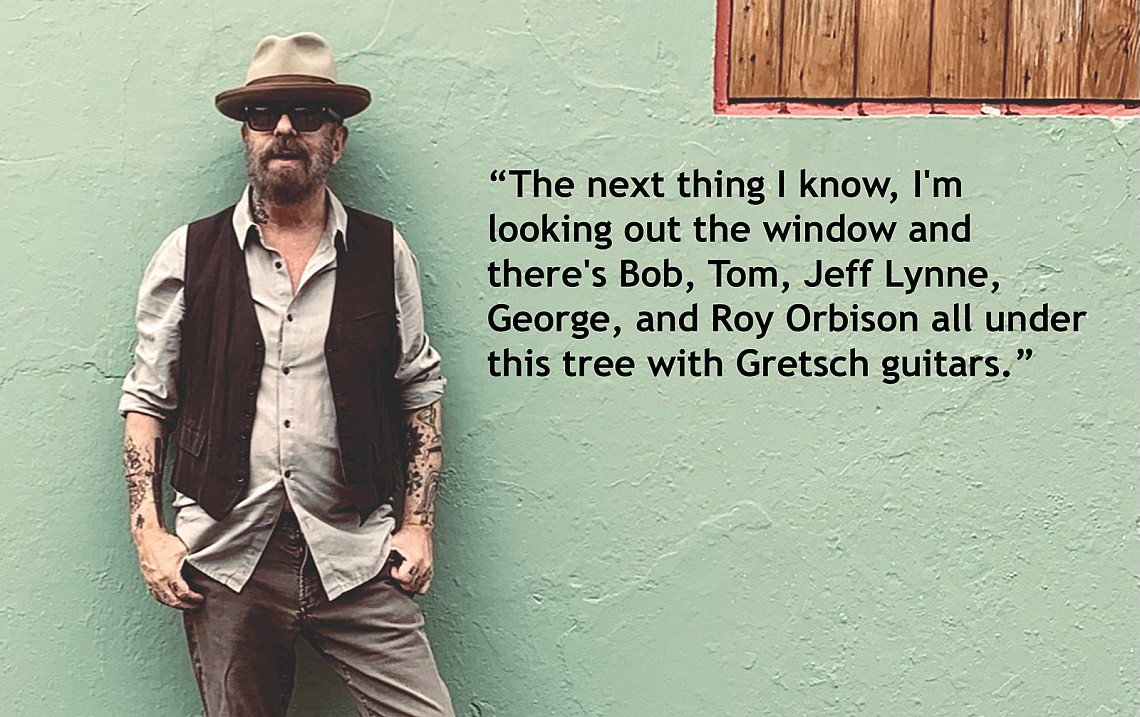
Tom and I had a really great bond and a lot of fun, and through that, a lot of things happened. I was filming Dylan stuff3 and then George Harrison was living at my house. Bob was talking about how he never had a backing band like The Band that really was amazing, and I said the only one I can think of is The Heartbreakers. My back garden was this mad meeting place. It would be George playing a Beatles song on acoustic guitar in the garden to Tom. They'd be singing harmonies, and then Jeff Lynne joins in, then the next thing I know, I'm looking out the window and there's Bob, Tom, Jeff Lynne, George, and Roy Orbison all under this tree with Gretsch guitars.
So going back to that song and that period, it all led to things like the Traveling Wilburys and it actually led to "Free Falling" and the adventure with songwriting in a different way and videos and an acceptance that the world had actually changed and there was a new medium that you either had to ignore or somehow be part of, and I think he actually enjoyed that. He rang me once in England and asked if I'd come over and direct the video for "Mary Jane's Last Dance" but I couldn't because I was in England.
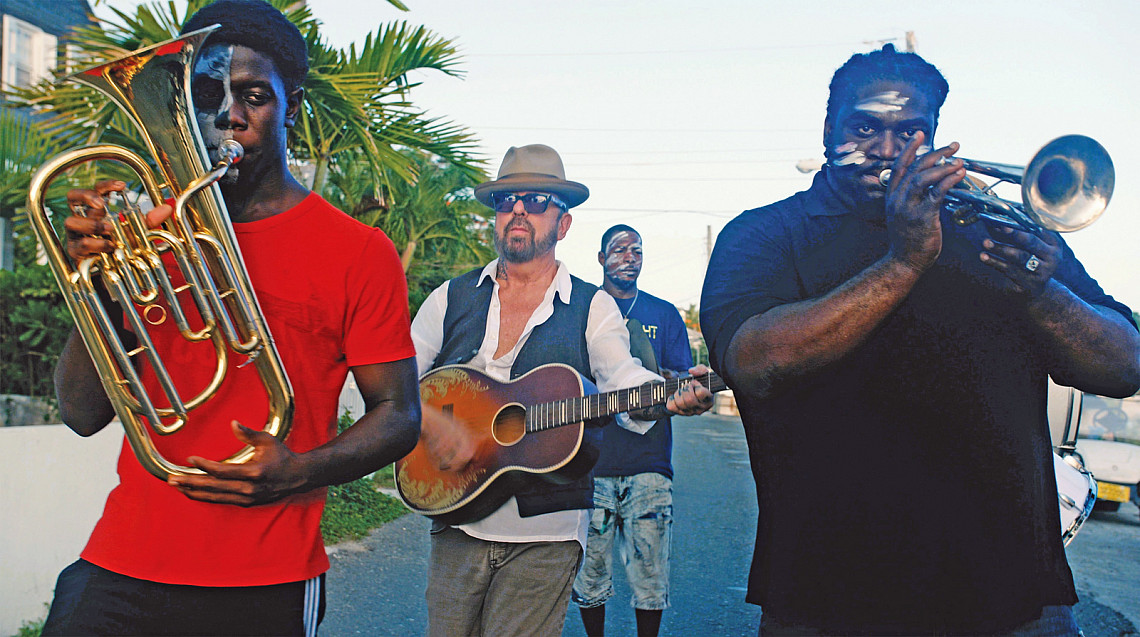
Songfacts: Were you ever asked to join the Traveling Wilburys?
Stewart: I couldn't because I was making a Eurythmics album and then doing a world tour with Annie when they were right in the middle of it. They only had I think two weeks to make the album, which they did in my garden studio, using my kitchen. Jim Keltner used the refrigerator.4 I would have loved to and I would have easily been an accepted Wilbury, but it was right at the period of Eurythmics making We Too Are One and touring it.
Songfacts: Another Eurythmics song I'd like to get your thoughts on is "Beethoven."
The guy that played the drums in Eurythmics is from Sweden, Olle Romo, and he is very technical, kind of genius. We got the Synclavier to this chateau in France. We always liked to record in different places but this chateau for three months was about the same price as a recording studio for a month, but it was huge, with 24 bedrooms, and it was miles outside of Paris and Normandy. The smoking room was the called the fumoir, and that was the only little room where we could set up the gear and not have big echoing sounds.
So I made that song up out of words, moving them about:
I love to
Listen to
Beethoven
Duh-duh-duh... DUH
It was really about somebody losing their mind, a woman under the influence or that kind of feeling, which Annie grasped straightaway.
Sophie Muller did the video. It's a housewife character in a straight apartment who starts to hallucinate and lose her mind from frustration and boredom. Then she walks out of there and it turns into "I need a man!" Like going crazy in a club.
It was one of those times when the music was like a surreal trip. And instead of trying to make it into a song, I just made it this thing.
And imagine, I delivered this video as the first single to the record label. They're all sitting in a room, I put it on, and there's Annie going, "I was dreaming like a Texas girl..."
And they're like, "What the hell is this? She's got a wig on and knitting."
Then it goes into the song and there's no song, just this weird Synclavier sound and then every now and then when she's flipping out in the kitchen, or smashing the shelves, it goes, "I love to listen to... Beethoven."
It's like when you put two things together like in A Clockwork Orange with "Singin' In The Rain" when he's beating up a chap. It's that extreme juxtaposition.
Songfacts: You've talked about some of your incredible collaborations over the years. Which of those was the greatest learning experience for you?
Stewart: I suppose SuperHeavy. I had A.R. Rahman, an Indian composer, Damian Marley, Mick [Jagger]... Mick and I have done so many things nobody's even heard - amazing songs. We've been working, writing songs forever. And we had Joss Stone, who was very young at the time. We set up in a circle in the room and we just were looking at you each other and playing. A.R.'s playing this Indian-sounding instrument, Damian's doing his toasting, rapping, spoken word, and then Joss is singing and so is Mick. Some of the songs on there are incredible.
So everybody came and played their character. Instead of a song song, they were being the character in the movie that we haven't made yet. So that was a great, interesting collaboration.
Songfacts: What's the hidden gem in the Eurythmics catalog?
Stewart: It's not really hidden, but we always ended the show with it, the last encore, and people were always crying. It's a song called "The Miracle Of Love." And another one that's called "When The Day Goes Down." Sometimes we could do that just acoustic and everybody's crying. So you can pick one of those two.
July 19, 2022
Ebony McQueen is up on streaming services and available as a vinyl boxed set.
Further reading:
Our 2008 interview with Dave Stewart
Eurythmics Songfacts entries
Interview with Ann Wilson of Heart
Interview with Glen Ballard
Footnotes:
- 1] Some of the dynamic tension in Eurythmics owes to geography: Lennox is from Aberdeen, Scotland, and Stewart is from Sunderland, England. She came to London to study at the Royal Academy of Music but left and ended up working odd jobs. Stewart met her when she was 21; they formed a band called the Tourists that released three albums before paring to a duo with Eurythmics. (back)
- 2] This happened in October 1984 when Petty was mixing a song for the Southern Accents album, which he'd been working on for about two years. His hand had to be surgically rebuilt, and it took about nine months of physical therapy before he could play guitar again. (back)
- 3] Stewart directed Bob Dylan's music video for "Emotionally Yours." (back)
- 4] When Stewart mentioned this, we assumed he meant the legendary session drummer Jim Keltner, who played on that Traveling Wilburys album, was storing food in Dave's fridge or helping himself to its contents, but Keltner was actually using the refrigerator as a percussion instrument. Stewart's studio was very small, so the band set up in his kitchen and used it as a studio. Keltner improvised by banging on various items and appliances in the room, at one point opening the fridge and playing on the shelves that held the food. (back)
More Songwriter Interviews