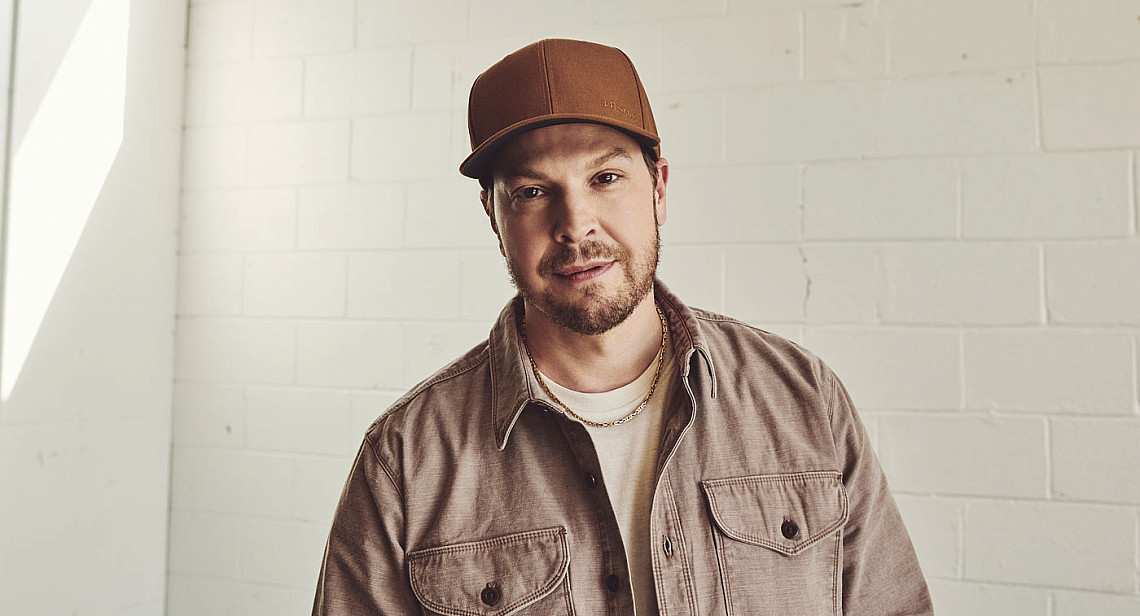
Gavin DeGraw's hit single "I Don't Want To Be" projected him to the spotlight in 2003, opening the one-hour drama One Tree Hill every Tuesday evening on The WB/CW. It was our entry into DeGraw's music, a melodic blend of rock and pop with honest lyrics, soulful singing and tantalizing piano. Never fitting into any mold or genre, DeGraw is an authentic songwriter whose lasting appeal has been the integrity in his music, and as a person.
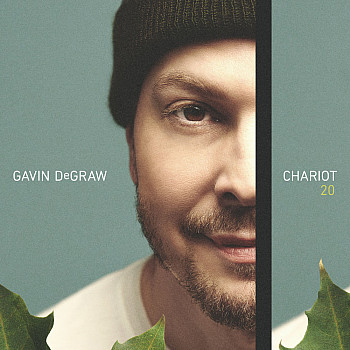
His 2003 debut album, Chariot, will be rereleased September 27 in revived form as Chariot 20. It represents a modern Gavin DeGraw, still soulful and melodic, yet not entirely removed from the 20-something who released the original. Demonstrating the versatility of the songs and craft in each one, this new version will appeal to original fans and new fans alike, striking a chord in its earnestness, ingenuity, and melodious meanderings. There's more exploration on Chariot 20, which never wanders too far from the original intention of the songs but demonstrates the growth of DeGraw as an artist. Chariot is a timeless record, full of lyrics that charm and illuminate, music that inspires and delights.
Chariot carried DeGraw through the next several years until his follow-up self-titled album. His fourth album, Sweeter, found him exploring cowrites, teaming with Ryan Tedder for the hit single "Not Over You." DeGraw went on to collaborate with the likes of LeAnn Rimes ("Celebrate Me Home") NEEDTOBREATHE ("Brother"), Brett Young ("Chapters"), and Colbie Caillat, earning a Grammy nomination with the latter for their song "We Both Know" from the film Safe Haven.
Hailing from South Fallsburg, New York, DeGraw honed his talents in New York City but now calls Nashville home. Currently on a world tour, DeGraw took time out of his busy schedule to talk with us about the significant impact Chariot had on his life and how his most recent album, Face The River, may be the one to top.
Nicole Roberge (Songfacts): Congratulations on not only 20 years of this album, but of a really solid career. Did you have to get out of your comfort zone at all to play new versions of these songs when you've been playing them in the same style for 20 years?His 2003 debut album, Chariot, will be rereleased September 27 in revived form as Chariot 20. It represents a modern Gavin DeGraw, still soulful and melodic, yet not entirely removed from the 20-something who released the original. Demonstrating the versatility of the songs and craft in each one, this new version will appeal to original fans and new fans alike, striking a chord in its earnestness, ingenuity, and melodious meanderings. There's more exploration on Chariot 20, which never wanders too far from the original intention of the songs but demonstrates the growth of DeGraw as an artist. Chariot is a timeless record, full of lyrics that charm and illuminate, music that inspires and delights.
Chariot carried DeGraw through the next several years until his follow-up self-titled album. His fourth album, Sweeter, found him exploring cowrites, teaming with Ryan Tedder for the hit single "Not Over You." DeGraw went on to collaborate with the likes of LeAnn Rimes ("Celebrate Me Home") NEEDTOBREATHE ("Brother"), Brett Young ("Chapters"), and Colbie Caillat, earning a Grammy nomination with the latter for their song "We Both Know" from the film Safe Haven.
Hailing from South Fallsburg, New York, DeGraw honed his talents in New York City but now calls Nashville home. Currently on a world tour, DeGraw took time out of his busy schedule to talk with us about the significant impact Chariot had on his life and how his most recent album, Face The River, may be the one to top.
Gavin DeGraw: No, actually. Funny enough, I just like to get creative. Even though the record was cut 20 years ago, I never stopped playing the songs. These songs have evolved from a performance standpoint - my singing and playing's been evolving, and my voice has been maturing. All those things are all these ingredients.
I found it a great opportunity to document where I'm at in my life right now creatively, and was fortunate to be able to do it with someone like [producer] Dave Cobb and [engineer] Greg Koller. To me, Dave's the greatest producer in the world right now for the kind of music that I listen to. To have the opportunity to cut the record with him, document these songs as they feel right now, and have him introduce ideas that were approaches to capturing these songs, it was good batter to make the cake.
Songfacts: Each song has a different element that captures a new vibe. "Chariot" has a bit of a gospel feel now. You originally wrote the song after a spiritual experience, is that correct?
Songfacts: Has the meaning behind the song changed for you, or do you feel more connected to it?
DeGraw: It still means the same thing to me. Sonically, it feels like it's suiting the meaning of the lyric. I feel like it's evolved. It's reached another level of maturity, and rightfully so. It's 20 years later, and it's 20 years lived in.
Songfacts: The version of "I Don't Want To Be" on this record is a very soulful rendition. That song is synonymous with One Tree Hill and ingrained in many people's minds that way. Having a song that was so familiar, were you worried that people would be too attached to the old version?
DeGraw: That's definitely a concern with any performance of a song that anyone's been privy to. You know in your heart that the listener can't help but compare it. It's totally natural to compare it to what you're familiar with.
With any song that the audience has already heard, that's something that crosses my mind: "Oh, no, I hope they don't hate this. I hope it's not too far away from the original so they don't appreciate it. I hope they don't feel like I'm tinkering too much." But this particular version of it feels so honest. It's far enough away from the original, as far as sounds are concerned, that there's something fresh and very classic about it. I hope when people hear it, it feels like a warm blanket.
Songfacts: One of the songs I was really impressed with was "Chemical Party." It already had a real funky feel to it, but you go deeper with it on this album. Was it hard to put a creative spin on this song or did it evolve into this revitalized version?
DeGraw: Thank you. That was the result of a group of musicians in the room playing with sticks and stones and just tinkering. It's the result of jamming, the result of, "Hey what about this tempo, what about this groove in the background? What if these three notes were happening right here, and I phrased it like this?" That was really an on-the-spot improvised moment that happened with that song.
I didn't change my singing much. It's just that the performance approach of the band was so different. I think it added something really fresh to the song. It added almost this "Boogie On Reggae Woman" type thing.
Songfacts: You have two new songs on Chariot 20 that are unreleased tracks: "Get Lost" and "Love Is Stronger (Alright)." Why didn't those songs make the cut then and why release them now?
DeGraw: I wrote them way back, not the original session, but early on. They're songs I've had sitting there that I wish had seen the light of day. I'm hoping that this record can get some love and attention and will give these other couple of new ones the opportunity to have an ear on them, get a listen, and get a little bit of love.
I felt like they were songs that really suited the style of the other songs that were on Chariot. It's a nice fit. It completes the outfit, like the tie and the hanky.
Songfacts: With this new version of Chariot, how do you connect with loyal fans who first heard the songs 20 years ago, and with new listeners who may be exposed to your music for the first time?
 DeGraw: I don't focus too much on the "getting the word out" element. I think I do my craft right: write the songs, learn how to play them, live in them, hope they get real performances for them, and make meaningful sounds and records. And in the process, do no harm to your prior listeners, right? The Hippocratic Oath.
Hopefully people who already know the earlier Chariot record hear this recording and go, "I really love this too. I like what's going on here." I bear in mind that the music that someone 20 years ago was listening to, their taste may have evolved as well, and perhaps their tastes have shifted more toward this sonic approach, this newer version of the Chariot record. It may suit the person who, say was listening to pop in 2003, but they're listening to Chris Stapleton in 2024. As far as reaching younger audiences, I can't necessarily focus on the marketing element of it. I'm just a stupid songwriter.
Songfacts: I think it'll reach people who may not have been exposed to this album early on and will now introduce them to your music in a new light.
DeGraw: I think you're right, and I feel blessed to be living in an era where sharing information has become so easy. There are so many ways for people to discover music, so many more channels and podcasts and people who are influencing how music gets heard across the board. For me to have the opportunity to recut this record and have it sound this way, I think that relying on the word-of-mouth thing will probably be the most powerful part of it. To see if people go, "Actually this is cool" or "I didn't think I'd like it, but I do," or "It is so different, here, will you throw it out for me?" However that translates.
Songfacts: Is there anything you were able to do on this new version that you didn't get to the first time that excited you?
DeGraw: The biggest thing is having these performances be so live and natural. They're minimalist, live performances of some wonderful musicians sitting in the room. I was lucky to have them be available to perform with me and to bring the beauty of what they do to the performance of the songs. And to work with A-list people across the board on getting the vision captured for the sound of the record.
The main thing is, I really wanted to create a classic-sounding record that doesn't sound like the year that it's made. I think the original Chariot record did a really good job at that and we got very close to that. This other version is a 20-years-later version of creating a classic record of these old copyrights.
Songfacts: After going through this experience, is there a song of yours on another album you want to try recording another version of?
DeGraw: Yeah, I'd like to record everything. I'd love to do more of this, for sure. Performing with people, playing music together, even when nobody's recording, is my greatest joy. Revisiting songs and hearing how different players approach a song brings so much different nuance and life to a song. It's one of the things you notice when you play music together with people: how different a song can come across with a different guitar player, drummer or a different piece of gear. The gravity those changes have on how a song sounds. I always find that so interesting.
Songfacts: You released Face The River in 2022, which was a deeply personal album about the loss of your parents, but also a celebration of life and love. How did that album change your songwriting moving forward?
DeGraw: I wrote in the moment, what I was experiencing, seeing, and feeling. I think from Chariot, to making that record, that was the greatest record I've ever made. In my mind, it was the best writing and the best singing I ever did. And as a creative type, I felt like I had hit my stride for a little while there creatively just because my life was so fucked up at the time that it was forcing me to do that.
I'm particularly proud of that record. Dave Cobb produced that record. From working with Dave, it changed how I wanted to sound. I wanted my records to sound more like these 1970's songwriter-soul records. These Bob Seger meets Al Green-type sounds but with my own songwriting. Because it sounds so authentic, that changed the way I wanted my records to sound. When the opportunity came with Chariot, Dave was the person I thought could provide the different approach that could capture these old copyrights and help maintain their authenticity at this point.
Songfacts: It's a beautiful album that demonstrates the evolution of your music with such raw honesty.
DeGraw: Wow, thank you so much. I really appreciate that, because I think that, bar none, that was the greatest I had ever done for my craft, like I had done my best and I don't know if I'll ever be able to top what I'm doing right now. Like I feel really good about this, but I wish I hadn't had to go through what I was going through to get there.
Songfacts: I think when you draw on that and channel those personal experiences, when you're writing from your heart, that's when the best and most relatable material comes out. Not that anyone wants to go through the terrible stuff, but that's when the real art comes through. That's evident on this album.
DeGraw: I agree with that 100 percent. We as listeners, if I remove myself from the equation, as an audience member, that's what we need as our therapy. When we hear an artist do something or a songwriter say something and we go, "Yeah man, finally somebody gets me. Somebody's representing me out there. I'm not so alone in the world," that's what we want as audience members out there. That's definitely what the artist's role hopefully is providing for, for us as audiences.
Songfacts: You put so much love and family devotion into your music. We see it early on in a song like "I Don't Want To Be," where you explicitly list details about your parents, to "Freedom (Johnny's Song)," where you delve deeper into personal history. It demonstrates your storytelling ability yet you maintain that connection with fans. Why is it important for you to share those personal stories, and is it a conscious experience to write so openly?
DeGraw: Part of it is realizing that you have to give enough details that someone can relate to you and believe what you're saying if you're songwriting. You also realize more so that personally, you're not going to feel good about what you're doing as a writer unless you really are being honest, because you're trying to get these feelings out of yourself this one time so you don't have to explain to yourself all the time about that one thing. If I write a song about this, I'm explaining myself to the best of my ability about these things that are going wrong with me, or going right with me. It helps you navigate the world and your own emotions as a creator. You're going, "I gotta get this feeling out of me, because it feels so good," or "I gotta get this feeling out of me because it feels so bad." And then what happens after that is totally not up to us whether people gravitate towards that or not. It's just you creating your piece of work going, "There it is. I don't know if you're going to like it or not, but that's me."
Songfacts: I think that honesty is what draws people in.
DeGraw: That's your job. Your job is to put out there what you are. And if not what you are, it's what you wish you were. Or what you wish you weren't. But all those things are a reflection of you.
Songfacts: Is there a song in your catalog that you think defines you most?
Songfacts: There's a timeless quality to your music, each album is its own little keepsake in time. What has been your most memorable album to make, and which was the most difficult album to make?
DeGraw: Honestly, I'd say the Face The River record and the Chariot record both are kind of parallel in that regard. Because the Chariot record was a collection of my entire life's work leading up to one moment where I could choice-pick how I thought I should be representing myself at that point in my life. They say - and it's been said so many times - you have your whole life before your first record. Up until that point, you've been writing that record for who knows how many years, playing those songs for who knows how many years, and had the luxury of living with those songs for an extended period of time.
There's a lot of pressure to get that right, particularly that first time, because you think, This may be my last chance. This is my first chance, but my last chance too. Perhaps the pressure element of that makes it the most significant thing you're ever going to do artistically, as a creator, as an artist. And then you have the lucky position of hopefully not letting your audience down on every album that follows that success, if it's successful. Like damn, this is really shitty compared to that first one. Moving forward, everything's going to be compared to everything else, you just can't help it. You go to a restaurant, you order a meal, you like it, you go back, you order something else, it sucks compared to the last thing that you had there. It's the nature of what it is. Or if it's as good or better, you're like, "Wow, this menu's amazing," and that's the way records work.
Songfacts: No pressure.
DeGraw: No pressure! Hey, if you're lucky enough to have pressure, that means you're doing alright.
Songfacts: You've stated before that music should be genreless. Do you think you've accomplished that in your career?
DeGraw: As far as a genre goes, I have too many interests as a musician to call myself any particular genre. We used to have a general term, which was singer-songwriter. I don't know where that fits anymore in how the music world or how marketing people identify this stuff, but it became pretty simple over the years in saying, "Oh, I'm country, I'm R&B, I'm pop, I'm rock." I don't identify as any one particular thing.
They just call it singer-songwriter, which is pretty vague. Vague is good though. What's Billy Joel? What's Elton John? What do you call that? I like a lot of different types of music if it's done well. I don't necessarily subscribe to having to fit into a genre.
I think it harkens back to my success and lucky swing at bat with "I Don't Want To Be," which is basically me stating, "I don't belong in a box." Perhaps I'm lucky I had success with that song. It gave me a wide breadth because of the nature of the content of it, and it's permitted me to continue doing it outside of the box, to the best of my ability at least, which is good enough for me at the moment. It doesn't mean the best - it just means to the best of my ability.
Songfacts: You do a lot of work for veterans and recently played "Chariot" with the US Air Force Band. What is your connection and why is this work so important to you?
It was an opportunity to be on stage with them and showcase their skills and represent our country. The red white and blue represents everybody in this country and that's a beautiful thing - we should embrace that together. Playing with the military guys and girls was an opportunity to show a little unity on the day of our independence that we should all enjoy together. That was so much fun and such an amazing place to be on such a special day. It was very near and dear to my heart. My granddad, my dad's dad, was a WWII vet and died years ago on the Fourth of July, so that day is a special day to me.
Songfacts: You recently signed with Sony Nashville, and you live in Nashville now. What can we expect from that partnership, and do you find yourself drawn to a Southern sound?
DeGraw: So far, so great. It's been so nice. I've met a great collection of people over there.
You spend your time where you feel good. I got a lot of love and support from that community right away when I started spending time in Nashville to begin with years ago. My brother and I opened a big, beautiful place on Broadway called The Nashville Underground. Nashville's been great to us. It's been an amazing community for us and my new partnership with Sony Nashville is a reflection of that. There's so much music talent and people in the music world who are in Nashville, Tennessee, that it's the right place for me to be right now, so I'm going to embrace that. Which is a big deal for a New Yorker to say. It's been a wild ride. I'll take it.
August 5, 2024
Get tour dates and more info at gavindegraw.com
More interviews:
Shawn Mullins
Kay Hanley of Letters To Cleo
Matt Nathanson
Photo: Matthew Berinato
More Songwriter Interviews