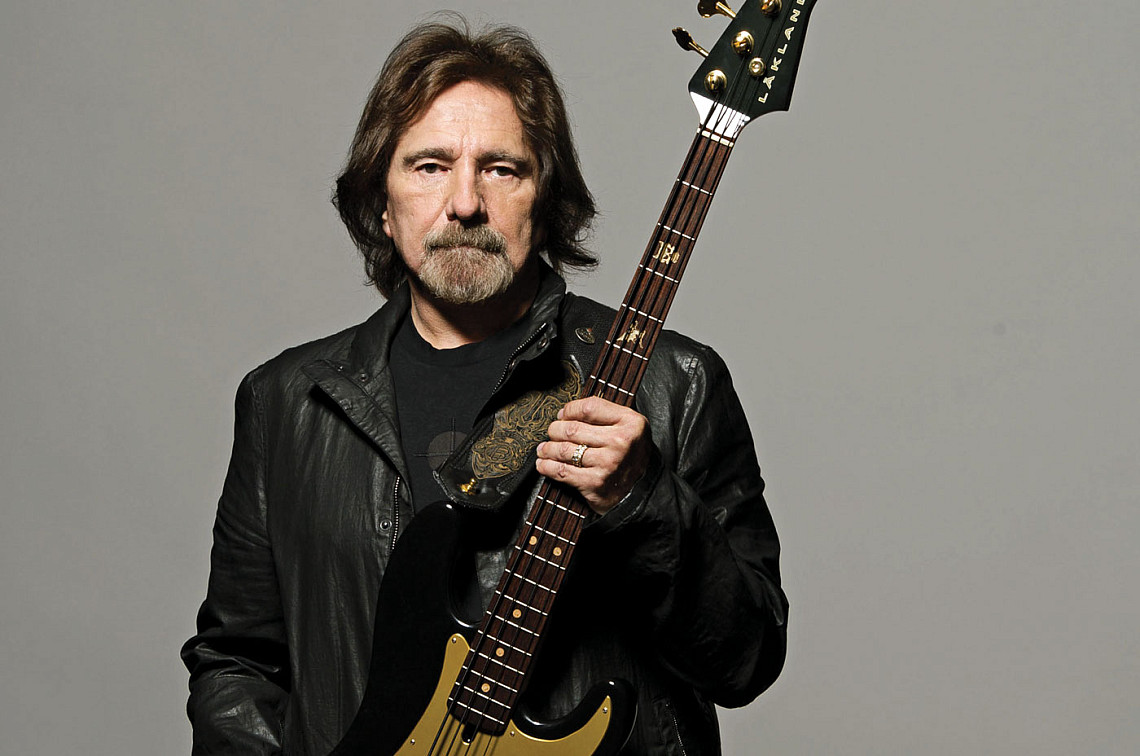
When you think of rock lyricists, nine times out of 10 it will be the person who sings them who is the author. But there have certainly been exceptions to the rule over the years: Pete Townshend in The Who (I know, I know, he sang some of them), Neil Peart in Rush, and certainly, Geezer Butler in Black Sabbath.
Second only to Tony Iommi on the number of Sabbath albums he appeared on (14), Butler helped define heavy metal with lyrics to classics like "Black Sabbath," "War Pigs," "Paranoid," "Iron Man" and "Children Of The Grave."
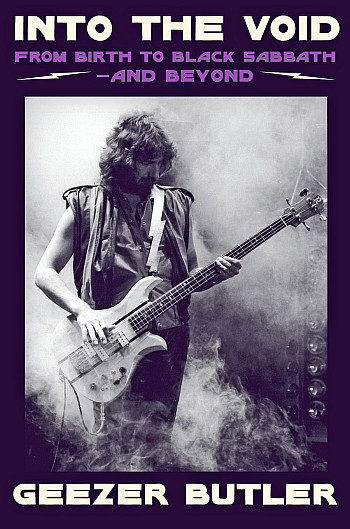
After Sabbath wrapped it up in 2017 with The End tour, Butler joined a group called Deadland Ritual with Steve Stevens (Billy Idol's right-hand man) on guitar and Matt Sorum on drums that lasted about a year. In 2023, he published his autobiography Into The Void: From Birth To Black Sabbath And Beyond, which in 2024 was issued as a paperback version for the first time.
Butler spoke to Songfacts shortly before the release of the paperback issue to speak about the book, the lyrical inspiration behind several Sabbath classics, and how drug use affected the band.
Greg Prato (Songfacts): What made you decide to write your autobiography at this point?Second only to Tony Iommi on the number of Sabbath albums he appeared on (14), Butler helped define heavy metal with lyrics to classics like "Black Sabbath," "War Pigs," "Paranoid," "Iron Man" and "Children Of The Grave."
After Sabbath wrapped it up in 2017 with The End tour, Butler joined a group called Deadland Ritual with Steve Stevens (Billy Idol's right-hand man) on guitar and Matt Sorum on drums that lasted about a year. In 2023, he published his autobiography Into The Void: From Birth To Black Sabbath And Beyond, which in 2024 was issued as a paperback version for the first time.
Butler spoke to Songfacts shortly before the release of the paperback issue to speak about the book, the lyrical inspiration behind several Sabbath classics, and how drug use affected the band.
Geezer Butler: Tony [Iommi] had written his, Ozzy [Osbourne] had done his. I've always had it in mind to write one, to put it from my perspective, but never really had the time. And then the pandemic hit and I was stuck at home for a year or something. I was bored stiff – I couldn't go out anywhere. And I thought, Well, if I'm going to write it, I'm going to sit down and write it while I'm stuck at home.
Initially, it was a memoir for my grandkids to read so they'd know where I grew up and that kind of thing. It was just a note to them, really, because when my parents passed away they left a big void. I always wished I'd asked my parents stuff – I sort of took them for granted and never really spoke to them about their lives - and it always made me sad that I didn't really know that much about my parents. So I thought, I'm just going to write a note for my grandkids to let them know about my life.
And the longer the pandemic went on, the longer the book started becoming! Eventually, I showed it to Gloria, my wife, and she said, "Oh, this is really interesting. You should do it as a book and have it published." She got on to the agents, they read it, they loved it and wanted to publish it.
Songfacts: Have any other Black Sabbath members read it, and if so, what did they think?
Butler: I think Ozzy listened to the audiobook. I don't know if Tony read it or not.
Songfacts: Did you read Ozzy's, Tony's, or Ronnie James Dio's autobiographies?
Butler: I didn't read Ronnie's. I think I got halfway through Tony's book. And I had Ozzy's book on Audible. I thought Tony's didn't really sound much like him. That's why I wanted to do my own book rather than get a ghostwriter. Some parts of [Iommi's book] just didn't feel like it was him writing it, because I know him backwards. I just wanted me to do it rather than get a ghostwriter.
Songfacts: So is this book 100% written by you, or did someone help?
Butler: The only part that they helped me with, they researched tours, which tour happened on what day, what date the albums came out, and how they did on the charts. That kind of thing. But everything else was just me.
Songfacts: In the book, you are open about your struggles with depression. It seems like many musicians have depression.
Butler: It's not something that people openly talk about, or they didn't used to, anyway. I used to get it intermittently when I was much younger. I just thought, Everybody gets like this.
I used to go to doctors when it was getting really bad, and they used to say, "Go and have a couple of pints in the pub" or "take your dog for a walk and you'll get over it." They didn't see that it was a medical condition. They just treated it like you get in a mood and you get out of it.
I used to get into really dark places. The only thing that could get me out of it was to write lyrics.
Songfacts: You also mention in the book that Prozac ultimately helped you with depression.
Butler: Yes. Much, much later. I think in the late '90s, I went to LA and I was feeling really down. I got into the studio and I thought Tony and Ozzy were going to kill me. I really did. I thought they were going to poison me. I was having a nervous breakdown.
I went to this guy in St. Louis, and he finally diagnosed me properly. He said, "You're having a nervous breakdown. It's a mental thing that you're having." And he put me on Prozac. He said, "Be patient with it." After six weeks, I started feeling great. This dark cloud lifted off me.
Songfacts: Also in the book, you are quite candid about your and the band's drug use. Do you think drug use helped or hindered the creative process in Sabbath?
Butler: I think it originally helped, and then eventually it started getting in the way. That's what finished off the first lineup in the late '70s.
Songfacts: What Black Sabbath song seems most relevant to you today?
Butler: "War Pigs," because it never goes away.
Songfacts: I feel that the two best rock war-protest songs of all time are "War Pigs" and CCR's "Fortunate Son."
Butler: Yes. There was a great Bob Dylan song as well called "With God On Our Side." That influenced "War Pigs" as well.
Songfacts: What's a song you worked on that you really like but not many people know about?
Butler: I like the solo stuff that I did on the GZR album – on the Black Science album.1 Some of that was sort of getting frustrations out of myself. It's hard to pick just one song.
Songfacts: Who are the best metal bass players out there?
Butler: Robert Trujillo from Metallica is a fantastic bass player. I'm not really sure about anybody else.
Songfacts: Something that I've always felt made your bass-playing style unique was that you play bass almost like a lead guitarist at times.
Butler: It's just the way it developed because I was a rhythm guitarist. When I was a kid, my very first guitar was an acoustic guitar with two strings on it because I couldn't afford a full set of strings. For two years, I used to play all Beatles songs on two strings – the melodies. And when I got a bass, it sort of translated over to that.
Songfacts: What's the best cover of a Black Sabbath song?
Butler: I think Charles Bradley's "Changes." Just the soulfulness in his voice. It's so soulful. It's a great song – the way he puts it across is brilliant.
Bradley's version of "Changes" is the theme song to the Netflix series Big Mouth. In 2003, when the MTV reality show The Osbournes was red hot, Ozzy and his daughter Kelly recorded the song as a duet, changing the lyrics to be about a daughter growing up and setting out on her own. Their version was a #1 hit in the UK.
Songfacts: Also in your book you mention you enjoyed the punk band the Dickies' cover of "Paranoid."Butler: That was the first cover anybody ever did, back in the '70s.
 Songfacts: Speaking of punk, something that I've felt for a long time was, there is not much difference between early punk and early metal. For instance, if you speed up a Black Sabbath song it would sound like the Ramones, and if you slow down a Ramones song it would sound like Black Sabbath.
Butler: I think so. A lot of the punk musicians really loved what we were doing, and we liked what they were doing, as well.
I loved what the Sex Pistols were doing. One of The Clash played on Tony's albums [drummer Terry Chimes played on the tour in support of Sabbath's 1987 album, The Eternal Idol]. And I know Johnny Rotten used to like Alice Cooper. And the Ramones toured with us, as well.
Songfacts: Was there ever any friction between you and Ozzy about lyric writing, or was it just understood that you wrote most of the lyrics and he would contribute from time to time?
Butler: He used to leave it up to me. It wasn't until right at the end that I'd write lyrics and he was just so out of it that he wouldn't even bother reading them. On the Never Say Die album, Bill Ward sang one of the songs ["Swinging The Chain"] because Ozzy refused to sing it.
Songfacts: You mention in your book feeling relieved when Ronnie joined Sabbath and wrote lyrics.2 Did he then write the majority of the lyrics or did you continue to contribute?
Butler: He wrote practically all of them. I think there was only one or two that I wrote with him.
Songfacts: Which Ronnie-era Sabbath songs contained his best lyrics?
Butler: I really like the lyrics to "Heaven And Hell."
Songfacts: I once interviewed Ronnie's wife Wendy for a book about Rainbow [2016's The Other Side of Rainbow], and she said the lyric from "Heaven And Hell," "The world is full of kings and queens that blind your eyes and steal your dreams, it's heaven and hell," was about Ritchie Blackmore.
Butler: [Laughs] Probably!
Songfacts: What was the lyrical inspiration for "Children Of The Grave"?
Butler: In the '70s, people were just starting to realize about pollution. Climate change and that sort of stuff. It was right at the beginning of that, and it was a song about how we are all going to be children of the grave if we don't do something about the environment.
Songfacts: "Changes."
Butler: We were doing Vol. 4 at the time in Bel Air [Los Angeles], and Bill Ward and his wife were going through a divorce. When your marriage fails - that's what it was about.
Songfacts: "Tomorrow's Dream."
Butler: It's about how fleeting being in a band can be. The popularity. There were a lot of bands in the beginning of the '70s – the Bay City Rollers and bands like that – who were absolutely massive for about two years and then nobody ever heard of them again. It was about how fleeting fame could be.
Songfacts: "A National Acrobat."
Songfacts: And how does the song title "A National Acrobat" fit into that?
Butler: Sperm swimming towards the egg and being pushed away from the egg... I don't know what drugs I was on at the time! In my mind, it was like an acrobat swimming away from the egg.
Songfacts: You just mentioned drugs, and earlier you mentioned that drugs at first may have helped. Were there any specific drugs that you could say helped more than others as far as writing lyrics or music at the time?
Butler: When we were doing Vol. 4, it was the first time we'd all been together in this massive mansion in Bel Air. It was "cocaine days" – it was the first time we were all really into cocaine. And because we were all in the same house together, we were partying every day.
If one of us had an idea, no matter what time of the day or night it was, you'd get up and play your idea to the rest of them. If you were really tired, you'd do a few "toots." It would probably get you through playing together, any particular time of the day or night.
Songfacts: I'm surprised you said cocaine. I thought you'd say pot.
Butler: Masters Of Reality was probably "the pot album." That's when we were all smoking dope. Vol. 4. and Sabbath Bloody Sabbath were the cocaine albums.
Songfacts: And what about the lyrical inspiration behind "Symptom Of The Universe"?
Butler: That was about love. Love is the symptom of the universe. That's what gets us all through it.
Songfacts: Which song are you most proud of lyric-wise?
Butler: I like "Sabbath Bloody Sabbath," "Paranoid"... "War Pigs" I really like. "A National Acrobat" I like. Well, the first part, anyway. "Supernaut."
Songfacts: Which Sabbath song is the most underrated?
Butler: Maybe "Hand Of Doom." I like Bill's whole drum track on it. It's totally different to what anybody else was doing. The lyrics were about soldiers coming back from the Vietnam War. That's what inspired me to write those lyrics.
We played an American Army base in Germany. It was a sort of halfway house when soldiers were coming back from Vietnam so they could face family life and ordinary life when they came back to America. They'd stop in Germany to decompress. They'd tell me these horrendous stories about being stuck in the mud in Vietnam and how many of them were on heroin.
Of course, they didn't tell you that on the news. I just thought I'd write about that.
Songfacts: One thing I loved about Black Sabbath was, although it was considered a hard-rock band or a band that helped create heavy metal, Sabbath was musically varied. And I feel that is what is missing from a lot of modern-day hard rock and metal. Do you agree?
Butler: Absolutely, yeah. Our albums, we'd go from really heavy stuff to jazz. Like "Air Dance," for instance – that's totally jazz. The very first songs we wrote, Bill Ward was really influenced by Buddy Rich, so he had this swing feel to his drumming. We didn't want to be restricted to any one particular sound, so we used to love experimenting when we had the time to do it.
Butler: Yeah, that was a lot of inspiration from The Beatles. Listening to Beatles albums, they'd do a normal pop song, and then it would be so varied. Especially Sgt. Pepper, each song has its own kind of sound and feeling. We didn't want to have one particular sound on one album. We liked to vary it. Plus, it makes you grow as a musician.
Songfacts: There has been talk in the press recently about Black Sabbath possibly playing one more show with Bill Ward on drums. Would you like to see this happen, and do you regret Bill not participating on The End tour?
Butler: We all regret it. It's health-wise, really. It's up to Bill. If he feels like he can do it, then we'll do it.
Songfacts: So if Bill said he'd be up for it, all the other members would be on board?
Butler: If he can do it, yes. But it's all down to him.
June 6, 2024
For more Geezer, visit geezerbutler.com
Order Into The Void: From Birth To Black Sabbath And Beyond on harpercollins.com
Further reading:
Black Sabbath Songfacts
Interview with Tony Iommi
Fact Or Fiction: Black Sabbath Edition
Bully Problems? Call Ozzy
Interview with Zakk Wylde
Interview with Rob Halford
Interview with Ian Gillan
Photo: Ross Halfin
Footnotes:
- 1] Black Sabbath struggled in the mid-'90s and took some time off after their 1995 tour for their album Forbidden. Butler recorded solo under the name GZR - also known as Geezer or The Geezer Butler Band - and released an album later that year. Black Science was their second album, released in 1997. That year, Sabbath returned to action to headline Ozzfest. (back)
- 2] Ronnie James Dio became Black Sabbath's frontman in 1979 when Ozzy was booted from the band. He left in 1982 after two albums, returned for one album in 1991, then in 2006 formed a group called Heaven & Hell with Butler and Iommi that lasted until Dio's death from stomach cancer in 2010. (back)
More Songwriter Interviews