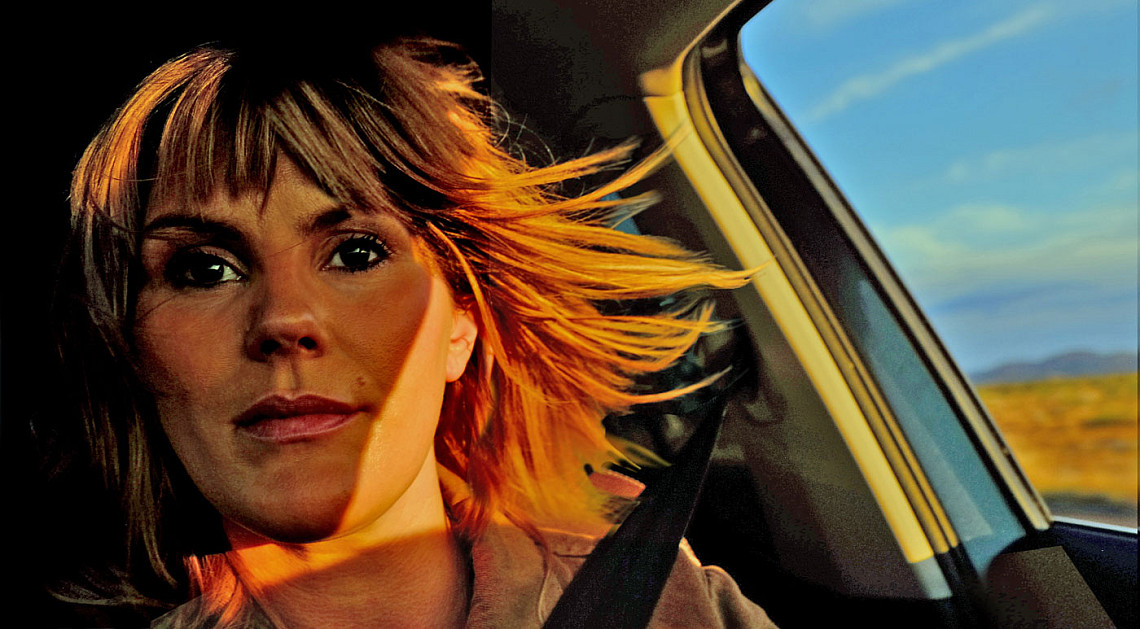
In 2021, Grace Potter took an extraordinary journey that led to Mother Road, her new album, released August 18. That journey included four road trips that traversed the iconic Route 66 - an expedition that began as an exploration of her soul, and evolved into a collection of songs that will help listeners find theirs.
Potter hails from Vermont, and notably got her start in music as Grace Potter And The Nocturnals. She navigated the landscape of the music industry in her early 20s, making a name for herself among the comparisons to Janis Joplin, Bonnie Raitt, and Joan Osborne. The band's blend of blues, folk and alternative rock was a welcome addition to the 2000s music scene as they were a staple among music festivals and the jam-band circuit.
Potter embraced her solo career in 2015 when she released her debut album, Midnight, and enhanced her craft while finding her niche with a new pop-infused sound. The Grammy-nominated Daylight followed in 2019, but in between, Potter's music has been featured on television and film (Tangled, Frankenweenie, Grace And Frankie, One Tree Hill) and she's done amazing collaborations, frequently with Kenny Chesney ("Wild Child" and "You and Tequila"). She also founded the Grand Point North music festival in Burlington, Vermont, which drew the likes of Chesney, Ani DiFranco, Fitz And The Tantrums, and the Trey Anastasio Band. Potter is an advocate in her community, and among the recent catastrophic flash flooding in Vermont, she initiated a livestream concert to raise funds and awareness for those affected.
On Mother Road (the name given for Route 66 by John Steinbeck in The Grapes Of Wrath), Potter bravely shares her stories - real and imagined - and takes us on a welcome adventure of the roads not taken and the places unseen. She is reflective, candid, inspiring, and humorous.
In this interview, she discusses the thematic element of "Mother Road" and how it recurs throughout the album, popping up on tracks like "Little Hitchhiker" and "Ready Set Go." It triggers the listener to remember where they are and where they're going, and shows the power these travels had on her. The album is for anyone who has felt like they needed to regain clarity, find themselves, or just feel the open road again. Whatever you experience when you listen to it, you'll want to hop in for the ride.
Nicole Roberge (Songfacts): What an amazing journey it seems like this album was for you, cathartic and inspiring, and courageous of you for recognizing you needed to take that trip. What was your goal with taking that trip, and was music even something you were seeking on that journey?Potter hails from Vermont, and notably got her start in music as Grace Potter And The Nocturnals. She navigated the landscape of the music industry in her early 20s, making a name for herself among the comparisons to Janis Joplin, Bonnie Raitt, and Joan Osborne. The band's blend of blues, folk and alternative rock was a welcome addition to the 2000s music scene as they were a staple among music festivals and the jam-band circuit.
Potter embraced her solo career in 2015 when she released her debut album, Midnight, and enhanced her craft while finding her niche with a new pop-infused sound. The Grammy-nominated Daylight followed in 2019, but in between, Potter's music has been featured on television and film (Tangled, Frankenweenie, Grace And Frankie, One Tree Hill) and she's done amazing collaborations, frequently with Kenny Chesney ("Wild Child" and "You and Tequila"). She also founded the Grand Point North music festival in Burlington, Vermont, which drew the likes of Chesney, Ani DiFranco, Fitz And The Tantrums, and the Trey Anastasio Band. Potter is an advocate in her community, and among the recent catastrophic flash flooding in Vermont, she initiated a livestream concert to raise funds and awareness for those affected.
On Mother Road (the name given for Route 66 by John Steinbeck in The Grapes Of Wrath), Potter bravely shares her stories - real and imagined - and takes us on a welcome adventure of the roads not taken and the places unseen. She is reflective, candid, inspiring, and humorous.
In this interview, she discusses the thematic element of "Mother Road" and how it recurs throughout the album, popping up on tracks like "Little Hitchhiker" and "Ready Set Go." It triggers the listener to remember where they are and where they're going, and shows the power these travels had on her. The album is for anyone who has felt like they needed to regain clarity, find themselves, or just feel the open road again. Whatever you experience when you listen to it, you'll want to hop in for the ride.
Grace Potter: I knew that music was probably going to come out of it because music always does when I go out on the road, because that's where I get so much inspiration. But I very specifically was not aiming to write songs. I was kind of conceptualizing this film, this larger storyline that always has come to me when I'm writing a setlist or writing a song, when I'm conceptualizing what I want to do next in my life. I always come at it from this very cinematic point of view. Even when I was 15, I wrote this song called "Miss Daisy" about a young girl who cuts out of her hometown and tries to make it in the big city and goes through all these ups and downs.
I realized I wanted to be a filmmaker, I wanted to write and tell stories, I wanted to find and connect with people through music, but also through visuals. I have continually felt like, not even with the new songs or anything I was working on, but all my songs that I have written since the beginning of my songwriting, have always had pictures behind my eyelids. So that when I close my eyes and I'm singing them, there's so much going on in the landscape behind my eyelids.
I wanted to talk to some of those characters. I wanted to get to know them and understand them better. It was a really amazing way to stay awake for a 10 or 12 hour stretch of driving. It was like a silent meditation retreat. I didn't want to sing. I didn't even have my guitar for the first couple passes along Route 66. I just wanted it to be about the storytelling mind finding its way onto a page or into a notebook at the end of each one of those driving legs.
Songfacts: How long was your trip?
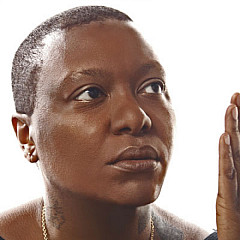
Potter: There were four separate trips. One I drew out in a map that was going to be a part of the liner notes, but we ended up paring down the liner notes to simplify things and really keep it focused on the music. The four trips were Los Angeles to Vermont, by way of Route 66, Vermont to Nashville, then Nashville to LA by way of Route 66. Then another trip from Topanga all the way back to Vermont by way of Route 66 with a side visit to our astronaut friend Jessica Meir down in Houston. We also did New Orleans on that last trek. So, we did Route 66 to a point, veered off that trail, and ended up down south and in the Gulf of Mexico, and then made our way back to Vermont, which was a profoundly different journey because I had my family with me. So, three solo cross-country trips, and one final family trip at the end.
Potter: I'm so glad that effect comes across. That makes me so happy. And you deserve that. You have a life you've built, you do all these things, and I think those chambers of reality can empower us to believe that is the only chamber we have chosen for ourselves. I'm not saying run away from home. I am saying, run towards yourself.
I was home in Vermont, I was in my hometown, but I felt so removed from the person I thought I would be at this point in my life. Especially having lived that happily ever after. I thought I had it all and so I couldn't understand or reset my mind into a place of being ok and my mental health was a real factor in this as well. I'd love to say I was just frivolously like, "Oh let's la dee da my way across the country until I find myself and write a hit album."
No, it was kind of the opposite. I was just broken and screwed up and needed to feel the freedom that I longed for, and honestly that the pandemic pulled out from all of us. This was a willful gesture in some ways, and also a functional one. We had a perfectly good car just sitting there in California, and we needed a car. And I thought, Well, that's a very functional Vermonter move. A Vermonter would always need a good reason to do something like that. We don't just take frivolous road trips.
Songfacts: It was something you needed, and you gave yourself permission to do it.
Potter: Yeah, exactly. And that's another thing about just feeling like you can give yourself permission. There's a difference between being indulgent and giving yourself permission when you really need something. At that point in my life and the evolution of how I had been coping with the shift in my career and the inability to get out on stage and share my music the way I wanted to - there was a good amount of that that felt like I didn't have any control. But there's one place where I've always felt like I do have control and that is behind the wheel. I love to drive.
I recently went to Thunder Road, actually, which is a real racetrack in Vermont. Boy, oh, boy did that hit home. I may have been a trucker in one life, but I was definitely a race car driver in another life.
Songfacts: That could be the next album?
Potter: Oh, hell yeah. I do have my feelings about race cars and watching people driving around in circles. It's a pretty wasteful thing with where climate change is at. It's a conversation I had to have with myself about this record - how many unnecessary road trips is this going to inspire?
It's like the old thing in the '50s where people would just take a drive, they'd just burn gas because they were bored. So much of this album was born out of that culture because that's what my grandparents would do. They literally would go take a Sunday drive. They didn't know where they were going but they were based in Albuquerque, and they were right on Route 66. A lot of my inspiration came from my grandparents literally getting in the car when they didn't know what to do.
"It's raining, what should we do today, Madre?"
"Why don't we jump in the Buick and see what's out there?"
Songfacts: I still get behind those people going for their Sunday drives.
Potter: Hell yeah, the old Sunday driver. Except, my grandmother, they called her "Lead Foot Betty." The only thing more dangerous than an old person driving slowly is an old person driving way too fast. And it's totally going to be me. I'm already preparing my son for it.
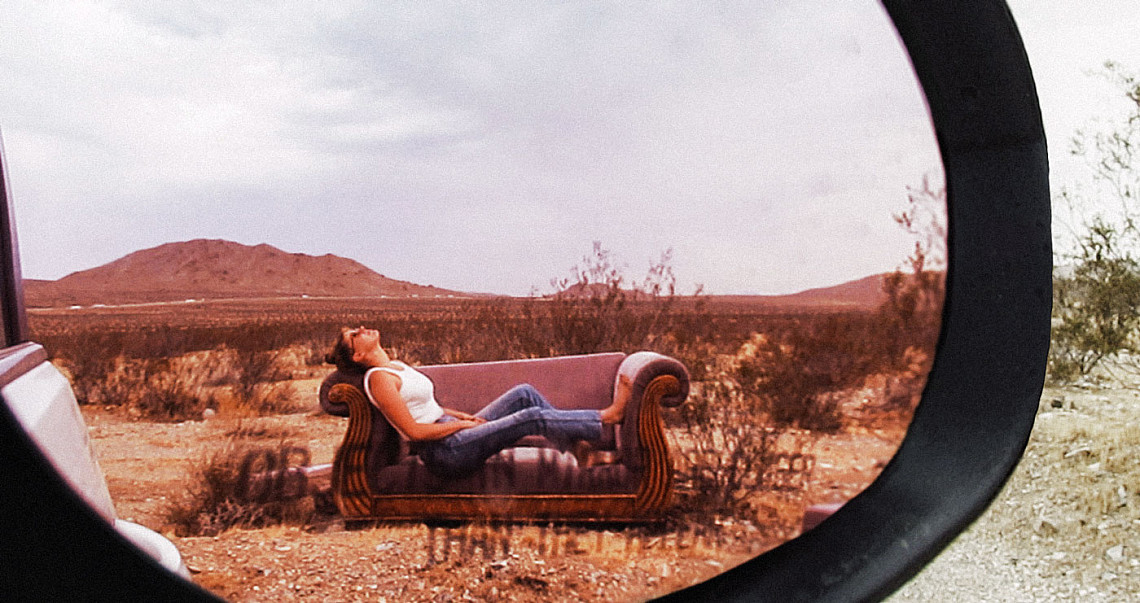
Potter: It is a theme song! I love that you picked up on that. That means that you have that same visual landscape that happens for you when you hear music as I do when I'm writing it. And that's not typical. A lot of people are like, "What, what's going on there? What are you doing?" But you just nailed it.
That's exactly what I was trying to illustrate, that we all need a superhero or an emancipated character within ourselves that has absolutely no care for the mundane life stuff and that can really indulge the fantasy of the superhero in all of us. I really feel that within that song she came out pretty strong and was demanding to be seen and demanding to be heard.
Songfacts: The character came through as this really empowered person. I like how you refer to it as a superhero in all of us.
Potter: Yeah, I invented Lady Vagabond when I was 9. She's been around for a long time. That's one of the characters that visited me on my travels. In my sort of silent meditation, I found her again and remembered things. I was going through the log of my memory, like, "Why did I run away from home that one time, and what was I doing, and what was my plan?" And one of my only plans when I ran away when I was 9 was that I was going to get Pop Tarts from Katelyn's house right down the road from me because she had better snacks than me, and if anyone asked me why I was alone, I was going to tell them it was fine, actually I have a chaperone and her name is Lady Vagabond and she has a cape and a cowboy hat and she uses a slingshot. She doesn't hurt anybody and I'm safe. She's just not here right now but she's my babysitter so don't worry about me. You don't have to call my parents or tell anybody where I am.
Songfacts: It's amazing how kids' imaginations work, but you used her to protect yourself.
Potter: I did. She was my talisman. And I've lost that internal sense of protection in aging and going from being a fearless 9-year-old kid to someone who had a child of my own in the midst of a pandemic and moving back to my hometown. It was stirring up so many feelings in me, good and bad, that felt like they needed to be hashed out. I had forgotten about her, and many of the characters on this record, until I was forced to face the demons of my upbringing and my childhood and my teachers and my friend group and all these memories that would come flooding back through me when I was pilfering for ways to stay up while driving.
Songfacts: "Little Hitchhiker," melodically, has a softer feel to it and tugs at the heart a bit. This is inspired by that experience of you running away when you were 9?
Potter: Yes. That one was when I ran away from home. Of course, my neighbors played around with my backstory that I was an orphan, and I had all kinds of fake names. I took my glasses off. Honestly, what happened was, I got saved. My mom knew. Within 10 minutes of me running away, my neighbor probably called her. But it was imagining what could've gone wrong, and the mother in me was like, "What would I do if my kid ran away?"
That's where I formed a new hypothesis and a new understanding of what the songwriting around Mother Road could be. Which are the roads not taken or the ways it could've gone wrong and how different life might look if I hadn't made it when I ran away from home. It's tying in this carefree, "You can say no, but why not say yes? And just go be free. Go run away," and escapism, but how that escapism can also come to a terrifying ending.
"Little Hitchhiker" really brings you into that narrative in a really bone chilling way. It also addresses the little girl lost in me. The loss of innocence is the same as the free spirit and the energy of, "Let's go try anything! I've got my superhero protector. What could possibly go wrong?" Well, a lot.

Songfacts: There are a lot of characters on this album, and it seems like a way of examining your life through these characters. Is there a story on Mother Road that speaks the most to you, or that you'd want to stay in for a while longer?
This particular album is more of an exploration into how deeply we need to indulge in and fortify our imagination, and swim through the lies and stories that we tell ourselves that come to define us. And really hold that mirror up in front of me. I think that every song does it in one way or another.
"Rose Colored Rearview," very specifically, is about a mirror and not wanting to see what that truth really is. But this record is about regret and swimming through denial and feeling stuck in these stories I had built around the life I thought I was going to live, and how different my real life really was. That fantasy and that imaginative quality is inherent in me. It's really the lightning bolt that keeps me making music and ambitious and filled with light.
I think these questions are important to ask. Even the painful ones can have some of the most fruitful results. This is just the beginning of that journey, but this is kind of an anthem album, if you will. I feel excited and renewed energy to share my art with the world and bring it out in a really different way.
Songfacts: If Mother Road is regaining yourself and finding clarity, what would you say to 20-something Grace just starting out if you took her on that road trip with you?
Potter: I would have so much advice for her, that if I had got, my life would be so different if I listened to the older me. I've always written songs like an old lady. I had written this song "Big White Gate" and it was from the perspective of me when I'm 84 and dying in a hospital bed and looking back on my life. I've always been doling this advice out to myself. I've always been an old soul. Maybe it's like a Benjamin Button situation where I'm just getting younger and younger, but I think my 40-year-old self is far less well-behaved than my 20-year-old self. I'm a cantankerous little misfit over here.
Songfacts: You're very active in charities and giving back, especially in your community and home state, notably as founder of the Grand Point North music festival. How important is it to you to give back through music?
Potter: I think one of my greatest accomplishments was my music festival and continues to be something I'm really passionate about. It was pretty devastating to have that fall apart in the midst of Covid, and have the rug pulled out from me yet again.
Daylight, my Grammy-nominated album in 2019, was, what I believe, the beginning of an exciting trajectory, and a career reboot I was really excited to roll up my sleeves and dive into. That derailment was one which I'm still working to recover from. The festival was about to have its 10th annual.
I've just been looking back on the footage and all the incredible art and music and dance and the collaborative culture that I was bringing to the city of Burlington and the state of Vermont that was really my vision from the beginning, this mixing of the mediums. Not just music, but using the vehicle that served me best. Having Kenny Chesney come back year after year, Warren Haynes, Jackson Browne and all these amazing people in my life who I had met and become friends with in the big wide world. Bringing them back to my home state and sharing what I had to offer and what Vermont had to offer in a really selfless way. It felt so close to my purpose, and it continues to be something I'm fighting for every day. I worked really hard to build it and I worked tirelessly to dream up what could make it better every year. I miss that. Maybe it is just that I miss it, that I'm so proud of it.
But I also feel like when you look at who we got to the Waterfront and what an amazing experience, what an amazing weekend it always was for fans, that does feel very much like one of my greatest accomplishments. It's something I'm going to continue to push to try to recreate or fix or make better.
August 21, 2023
For album details and tour dates, visit gracepotter.com
More interviews:
Larkin Poe
ZZ Ward
Gin Wigmore
Lissie
Noelle Scaggs of Fitz And The Tantrums
photos: Grace Potter
More Songwriter Interviews