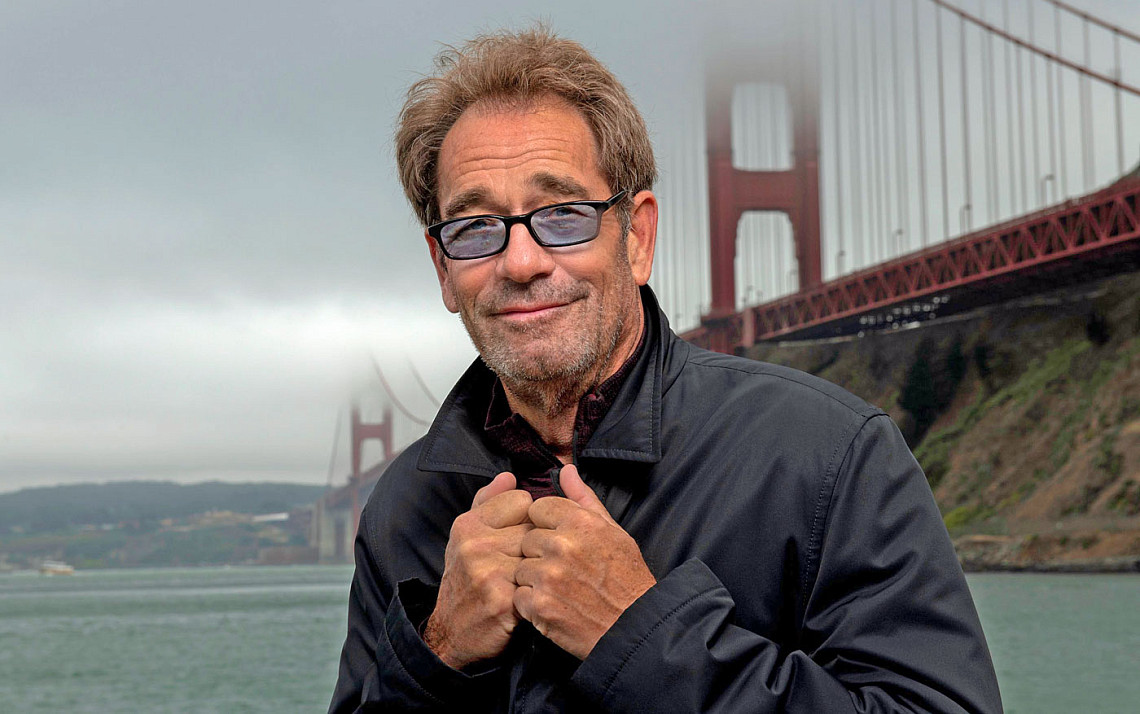
It's hard to believe, but throughout all of 1984, just five albums occupied the #1 slot on the Billboard 200 chart: Thriller, the Footloose soundtrack, Born In The USA, Purple Rain and... Sports, the third album from Huey Lewis & the News.
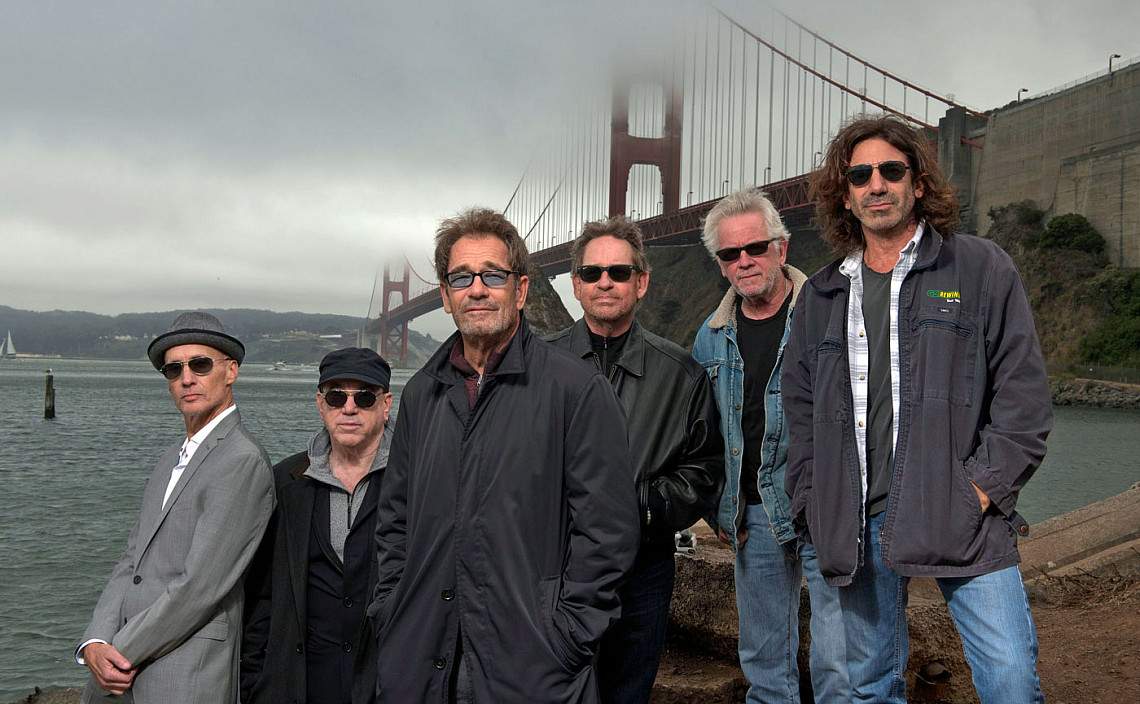
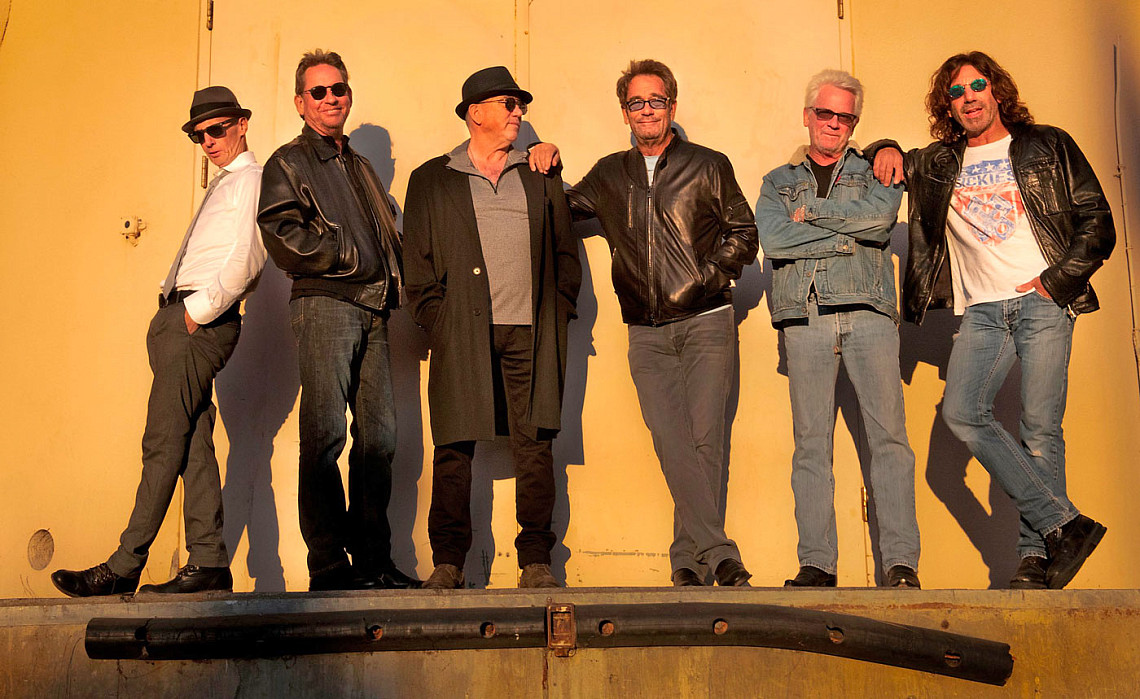
Released on September 15, 1983, Sports saw the band (Huey Lewis – vocals, harmonica; Mario Cipollina – bass guitar; Johnny Colla – vocals, saxophone, guitar; Chris Hayes – lead guitar, vocals; Sean Hopper – keyboards, vocals; and Bill Gibson – drums, vocals, percussion) expertly merge pop and rock to score five hit singles: "Heart And Soul," "I Want A New Drug," "The Heart Of Rock & Roll," "If This Is It" and "Walking On A Thin Line." To mark the 40 anniversary, Sports will be reissued on vinyl in classic black and olive green.
As Lewis explains, there was plenty of heart and soul that went into the album, but also a few techniques that made the songs pop on the radio. He also talks about their approach to music videos that worked so well on MTV, the stories behind some of the key tracks, and how he's dealing with hearing loss.
Greg Prato (Songfacts): You have talked about making the songs on Sports very radio-friendly. How did you accomplish that?Released on September 15, 1983, Sports saw the band (Huey Lewis – vocals, harmonica; Mario Cipollina – bass guitar; Johnny Colla – vocals, saxophone, guitar; Chris Hayes – lead guitar, vocals; Sean Hopper – keyboards, vocals; and Bill Gibson – drums, vocals, percussion) expertly merge pop and rock to score five hit singles: "Heart And Soul," "I Want A New Drug," "The Heart Of Rock & Roll," "If This Is It" and "Walking On A Thin Line." To mark the 40 anniversary, Sports will be reissued on vinyl in classic black and olive green.
As Lewis explains, there was plenty of heart and soul that went into the album, but also a few techniques that made the songs pop on the radio. He also talks about their approach to music videos that worked so well on MTV, the stories behind some of the key tracks, and how he's dealing with hearing loss.
Huey Lewis: First of all, we produced the record ourselves because we knew we needed a hit record. It was 1982 when we recorded that record. And if you think back to '81/'82/'83, there was no internet. There was only one avenue to success, and that was a hit record. You needed to be Top-40. Top-40 was an AM invention based on push-button radio. In the '50s, as long as the listener didn't hear something they didn't like, they would stick with that station, but now that there's a push-button, they could push the button if they heard something they didn't like. So, the idea was to narrow your playlist and just play the hits, and that was Top-40.
By 1981, it had gone to FM radio, because FM started as an alternative to AM radio, but cars only had AM radio. Then finally, FM radio became the format.
Top-40 FM radio was called CHR: Contemporary Hit Radio, and it wasn't Top-40 anymore, it was probably like, 23. You'd get eight or nine plays a day if you were number one, two, or three. If you were number 22 or 23, you got one or two plays a day. So, that was the format we all competed for. That was the only avenue to success if you wanted to play your own music.
So we insisted on producing a record ourselves. Our manager fought for that, and we were allowed probably because we were signed to Chrysalis Records, a very small British label 6,000 miles away, and they couldn't control us. We knew we needed a hit, so we aimed every song right at radio. But we wanted to make those commercial decisions ourselves because we knew we were going to have to live with them.
Every song on Sports was pretty much aimed at radio, but they're all different genres, if you notice. It's kind of strange. "Bad Is Bad" is kind of a bluesy a cappella number, "Honky Tony Blues" is a country song, "I Want A New Drug" is a power rocker. We knew we needed a hit record but we didn't know we were going to have five of them.
We aimed all those songs right at radio, and we accomplished that by truncating everything. Like in the intro to "Do You Believe In Love," which went [play the clip to hear this part]We'd cut that in half. If you don't get to the hook in 30 seconds, it's no good. Everything was truncated and aimed to be hooky and right at radio, as opposed to stretching out, like any of the jam bands.
Dave Matthews' manager, Coran Capshaw, perfectly figured out when they came up that people were sick of Top-40 and MTV, and he purposely made those songs seven minutes long so they wouldn't go to MTV, so they wouldn't be truncated, so they would provide an alternative as a jam band. And we're more of a Dave Matthews Band than we are a Top-40 band, but in our day, you had to have a single.
Clover and "Do You Believe In Love"
Huey Lewis and Sean Hopper were in a San Francisco band called Clover before forming Huey Lewis & the News. Clover released two albums in 1977 that were produced by Mutt Lange, who three years later was at the helm for AC/DC's Back In Black. By this time, the band had moved to England and took a gig backing a new singer with a funny name - Elvis Costello - on his debut album, My Aim Is True. Lewis wasn't part of these sessions because Elvis didn't need a singer or harmonica player.Those two 1977 albums went nowhere, as did the first (self-titled) Huey Lewis & the News album, released in 1980. Desperate for a hit, they recorded "Do You Believe In Love," written by Lange, and made it the first single from their next album, Picture This, in 1982.
The main singer in Clover (Lewis was primarily the harmonica player) was Alex Call, who stayed friends with Lewis and wrote the 1988 Huey Lewis & the News hit "Perfect World," as well as "Jenny (867-5309)" for Tommy Tutone. Call and other original members of Clover released a new album in 2018 with a contribution from Lewis on harmonica.
Lewis: I don't know. I used to tell people when they'd ask "Why did you call it Sports?" – "Because we couldn't spell 'weather.'"1
And we're a team – my band is a team, we're not individuals. We do things as a team sport: produced the records ourselves, wrote the songs ourselves, recorded them ourselves in San Francisco and not LA. It was a game for us, as well - we're trying to chisel out a career here. We have a lot in parallel with professional sports stars. We play coliseums and we take showers together!
Songfacts: At what point during the writing or recording of Sports did you realize it was a special album?
Lewis: Oh, I never realized it was a special album. I realized it was special when it started to take off on the charts.
I don't see it as a special album. I see it as a collection of singles, because that was a record of its time and we needed singles. Clearly we produced it ourselves because no legit producer would have had this many diverse musical styles on the same record. It's kind of crazy.
Our subsequent albums I think hold together much better as albums, but Sports always sounded just like a collection of singles to me.
Songfacts: You made custom versions of "The Heart Of Rock & Roll" for different cities.2 Were any of these hard to sing? Albuquerque, maybe?
Lewis: It's funny, because when the song became a hit, they wanted me to go back in the studio and on the ride-out, just go, "ALBUQUERQUE!" or whatever. So I did. They had a whole list.
I was in the studio doing that – we did 20 or 40 cities – and they said, "Now we're going to do Canada." I said, "Canada?!" And they go, "Halifax." I just couldn't do Halifax. I said, "Look guys, I can't do that. Because the heart of rock n' roll can't be in frickin' Halifax, OK?" That's when I cut it off.
But the irony is, on the very next tour, we rehearsed it up there in Halifax in a hockey arena - we rehearsed our whole show. We were there for like a week, and I got to see the town. There was this little music bar there, and there was this great blues band playing... in Halifax, Canada! So, I said to myself, "Wow. Halifax really is the heart of rock and roll."
 Songfacts: What was your approach to music videos at this time?
Lewis: Avoid the literal translation of the song at all costs. Zig when the song zags, as it were. And just have fun, be funny.
Stay away from the song – I don't want to have to retell the story. The same way a good book is better than the movie, a good song is always better than the video, so don't get in the way of the song.
Songfacts: That's probably the main reason why your videos have aged well, because they showed the band's sense of humor. A lot of artists at the time were doing these big, overblown, serious videos.
Lewis: The story there is we did these funny little videos when we were trying to get a record deal. There was a gal named Kim Dempster who ran an outfit called Videowest in San Francisco. She made us a deal. She said, "I'll shoot a video of you guys and give it to you if you let us show it on our late-night program." Cable TV was brand new, videotape was brand new. So I said, "Sure."
I wrote this video for "Some of My Lies Are True." We cut it at Ocean Beach on a sewage pier, the idea being, where is the craziest place a band would be playing? Just like the old Hullabaloo or Shindig! when James Brown would be set up at the beach or something, and you're going, "What's James Brown doing at the beach, for Christ's sake!" I loved all that juxtaposition.
So we made that video and then we got signed. Our second album [1982's Picture This], everybody thought "Do You Believe in Love" was going to be a big hit, and the label wanted to do this really serious video, so they hired an advertising guy who was a fashion guy, who dressed the set up in pastel colors and dressed us up in matching pastels with lots of make-up and shot the video all day long, hard.
I didn't know what was going on in that video. I just had this terrible sinking feeling. And when the video ended, everybody stood up and gave us a standing ovation! I thought to myself, Well, clearly there's no art to this. Nobody knows anything about this. We're already writing our own songs and producing our own records, we need to be making our own videos.
That's when I entered into that stage of having fun and trying to zig when the song zags. So, we did all of the rest of the videos, mostly.
Songfacts: How did you come up with the hand-clapping bridge on "Heart And Soul"?
Lewis: I've always been a big fan of hand claps. I used them a lot.
In "The Heart Of Rock & Roll" [at the beginning after the heartbeat], that's actually one hand clap with super-long echo on it. We used hand claps a lot in the early days and it just seemed like a nice way to cut up that break.
Songfacts: What do you recall about covering "Heart And Soul," which was written by Mike Chapman and Nicky Chinn?
Lewis: It was originally written for a girl:
Two o'clock this morning
If he should come a-calling
I'd never dream of turning him away
Because he's heart and soul
He's got it all
I can't remember which Mike Chapman artist it was written for, but then he produced Exile, and Exile cut the song and released it. Well, I didn't know that. I heard the song from a publisher and said, "Wow. This is a great demo." Well, it turns out it was Mike Chapman's production of Exile – a record.
We started to cut the song, and interestingly, the publisher had pitched it to pretty much everybody in LA. I'm mixing the song in LA, I go to the bathroom, and in the studio right next door comes the same song! It's the BusBoys cutting "Heart And Soul!" He'd pitched it to them too. I listened to it and I thought, Ah, I still think our version is a little better, so I hung with it. But needless to say, I was not very pleased with my publisher.
Songfacts: How about "Bad Is Bad"?
Lewis: I originally wrote the song "Bad Is Bad" for my band Clover when I was in Clover, although I gave everybody a writer's credit. It was written as a shuffle, but it was Johnny Colla's idea - our saxophone player and vocal arranger - to make it into sort of an a cappella version - by then we were doing a cappella stuff. Then we added the drum machine. The first beats of the song are LinnDrum, so it sounds almost techno. And then the doo-wop stuff comes in, so it's kind of the old and the new at once.
That really identified our production style on that record – that's really what we were going for on every song, the old and the new at once. The songs are written sort of old style, but we wanted to give them a bit of a modern sheen, and we did that with machines. People don't realize, the Sports album seems to be just a bar band playing songs live, but it's anything but. "I Want A New Drug," "The Heart Of Rock & Roll," "Walking On A Thin Line," "Bad Is Bad" – all cut with drum machines when the LinnDrum was brand new.
Songfacts: "If This Is It"?
Lewis: "If This Is It" was a progression that Johnny Colla had written. It was up to me to write the lyric, and man, it was really hard. I worked and worked, and I couldn't come up with anything good. Then one day I was on the tour bus when we were traveling. I was in my bunk and I had this epiphany. The song is major and minor together sometimes, so it's complicated, and the music is telling me that there's confusion in there. That's when I got "If This Is It." That might not make any sense, but it made sense to me.
 Songfacts: Of the four songs on Sports that weren't singles, which one means the most to you?
Lewis: I'm going to say "Finally Found A Home." It really is a true story. It was written about finally having a career, a gig.
We have a new musical that I hope to get on Broadway next spring, and "Finally Found A Home" is featured quite prominently in the musical.
Songfacts: Is the musical going to be all Huey Lewis & the News music?
Lewis: Yep, all Huey Lewis & the News music. It's called The Heart Of Rock & Roll.
Tower Of Power Of Love
After Sports came "The Power Of Love," the monster hit from Back To The Future. The horns are from Tower Of Power, from across the Bay in Oakland. Lewis really wanted these horns on tour, but Tower Of Power is a full band, and they were struggling. They struck a deal: The horns join the tour but the full Tower Of Power band comes along to play midnight shows in certain cities, promoted by Lewis every chance he could.Lewis was true to his word. Not only did he hype the midnight shows in interviews and on stage, he and his bandmates would often turn up at them.
"We'd go play and it would be packed because everybody wanted to see Huey Lewis and they'd come up and jam with us," Tower Of Power leader Emilio Castillo told us. "We did that in several cities. That really regenerated our career."
Lewis: I've got to say Purple Rain. Those are all good records, but Purple Rain was amazing.
Songfacts: Some people don't realize that you were a friend and admirer of Phil Lynott from Thin Lizzy. Around the time of his passing wasn't Huey Lewis & the News going to back him on an album?
Lewis: We cut three songs with Philip. His management asked if I would produce a record for Philip, and I said, "Well, I don't know if I have the time to do a whole record, but I'll do three tracks." And they said, "OK, fine."
So, he came over to America and we cut three things. He only had eight days or something and we didn't finish them – we didn't get the vocals done. We got them most of the way, and unfortunately he went back to Britain and then passed away [on January 4, 1986].
Philip was my mentor. First of all, there was nobody better on stage. There was never a better hard-rock band than Thin Lizzy. They were unbelievable. He took me under his wing and really taught me everything - not musically, necessarily - but everything about being a "rock-and-roll star," if you will.
Philip was an amazing rock star. He was a Black kid born in the middle of Dublin, Ireland, and went to an all-white school. He was a peacock to begin with – he was different – and he loved being a rock star. He taught me everything about how to deal with your band, your crew, the critics, the record label, management, fans. He really was just instrumental in forming my education. I miss him every day.
Songfacts: I've read that you suffer from hearing loss.
Lewis: I can't hear music at all. I can't hear pitch at all. Even one note is out of tune with itself for me, so that's been a bitter pill and a hard pill to swallow. But you've got to move on in life. I have hearing aids in and I'm Bluetoothing to the computer so I can hear you now. Without my hearing aids, I'm completely deaf.
But I try to stay creative. I lost my right side [of hearing] 35 years ago. When I lost my left side and couldn't hear music anymore, it was traumatic. It was six months of pretty much lying in bed, just worrying, and trying different protocols and acupuncture and chiropractic and all-organic diets – no salt, low salt, all that stuff. And finally, thanks to my kids, you've got to move on.
So, I try to stay busy. We have the musical that I'm very much involved with even though I can't hear the music. And I have a television show that I've sold the idea to Fox, but we're stuck with a writers' strike now. I try to stay creative and busy.
I remind myself that there are many, many others much worse off, and that's important to remember. My life is not as good as it used to be when I could hear, but it's still pretty good.
September 11, 2023
For more, visit hueylewisandthenews.com
Further reading:
Interview with Alex Call
Fact or Fiction: Huey Lewis
The Musical Impact of 1984
Fact or Fiction: The Early Days of MTV
Interview with Scott Gorham of Thin Lizzy
photos: Deanne Fitzmaurice
Footnotes:
- 1] In 2020, the band released an album called Weather, a play on the news/sports/weather theme. (back)
- 2] Radio stations loved this. They'd get a custom-made version of the song with their city named in the list of places where the heart of rock and roll was still beating. It was pretty cool for listeners to hear their city mentioned in a hit song. That didn't happen very often in places like Pittsburgh and Fort Wayne. (back)
More Songwriter Interviews