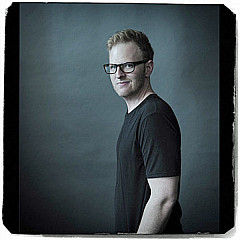
Ian Broudie is the primary member and singer/songwriter of The Lightning Seeds, a Liverpool act known for creating wonderfully memorable pop music. Before these Lightnings struck, so to speak, Broudie was in a group called Big In Japan, which also included Holly Johnson (later lead singer of Frankie Goes To Hollywood) and Budgie (who would later become one of Siouxsie's Banshees). This opened doors for Broudie to become the producer for many great UK acts, including Echo & The Bunnymen, The Fall, and The Icicle Works. His production demand even led him to California, where he helmed projects by Wall Of Voodoo and The Three O'Clock.
Although better known in his home country for hits like "Three Lions" (England's theme song for Euro '96), "The Life of Riley," and "Lucky You," the irresistible "Pure" even became a hit in the US. On the perfect jukebox, all these songs would have been international smashes.
Broudie kept producing but deactivated from his own music in 1999 and didn't return until 2009, when he released Four Winds, an album influenced by a string of tragedies, including the deaths of both his parents and two siblings. He waited another 13 years to release his next one, See You In The Stars, due October 14, 2022. The first two singles, "Sunshine" and "Walk Another Mile," are out now.
Much of Broudie's music expresses an undeniable joy, but as he explains here, it's tinted with a shade of blue that gives it nuance and depth. Even the effervescent "Pure" isn't so simple, with a layer of sadness under the surface.
Although better known in his home country for hits like "Three Lions" (England's theme song for Euro '96), "The Life of Riley," and "Lucky You," the irresistible "Pure" even became a hit in the US. On the perfect jukebox, all these songs would have been international smashes.
Broudie kept producing but deactivated from his own music in 1999 and didn't return until 2009, when he released Four Winds, an album influenced by a string of tragedies, including the deaths of both his parents and two siblings. He waited another 13 years to release his next one, See You In The Stars, due October 14, 2022. The first two singles, "Sunshine" and "Walk Another Mile," are out now.
Much of Broudie's music expresses an undeniable joy, but as he explains here, it's tinted with a shade of blue that gives it nuance and depth. Even the effervescent "Pure" isn't so simple, with a layer of sadness under the surface.
 Dan MacIntosh (Songfacts): The new album is called See You In The Stars, and the title track is a very serious song about the death of a friend. Then the rest of the album is really positive with songs like "Sunshine," so, my first question is: Is that song truly representative of the album and is it really the right album name?
Ian Broudie: Well, I don't think it is, but it just felt like a good title. That, and possibly "Permanent Danger," have slightly different feels than the rest: One's a little more cerebral and one's a little bit sadder.
I feel like Lightning Seeds has to have a certain positivity, even though my natural bent is a little bit on the blue side. I think that always gave the push-pull against those two things, the bittersweet is what kind of defines it for me when I'm writing a tune. Generally, if it's got that to it, then I think it's a Lightning Seeds tune.
Songfacts: I also noticed there's a real sort of dissonance between your original music and a lot of the artists you produce. You've produced Echo & The Bunnymen, The Fall, and yet, you just strike me as such a positive guy. Is there a different hat you wear as a producer so that you can work on music that may not reflect your natural disposition?
Broudie: When I worked with Echo & The Bunnymen, I did a lot of writing because we were all friends of the same age. There was no division, so we just collaborated. But that was 40 years ago. I'm not that cheerful now, to be honest, but I do think I made a conscious decision when I made the first Lightning Seeds album that I don't want to cover the ground that I've covered already.
I think Mac [Ian McCulloch] would have loved to have written "Pure," and I'm sure I would have loved to have written "The Killing Moon." I don't think anyone is totally defined by any one thing.
It's interesting, before you have any success, everything is a bit cheesy. When you're a kid, you'd be in a reggae/ska band, or you'd sound like Jim Morrison. You can do anything. Once you become an artist, you discover your voice. You discover how you are that, and it doesn't mean you're incapable or unaware of everything else. There are a lot of lines that cross between everything I've produced, from the Bunnymen to The Coral to The Pale Fountains and The Lightning Seeds.
I have a voice, and most music is in the voice - it's the voice that is representative. Everyone around me when I was 18, all the bands except maybe The Cure, they were all trying to be Scott Walker or Jim Morrison, and I wanted to stay well clear of all that.
A See You In The Stars standout is "Emily Smiles," which has yet to be released. It has that Lightning Seeds push-and-pull Ian speaks of, with a rousing melody and a lyric that can seem both hopeful and despondent. A sample:
When Emily cries I lose my head and I lose my mind
And she says, "Hi, haven't seen you in a while"
Then Emily smiles
Songfacts: You mentioned ska, and "Emily Smiles" on the new album you wrote with Terry Hall of The Specials. And you've worked with Terry Hall multiple times. What is it about that collaboration that makes it so successful, and what can you tell me about that particular song?When Emily cries I lose my head and I lose my mind
And she says, "Hi, haven't seen you in a while"
Then Emily smiles
Broudie: Terry and I have been great friends for a long time, and I tend to write better with people I know. I rarely work with people I don't know, certainly these days. When you're young, you kind of have to.
But it's easy for us to work together. The first time we wrote together was on a song called "Sense" [1992], so it's been 30 years later. I play that song live. "Lucky You" [1994] is another. It was a hit over here in Europe. We seem to do well when we write together. We hadn't written together for ages.
I had a lot of "Emily Smiles." It was a strange song, really, it was actually a jigsaw, and I couldn't get the pieces in the right order. In fact, it's really very edited on the album from what it was. I think partly because we hadn't done a record in a long time, and I was trying it too hard. I overthought it. In the end people said, "It sounds really good, but I don't get it."
Songfacts: Is it harder to produce yourself than it is producing others?
Broudie: It's very hard, as a writer, editing yourself. I'm sure you're editing yourself when you're writing. We all have to step back a little.
Oddly, as I haven't done an album for so long, this album was done very quickly, which sounds like it can't be true, but I'm doing okay when I'm on the pitch producing myself. I sometimes need to take a step back to see clearly because I'm very nervous and lack the confidence to rid out things, so I need the picture a little bit clearer. It's hard for me because I wrote the last four songs and recorded them in three weeks, and they were mastered a week later.
Songfacts: That was like a burst of creativity, right?
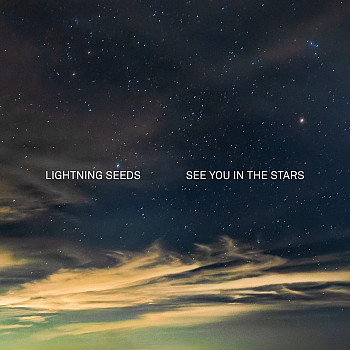 Broudie: It was, and it was a burst of pragmatism, to a degree. I had a lot of half-tunes and I had to put the work into them to turn them into tracks and recordings. I was finding different reasons not to finish. And my son, who manages me, kind of ran me and said, "Look, if you want to have vinyl, you have to book it really far in advance," because in the '90s record companies thought vinyl was over and they tore down the plants, so now it's very difficult, you have to book a long time ahead.
He basically said to me, "If you don't finish in the next three weeks, we miss this run at the vinyl. And it's Christmas, so the album's not going to come out for a year." And I couldn't face the thought of that.
It was good getting that pressure. I wrote those four tracks and finished off some of the tracks and recorded the new ones and did them in the way I did Cloudcuckooland [1990], just sitting on my own, playing everything, recording everything. Then I mixed it for two days and it was really good.
So for me, the box is now shut. I can look at a track off the first album and start thinking about it, and I'd quite like to put the tape back up. It's funny, we went to rehearsal of the tracks off the new album the other day, and I was with the drummer. He said, "What's this bit?" And it was a bit I'd written after I'd finished. He was like, "You're still writing." So it's very hard for me to stop.
Songfacts: Since this is for Songfacts and about songs and songwriting, I wanted to ask which of your hit songs you enjoy playing the most and mean the most to you, even to this day?
Then I sang it, and the engineer said, "Forget it. Let me put it down on DAT1 for reference." So it went onto this DAT.
I didn't have a record contract at the time because I didn't have a live band. There was a guy I knew who was kind of a '60s, cigar-smoking music biz guy who was sent to me. "If you ever finish the tunes, send them to me." So I sent this DAT to him of the songs I'd recorded at home and finished. He called back and said, "I'm sitting in my garden, the sun is shining, I'm looking out at the Thames with a glass of white wine. I love this! It sounds great! This song 'Pure,' it's fantastic!"
I thought, Oh no, it's not on the album. I haven't finished that! I said, "No, no" and he said, "Yes, yes." He said, "That's the track. Let's put it out."
So, I said, "Well, we have to get a record deal." And he said, "We'll just press 500 of them and give them to [indie label] Rough Trade and I'll hire someone to take them to radio." And that's what he did.
"Pure" was like a magical thing that changed my life, really. It ended up in America and ended up being what it was. And it was a lesson to me. I hadn't finished it and I was so unconfident with that. So what I gained from that is, if you've got a good idea, however badly you do it, it will always be a good idea. If you haven't got a good idea, no matter how well you sing it, and whatever you do, it will never be a good idea. And that's been my mantra all the way through songwriting and my whole career.
I can sing now, but at the time, I honestly couldn't sing. But if you do it with good intentions and an idea, something might happen. So, that was my attitude.
Songfacts: Have you given that advice to artists you've produced?
Broudie: I give that advice to people who have young bands. I tell them, "Try not to be too musician-y. Think wider." People use pop in reference to music, which they always do. There's this image of me as searching for perfection, which I would never do. I think the pursuit of excellence is not searching for perfection in any way. Those are two very different things, and I would admit that I overthink in the pursuit of excellence, but I would not admit to the pursuit of perfection in any way.
With pop, I always saw it in Andy Warhol, who would capture a moment in time, and you put it on your wall or you put it in your record collection. Now, that word pop, which I used to think meant that, doesn't mean that. So, when I think of "Rescue," when I think of "The Killing Moon" [both Echo & The Bunnymen songs] and I think of "Pure" and I think of "Sense," I don't see a great difference, really. From behind the wheel, they seem the same to me, to a degree. In intent and in creating these, there wasn't much difference.
July 28, 2022
More at lightningseeds.co.uk
Other interviews you might like:
Ian McCulloch of Echo & The Bunnymen
Vicki Peterson of the Bangles
Andy McClusky of OMD
Photo: Tom Oxley
Footnotes:
- 1] Digital Audio Tape was a short-lived format that worked really well if you could get your hands on a player. It was smaller than a cassette, but digital, so there was no loss. (back)
More Songwriter Interviews