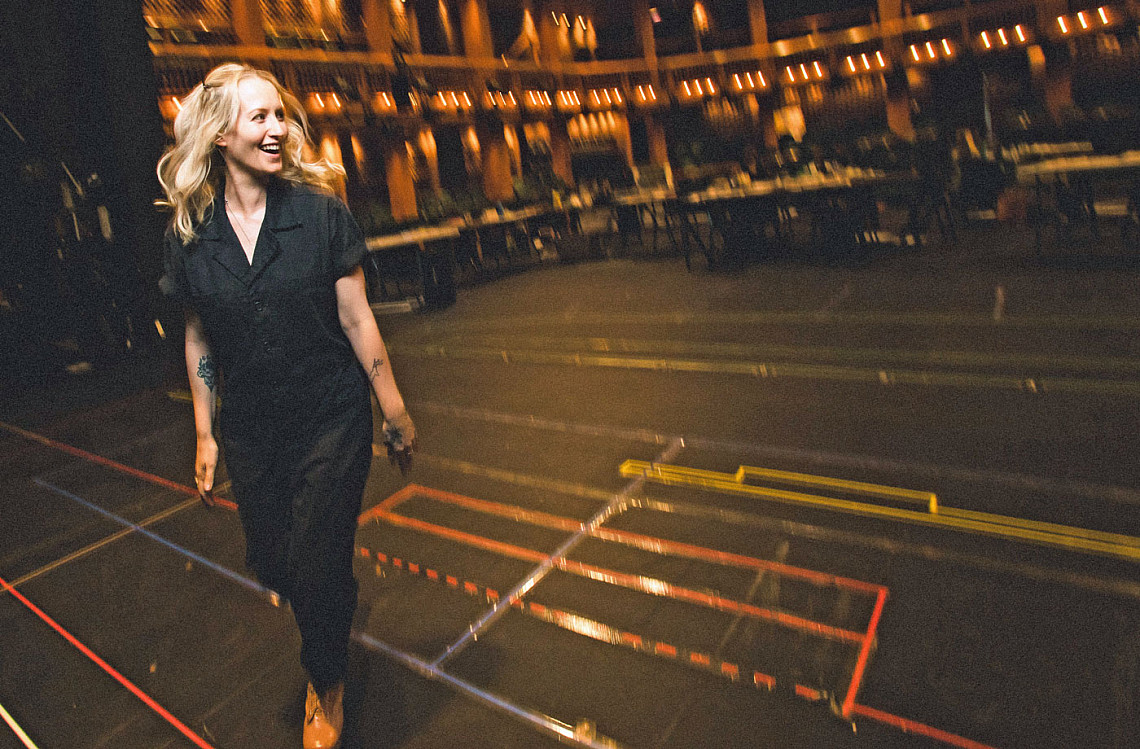
 Michaelson at a rehearsal for The Notebook. Photo: Joe Mazza.
Ingrid Michaelson's breakthrough album, Girls And Boys (2006), burst forth the quirky, sweet hit "The Way I Am," catapulting her onto the scene upon being featured in an Old Navy commercial. But the young singer-songwriter had already been making a name for herself, releasing music on her own label, and performing around the country. Her follow-up, Be OK, gifted fans "Keep Breathing," synonymous for its use in Grey's Anatomy, a television show that continued to showcase her songs in multiple seasons.
She has released eight studio albums, and for the past seven years, Michaelson has diligently worked composing music for The Notebook musical, currently running on Broadway. Throughout that time, she has expanded her talents by composing for the children's show Slumberkins on Apple TV+, and scored 2023's Tiny Beautiful Things on Hulu. She garnered an Emmy nomination for her original song "Build It Up," written for Hulu's Little Fires Everywhere. The allure of her Christmas music (Ingrid Michaelson's Songs For The Season) is undeniable, and this past holiday season brought forth several Christmas shows from New York to London.
Now, she's back with her ninth studio album, For The Dreamers, due August 23 - a whimsical, introspective look at life if we only slow down and enjoy it. Michaelson both takes us back and brings us forward, allows us to reminisce and be still for a moment, hear our breath and the breeze, and travel back to a time when things were simpler and music was pure. For The Dreamers is for the nostalgic and hopeful, the pure of heart, and those looking for the meaning in what was already there and what's still to come.
We had a conversation with the songstress about where her adventures in music have taken her thus far and what her most significant songs have taught her.
Nicole Roberge (Songfacts): Your new album, For The Dreamers, comes out in August. You mention it's different from what you've released before, but also like returning home. How would you compare it to earlier releases, and what direction is it taking us in?She has released eight studio albums, and for the past seven years, Michaelson has diligently worked composing music for The Notebook musical, currently running on Broadway. Throughout that time, she has expanded her talents by composing for the children's show Slumberkins on Apple TV+, and scored 2023's Tiny Beautiful Things on Hulu. She garnered an Emmy nomination for her original song "Build It Up," written for Hulu's Little Fires Everywhere. The allure of her Christmas music (Ingrid Michaelson's Songs For The Season) is undeniable, and this past holiday season brought forth several Christmas shows from New York to London.
Now, she's back with her ninth studio album, For The Dreamers, due August 23 - a whimsical, introspective look at life if we only slow down and enjoy it. Michaelson both takes us back and brings us forward, allows us to reminisce and be still for a moment, hear our breath and the breeze, and travel back to a time when things were simpler and music was pure. For The Dreamers is for the nostalgic and hopeful, the pure of heart, and those looking for the meaning in what was already there and what's still to come.
We had a conversation with the songstress about where her adventures in music have taken her thus far and what her most significant songs have taught her.
Ingrid Michaelson: At the very beginning, I started off doing musical theater-tinged things. My very first record, which I don't consider my first record, is called Slow The Rain. There's little bits up on YouTube, but I tried to erase it from the history books. I went to school for musical theater and came off in that world writing in that vein.
I started listening to these great records in the summer of 2003. Two records specifically, Soviet Kitsch by Regina Spektor and Transatlanticism by Death Cab For Cutie - I listened to those ad nauseam, back-to-back, and they changed the way I thought about writing and what I wanted to write. I was pulling myself more away from musical theater and starting to play shows. That helped me hone this indie-pop sound and that's what I've been rolling with for many years, never veering too far off the path. I'm not veering too far off the path now either, but I think coming off of writing an actual Broadway musical, this record is coming back to the place where I started in terms of chord structure and lyrical structure.
There's a couple songs from The Great American Songbook that I'm covering, and The Great American Songbook is full of musicals. So, it's a bit of coming home but there's so much lived experience and life between when I was 23 and writing these first songs and when I'm how old I am now and writing them. Coming out of writing a musical for seven years, it feels like a natural extension of where my head has been and where my brain has been and sonically what I've been writing. In a lot of ways, I feel like this record was waiting to come out, I just had to find my way back there.
Michaelson: I wanted to make a song that felt like it had been around for decades. I wanted to make a song that felt classic. I also wrote it while I was in the middle of working on The Notebook, and I felt like everything I had written was trash. I sat down and I was like, "I'm going to write something not for the musical. I'm going to write what I'm feeling and what's in my brain right now."
I tend to always find the next thing, the next better thing. Or I'm always looking forward. Rarely am I sitting in my current present moment. I was thinking about the show and is it going to fail, and do I suck? Then I wrote this little song and it just felt like it beautifully encapsulated a goal. I wouldn't say it was where I was, but it's where I wanted to be. I wanted to be in this place where I could stop searching for the next best thing and be grateful for things that I do have. Which is easier to say than to do, obviously, but I do know that I am exceedingly fortunate in my life in all of the ways. I feel like I have to write these songs just to remind myself of that and that's where that song came from.
Songfacts: Do you feel like your work on The Notebook influenced your songwriting?
Michaelson: Yeah, totally. Structurally, and with the certain chords I was playing that I might not have written for earlier work, that kind of harkens back to this older sound. There's a cover of "What A Wonderful World," there's a cover of "A Dream Is A Wish Your Heart Makes," these almost jazzy chords, and the structure feels older.
A lot of that was how I approached The Notebook, and then The Notebook sort of shifted to become its own thing, but I did dip into The Notebook, wanting it to have, not a modern pop feeling. Traditional pop, in terms of the genre, that's what I was skating around in a musical-theater place with The Notebook. Then with this record, I chiseled it down to that traditional pop, like that post-big band, pre-rock 'n' roll "crescent roll" of time. That gooey time of music where things sounded magical.
Songfacts: You've spent the last several years composing The Notebook musical, which is currently running on Broadway. You recorded one of the songs, "If This Is Love" for the soundtrack. Is that your favorite song or what you connect with most?
Michaelson: I'm putting that song on For The Dreamers too. It's a jazzified version. That's a horrible word. It leans more into the jazz world than the show version. Because I wanted it to fit really nicely with the other songs on the record that do lean into that traditional pop-jazz world. I wanted it to be this connective tissue between this piece of theater that I've been working on the last seven years, and this record I'm putting out. Because I don't think this record would've come without The Notebook being written. I wanted to honor that connection and put one of the songs on the record.
There's already a version I put out, but it's very straightforward and true to the show. This one fits with the album more. It's one of my favorites. It's hard to say what my favorite is in the show because it kind of shifts and changes when I come back and see it. This is the song it feels like I can put myself into the most and makes the most sense for me to be singing it in my mind. It feels like that's my song in the show. Even though it's sung by a 17-year-old, the character, and she's falling in love for the first time, I connect with it the most.
Songfacts: "It Never Ends" is another song off your new album, and you wrote that for your nieces. We feel the closeness in that relationship, but it also sends a message about the power we all have inside us, if we can only see it. It's a really important message right now.
Michaelson: I wrote "It Never Ends" with two of my friends in LA. None of us have children but we all have nieces and nephews. We were talking about how difficult kids these days have it, navigating social media and climate change and the political landscape that we live in and how challenging it's going to be for these little ones. We wanted to write a song for them and that's where "It Never Ends" came from. It also became a little bit of a mantra for myself, as all the songs usually do have some measurement of myself in it.
There's a theme of the record, same as in "Backyard" - just keep going, keep believing in the good stuff. Because there is good stuff, and you might have to conjure that yourself at times. That's why I called it For The Dreamers, because the songs are for those people who are looking for the light side of things because there's so much heaviness right now. There's always been heaviness but it seems like it's heavier than ever. I wanted to make something that gave people a little slice of peace, something to nestle into for 40 minutes and feel a little jolt of serotonin.
Songfacts: It feels like a beautiful mantra, with the repetition of -
All the light I'm seeing is coming from you
All the light you're needing is coming from you
And it never ends.
Michaelson: I love the idea of having your kid listen to it. Not that I wrote it for children, but it is something younger kids can benefit from with those words. And that repetition is like a mantra, it's like a prayer, and every time you say it, it can weigh a little heavier, it can have a little more meaning. Like when you're coloring with a crayon and you shade something in and you go over and over it, it goes deeper and deeper and deeper. With the repetition of that song, the meaning becomes enhanced the more you listen to it.
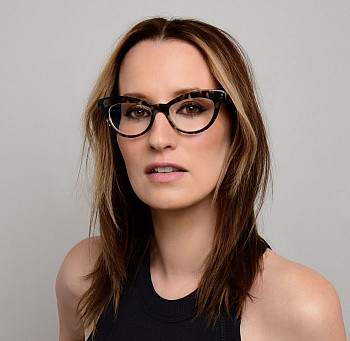 Songfacts: We interviewed Jason Mraz who talked about some of your collaborations in the past ["Christmas Valentine"]. You two have a long-standing friendship and musical relationship. What was it like working with him again on "Love Is," and how did that duet come to be?
Michaelson: He's just the dreamiest. I wrote this song with a couple people out in LA, and I was like, "This would be such a great duet with someone whose voice is as smooth as silk." And of course, the first person I think of is Jason. I texted him and said, "I know that we just did a song together not too long ago, so feel free…" And he said, "I wanna do it!" I was like, "You're so sweet. You're just a nice human." He is that person that you think he is. We sent him the tracks, and he recorded and sent them back. It's a sweet, easy song, so it was done relatively quickly. He's a really kind, giving soul, and I love his voice and how soothing it is. It feels nostalgic to me.
Songfacts: You mentioned a couple covers you incorporated on this album - "What A Wonderful World," and "You Make Me Feel So Young." There's a real classic feel to it. When you were developing this record, was your intention to include covers, or did that idea come during the recording process?
Michaelson: I didn't know which covers I wanted to do, but I knew that I wanted to have a few recognizable songs. I wanted people to listen to the record and feel like it has a foothold in that realm and I thought that adding two or three covers would help people's brains connect those dots and stay in that place. Who listens to a whole record anymore? I don't know. I do, and I still craft records that way, to be listened to at least a few times in one gulp. I wanted to firmly say, this is the genre I'm attempting to do. Nothing says that better than to honor the songs that you're inspired by.
Songfacts: You have a great knack for performing covers and making them your own. You do a stunning rendition of Elvis's "Can't Help Falling In Love," which you recently performed at the NMPA [National Music Publishers' Association] Annual Meeting, where Priscilla Presley was in attendance. What was that moment like for you?
Michaelson: I didn't know she was going to be there until a half hour before I sang. They said, "You know Priscilla's out there?" I said, "No, why would you tell me that?" Don't ever tell a performer anything like that, especially so soon before I was about to go out. But she was so lovely and I met her after, and she had nothing but wonderful things to say. It was intimidating but she was very lovely and receptive and warm.
Songfacts: All of your music, since you got your start, has been released on your own label, Cabin 24 Records. That's a really notable feat. Did you always want to be connected to the oversight of your creative and business process?
Michaelson: No. I made music and it started to get placed in commercials and Grey's Anatomy and all those things. No record label wanted to touch me until all of the sudden I was getting all these syncs on TV shows. Then all of a sudden, all these labels were like, "Do you want to sign?" My manager and I were like, "We've been doing this for eight months without any label. Why would we give away 50% of everything when we already did the work?" Throughout my career, we've done joint ventures with a label where we've licensed to a label for two years. Or just released it on my own. It's just how the cookie crumbled. I never intended to do it that way, it just seemed to make the most sense at the time, and then we did what made the most sense.
I know many people on labels who've had amazing experiences. I would never thumb my nose at any of that. It just didn't make sense or seem like I needed it. And to say, joint ventures, that's not nothing. I'm not out there selling CDs out of the back of my car. We would get radio help and touring support, but it was under a license. I would own everything. So, in two years, all rights would revert back to me and they wouldn't get their percentage anymore. As opposed to a label that owns half your publishing, half of everything, and has you there for a six-record deal. That was never attractive to me, the clamp down on me. I like the idea of flitting around from one distributor to another. I've always kept it very light in terms of my commitment to an entity that would attempt to share in my successes.
Michaelson: Yeah. Though I never wrote them for a soundtrack appeal, I wrote songs that somehow worked well. The big start I got was an Old Navy commercial for sweaters, and I swear it's because I have the word sweater in it ["If you are chilly, here, take my sweater"]. I think that's why they used that song ["The Way I Am"]. That was the big bomb, the big first use.
Grey's might've come simultaneously, but then "Keep Breathing" came after the Old Navy ad. That first record, Girls And Boys, technically the second record, but we don't talk about the first record - it's like Voldemort. So, Girls And Boys, my first proper record, I wrote that after listening to Death Cab For Cutie and The Shins and Regina Spektor and Weezer. And I wrote this kind of interesting, fun, indie-pop record. I had no radio aspirations. I didn't even think radio was still a thing at the time. I had no sync realizations - I didn't know what sync was when I was writing the records. I wrote the record in 2004, 2005, and it didn't do much until the end of 2006 in terms of being licensed.
I didn't know what this was. It was all this pure writing that seemed to resonate with music supervisors. I feel like I had a sound that went well with TV. Sometimes I'm like, "Is it good that my songs are on in the background?" But most of the time you hear the lyrics and they use them in a way that furthers the plot and emotional pull of the scene.
I write very simply. I don't adorn things - I tell it like it is in a way that maybe you've never thought of before. It's the simplicity, but it's not easy to do simple, well. I kind of cut to the heart and the chase. That simple lyricism works well when you need something to cut through and leave its mark in the middle of some intense scene. You can't have too many metaphors and too much flowery language. You kind of need to get to the meat and potatoes of the sentiment of the song and of the moment. It's not that I try to do that, it's always what I've done.
I've tried to be wordier and more complex and it's hard for me. I remember in college, so many years ago, I had one professor, probably English, who said, "You've got such great ideas, you just cannot expand on them." You know, you'd have to write a 10-page paper. I'd be typing in the biggest font I could find, I'd make the margins smaller. I'd double space, anything I could do to make it fit those ten pages. I have really smart thoughts and really interesting base thoughts, I'm just shit on expansion. So that's why songwriting became so great for me. I'm like, "Oh! Three minutes? I can repeat things? Chef's kiss!" I'm not meant to write a book but I was born to write pop singer-songwriter music for sure.
Michaelson: I connect with it in the same way I connect with a song like "Can't Help Falling In Love," because it does not feel like I wrote it. It's such a part of the zeitgeist, everybody got married to it, it's just not my song anymore, but not in a bad way. It's my song, but even my voice is so young - it doesn't sound like me singing. Whenever I do sing it, it's almost like I'm covering this sweet song that everybody loves. And there was a period of time where I was really sick of it, but that was probably shortly after it blew up and got really big, because that's what every musician goes through. They're like, "Ugh. I hate my hit song." And then you get older and you're like, "Oh, that song paid for my house, so don't complain anymore."
I love it, I love the legacy that it has, I love how many people it's touched. I've ushered people down many aisles. I love that I've been people's first-dance songs, that I'm part of the fabric of these people's lives. It's an indescribable feeling, gratitude for sure. And just bizarreness. I love the song, but I love its legacy more.
July 22, 2024
For album details and more, visit ingridmichaelson.com.
More interviews:
Jason Mraz
Matt Nathanson
Lenka
Rachael Yamagata
More Songwriter Interviews