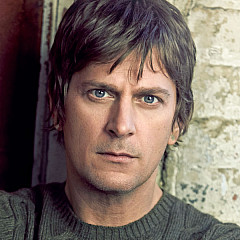
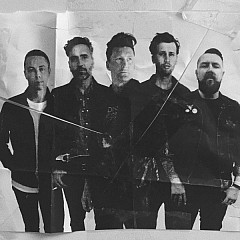
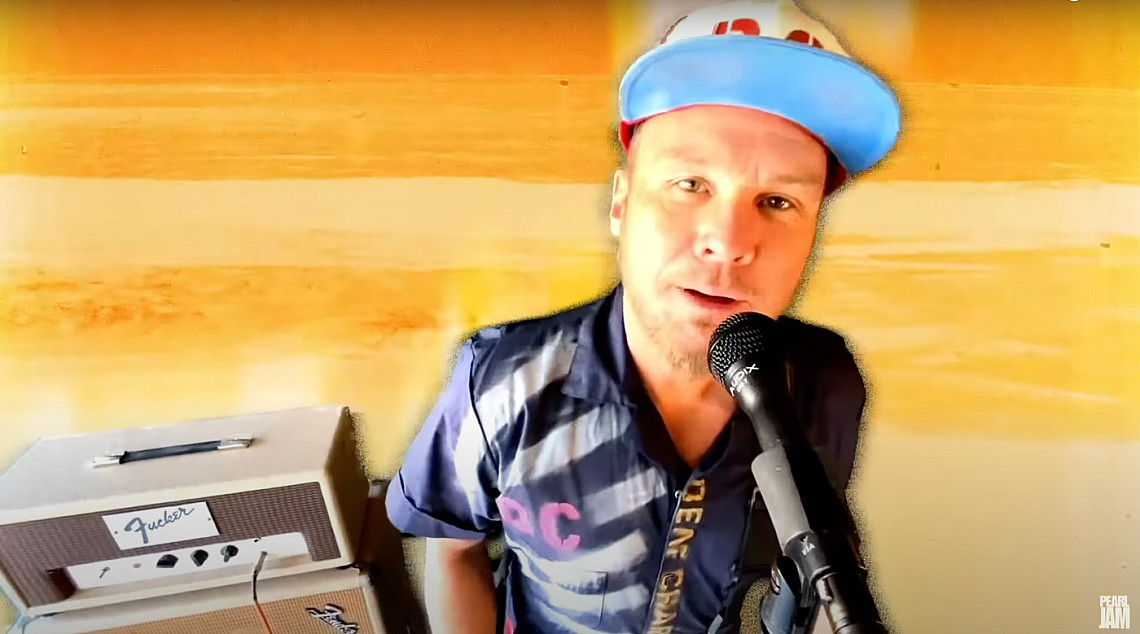
 Ament in the video for Deaf Charlie's "Something Real"
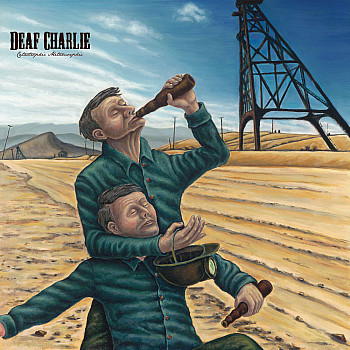
Over the years, Pearl Jam bassist Jeff Ament has filled his time away from the band with a variety of side projects – Three Fish, Tres Mts., RNDM, and as a solo artist. But one of his most musically varied turned out to be Deaf Charlie, which pairs him with ex-Fitz & the Tantrums drummer John Wicks. They issued their debut full-length, Catastrophic Metamorphic, on June 30, 2023.
Perhaps the reason why the 12-track album is so varied is because the songs were recorded and arranged by swapping files back and forth, with no parameters or limits as to how far the duo could take things. And as it turns out, Deaf Charlie is not confined to the studio – they're booked at the 2023 Ohana Festival, on the bill with Foo Fighters and Pretenders.
Ament spoke with Songfacts shortly after the album release to discuss singing, songwriting, his favorite songwriters past and present, and his memories of several beloved tracks he had a hand in writing over the years, including selections from Pearl Jam, Mother Love Bone, and Temple Of The Dog.
Greg Prato (Songfacts): How does the songwriting work in Deaf Charlie with John Wicks?Perhaps the reason why the 12-track album is so varied is because the songs were recorded and arranged by swapping files back and forth, with no parameters or limits as to how far the duo could take things. And as it turns out, Deaf Charlie is not confined to the studio – they're booked at the 2023 Ohana Festival, on the bill with Foo Fighters and Pretenders.
Ament spoke with Songfacts shortly after the album release to discuss singing, songwriting, his favorite songwriters past and present, and his memories of several beloved tracks he had a hand in writing over the years, including selections from Pearl Jam, Mother Love Bone, and Temple Of The Dog.
Jeff Ament: Typically, the songs go back and forth a lot. But this group of songs started with me recording a two-or-three-part demo version, and oftentimes it was to a really basic drum loop or drum machine part. At the beginning of the pandemic, I probably wrote 40 or 50 songs the first three or four months. I was trying to write some kind of a song every day at that point just as an exercise, but I wasn't doing anything else.
Initially, I gave John a song with the idea we could rush something out and do a quick visual thing to it, and we wound up doing a version of "Sittin' Round At Home" by the Buzzcocks. And then that turned into, "Hey, what if I give you another song?" A couple of months down the road, I sent him 30 songs and said, "Pick 10 and let's just go back and forth with these."
We met in person a couple of times to talk about what style and what are the parameters, and I was like, "No parameters. Let's go for it. Let's take this into outer space if we can." I said, "I'm not precious about any of these arrangements. You can chop them up as much as you want." So, at the center of what we were doing was to take them as far as we could and still retain the song to some degree.
A lot of times, the keys would change - maybe he would change it from minor to major. He would just leave the vocal in and put down a drum part and a couple of keyboard parts, and then that turned into him reaching out to people that played horns and played keyboards, and adding things that I probably would never have put on songs.
But we were challenging ourselves, because there was no intention to put it out. It was an exercise to keep us from going crazy during those first few months.
Songfacts: Did you set out to make the project stylistically varied, or did it just turn out that way?
Ament: We were just challenging ourselves to take stuff further out, and this group of songs were the songs he pulled out of the group that I sent him. There's a pretty good variety of uptempo, and slow and gospel-y. I think it just naturally became a little hodgepodge of styles because we were pushing each other a little bit.
Songfacts: Do you enjoy singing lead?
Ament: It's been a journey. I've done it a fair amount the last 20 years, mostly just to complete songs to present to the Pearl Jam guys. And in the process, I've made a few solo records just because there ends up being a lot of music. But we've had a couple of rehearsals where I'm the lead singer.
Any musician in a band, you're trying to listen and pay attention to everything, but when you're the singer, you have to remember all the words and you're listening to if somebody is singing with you and if the harmony is working. It's been fun, but it feels like a whole different spot for me.
Songfacts: What was the lyrical inspiration behind "Losing My Mind"?
I literally felt like I was crazy when they were explaining the fears they had and why they were supporting somebody who was putting racism and sexism... in some ways was really supporting the capitalist part of our country in a way that was in my mind working against my friends who are more blue collar. I just had these moments where I felt like I was crazy. They'd be telling me this stuff and I felt like I was in some weird vortex trying to understand where they were coming from. So, that was the initial part of it.
And then we head into the pandemic and all of a sudden that stuff exponentially ramps up in terms of people's fears and this stuff that was being said from leadership roles. It just made me feel even more crazy. I literally did feel like I was losing my mind.
What exactly is the story behind Deaf Charlie's mysterious name? In the album's press release, it is described as "Deaf Charlie AKA Orlando Hanks was a train robber with Butch Cassidy's Wild Bunch who spent a fair amount of prison time in Deer Lodge, Montana. He was called 'Deaf' because he had such a beautiful singing voice."
Songfacts: How does the collaboration in Deaf Charlie compare to Pearl Jam?Ament: Deaf Charlie is just John and I, so it's less complicated in that it's just a back and forth. And I love collaborating. I think the best collaborations in a band may be when two people have an idea for a song and then you let the band interpret that initial idea – those initial words and those initial melodies.
With a band it can be trippy finding that balance of letting the band take the song and it becoming a "band song." And then if you're one of the writers, sometimes you miss elements of your demo. But history has shown me that any band I've been in – but in particular, in Pearl Jam – that the best songs are the songs where we allow each other to bring something great to the table with that song. That's when we really hit on stuff that is unique and gratifying, when we allow each other that space.
Everybody in Pearl Jam is such a great musician and has such great ears that you want to lean on that as a songwriter. You want to use all the great aspects that everybody can bring. But it's different. It's five people vs. two people.
 Songfacts: How important is it for you creatively to have other musical outlets besides Pearl Jam?
Ament: There was a period of time when I wished that Pearl Jam recorded more and we made more music, but I see it differently now. I think it's been really important for us in between albums to go off and find new ways to write. Being in a room with other artists, you pick up new tricks, and every once in a while you'll come upon something and you'll be like, "Oh, Pearl Jam would crush this." I think everybody does that, and I think that's been beneficial.
You also go away from your first love for a while and then you fall back in love with your first love – over and over. That's happened with Pearl Jam, certainly.
Songfacts: Who are some of your favorite modern-day songwriters?
Ament: For the last 20 years, Sigur Rós. I just got their new record [Átta]. But from the very first time I saw them – whenever Ágætis byrjun was [1999]. That band is inspirational.
Another guy that has another new record out is Peter Gabriel [I/O], who continually, going back to Genesis, approaches sounds and songwriting in a way that is super unique.
PJ Harvey has a new album out [I Inside The Old Year Dying] that's incredible.
A band that is touring right now, The Cure, I listen to those early records over and over again. I think Robert Smith is one of the great modern-day songwriters.
And in terms of new music, there's this whole what my friend calls "talking British punk movement," which is the Idles, Fontaines DC, and Shame. And Slowthai. It's in the style of that music in that it's really raw lyrically but it's hip-hop and it's super-heavy. I've listened to that record a ton. There's so much great music out there.
Ty Segall I think has a new record out – he's one of the great young artists. He's almost becoming the new Bob Pollard in that he puts a record out every six months. They're all great records, but you just can't wrap your head around every record because there's so much stuff.
Songfacts: Have you written lyrics for Pearl Jam songs?
Ament: There might be 10 Pearl Jam songs that I wrote lyrics to over the years. There was a point right when we made Yield where Ed [Vedder] asked for help. For him to be in the studio by himself at the end of making a record, trying to finish 12 or 13 songs, it was just hard to be the only one left. So Yield, Stone [Gossard] and I each had a couple of complete songs.
Everybody's brought complete songs, and sometimes they end up on records, sometimes they don't. That's an incredible thing when you bring a complete song in and let the band re-form it, and to have Ed reinterpret your words. That's a really cool thing.
Songfacts: Can you give examples of Pearl Jam songs you brought in that were deconstructed or changed by the others?
Ament: There's a song called "Help Help," which was on Riot Act. The demo that I did for it was a little bit more rock – a little bit more Zeppelin-y. And then when the band got a hold of it, it just got a little bit more "art project-y." It's a cool track when I listen to it now. It sounds kind of psychedelic and almost like Jane's Addiction.
And then there's a song musically that I brought in that Ed wrote lyrics to called "Push Me, Pull Me" that was almost like an uptempo Police song, and that got turned into a little bit more of an art project.
Everybody hears this stuff in a different way. The only way you can be happy with it is if you're open to everybody interpreting it and breaking it open and changing it. I've learned to do that over the years.
Songfacts: Let's discuss some songs you've had a hand in writing over the years, starting with Pearl Jam's "Blood."
That's the main thing that I remember about "Blood." How do we give this thing a more simple melody that Ed can feel strongly enough about that he'd want to put words over it? And I was really obsessed at that time – bass-wise – with going back and forth between an almost super-low-end dub sound and a super-aggro overdriven sound. That song really shows that from a bass standpoint – it's going back and forth between those two sounds.
Songfacts: "Indifference."
Ament: We were hanging out with a bunch of acoustic instruments somewhere and I started playing what is the bassline in that song. I remember Ed said, "I'll sing over that kind of shit all day."
I got home that night and I made sure I remembered how to play it, and I recorded it. The next time when we went into the studio to record, I started playing that bit and he immediately started singing over it, and Stone came up with that beautiful guitar melody. That song came together really, really quickly.
Songfacts: "Tremor Christ."
Ament: That was another one where Stone had that insistent verse part. It was like a chord that has a blue note. We were at Kingsway in New Orleans at Daniel Lanois' studio with Brendan [producer Brendan O'Brien]. I remember that song came together super quickly. That song, "Last Exit," and I think "Nothingman" got recorded in that session.
Both "Tremor Christ" and "Last Exit" started with Stone playing a couple of chords. And Dave Abbruzzese plays a great drumbeat on that song. The bass is really free – it's sort of moving all over the place, moving around Ed's vocal.
That's the beauty of writing a song in the room with the band: We were all influencing each other in how we were playing. That's a good memory. Those three songs are really great-sounding tracks. We made pretty good music in New Orleans.
Songfacts: Temple Of The Dog's "Pushin' Forward Back."
Ament: Stone came up with that riff that was in seven, and I think I wrote the second part to it – a little bit of a change. Playing that sort of riff with Matt Cameron and with Chris [Cornell] was awesome. We knew that they could handle the odd time signatures in a really spectacular way.
I have amazing memories of making that record. Most days, Chris would come in with a new song. We would wrap our heads around it, and it was so easy and free that it almost felt like it was somebody else flowing us the songs. It came from such a good place too. Such good timing.
Songfacts: Mother Love Bone's "Stardog Champion."
I remember coming up with my part and thinking, "Man, I wish I had a 12-string bass." Because I was sort of obsessed with [Cheap Trick's] Tom Petersson. Well, I'm still sort of obsessed with Tom Petersson! We rented a 12-string bass when we recorded that song. That was the beginning of my journey with that instrument.
You can argue that that's a very signature Andy Wood lyric. He had a knack for coming up with those sort of T. Rex characters.
Songfacts: I just realized, you've been blessed to have worked with three of the best lyricists in rock history: Eddie Vedder, Chris Cornell, and Andy Wood.
Ament: Three of the great lyricists... and great drummers, so the engines and the conductors. I've been in the room with a bunch of assassins in that regard.
Songfacts: One last question. How the heck did you get that slide harmonic in "Even Flow"?
Ament: I was really obsessed with fretless bass at that time, so I was listening to a lot of Jaco [Pastorius], I was listening to a lot of [Japan's] Mick Karn, and I was listening to Tony Franklin, who at that time was kind of the only rock guy who was playing fretless in a rock band [The Firm, with Jimmy Page].
I knew at the beginning of Pearl Jam that the way Stone was writing, it was very Jimmy Page – very riffy. And because of Tony Franklin, I knew that fretless would add a really cool voice and texture to rock music. So that harmonic, I'm kind of ripping The Firm's "Radioactive."
And I figured it out by accident. I was always obsessed with playing harmonics on bass, but at some point I remember accidentally hitting harmonics and sliding on it, so I started experimenting with that part of it. So mistakes, and also having in the back of my head that sound of "Radioactive." Hats off Tony Franklin!
July 11, 2023
Here's where you can:
Order Deaf Charlie's Catastrophic Metamorphic
Follow Jeff on Instagram
See what Pearl Jam is up to on their official site
Further reading:
Fact Or Fiction: Pearl Jam edition
Interview with Shawn Smith of Brad
The Great Grunge Explosion of 1991
Interview with Kim Thayil of Soundgarden
Interview with Mark Arm of Mudhoney
Hidden Gem of Grunge: The Story of Truly
More Songwriter Interviews