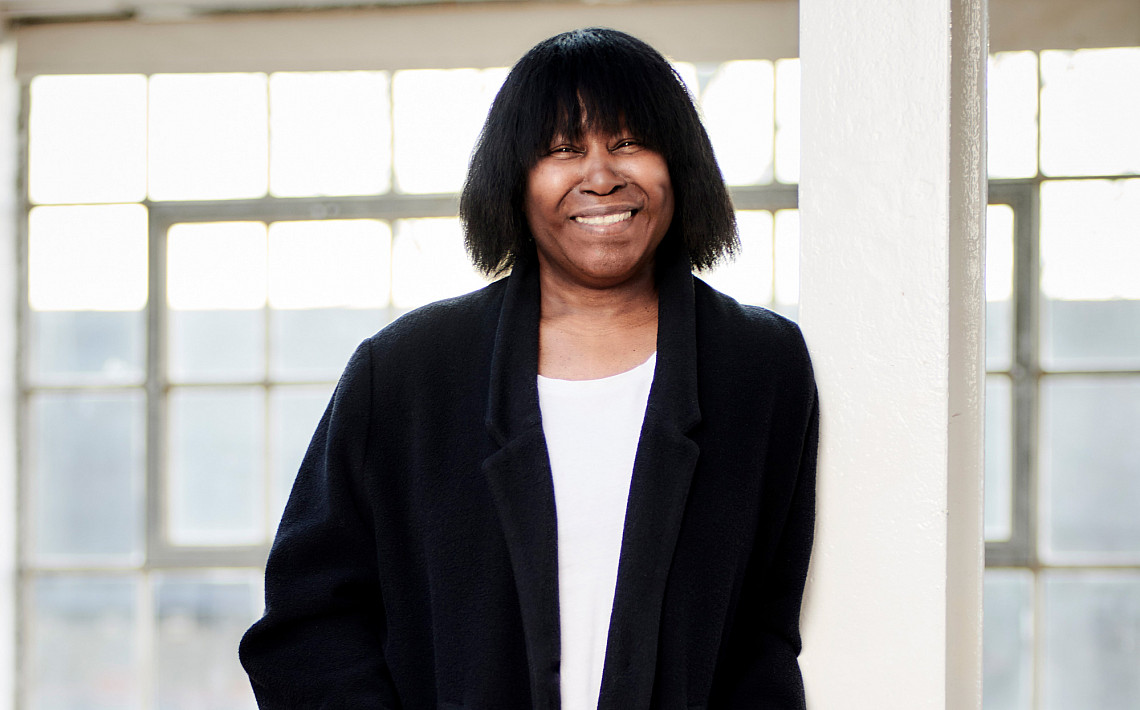
For Joan Armatrading, love is a primary form of communication. "The heart gives purpose to your life," she sings on "Always In My Dreams," a track from her latest album, Not Too Far Away, set for release May 18. "The head gives way to the heart."
Her robustly intimate songs have been triggering bouts of passion and introspection since she took up the trade in 1972 with her first album. Many found her via her 1976 hit "Love And Affection," others through her ebullient 1983 track "Drop the Pilot." She has remained steadfastly dedicated to her craft, exploring various genres but always dealing with interpersonal relationships with a focus on matters of the heart. We wondered if 2018 would be the year she couldn't resist writing a political song, but the 10 tracks on Not Too Far Away deal with the innate feelings we all share.
Armatrading has piled up accolades, including a MBE from the Queen of England and a collection of BRIT and Grammy nominations. We spoke with her about the album, got the stories behind a few of her classics (including one triggered by a cab ride in Times Square when it was still seedy) and found out if she ever does get the urge to write a political song.
Joan Armatrading: How does it fit in with my earlier work? Well, my first album was 1972. Do we go that far back?
I think I've been quite consistent in writing about love and how people relate to each other, how people communicate, and feelings. It's all about communication. I don't think that's changed over the years at all and I don't think it ever will because that's why we're here. We're here to communicate with each other.
I very often hear people talk about, "Oh, I went to visit Paris, it's the most beautiful city," but most places really only come to life when you are either with somebody in that city or you meet somebody in that city or you know somebody in that city. It doesn't come to life because you go and visit a great museum. It comes to life because there's some communication between people happening. And that's really what it's all about.
Songfacts: Like how a great meal has to do with the people you're eating it with.
Armatrading: Absolutely. This is why we're here. The first song on the album is called "I Like It When We're Together" and that's really just about people liking being with people. It's just really nice. Whatever the relationship is, whether it's your husband, your wife, your lover, your best friend, or just a group of friends going out to a club or whatever, it's all about just liking being together.
And even when somebody would say, "I love going to the cinema," very often they're talking about liking going to the cinema with somebody.
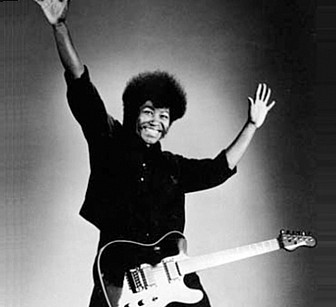 Back in the day...
Armatrading: Yes. But you will notice in "Me Myself I," I do say, "I want to have a girlfriend and a boy for laughs," because I don't want to be completely on my own. Most people don't. I don't. I wouldn't like it if I never spoke to people or I never met new people. If I didn't have my friends, that would be a non-existence, really. What would be the point of being on this planet? It's not to go to buildings or to sit under trees and be isolated, it's to be with people. That's why we're here. That's my opinion, anyway.
Songfacts: There are some other tracks that seem to express a similar theme. Would you be able to talk about what triggered some of the other songs on this album?
Armatrading: Can you think of a specific one?
Songfacts: Yes, I can. The one that really intrigues me is "Always In My Dreams," where you are almost programming yourself to dream about something.
Armatrading: Well, I can't tell you exactly why I wrote it, but I can tell you what the song is expressing. It's when somebody really – I was going to say loves but it doesn't have to be love – just really likes somebody and they're trying to get them to notice them. And dreaming about things: a person, a thing, something that you really desire. Daydreaming about it, dreaming in your sleep about it, can bring things closer to you.
When I'm writing, you might see me just kind of sitting in a chair and gazing up as if I'm doing nothing. "Why's she not writing? Why's she not working?" That dreaming is the thing that's going to bring that song closer to me. And that's what "Always In My Dreams" is about. It's getting this thing that you want - whatever that thing is – getting it closer.
The songs are about people, but they're not confined to people. It's about all kinds of things. There's a song on this album, "No More Pain," and it's not just about a physical "I've cut my hand" or "I've broken my leg." It's not about that physical pain, it's about the pain of losing somebody or even finding somebody, because sometimes you've found that person, but they haven't quite found you, and the pain of that can be pretty devastating.
So, "No More Pain" is about, in the end, saying, Okay, that's the situation, it's up to me now to decide, am I going to live in that pain, whatever that pain is, or am I going to say, "Snap of it, you have the power to do something different?" Because you have the power to make those changes and you don't have to stay in certain states. You can get yourself out of it.
I know people might listen and think, "Oh, yeah, of course you can, everything's really easy," but I do believe that you can talk yourself into things, and in a positive way. Most of my songs are very positive. Throughout my career they tend to be very positive.
Armatrading: Yes, because pain sometimes can be like a warning, as well. The line says, "This pain is my protection, it tells me to run." Well, sometimes, if you don't feel that pain, you won't know that you've got to get out of there. You've got to feel this thing to know whether you should fly. Fight or flight. You need to have that to know where you are sometimes.
Songfacts: What is the blue light representing in "Invisible"?
Armatrading: Blue light is your energy. Let your energy and your goodness and your true self shine through, because the song is talking about somebody who is kind of cloaking themselves and not allowing themselves to be seen. There's a line in there that says, "The thing that you're running from is what you leave behind," and because they're running all the time and trying to get away they're not allowing people to see who they really are. So, the blue light is that positive energy.
Songfacts: Is there a reason you chose blue?
Armatrading: Blue's a great color.
Songfacts: I think you have another song with blue in it.
Armatrading: I've got "Cool Blue," I've got "Into The Blues," I've got "Beyond The Blue." I like blue.
Songfacts: I see the trend. Is that a Wah guitar in the solo in that song?
Armatrading: Yes, it is a wah guitar. It is.
Songfacts: I understand you did the drum programing on this album.
Armatrading: Yeah, it's all about me, showing off. And I've done this since 2003 - I've played everything. So, 2003 was Lovers Speak, and then it was Into The Blues, This Charming Life and then Starlight. On Lovers Speak, Into The Blues and This Charming Life I played everything apart from the drums - I had a drummer. But, on Starlight and this album, I decided to program the drums myself. So, I'm the engineer on the album, I'm the producer of the album, I've written all the songs, arranged all the songs, written and arranged all the strings. I'm playing everything, I'm singing everything. I'm kind of doing everything, really.
Songfacts: How did you build the tracks? Many times, if people use the drum machines, they start with that and they build upwards. I'd like to hear how you did it.
So, if you put the bass down first then it might be, "Okay, let me have a look at how to do the drums." Because, let me tell you this, what I usually do when I write – I started writing when I was about 14 and I've always written and arranged my songs. Even early on, I would know I want the bass to be that and I want this arrangement on it and these kinds of sounds on it. So, I would always do my own demos and play everything myself and just get on with it. And, when I wrote, I would write sometimes the words first, sometimes the music first, sometimes both together, sometimes on a piano, a guitar, or whatever. And I had no formula that I would do.
And then, when I did the trilogy – Into The Blues, This Charming Life and Starlight – which was blues, rock, jazz, I decided to discipline myself and only write those things. So, as opposed to normally where I would do a pop song and then I'd do a jazz song and then I'd do a blues song and then I'd do a reggae song, I decided to only do blues songs for Into The Blues, only do rock songs for This Charming Life and only do jazz for Starlight. So, I had to really discipline myself.
On this one, I decided to write all the words first. So, I didn't write any music at all until I'd written all the words. And the reason I did that was because I really wanted people to listen to the words. I wanted the words to be very expressive and I wanted people to relate to the words and become attached to the words. And I felt that if I did that, the music would naturally fall where it needed to for those words. And I feel that that's what happened.
Armatrading: You can't answer that question because it's "Rosie," it's "Willow," it's "Me Myself I," it's "Weakness In Me," it's "Drop The Pilot," it's "Down To Zero." You name it... it's "Baby I," it's "Somebody Loves You." You name one of my songs, it'll be one of those.
People come with some of the least-known of my songs and they'll say, "We got married to that." So, that's the great thing about what I do, is that people will come and tell me how much they identify with the songs.
If you want the ones I've heard many, many times, it will be "The Weakness In Me," "Me Myself I," "Love And Affection," "Cool Blue." But I get it to so many songs.
Songfacts: Wow, that's got to be a great feeling, to have your catalog be that broad.
Armatrading: Yes, fantastic. I love it.
Most songwriters have reams of unfinished songs taking up notebooks and hard drive space, but Armatrading says that every song she starts, she finishes. They don't all get recorded, but they do get finished.
Songfacts: And, I don't expect you to reveal too much about it, but can you talk about the concept and the expression in "The Weakness In Me."Armatrading: No. [laughs] You just answered your own question. No, the concept is there for people to see. It's about somebody who has an affair and they've fallen for the person that they're having the affair with, but they love the person they were with whilst they were having the affair. And it's a question of who do they choose, because they love both. In choosing one they will lose the other that they don't want to lose.
So, it's that dilemma. And, as I say, I get people coming up to me and saying, "Yeah, I was in that situation. That described that situation."
Songfacts: Was there a real Rosie?
Armatrading: Oh, yeah. Actually, that's a great story. Yeah, I can tell you about that.
I was in New York and I'd just seen somebody off at the airport. I got into a taxi and I was talking to the taxi driver and he says, "Have you ever seen..." whatever this place was in New York. And, I said, "No, I haven't." So, he took me to this place, and it's a view that I've never seen before because I don't even know where it was, so I can't even say to somebody, "Take me there again."
Anyway, it was a view that allowed me to see a lot of the city and all the lights and everything. And then he said, "Have you ever been 'round 42nd Street and Broadway and all that area?" And, at that point I hadn't really. So, he said, "I'm going to take you 'round."
So, he drove me all around there. And I think it was 42nd Street or a street like that, there were all these gay guys and they were in their little shoes and their little shorty shorts. And that's where I got "Rosie" from, watching all the young boys in their kind of Rosie gear. That's how I came up with "Rosie."
And, I have to say, the taxi driver didn't charge me any more than I paid for going to the airport.
Songfacts: That's great. Well, I'm glad you got to see Times Square back in that day, when it was like that. People have no idea what it used to look like.
You've talked about how you will write a song in a key that doesn't suit your voice, because you are so dedicated to the song. Can you give an example of one of those?
Armatrading: There's a few of those. Although I can sing it, "Baby I" might be one of those. It's quite high when I'm singing the line, "Baby I." It's very high.
But the thing is, if I write something and the song says this is where it needs to be, then that's where it needs to be. And, you'll find sometimes you can change the key but it just doesn't sound as good. That happens as well when you try to do certain songs live. There are certain songs that you think will be great on stage, and then you get with the band and for whatever reason, no matter what arrangements I do, it doesn't matter, it just doesn't work. I can't figure that one out at all, but that happens.
Songfacts: Have you ever had a desire to write anything that has to do with politics or current events?
Armatrading: No. I'm not a protest singer. There are people who do it and when you do it well, it works, and that's what you should do. But, that's not what I do.
There's a song of mine called "In These Times." It's not a political song at all, but it was written thinking about stuff that was happening at the time. And the thing that made me write that song was, I was watching the television and they were talking about a war - it might have been Syria – it could have been any war because they're all the same, they're just people killing each other. And, this couple, a man and a woman, were talking about their son who was going off to war and the woman was kind of crying, she was in a terrible state: "Oh, my son, I don't know if I'm going to see him again, this is awful news, look at what's happening, this is terrible." And the father was like, "Yeah, my son's going off to war." And the difference of these two people was quite incredible. That's why there are words in there that say, "The mother she cares for her son." It's not that the father doesn't care but there's a pride in him about his son going off to war, whereas the mother is just thinking, "My poor baby, will I ever see you again?" That's what made me write "In These Times."
All kinds of things will make you write something. Some things make you think, why does that relate to that?
You never know what will inspire you. You could see somebody drop something on the floor and that could inspire you. You could see somebody drop something on the floor every day but this one particular day somebody could drop something, and it would inspire you. This thing, inspiration, it's not something you can touch and call up whenever you want. It's a weird thing.
May 8, 2018
For the "Drop The Pilot" story and more songwriting insights, check out our 2015 interview with Armatrading
Tour dates and order information for Not Too Far Away are on joanarmatrading.com.
More Songwriter Interviews