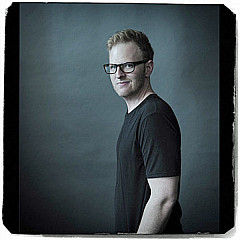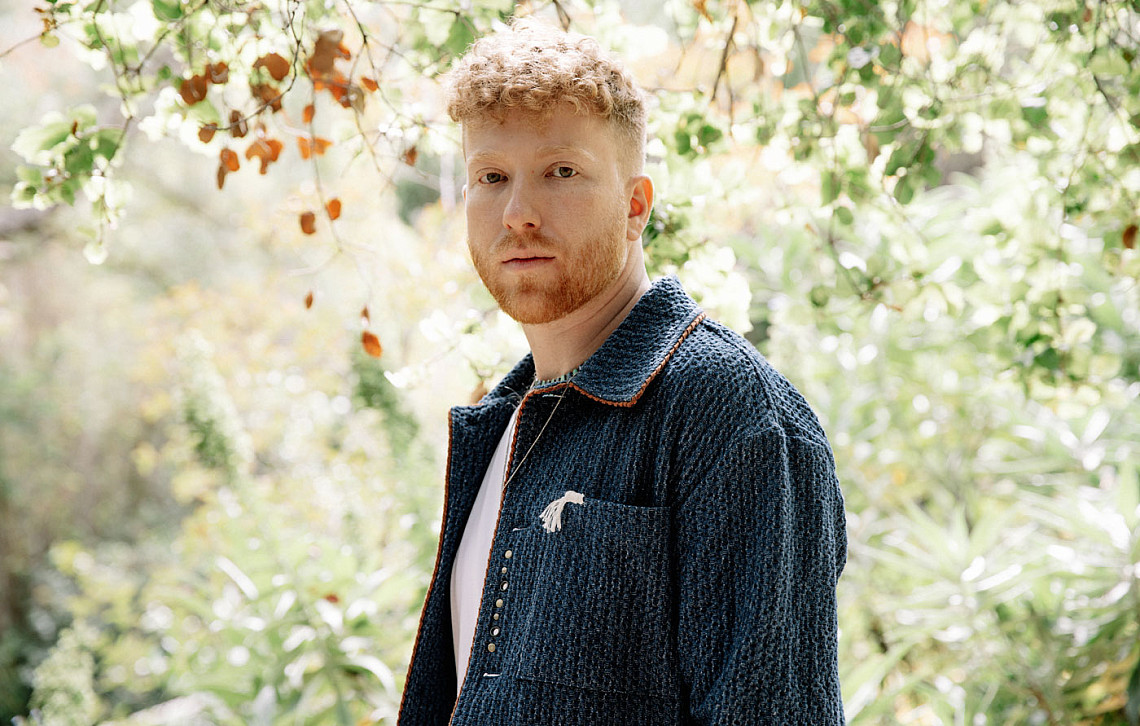
On the heels of his sophomore release, A Grey Area, JP Saxe prepares to embark on his own 2024 worldwide tour while currently opening for John Mayer. A sentimental and candid songwriter, Saxe earned a Grammy nomination (Song Of The Year) for his 2019 hit collaboration with Julia Michaels, "If The World Was Ending," which became a haven for the anxious feelings so many of us were experiencing during the pandemic. At the height of lockdown, Keith Urban, Niall Horan, H.E.R and a host of other luminaries covered the song (virtually, of course) to benefit Doctors Without Borders.
The grandson of distinguished cellist János Starker, Saxe grew up in Toronto, moving to Los Angeles at 19 to pursue music, destined to make a career of it. He found solace in the poetry community, released multiple singles and EPs, and eventually garnered the attention of Arista Records, which released his debut album, Dangerous Levels Of Introspection, in 2021. His eclectic musicality ranges in styles from R&B to pop, and the versatility in his songwriting denotes a raw energy now seen on his latest, A Grey Area. Symbolic of Saxe's determination to defy definition, it presents an intriguing dynamic, illuminating the senses - just when you think you've caught up, he's a few steps ahead. Each song presents a new gift when you listen to it again - a hidden treasure that wasn't there the first time and beckons you back. A Grey Area is all-encompassing - there is freedom and positivity in his melodies and a fluidity in his songwriting.
As Saxe settled into his coveted opening slot on John Mayer's solo tour, he took some time to visit patients at Seacrest Studios in Queens at the Cohen Children's Medical Center. Saxe met with a boy celebrating his 11th birthday, whom he wrote a song with. His uplifted spirit shines through when he speaks. There is an overwhelming positivity about Saxe, an awareness about his songwriting and his place in music; an appreciation of his belonging. It is that humble gratitude that sets him apart in his craft and demeanor. He shared with Songfacts the journey to get to A Grey Area, the poet within him, and how collaboration is not just a benefit to songwriting, but a human element.
The grandson of distinguished cellist János Starker, Saxe grew up in Toronto, moving to Los Angeles at 19 to pursue music, destined to make a career of it. He found solace in the poetry community, released multiple singles and EPs, and eventually garnered the attention of Arista Records, which released his debut album, Dangerous Levels Of Introspection, in 2021. His eclectic musicality ranges in styles from R&B to pop, and the versatility in his songwriting denotes a raw energy now seen on his latest, A Grey Area. Symbolic of Saxe's determination to defy definition, it presents an intriguing dynamic, illuminating the senses - just when you think you've caught up, he's a few steps ahead. Each song presents a new gift when you listen to it again - a hidden treasure that wasn't there the first time and beckons you back. A Grey Area is all-encompassing - there is freedom and positivity in his melodies and a fluidity in his songwriting.
As Saxe settled into his coveted opening slot on John Mayer's solo tour, he took some time to visit patients at Seacrest Studios in Queens at the Cohen Children's Medical Center. Saxe met with a boy celebrating his 11th birthday, whom he wrote a song with. His uplifted spirit shines through when he speaks. There is an overwhelming positivity about Saxe, an awareness about his songwriting and his place in music; an appreciation of his belonging. It is that humble gratitude that sets him apart in his craft and demeanor. He shared with Songfacts the journey to get to A Grey Area, the poet within him, and how collaboration is not just a benefit to songwriting, but a human element.
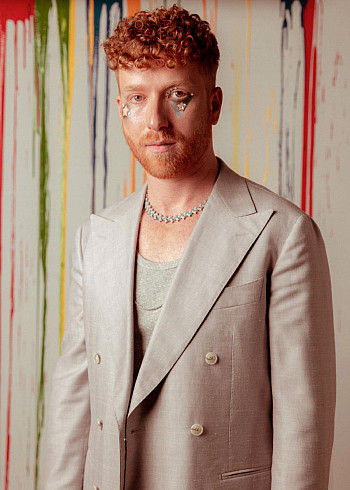 Nicole Roberge (Songfacts): Congratulations on A Grey Area. It must feel great to finally have it out in the world after all the work you put into it.
JP Saxe: It's nice that the songs are no longer just mine. After two years of those songs just being for me and my friends, it felt like we should let them be shared with people we didn't know.
Songfacts: You had a very beautiful and symbolic journey to Colombia, where your mother taught, and you learned to speak Spanish. How did this culture influence you personally as well as the writing of this album?
Saxe: Medellín is just an extraordinarily inspiring, creative environment. There's something really special going on in the creative environment in Medellín and I was grateful to be embraced by that. There's something inherently creative about being in a new, unfamiliar environment, because you have to navigate what it means to be yourself in surroundings where you've never been yourself before, and that's an illuminating, refining character experience. And being creative and writing and expressing yourself all while having to be around people you're meeting for the first time, in environments you're in for the first time, that critically impacted the way I was exploring my emotional experience in these new songs.
Songfacts: It opens you up to a whole new energy.
Saxe: Yeah, I think sometimes traveling is less about seeing what changes around you, and more about what doesn't change in you, as you're in a place you've never been before.
Songfacts: "Old Times Sake" is such a nostalgic intro and really sets the tone for the album. What made you choose an epigraph to intro your album?
Saxe: I really love poetry. The poetry community in Los Angeles was my first Los Angeles family. The first reason was that I really wanted to represent and incorporate how much poets have meant to me and my music on my album. Yesika Salgado was one of my favorite poets and a beautiful friend. When I read her poem, "Old Times Sake," it made me feel the way I would hope my music would make people feel. It also felt thematically aligned with the subject matter I was exploring with the songs on the album. I asked her if I could work with her to turn her poem into an epigraph.
I always love the process of reading the poem at the beginning of the book, not knowing why it was picked. Then reading the book and having a new perspective on it, having now read the entire story. I like that creative phenomenon, that relationship between an epigraph and a story. I thought it could be fun to see what that could be on an album. It wasn't something I had seen done before. Yesika's poem was the perfect poem to do it with. I hope people hear that track and it sets the tone for the album and when people hear it, they go back to that first track and hear it in a new way.
Songfacts: "Someone Else's Home" really stood out with its poetic elements. The juxtaposition in the beginning with the lyrics, "Don't like your choices of art on the walls, but I don't say it," to, "I tried to put a sculpture in the yard once… You said you hated it." You intensely capture this feeling with that imagery. What devices do you use in your songwriting?
Saxe: One of the lyrical devices that I use quite a bit is paralleling physical space with emotional space. "Someone Else's Home" is one of the more literal examples of that. I'm not talking about the art on walls and sculptures for no reason. It's not just random details for details sake. It's for a very specific emotional purpose which is paralleling feeling out of place in a literal home, and with the more emotional, intangible feeling of feeling out of place in your own life, or in a life you're creating with someone. I start with those stories, the ones you reference, those lyrics, and then I slowly pivot it toward the emotion:
I still park on the street when there's room in the driveway
And leave my shoes at the door
Leave my doubts in my head
And I desperately downplay
How I don't feel like me anymore.
So, it kind of transitions how it seems like random details, like the paintings, but there's a direct line to what I'm trying to convey sentimentally.
Saxe: That one was interesting. I had that entire song written with the exception of one line. What I had was:
I don't miss you
I just blah blah blah blah
It's not fair to anybody
But I just can't get you off of my mind
I don't miss you
I just blah blah blah blah
I can't help it, how I dream
As if you're painted on the back of my eyes
I don't miss you
I just think about you all the time.
I had the verses, but I couldn't figure out how to execute the back half of the first line of the chorus. I worked on it for months and tried so many different things and it never quite felt right. I probably tried 10 different options, maybe more. I got to the point where I thought it was a special song and I wanted to figure out what the right feeling was for that first lyric. I considered who may be able to help, and I texted John the song and I told him the lyrics I was trying to find. He said, "Why don't you come into the studio, and I'll play some guitars and we can try to figure out the lyric." And we did just that. We went into his studio, played a bunch of guitars on it, and we found the lyric. And that is how the song became what it is now.
Songfacts: Having someone, in any form of art, who is humble and open to collaborating is such a wonderful gift. Sometimes it's amazing what fresh eyes, or ears, can do for your craft.
Saxe: To me, it's as built into the songwriting process as figuring out my experience of the world is built into the conversational process. We don't just arrive at our emotions without talking about it with our friends. If we navigated our entire experience of our life by just sitting in our rooms thinking to ourselves, we would have a far less nuanced and far less alive experience of things than when we sit down with people we love and respect and talk it through. To me, that's the same concept as songwriting with other people.
Saxe: It was originally the concept of another poet friend of mine, Alyesha Wise. I asked Alyesha to listen to the song and asked her if she had any visual allegories that came to mind. She had this idea to incorporate letters to the piano and environment, and that became, why don't we ask fans to submit letters to a prompt? She wrote the prompt, which was: Write a letter to a part of yourself that you've lost touch with, or a part of yourself that you've lost. We got all these really beautiful letters from fans, and we turned all those letters into wallpaper and created a whole set out of it.
Daniella Ortiz, who had been my art director for the album, created the set, and Matthew Takes directed the video. I'm really grateful to have an incredible group of people to collaborate on the visual aspect of this album because I'm not a visual artist. I don't think that way. I think in metaphor. I think in lyricism. I don't think in visual storytelling, so to be able to work with people I admire, it's cool how that expands the world of art.
Songfacts: "All My Shit Is In My Car" has an '80s rock vibe with this great build. Your versatility is very present on this song, to go from this soaring rock chorus, and slide into an R&B style. When you compose a song like this, is it formulaic, or does it just evolve from that first line and a feeling?
Saxe: That song had a lot of forms to it, because originally it was kind of just the '80s rock vibe, but that was boring to me. That song got a little genre-ADD. It feels like every section of that song comes from a different section of our musical tastes. It was also an opportunity to yell. I have a lot of songs where I whisper about my feelings, and that song I get to yell, which felt like a nice change of pace.
Songfacts: Your songs have a refreshing vulnerability to them. Is it easier to present those feelings through song sometimes?
Saxe: It's the only way to do it. Otherwise, I'm a heavily guarded locked box. Maybe not a locked box. Maybe one of those fancy safes from those old bank robbery movies in the basement. Maybe the ones from Harry Potter. That's what my emotional experience feels like aside from the songs. I would equate my relationship with vulnerability to the funky, magical safes in Harry Potter, and my songs are the spells they use on them.
Songfacts: What song of yours has been the hardest to write but one that you needed to get out and share?
Saxe: "Anywhere" took a really long time to write because I had the chorus - I wrote the chorus with Michael Pollack. Then I thought the verses and the pre-chorus were wrong. I wrote them 30 times before I arrived at what I thought was the correct emotional target. "I Don't Miss You" took a really long time too.
And then there are some songs that only took three hours. "If Love Ends" took three hours. "Someone Else's Home" only took three hours. "Fear & Intuition" only took three hours, although the bridge used to be the chorus and the chorus used to be the bridge, but I switched them, and my co-writers were mad at me for it, but they came around.
"Caught Up On You" wasn't hard, that one was really fun to write. That's one of the only songs I've written drunk. I don't think I would've sexualized communism in the same way if I was sober.
Saxe: I learned that your most private, most personal emotional experience can often be your most universal in ways you would never possibly expect. Any attempt to be universal in my heart is probably completely obsolete, and all I have to do is talk about what it means to be myself, and recognize that I am just a basic bitch, having a basic bitch experience. All kinds of other people are very likely gonna relate to it as long as it feels real to me.
Songfacts: You grew up playing open mics as a teenager in Toronto. You have a worldwide tour next year and are currently opening for John Mayer on his solo tour. How does that feel?
Saxe: It's surreal. I pay my rent with songs. It's so wild. Everything I dreamed about as a kid is smaller than what my life has become. My hope was that I could pay my rent with songs. Not only am I able to do that, but I get to open for my favorite artist, I get to work with all my friends, I get to travel the world, I get to meet people around the world who would probably be my friends if I lived in those places because I've made music that I personally love so much. Usually, the people who resonate with my music are people that would be my friend if I were to hang out in the place that they lived. It's like this cheat code on community that I get to show up to all these cities that I've never been to, and all the people who show up to the concert are probably who my community would be if I lived there.
Songfacts: It's a pretty good gig.
Saxe: I feel very grateful.
October 24, 2023
For album details and tour dates, visit jpsaxe.com.
Further Reading:
Interview with Andy Grammer
Interview with Leah Nobel
Interview with Alison Sudol
Interview with Nick Waterhouse
photos: Matthew Takes (1), Mai Wenn (2)
More Songwriter Interviews