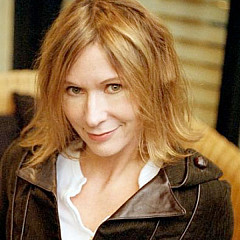
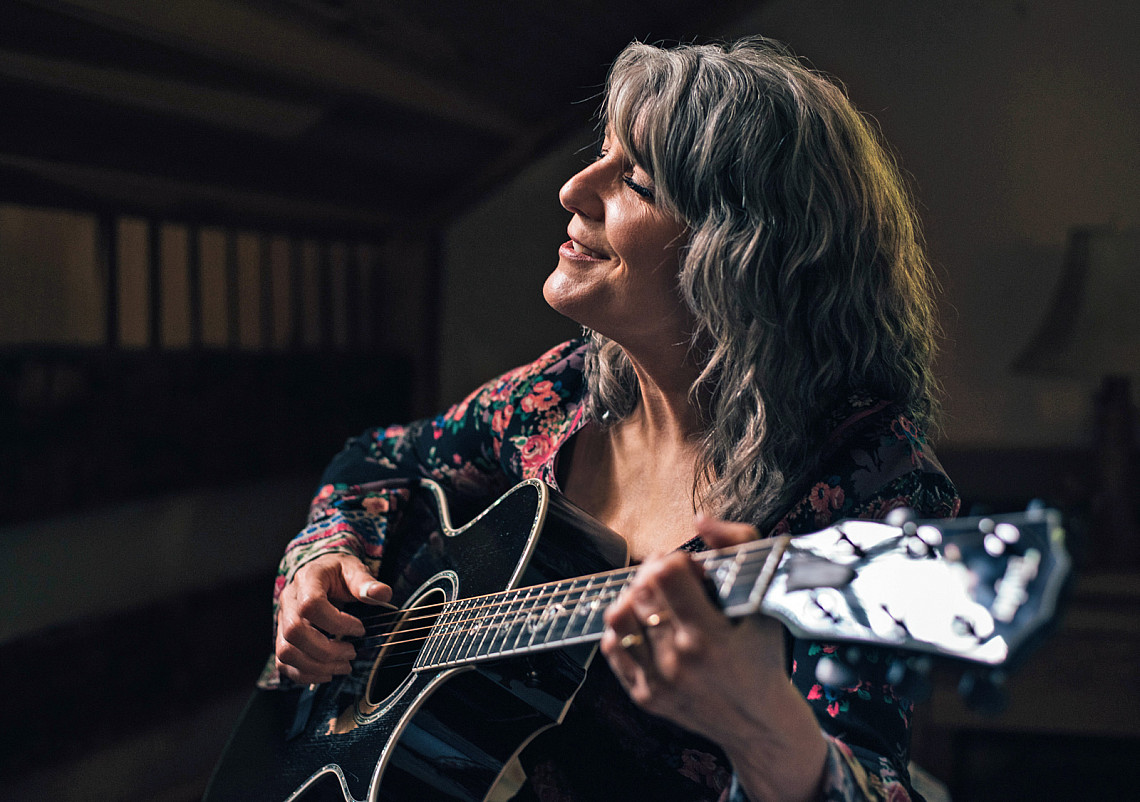
 Kathy Mattea utters the first words in Ken Burns' epic Country Music documentary, a chronicle of the genre's evolution throughout the 20th century as told by some of its biggest stars. And eventually, before the 16 1/2 hours are over, it also tells her story.
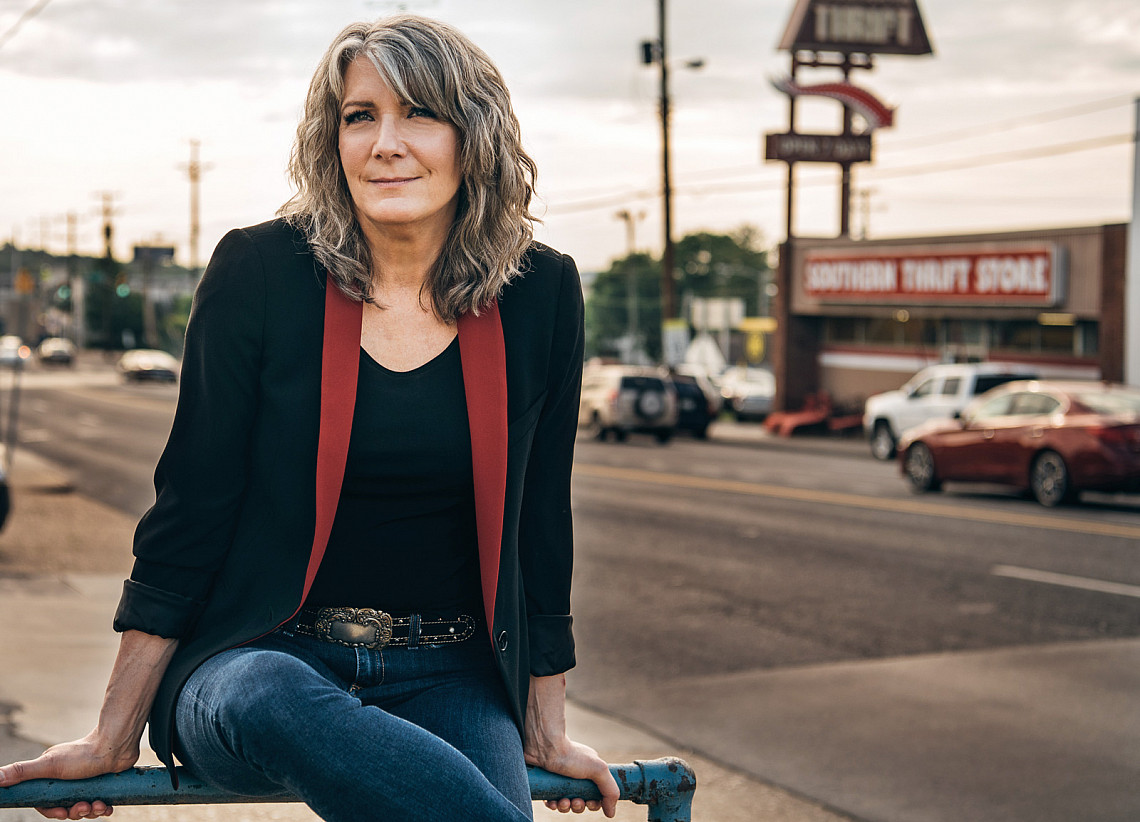
 She may not be a coal miner's daughter, but the West Virginia native is a coal miner's granddaughter. A two-time Grammy winner who first hit #1 with "Goin' Gone" in 1987, Mattea began her career steeped in traditional music history from being a tour guide at the Country Music Hall of Fame. "The day I learned about Bob Wills and the Texas Playboys, I went home and I was like a changed person," says the singer, who also cites Brenda Lee and Loretta Lynn as major inspirations.
As one of the consultants of Country Music, she attended a screening at sponsoring station WETA in Washington, D.C. We caught up with her backstage to talk about the project, her own path between traditional roots and Nashville commercialism and the song choices she's made over the years.
Kathy Mattea: It's like a great epic movie. It's so much more in depth than you could do in a movie format. This will be around for a long time, but you pick up other nuances about it every time you see it because it's so in depth. Some picture that floats by and seems random, later on, you realize they're going to talk about it in another 10 minutes and you get a deeper picture of it. I didn't know when I did it, but I am the opening person.
Songfacts: When did they do these interviews?
Mattea: They started the project eight years ago. I think I did my interview, gosh, four years ago maybe? They did 101 interviews and Ken says they've lost 20 since they did them. They got Merle Haggard, which was incredible. They missed George Jones. They were really afraid they were going to miss Loretta Lynn because she canceled several times because of health reasons. They got a great interview with her. Part of it is hearing the story from so many people who lived it and the connection to the previous generations that people had: Ricky Skaggs playing with Bill Monroe when he was 8 years old, and bringing his legacy forward. It's like a big old family, which is like a cliché, but you really get to see how true that it is.
Mattea was one of a handful of consultants for Country Music, who were called into Ken Burns' Florentine Films headquarters in Walpole, New Hampshire, to watch rough cuts and give notes to aid further editing. "We'd see an episode in the morning and give notes and see another episode in the afternoon and give notes. So over the course of four days we see all eight episodes," she explained.
Some days were harder than others.
"There was one day where Hank Williams dies in the morning and Patsy Cline dies in the afternoon," she said. "We were shredded, man! Dinner that night was like a funeral. And we knew what was happening. We've heard the story a million times, all of us we were just absolutely in tears, sobbing."
Songfacts: You're part of that legacy too. It must feel good to be part of that. Some days were harder than others.
"There was one day where Hank Williams dies in the morning and Patsy Cline dies in the afternoon," she said. "We were shredded, man! Dinner that night was like a funeral. And we knew what was happening. We've heard the story a million times, all of us we were just absolutely in tears, sobbing."
Mattea: Yes. In the film, Rhiannon Giddens namechecks me! She was listening to me when she was young. First of all, I'd never think that. It's a very lovely, touching thing. It's just nice to think something you did moved somebody. That's why we all do it. Besides the passion, you want it to resonate with somebody else.
Songfacts: Your roots have gone to some of the figures explored in Country Music.
Mattea: I grew up in West Virginia, and I was completely eaten up by music when I was a kid. But there was nobody in my family who played, and nobody in my world to teach me, so I would learn from anybody who would teach me. I was like a sponge, but I learned what people taught me. My dad had collected Big Band records and had a big console stereo that he'd tape a quarter to when the needle got old. It wasn't exactly an audiophile experience. I just took what I could get wherever I could get it. So I have like a Swiss cheese knowledge of all that stuff.
I got into college [West Virginia University] and I met a bunch of young people who were really into music and into traditional music, but with sort of a modern edge on traditional music. I just went down the rabbit hole. Then I went to Nashville. My first job was as a tour guide to the Hall of Fame, so that filled in all the gaps for me. I got to know all the history. The day I learned about Bob Wills and the Texas Playboys, I went home and I was like a changed person. I thought, What is that? There were a lot of moments like that there. It was a fortunate thing.
Songfacts: Was it an arcane thing to do in college to study old-time music?
Mattea: I found a bunch of people who were into folk music and bluegrass, and really, it was about community. It was about sitting in a circle playing music. That was their favorite thing to do.
Some people had record collections, some people had grown up playing with their parents, so everything came in. We'd play Beatles songs. We'd play old-time songs. We'd play Bill Monroe songs. Then in the middle of all that, the Will the Circle Be Unbroken album came out, which was our generation going back to the previous generation and giving us a real exact thread back.
Will the Circle Be Unbroken was a 1972 triple LP album from the California country rockers the Nitty Gritty Dirt Band, which gathered a wealth of still-living country western and bluegrass stars to sing on a number of classic and traditional songs to introduce to a new generation. Among those taking part were Mother Maybelle Carter, Doc Watson, Merle Travis, Roy Acuff, Norman Blake, and Earl and Randy Scruggs - even Joni Mitchell contributed a tune. It also helped introduce fiddler Vassar Clements.
The album was nominated for two Grammys but didn't win any until a follow-up album was recorded in 1989. Will the Circle Be Unbroken: Volume Two, featuring the likes of Johnny Cash and Emmylou Harris, won two Grammys: Best Bluegrass Recording (for "The Valley Road" with Bruce Hornsby) and Best Country Performance by a Duo or Group with Vocal. It was also named CMA Album of the Year.
A third volume, with guest appearances from Alison Krauss, Dwight Yoakam, Tom Petty, Taj Mahal and Del McCoy, among others, was released in 2002 to coincide with the 30th anniversary of the original.
Songfacts: Was Nashville receptive to that approach? The album was nominated for two Grammys but didn't win any until a follow-up album was recorded in 1989. Will the Circle Be Unbroken: Volume Two, featuring the likes of Johnny Cash and Emmylou Harris, won two Grammys: Best Bluegrass Recording (for "The Valley Road" with Bruce Hornsby) and Best Country Performance by a Duo or Group with Vocal. It was also named CMA Album of the Year.
A third volume, with guest appearances from Alison Krauss, Dwight Yoakam, Tom Petty, Taj Mahal and Del McCoy, among others, was released in 2002 to coincide with the 30th anniversary of the original.
Mattea: I loved every kind of music. But I started writing, and everything I was writing was coming out country. So that was partly why I moved to Nashville. When I got there, people responded to my voice. I had done everything from community theater and Broadway standards when I was growing up to jamming with my friend's dad's bluegrass band - and everything in between. I didn't really see much difference. So I started singing demos for people. It took me a while to find my voice as a recording artist. I was really fortunate because the company I signed with let me find my way. I didn't have a hit until my third album, and they stuck with me. It turned out I found in the depth of my voice a combination of folk and bluegrass influences. That amalgam became my path.
Songfacts: Was that commercial enough for them?
Mattea: I used to laugh because people used to say when I was coming up, "Oh, she's a New Traditionalist." Then someone would say, "No, she's a modern country singer." And I would just laugh – it's like all the same to me. It was fresh, because Nashville had gotten to more of a poppy sound, so something acoustic-based or more story-based in the lyric was coming back around. It was right before Randy Travis quit, and there was a big, wide open door that happened in the late '80s, where in Nashville, Lyle Lovett and Nanci Griffith and Steve Earle and Highway 101 - all of these young people who had a thread back to traditional music and great songwriting and storytelling were coming back around.
Songfacts: You mention coming to Nashville and writing songs. Why did you stop?
Mattea: It's my big regret. I came to Nashville with a songwriting friend and I moved because he was moving and I thought, I'll never go if I don't go with him. He's now a dentist in Richmond and I'm a country music star, which has always been the funniest thing to me. But I realized pretty early on that I was further developed as a singer, that I had more raw talent as a singer than I did as a writer. I made a conscious decision to go with my strength. I've written some songs I'm proud of and I think I could have been a great writer if I stayed with it. But I see myself as a singer who sometimes writes. My husband is a person who cannot not write songs. Like, he worked in his dad's machine shop and just wrote songs. Me, I'm not one of those people.
Mattea married songwriter Jon Vezner in 1988. He co-wrote four of her hits: "Where've You Been," "Whole Lotta Holes," "Time Passes By" and "A Few Good Things Remain." Mattea also co-wrote two songs with Vezner on her 2000 album, The Innocent Years, the title track and "Callin' My Name" (with Sally Barris a third credit on both).
Vezner has also written songs for others – "Then What" for Clay Walker, "If I Didn't Love You" for Steve Wariner, and "You're Gone" for Diamond Rio.
Vezner has also written songs for others – "Then What" for Clay Walker, "If I Didn't Love You" for Steve Wariner, and "You're Gone" for Diamond Rio.
Songfacts: You did co-write some songs you recorded.
Mattea: Yeah, I have. I co-wrote them because not spending decades honing my craft, I feel like I need someone to help me keep the structure and help me keep it between the lines. It's really fun, but I was just born to sing I think. It's been my calling.
Songfacts: But you have the knowledge of songwriting to decide what songs to sing, and as a result you have shined a light on a lot of lesser-known writers as they were coming up.
Mattea: My first eight singles were either first cuts or first singles for at least one of the writers on them. They'll talk about Guy Clark a lot on the songwriting episode and I had a big hit by his wife Susanna. I got to hear later about what that meant for her. Just a lot of digging for a songwriter. I loved bringing writers to the forefront that no one knew about.
Songfacts: What was your process? Did you listen to a lot of songs? Did you already know some of these people? Did you keep in touch with songwriters you admired?
Mattea: Everything. I would go sit with publishers who would pitch me stuff. I'd go to writers' nights and listen. I would network with people. I'd visit with musicians when we were making records. We were turning each other on to albums and stuff. It was just like: You're young, somebody has invited you to the party, you're in the game. It's like your dreams are coming true all around you and you're swimming around in the most fun community you could be in. Again, I was just like a sponge.
Songfacts: And you could bring along the people you discovered.
Mattea: Yeah. That was really the fun part. For instance, Don Henry, who wrote "Where've You Been?" with my husband, which was one of my really big songs. I recorded one of his songs, so I just called him up. It's just the most fun thing to call somebody up and say, "Hey, it's Kathy Mattea. I love your song such-and-such, I want to do it!" I'd heard a big long string of his songs, and I was like, "Who was this guy?" I called one guy up and said, "Hi, I'm Kathy Mattea, who are you? I want to know you."
My husband was like, "Oh, I love that song, I'm calling that guy up!" They started writing, and "Where've You Been?" was the second song they wrote. That's the way the community is. It still is that way very much, but not as much as it used to be.
Songfacts: But it's still your process?
Mattea: Yeah. Turning over rocks. On my latest record I did a song called "Mercy Now," which has been floating around for a long time. It's a 10 or 15-year-old song, but no one in my audience knows it. It's not something the mainstream country audience knows. So that's part of the fun of it, saying, "Hey, here's this gem written by this wonderful writer. You might not ever know about her, so y'all meet each other." That is one of the great joys about doing this.
Among the songwriters Mattea has showcased over the years are Nanci Griffith, whose "Love at the Five and Dime" was her first country Top 10; and Pat Alger and Fred Koller, who co-wrote her first #1, "Goin' Gone." She has also recorded Laurie Lewis's "Love Chooses You," as well as Gillian Welch and David Rawlins' "455 Rocket," Cheryl Wheeler's "Further and Further Away" and Jim Lauderdale's "I'm On Your Side." Her most recent album, 2018's Pretty Bird, featured Joan Osborne's "St. Teresa" and Mary Gauthier's "Mercy Now."
Songfacts: What do you think the effect of the Country Music series will be, with so many millions watching? Mattea: I don't know how to predict those things, but I can say that even for us who knew the stories, it was very powerful. Partly because the stories are told by the musicians themselves, partly because the musicians know the history - they didn't have to pull in a bunch of historians.
And a lot of the footage is new. You know the stories, but you haven't heard that person tell the story and drawn out in the telling of it. There's a lot of footage and pictures nobody's ever seen that they dug out of somewhere - home movies of the Cash family.
Songfacts: Yeah, that scene of Johnny Cash doing an Elvis Presley impersonation!
Mattea: Jimmie Rodgers in blackface! Or Jimmie Rodgers in a cowboy outfit. There's so much to it. That part of it was really rich. But here's the thing: I think if you don't think you're a country fan, you're going to find something to fall in love with. And the story is epic. The community, and the way it moves all together and the way the music comes out of that, is epic. It's like a great novel in visual form.
Songfacts: Yet it seems like it's telling the story of one kind of country music, while another quite commercial pop-sounding music is what you'll hear on country music stations.
Mattea: A couple of things come to mind when I hear this brought up. When I was young and hungry and doing session work, when I got poor, I would go transcribe interviews for [Music Row journalist] Robert Oermann because I could type fast. So I heard all these in-depth interviews with people. He interviewed Kris Kristofferson and Kristofferson was saying, "I moved to Nashville in the '60s, and they were making all these records with strings. And that's what pop music sounded like when I was a kid."
And I thought, Oh my gosh! There's this tension between the influence of pop music, and the pullback to the tradition. Between the commercial, and the roots that go back to sitting on porches, because that's what you did when you got together: you sang and danced and told stories. The tension between those two things is always going to be there. It's always going to be a pendulum swinging back and forth. That's how I feel about it.
How they dealt with it in the film is they took it up to Garth Brooks, who was kind of the turning point when country music started going into arenas and stadiums. Basically, Ken says anything 25 years or less we have no idea, no perspective. But Garth Brooks was definitely a turning point in country music, so they take it all the way up to there and then they leave the rest for somebody else.
Songfacts: Someone will have to figure out where Taylor Swift or Maren Morris goes in the country world.
Mattea: My cousins back in West Virginia were like, "You're doing country music, Kathy, but there's no twang! Where's the twang in it?" They were like, "We're not really sure you're doing real country music."
There's always going to be that. What you get to see in this film is that it started with a big bang. It started with the culmination of the English folk ballads and the fiddle and the banjo and black slaves coming over. And then the church music, and it all kind of mushed together, and all these branches started coming out of it.
Bob Wills is as much jazz as he is country, but he's both. Those are the things that open up a new world. So we don't have any perspective on Taylor Swift yet. But, going back to the storytelling and songwriting traditions, that young woman was writing songs about her generation that are incredibly well-crafted and part of the Nashville tradition of storytelling. She was basically a teenage version of Loretta Lynn. Same thing. She was writing her experience, Loretta Lynn was writing her experience. In a lot of ways, it looks different as time moves on, but there's a lot that's the same as well. It's complex.
September 26, 2019
Country Music is available at pbs.org and on the PBS App
Other interviews you might like:
Pam Tillis
Dean Dillon
Holly Dunn
More Songwriter Interviews