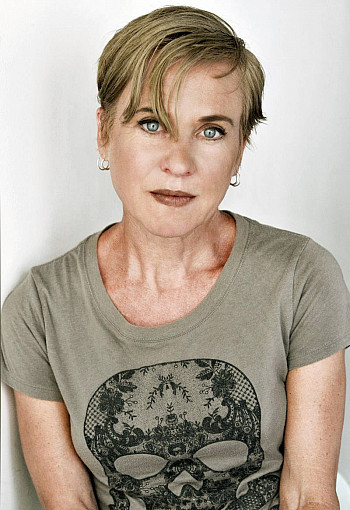
 In our chats with songwriters, we often hear about songs that "wrote themselves," which makes discerning their meanings a challenge even for the writer. Kristin Hersh goes a step further: after suffering head trauma in a bike accident when she was 16, she started hearing things - tones, chimes, hums - that formed into songs. She didn't know where they were coming from or what they meant.
Hersh was diagnosed with bipolar disorder, which was later amended to dissociative disorder - she developed a different personality that expressed itself in her music. She called this person "Bad Kristin," or "Rat Girl." Accordingly, the songs are elusive and intense. In concert, Kristin would assume a glassy stare when this side of her took over, a woman possessed. She has since reined in her memories and learned to manage her dissociative disorder through therapy.
In 1980, Hersh formed Throwing Muses with her stepsister, Tanya Donelly, in Newport, Rhode Island (this was before the head injury - she and Donelly were both 14). Hersh wrote most of the songs. Raw, impassioned and mysterious, they cut against the grain of '80s pop music, finding a following on college radio, in independent record stores, and in England, where their record label, 4AD, was based. When Hersh released her first solo album, the acoustic Hips And Makers, in 1994, it outsold every Throwing Muses album combined, thanks in part to the Michael Stipe collaboration "Your Ghost." Donelly made a mark with two other bands: The Breeders and Belly.
Hersh kept Throwing Muses alive and still revives them from time to time. She also has a band called 50FootWave, and continues to work as a solo artist. Regarding the configuration of her current band that is touring the US, Hersh says: "This trio is kind of a cover band, we just cover our own material, if that makes any sense (which it doesn't). Rob [Ahlers] is the drummer in my noise-rock trio, 50FootWave, and Fred [Abong] played bass with the Muses. So, we play everything from those two bands and all my solo material to songs from my Appalachian folk songs record."
Trigger warning: If you're a fan of the Throwing Muses song "Dizzy," you might be what Hersh considers a "lowest common denominator" listener. Don't take it personally - we like it too :)
Kristin Hersh: Pasadena Daydream was a really beautiful festival, but no, we aren't much of a cover band. We developed our own sonic vocabulary so early on that it began writing itself before too long. There's always another new Muses song waiting for us.
Songfacts: How did you come to work with Michael Stipe on "Your Ghost"?
1) The record wouldn't be released.
2) That if it was, there'd be no single.
3) That the single would never be "Your Ghost."
4) Even if it was, there'd never be a video for it.
So he was basically off the hook. I believed all these things to be true and none of them were.
Songfacts: You've worked with Bob Mould on a couple songs, "Red Heaven" and "Dio." Why do you think you connect so well with Mould, artistically?
Hersh: Bob and I have known each other for a long time. Musicians who put music first are everywhere in life, but rare in the business. We stick together and pull each other up when it gets too hard. Bob is one of those.
Hersh was good friends with Vic Chesnutt, a musician with her eclectic sensibilities who was paralyzed from a car accident. Chesnutt suffered from depression, and in 2009 died of an overdose of muscle relaxants at age 45. In 2015, Hersh released a highly acclaimed book called Don't Suck, Don't Die: Giving Up Vic Chesnutt.
Songfacts: Another man you worked a lot with was Vic Chesnutt. What did you learn from that experience?Hersh: Vic was one of the good guys to the nth power. People who refuse to suck are everything. They'll save music.
Songfacts: I read a quote about the song "Dizzy." "'Dizzy' is surely one of the greatest pop songs ever written about the delirium of interracial sex. Or possibly sunstroke, depending on your reading." That's a lot of possibilities. Which interpretation is correct? If not any, what's the song about?
Hersh: That's not a real song. It was a joke, making fun of Warner Brothers when they kept pressuring me to give them a single (meaning, a lousy song that'll fool dummies). I don't believe in the lowest common denominator and kept fighting for quality, but that's a losing battle in the corporate recording industry. We weren't planning on including "Dizzy" on the record because it's so hilariously bad. Lesson learned: don't make jokes that nobody'll get. Haha.
Songfacts: It's been said "Listerine" is about Throwing Muses' split. True?
Hersh: Throwing Muses never split, we've worked continuously for 40 years. We just don't care who's paying attention. And honestly, if you want to attract attention, real music will leave you. Songs and ego erase each other.
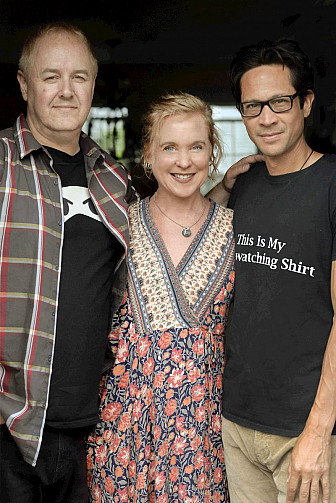 Rob Ahlers, Hersh, Fred Abong
Hersh: Songs are dreamy, hyper-real takes on life that I don't argue with. "Bright Yellow Gun" can say whatever it wants to... like one of my kids. I have to let them invent themselves.
Songfacts: Of your early songs, you've said, "Their angry, edgy nature reflected the sound inside my head." Is that description still accurate of your songs today? Have you mellowed with age?
Hersh: I still love noise, but I don't hear it as angry. 50FootWave isn't just loud, it's aggressive, but only because it's so celebratory. We love noise. You can yell when you're happy, too.
Songfacts: I noticed "Sunray Venus" is a song you play a lot in your solo set. Why is this one of the few Throwing Muses songs you play solo?
Hersh: Uh... I dunno. I really like it?
Songfacts: You've written a book about your Rat Girl personality. This musical personality was/is separate from your offstage personality. Is this still happening for you?
Hersh: I try not to disappear while I play now, but it still sometimes happens.
Songfacts: What three songs best represent what Throwing Muses is all about, and why?
Hersh: "Sunray Venus," "Sleepwalking" and "Glass Cats" from 2013's Purgatory/Paradise - those are the band's three sonic vocabularies.
Songfacts: Lastly, what are your favorite solo songs, and why?
Hersh: Sky Motel's "Costa Rica," Sunny Border Blue's "Your Dirty Answer" and "Bright" from Wyatt At The Coyote Palace. I really have no idea why. Tomorrow, I might have a different answer...
September 13, 2019
Tour dates and more info at kristinhersh.com
Other interviews you might like:
Victoria Williams
Eric Hutchinson
Paula Cole
More Songwriter Interviews