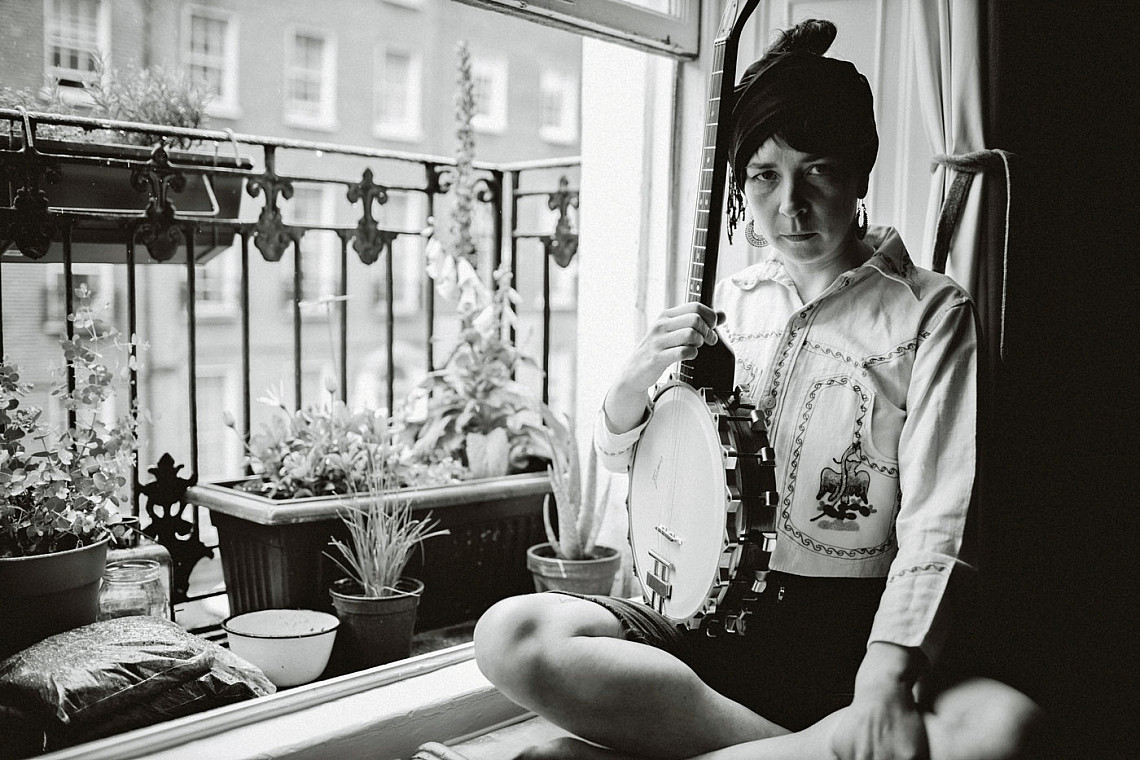
 American fans of Irish music are in for a real treat when Lisa O'Neill makes her way to the US for the first time in nearly a decade to promote her 2023 album, All Of This Is Chance.
 Hailing from County Cavan, Ireland, O'Neill moved to Dublin when she was 18 and first visited America in 2011 as the opening act for David Gray on his Lost and Found tour. Gray had seen a YouTube video of O'Neill and quickly asked her to join him as his support on that tour. O'Neill was working in a coffeehouse at the time as a barista, all the while writing songs and performing in Dublin. She had barely been outside Ireland, and the opportunity presented to her was life changing. Gray personally promoted her at shows; he even made her a Facebook page and sold her albums on his website. However, it is her pure talent and drive that has secured Lisa O'Neill the honors that she has garnered in the 12 years since.
With five albums behind her, two of which were nominated for the Choice Music Prize in Ireland, O'Neill has the backing of a record label now, along with a promotions team in the UK and US. Her anthemic song "Rock The Machine" (from the album Heard A Long Gone Song) won Best Original Folk Track at the 2019 RTÉ Radio 1 Folk Awards. She was also nominated for four BBC Radio 2 Folk Awards in 2019 - Folk Singer of the Year, Best Traditional Track, Best Original Track, and Best Album.
The accolades continue to pour in for O'Neill, whose stirring songs blend traditional Irish music with lyrics that detail the strength of a woman who has compelling convictions and is not afraid to share them. Her pure songwriting and organic music - she plays the guitar and banjo - make for songs that reach the soul. She advocates for those with voices long gone and stands with those whose power has been taken from them. A beacon of hope and champion for the downtrodden, at times, O'Neill is seemingly a messenger, telling stories of ghosts, serving as a voice for the people and the culture. Traditionally rooted in her Irish heritage, the purity in her music makes for a captivating live performance. She is quick-witted, motivates and moves, and her music is as inspirational as it is informative.
Preparing to head to the US on the heels of a headlining UK tour, she talked to Songfacts about how significant her last visits here were, why she is compelled to share historical narrative in her songs, and what it was like to record her idol Bob Dylan's song for Peaky Blinders.
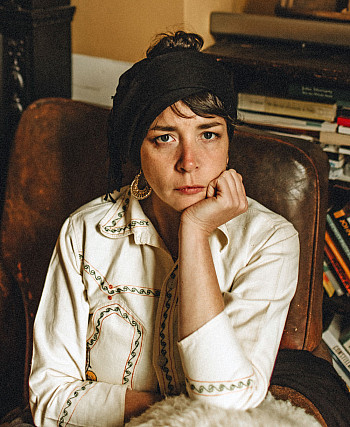 Nicole Roberge (Songfacts): How are things in Ireland? Are you excited to come back to America?
Lisa O'Neill: It's a beautiful day in Dublin. I'm excited to travel - I haven't been to America in eight years. I'm super excited to get to America. I like seeing new places. Although I've been there before, the last time I was there I was a bit of a child and now I feel like I'm going into America as a woman. I'm really looking forward to my journey and seeing how my songs land. It's all an experiment.
Songfacts: You first toured here with David Gray in 2011. He saw you on YouTube and invited you on tour with him. How often have you been back?
O'Neill: That was the first time I ever arrived in America. It's hard to look back on the last decade of yourself collectively. You're really only in it a year at a time. I have been back since then but there's been a great pause. I went back in 2008 and did a few shows - New York, Chicago, and Boston. I went back to do SXSW at one point, but this will be my first proper effort to go back. It's like starting again, really. I have a record label now, management, and an agent in the US as well. I get a different shot at it, I suppose, this time. But it's a lifetime's work.
Songfacts: Back when you were working in a coffee shop, were all these successes, all this support, things that you thought could happen?
O'Neill: No. When I was working in the service industry and making coffee, certainly not, because I wasn't facing it. I was a bit unambitious. At that time, when I was working in the café, I was always writing songs, but I had no big goal for where they'd go. I enjoyed being in that place of receiving songs. It really got me by surprise to get a call from David Gray and to find myself within that year leaving the job and doing an interview in the American Embassy for a visa to go play music in America with this wonderful band. It all happened so fast.
What else happened fast was I had the experience then and it was mind-blowing, life changing, and I'll never forget it. I was so green and so innocent. It wasn't like I had been to America on holiday or done a little gig here and there and I was at this level with David. It was straight from the café to the Grand Ole Opry in a sense. Boston was a huge gig. We played the Beacon Theatre in New York. All these places. Don't get me wrong, David earned that level, not me, but he brought me along to see it, and I got to play in front of those audiences in those wonderful rooms. So no, I wasn't aiming for it, but when I returned home and I had those experiences, I thought, That's a thing. That's a thing to work towards. Once I had a taste of it, I thought, I like this, I really like this.
Songfacts: And you just now came off a really big headlining tour in the UK?
O'Neill: It's the biggest tour I've done in the UK for sure. And that was great.
Songfacts: That's in support of your new album, All Of This Is Chance, which is very rich in Irish tradition and storytelling. What was the process of writing that album?
O'Neill: It was the longest gap between releases of albums that I've had since starting out. It was five years between that and the last album. It wasn't supposed to be like that, but we won't go down the boring road of talking about the pandemic. It halted everything outside of my choice, so the process was different. There was no gigging happening. I was in one place. There's a lot to be said for staying in one place for a while and seeing how the subject changes or the thing that you're working on changes. I can only be in a moment at a time, and I don't look at the process as one big story. It was different and enjoyable and there was a lot of solitude involved. I didn't necessarily seek out that solitude.
In other albums I always lived with people. In other albums, when I was nearly ready, and I felt like I had collected a lot of ideas in songs, I'd want to sit down and prepare them before I sat down in a studio, so I'd usually go somewhere very peaceful. I'd maybe rent a cottage at a lake or at the bottom of a mountain somewhere. Somewhere in nature and be there with the songs for a few weeks and really give them a lot of time and care and see where they begin and end. But with this particular album and the pandemic, and living alone at this point in my life, all that solitude and space was there for me at home, and it went on and on and on, like it did for everyone.
I recorded half of the album early on in the pandemic. There was six months' break from when we first went into the studio, and then we stepped back and went back in. I think that was interesting too.
Songfacts: "Old Note" is very visceral and evokes nature and the different senses, with very pensive music. It's very beautiful. Why did you pick that song as the first single?
O'Neill: The few people who heard the songs before the album came out, everybody was leaning towards it. They all said similar things, "There's something about it." I was really happy because it was one of my first choices as well, but I didn't think they'd go for it because it was so long. But they did. Sometimes those decisions are not overthought or overcommunicated. It's a lovely song. I think it's special.
O'Neill: "Factory Girl" is a traditional song, so that's one I learned with Radie Peat1. I could empathize with the woman's story. There's a lot about empathy. When I'm learning a song that's old and in the tradition, if I'm going to take it on, I have to feel empathy for it. I have to feel like I can pop myself in the shoes of the character or the story. The character doesn't have to be a person either. The character can be a tree or a dog, if you can get to the essence of the story. For the likes of "Violet Gibson" and "Rock The Machine," both came to me when people sort of came to me and challenged me to write songs about these topics. I didn't grow up with those stories.
"Rock The Machine," the National Concert Hall asked me to write a song about the Docklands and the River Liffey. When I went to the Docklands, I thought, I'll go talk to the people who worked at the Docklands and maybe I'll be able to write a song then. What I found was that so many jobs were lost at the Docklands, and there you have it. There was my story and I really felt something for that. I thought, Well that's sad, that's wrong. And that continues on today. The machine, the damn machine coming in and replacing our jobs and our livelihood. It's our way of life and purpose. There's more to life than money and wages, though we need it. The machine vacuums something else, as well, which is the foundation of community. We all have a part and a purpose within this thing. If the machine comes in and says, "We don't need you anymore," that's not very empathetic, is it, machine? You don't have any feelings. "Rock The Machine," I felt strongly about, and I was glad for the song to land in the right way.
"Violet Gibson" - there's a songwriter named Ian Lynch, and we'd give each other a little challenge. He said, "I give you an idea for a song, you give me an idea for a song, and we'll meet back here in two months' time and show me your song on this date." That was the idea there. And he gave me Violet Gibson2. I hadn't heard of her. As I read and I learned, I got quite the right amount of anger, and thought, That's wrong. Well, then ok, I can write a song about that because it's so wrong. That's what drives us, I think. That's what we should follow, what drives us. What we feel strongly about. We can probably really apply ourselves to that.
Songfacts: I really found "Violet Gibson" quite exquisite. The woman who shot Mussolini, you're giving this woman a voice. You're telling and sharing her story. It's truly eye-opening for people who didn't know who she was. What do you think she would say about your song?
I moved in silence
for the love of truth not violence.
I'm mad and I know
people don't really change I suppose,
they just go a little bad when they go.
I never read anywhere that Violet Gibson suggested that she was mad. But the big conversation that's out there about her is, is she mad to do a thing like that? People still scratch their heads today at what level of madness was Violet Gibson at to shoot a man like Mussolini. I just think, do we not have that answer? She wasn't mad. She saw something that others didn't see. She saw that this guy was going to a very negative place very fast. I think it's the violent aspect to it, her attempted assassination. If you want to balance that with what Mussolini did, with what he got away with eventually, I don't think she was that mad. She was in tune with what was going on where others were maybe a little bit behind the times. She never got the validation when the rest of the world realized Mussolini was a bad egg.
So, the song is as much about that as, it's not ok to just let the narrative go and run with society and the idea that this person's a bit crazy when really after a certain amount of time, we find out they were alright. It just took the world about 10 or 20 more years to realize what they were saying was true. I feel quite strongly about that. I know that women in the world, and people in the world today, it's still very easy to label someone as mad when they are speaking against the status quo. It's frightening that someone can be imagined in history as not to be taken seriously when really the opposite was true.
Songfacts: "Rock The Machine" was really an anthem for these hardworking people and the plight of machines taking jobs, which you won an RTE Radio 1 Folk Award for, for Best Original Folk Track. Did you expect it to have that impact on people, especially when there's this historical narrative?
A woman came up to me at a gig once and said, "The hospital Violet Gibson was in was the hospital my mother went to." She had such an amazing story to tell me. She said, "This really speaks to me, and I just feel like my mother's story isn't told." There were so many women in there like her, and that was really beautiful to me. Nurses from that hospital have come up to me and told me little insights and things about the inner workings of the hospital. You just have to scratch the surface with the song and the audience are like all these hundreds and thousands of branches to the subject and they come back and tell you more. I could be anywhere in the world and hear a similar story. It's fascinating. You're opening up a conversation when you write about the truth. People still need and want to talk about it today because it's still relevant.
Songfacts: Music has an incredible way of connecting people.
O'Neill: And repeating itself. Subject matters and stories can repeat themselves as we move through decades and centuries. That's when you feel something is coming up in an old song that's been written in a new song today. It shows us a lot about where we've come from, what we could change, and what we can get through. What humanity is really capable of in good and bad.
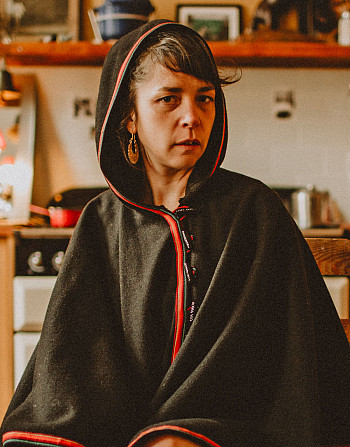 Songfacts: Do you enjoy writing about historical events and people, and is there a topic you haven't written about yet but want to?
 O'Neill: There's lots of stories I want to write about. I want to write about the housing crisis here in Ireland. I feel that all around me. The injustices feel more urgent than any other story. If someone comes to me with a story about a fascinating woman from 200 years ago, and they might like this story, I think I might like that story too, but it doesn't feel urgent to me. As I live among society and as I travel around the world, I think I have to write about that, and I have to find out if that's true or not. If it is true, I really have to write about it.
For example, a couple weeks ago, I was in Manchester, on the last night of the tour. I'm hoping this isn't true, but I have a feeling this is true. I met a homeless man, and he told me that people who are begging in England are now arrested for begging, and they take their money off them. That was a real moment where I thought, I need to write about this. I need to find out if it's true or not. I've been doing a little bit of digging since, but I haven't gotten there with that one yet. I'm not having a dig at Manchester, England, or anything, but is this how we're treating our homeless people anywhere in the world today? That's not ok. Are we not entitled to ask for help? Because that's all a person is doing when they're begging, they're asking for help.
My new attitude, maybe not to be too precious, because the world is changing so fast, is, as ideas come to us, don't be too precious with them, and write them tonight, and make a little song and get it done. Before you know it, it won't be relevant anymore. I just finished one called "When Cash Was King." I'm considerably worried by this cashless society we seem to be slipping into. I think it's important to have both. There's so much to our history with cash, down to The Tooth Fairy leaving money under your pillow. That's a lovely ritual. I left my phone behind one night in London a couple of weeks back, so I had no cards. I was with my manager at the hotel, and I wanted to buy a bottle of water. They wouldn't accept my cash, and I was a resident at the hotel. I thought, Wow, so if I don't have a mobile phone or bank account in London today, does that mean I can't buy a bottle of water? That's huge. Cash is so important. It's a fundamental part of our independence. My feeling is, if we depend on the machine to mind all our finances and everything has to run through that system and that model, someday the button might break. If all systems go down, where will we be without our stash of cash?
I've written "When Cash Was King," and I think it's an important time to sing it because we're on the cusp here and I'm hoping the song might save the life of cash. We're powerful. We have a way of holding on to things we believe in.
Songfacts: You recorded a version of Bob Dylan's "All The Tired Horses" for the television series Peaky Blinders. It's very emotive and you really put your own sound into it. You also have a sweet and clever song called "Bobby D," where you confess to being a big fan of Bob Dylan. What was that experience like, especially as an admirer of his music?
The whole thing came about when they heard my music. I don't know who the instigator was. I know Cillian Murphy is a fan, which is huge to me because I'm a fan as well. They had taken one of my original songs ["Blackbird"] and put it in the series as well. But this was a very last-minute moment and they needed it quickly. They wanted results within three or four days, so it was a high-pressure situation. All the energy was in there, so I don't remember all the logistics around it. It was very exciting. I can't explain it. It was a whole new level of excitement. It felt almost otherworldly to be working with that level of drama and television because I'm a real genuine fan of Peaky Blinders. I've been following it, so it felt like a responsibility, especially with Bob's song.
He's a wonderful songwriter and it really got me thinking about songwriting as well. Just the power of one line. Not anyone could get away with that. It doesn't mean go out there and one line will do it and repeat it and that means it's a mantra. Not any line can be a mantra, but he manages it with that one. I love it. I was listening to it again last night - his version. It's magic. There's a lot of life. His is very hypnotic. But that's not what was working for the final scene, so I had to do something different with it.
I guess I went in the opposite direction, and they slowed it right down. I had to figure out how low I could go with my voice and how high I could go. That was really fun. And then when I got to a certain point, I put the drum down and the basics and sent it all to Cormac Begley3 and Colm Mac Con Iomaire4, who I wanted to work with on this, and they both sent me back little ideas over it right away, within 20 minutes. They responded naturally and well to it because they knew what I wanted or where it was going. It was amazing and I hope I get to work at that level again someday with some of these guys. It really was inspiring. It felt like I went up in a rocket.
Songfacts: You have such an amazing range of songwriting. If you had to pick a song to introduce new listeners or American listeners to, what would it be and why?
O'Neill: Sometimes if I think of something like that, I think, Should I introduce them to the softer side or the wildness? I think I'd pick my song "Mother Jones." I have a song written about the woman Mother Jones, an Irish immigrant who was a labor activist in America for awful working conditions for people who worked in the mines and factories over the years. She was an amazing woman. I wrote a song about her. There's a folk station on NPR that is going to play one of my songs this week and that's the one I gave them. How do I want to introduce my music to people in America? I give them the "Mother Jones" song.
May 4, 2023
Here's our interview with David Gray
For tour dates and album info, visit Lisa O'Neill's official website
Footnotes:
- 1] Radie Peat is a Dublin-born singer and musician who's a member of the Irish folk group Lankum. Peat and O'Neill collaborated on "Factory Girl" for O'Neill's 2018 album, Heard A Long Gone Song. (back)
- 2] Violet Gibson was an Irishwoman who attempted to assassinate Italian dictator Benito Mussolini, who founded Italy's National Fascist Party, in 1926. The failed ploy got her committed to a psychiatric hospital in England for the rest of her life. O'Neill's Gibson-inspired tune is featured on Heard A Long Gone Song. (back)
- 3] Cormac Begley is an Irish concertina player who released his self-titled solo debut album in 2017, followed by B in 2022. He's one of O'Neill's many collaborators on All Of This Is Chance. (back)
- 4] Colm Mac Con Iomaire is a founding member of the Irish rock band The Frames, for which he sings and plays the violin. He also provided the string accompaniment on O'Neill's "One Note." (back)
More Songwriter Interviews