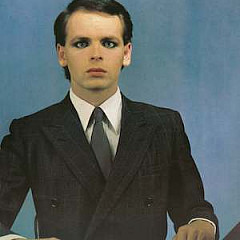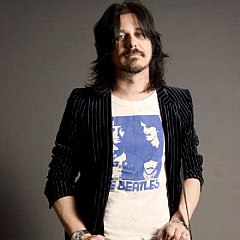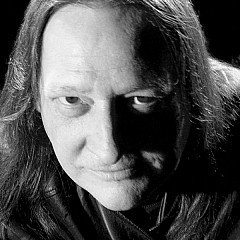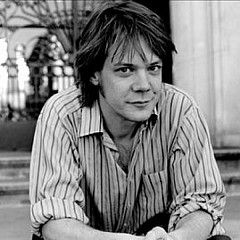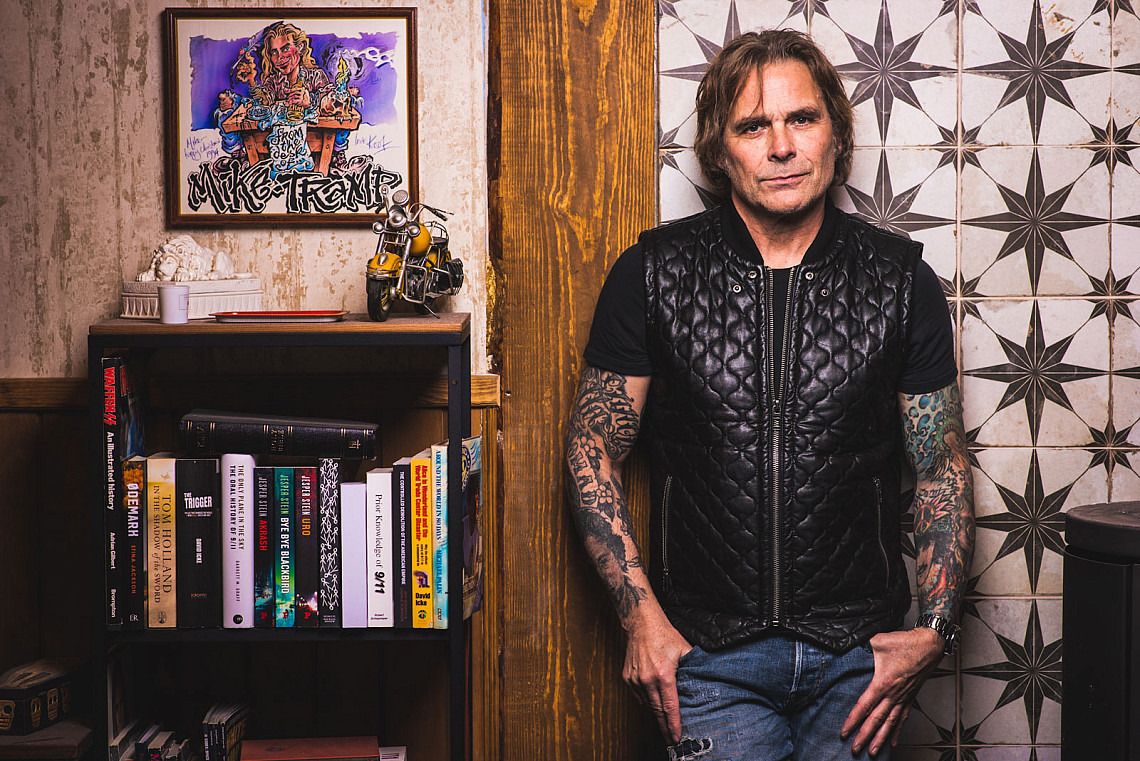
White Lion stood out from the hair-metal pack of the late '80s with heartfelt hits like "Wait" and "When The Children Cry." Unlike, say, their one-time tourmates Mötley Crüe, they didn't show up in the police blotter or the tabloids, but they did earn a reputation for deft musicianship and powerful songs. Kerrang! gave their 1987 album, Pride, five stars.
Frontman Mike Tramp (from Denmark) and guitarist Vito Bratta (from Staten Island) were their songwriters and the core of the group. They broke up White Lion after releasing their 1991 album, Mane Attraction, and have never reunited. Bratta pretty much disappeared until Eddie Trunk tracked him down in 2007. Tramp formed a band called Freak Of Nature and put out some solo albums before revisiting White Lion material in the '00s, triggering a legal scuffle with Bratta that has scuttled any reunion.
On April 14, 2023, Tramp will issue Songs Of White Lion, with his re-recordings of 12 of the group's best-known tunes. Here, he talks about some of those classic White Lion songs and explains how a reunion with Bratta could work.
Greg Prato (Songfacts): How did the idea come up to do the Songs Of White Lion album?Frontman Mike Tramp (from Denmark) and guitarist Vito Bratta (from Staten Island) were their songwriters and the core of the group. They broke up White Lion after releasing their 1991 album, Mane Attraction, and have never reunited. Bratta pretty much disappeared until Eddie Trunk tracked him down in 2007. Tramp formed a band called Freak Of Nature and put out some solo albums before revisiting White Lion material in the '00s, triggering a legal scuffle with Bratta that has scuttled any reunion.
On April 14, 2023, Tramp will issue Songs Of White Lion, with his re-recordings of 12 of the group's best-known tunes. Here, he talks about some of those classic White Lion songs and explains how a reunion with Bratta could work.
Mike Tramp: The main reason is that I have carried that "backpack" since basically the early '90s. I ended the band in '91, and for three years - '92 to '95 - I had a band called Freak Of Nature, and released three albums. And when I went solo with my first solo album in '97, everywhere I went half the poster said "FROM WHITE LION" or "THE VOICE OF WHITE LION." Even some banners on the first American club tour that I did announced me as "White Lion." So, it's been an ongoing running away/chasing this past.
At times, I had been called back into duty to resume the White Lion position as just me. And the times before when I did Tramp's White Lion, I made the decision but I wasn't ready in my heart to do it. After a few years and lawsuits with Vito, and people using the name more than they should and stuff like that - especially in announcing concerts - I pulled back. Since then, I recorded 10 more solo albums, but no matter where I go, people are lazy and concert promoters are constantly pushing, "Are you playing any White Lion songs? The fans want to know if you're playing White Lion songs." No matter what I do.
So, I came to the conclusion that if I'm going to play White Lion songs, I have to play them 100% the way they are, because my solo albums and my solo band is like Tom Petty or Springsteen - it has nothing to do with the '80s sound and world. So that band doesn't really do that and we don't play those songs correctly. So I started messing around with how I could do that, and also finding a way for me to sing these songs, since I'm not 26 anymore - I'm the opposite, I'm 62. I wanted them to feel like they're here today and not like a dinosaur brought back to life with some assistance from technology.
Songfacts: Are there any versions that you prefer over the original?
Tramp: Well, yes. Basically all of them.
Of course, if I hadn't written these songs with Vito Bratta and we hadn't gotten the success in '87 and '88 with the Pride album and everything exploding from there, I wouldn't be here talking to you today about this. But you know what? When you get a second chance to do something, you do it different. I'm going into this project with 35 years of knowledge. I have sung these songs in 20 different versions: acoustic guitar, piano, whatever. So when I'm now in my studio singing these songs, I own the songs today before the songs owned me, and I kind of follow along.
Now I'm so comfortable in those songs that I just sit there with them and put them into the track and feel at home with them. So, your basic question of if I like these versions better, there are a couple of songs that I've given a little bit of a kick in the ass. When White Lion went in to record the Big Game album in '89, we'd been on the road for two years. The Pride album had been in our live set for three years before we even recorded the album, and then Vito and I were given just two weeks to write the Big Game album.
That is extreme. We needed half a year off, we needed hair treatments for our abused hair, we needed just to breathe. We needed the vocal cords to relax, stuff like that. We didn't get that.
By the time we go in to record the Big Game album, which is our follow-up to a massive success, money is coming in from all the other stuff we have done. When we went in to record Pride, we lived in a one-bedroom apartment, we had no money. Now, we're sitting there talking about what sports car we're going to buy today, and I'm going to extend the forks on my Harley-Davidson, stuff like that. We're in the wrong place. So, there are some great songs on the Big Game album, but they're unfinished.
Songfacts: Let's discuss the lyrical inspiration behind a few White Lion songs, starting with "Wait."
When Vito played that intro to "Wait" for the first time and I just sang, "Wait," there was really no way out of that song that said, "I'm gonna write this song about Lord Of The Rings or something else." It had to be a plain and simple breakup/love song. The title says it all.
Songfacts: "When The Children Cry."
Tramp: This is 1985. I lived at my manager's house in Staten Island, and I'm at home with an acoustic guitar. Ronald Reagan is the president, and I think if you look at statistics, America is in damn good shape. And the music business is at its peak. Basically, the feeling of the world and the feeling of America at that time are people having a good time.
Here I am, singing, "When the children cry let them know that we tried," "One united world under God," "No more presidents and all the wars will end." It's obviously not the moment that I'm writing about. Maybe I was a little bit Nostradamus at that time.
But it was an awareness that things will not be this way always. It just felt much more right for me to write those kind of lyrics than saying, "Baby where have you been since last night, I've been lying awake all night and now you're here." I find it really difficult to write cheesy, tongue-in-cheek, sexual innuendo songs. It's not my forte, not my strength.
Songfacts: "Little Fighter."
Tramp: Now, here we come onto the Big Game album. We've been on the road with Aerosmith, with Kiss, with AC/DC - we've been out with the giants. We're seeing the world. We've been to Japan, had two big successful European tours. And now, Vito and I are in a run-down motel in Palm Springs where we had just gotten a bungalow with two rooms, and here we are writing these songs together. It's like a David Lynch scene. We've been sitting there writing "Little Fighter," and I go into the other room to sit, and suddenly, it jumps out of my head and I remember a long, long time ago...
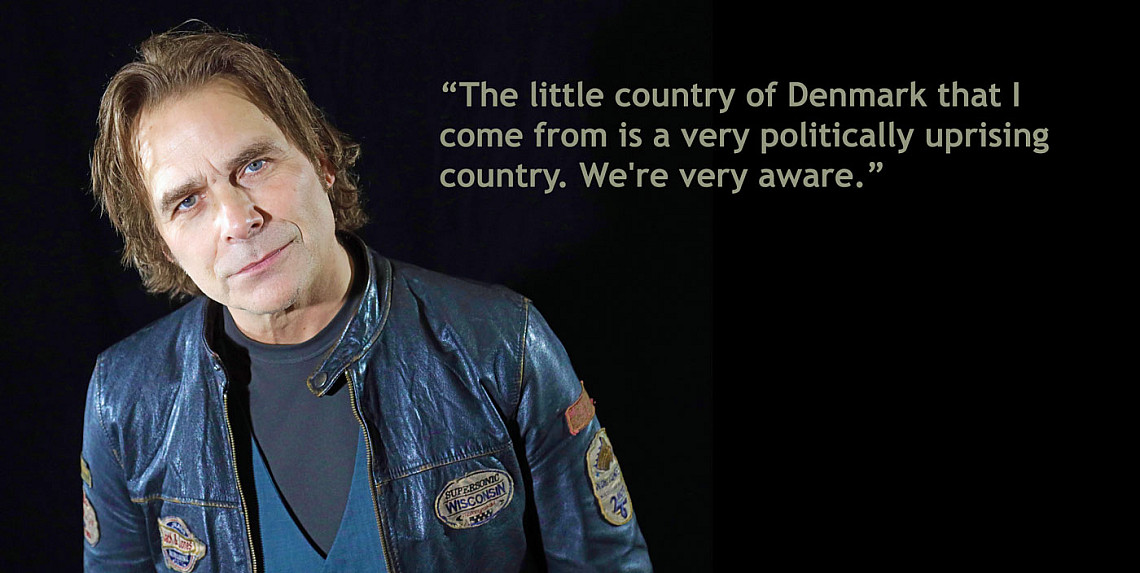
The little country of Denmark that I come from is a very politically uprising country. We're very aware. We're the ones that created that smiling sun T-Shirt saying, "NUCLEAR POWER? NO THANKS." That's how I grew up. And I remember hearing this story about this little fishing trawler called the Rainbow Warrior that's sailing around New Zealand in 1985 trying to prevent the French government from doing nuclear testing down there. And in the middle of the night, French frogmen blow this boat to pieces.
So, I saw in that song this little thing going up against a superpower, and I say, "Here we go - a modern-day David and Goliath." So, I put that in the lyric and wrote that song without going into specifics.
It's incredible how many people have taken that song as their own fight in life, from soldiers in wheelchairs to people losing their children and stuff like that. "Hey, he was my little fighter." And it's really heartbreaking when you know that kind of song went that deep. It also tells me that I write lyrics with the option of the listener interpreting it his or her way.
Songfacts: "Tell Me."
Tramp: My starter lyrics, instead of "Tell Me" it was called "Lambs And Lions." It's one of those Bob Seger "Hollywood Nights" type songs - two lovers running away in the night and taking that journey. There's another video and song from Rod Stewart called "Young Turks" about two young people running away. Romeo and Juliet in the modern day. Not a lot I can add to the lyrics.
This song is so strong and melodic, and such a positive, upbeat and singalong song, that it cannot have a political or "I'm not having a good time" kind of lyric. It's almost forbidden that you go in and ruin the positive mood of the song by saying too many things.
Songfacts: "Cry For Freedom."
I've lived in the US for 42 years, and it has always been the greatest love and the greatest time in my life, but I do notice that most Americans are sort of OK with what happens in their local state and don't really bother with what goes on outside that. And here again I pick up on the apartheid situation in South Africa.
Once Vito and I established the groove in that song - that is so not '80s - I knew that the song had to have something completely different.
This is one of the songs on the new album that I really brought home, because that is so completely unfinished on that album. I always loved the song, I always thought the song was great, we just never nailed it the proper way.
Songfacts: "Love Don't Come Easy."
Tramp: Well, it doesn't! Besides death, it's probably one of those things that everyone will go through one way or another. They will go in and out, and they will search, and some will never find it and some will. And then when they find someone, there will be trouble again. One person gets confused, one is happy, one doesn't want to go the way you want to.
Along the song, you're going through three verses, and when you come to the third verse, you say, "Girl, you better make up your mind now because I can't wait." And then, we're back to the song I wrote in '86 called "Wait."
 Songfacts: Why do you think White Lion was unable to sustain the success of Pride?
Tramp: I'll definitely not put the blame on me or the band. This is really where the people that collected the commission and the percentages for their work did not show up. There were mistakes from the record company along the way, and as I'm a massive fan of nostalgia and have read hundreds of biographies and own almost every documentary a band has done, in many ways the story gets repeated over and over and over.
A lot of people within our camp - including our record company - were surprised that Pride became a success [the album peaked at #11 on the Billboard 200 and earned double platinum certification]. The record company did not want to release "When The Children Cry" as a single, and we pushed so heavily for it, and it came out and became a worldwide hit, [peaking at #3 on the Billboard Hot 100] and still today is our biggest song.
Then, when we go in to start recording the Big Game album, it's already pre-ordered a half million. It's going Gold the day the record comes out in the stores, so people get this false sense that it's going to be five times as big, so they slack off and they don't focus as much.
We had an episode where the two big cheeses from Atlantic Records come out to the studio to hear the songs, and it's that classic scene in the studio: lights dim, speakers cranked up. At that volume, everything sounds and feels right. Thirty years later, the story comes out that when they get out in the car, the big boss asks the smaller boss, "Why are you letting them do this?"
Why doesn't he either drive the big boss home and get back to the studio and say, "Guys... time out. Restructure. Let's just look at this - where are we?" No.
And we're "the emperor's new clothes" at that time. We're under the impression that, "Hey, this is going to be great. This is going to be big." We're continuing. More trucks, more clothes, more everything.
Songfacts: When was the last time you corresponded with Vito Bratta, and how would you describe your relationship currently?
Tramp: Thank God it's really good now at the moment. We've gotten to this place where we're sort of at peace. We were speaking by email the last two weeks - there was some old paperwork that needs to be settled and stuff like that.
I don't know if the next question is going to be this, but we're not going to reunite White Lion. We both don't think it would be as great as the White Lion that existed. That is, of course, not to say that we couldn't collaborate and do something if Vito wanted to.
If we do something, it would probably be more like when Jimmy Page and Robert Plant got together. They didn't call it Led Zeppelin, but they went to Morocco and they did versions of the old songs and did something sideways so that it is not a continuation. Because you can't continue that old band.
April 12, 2023
For more Mike Tramp, visit his Facebook page
Further Reading:
Tom Keifer of Cinderella
Joe Elliott of Def Leppard
Don Dokken
Cover Story: Slippery When Wet by Bon Jovi
Kiss Truly Unmasked
King's X, The Oral History
Photos: Jakob Muxoll (1,3,4), Morten Madsen (2)
More Songwriter Interviews