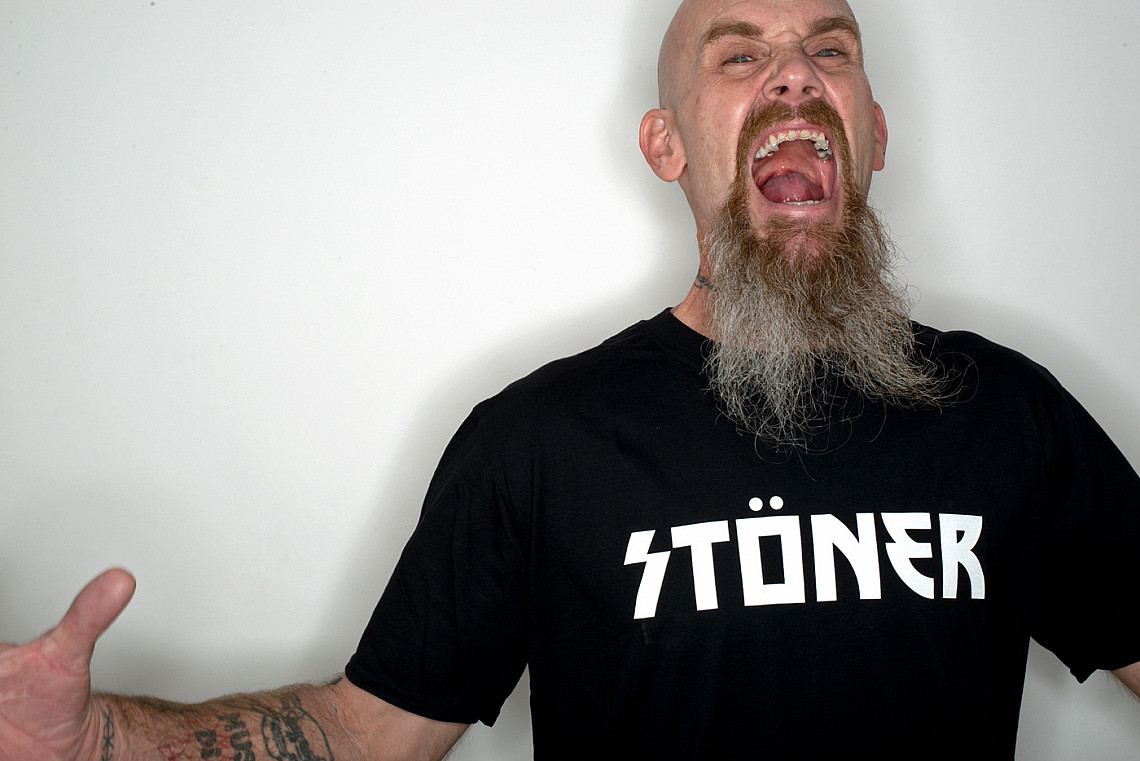
After exiting Queens Of The Stone Age in 2004 following their classic album Songs For The Deaf, singer/bassist Nick Oliveri has kept himself busy with a variety of projects. In case you've forgotten, those would include leading his own band, Mondo Generator, issuing solo albums, and playing bass with veteran punkers the Dwarves and in the brief Kyuss Lives! and Vista Chino projects (which saw Oliveri unite with his former Kyuss bandmates, John Garcia and Brant Bjork).
Now Oliveri, whose long goatee and bald noggin make him instantly recognizable, has united once again with Bjork in the band Stöner, who in the span of a year have issued a pair of releases, Stoners Rule and Totally.
Oliveri spoke with Songfacts shortly after the release of Stöner's sophomore effort, discussing how he prefers to pen songs, his memories of the classic Queens Of The Stone Age album Rated R (which turned 20 years old in 2020), and his encounters with James Brown, Rob Halford, and the late, great Mark Lanegan.
Greg Prato (Songfacts): Let's start by discussing your new band, Stöner.Now Oliveri, whose long goatee and bald noggin make him instantly recognizable, has united once again with Bjork in the band Stöner, who in the span of a year have issued a pair of releases, Stoners Rule and Totally.
Oliveri spoke with Songfacts shortly after the release of Stöner's sophomore effort, discussing how he prefers to pen songs, his memories of the classic Queens Of The Stone Age album Rated R (which turned 20 years old in 2020), and his encounters with James Brown, Rob Halford, and the late, great Mark Lanegan.
Nick Oliveri: The lockdowns were in full effect and Brant at the time was living literally a stone's throw away from where I am in Joshua Tree. And without being able to get in the same rooms with our other bands – like Brant and his solo stuff, and Mondo Generator and other bands that we play in – he called me up and said, "Hey, my drummer Ryan Gut is here. We're jamming, do you wanna come by? We have a livestream we need to get ready for, and we have five days to do it!" Something to that effect.
Before I could hang up the phone, I was in the car going over there to jam, 'cause I was dying to. And to get a call from Brant Bjork is a good call to me, so I went over there and he told me it was going on. He said, "We have a livestream, here's some songs. If you got some songs..." and I had a couple tunes. We basically threw all the songs together, and in four days recorded Stöners Rule at his studio in his old house over here.
I'm very comfortable playing with Brant, the first person that I ever jammed with in a room. I guess he called me because he knew I'm able to do that with him, and Ryan is definitely able to do that with him.
So we arranged some parts and improvised some things because we were going through some jam things. I had a couple versions that were super long and some that were shorter, so we went with the ones that were shorter and the jams that were more focused, and it came to be that way.
Brant had an idea. He wanted to call the band The Blonde Lebanese, which is a strain of hashish, I believe. I came up with Stöner. It seems to me like Brant Bjork could fly that Stöner flag, and his style of songwriting is what I would call "Stöner rock."
Songfacts: Did Brant bring in the material and you learned it, or did you collaborate on the songs?
Oliveri: Brant brought in most of it on Stöners Rule. He said, "I want the songwriting to be very simple. I want to take everything back to when we were very young, and not have real hard parts and things that have too much thought put into it, or make the listener go, 'Whoa. The time signature is so off on there.'"
We wanted to stay really focused on keeping it simple, our version of the Ramones. Not Ramones style, but the idea of, "1-2-3-4! Let's get it on and let's play." So verse, chorus, verse, chorus, bridge, out kind of thing. Maybe a jam in some of the songs. We stayed real focused on arrangements. He had some parts on most of the songs, and I came in with an old tune I had that we jammed when we were kids.
This riff I had, we ended up calling it "Evel Never Dies" – the Evel Knievel song. I didn't know what to do with the song because I always thought it was kind of silly, but Brant goes, "I like it! It's good." So it worked. And that's how we did Stöners Rule – we threw it together in a short period of time, and Brant had most of the ideas.
Songfacts: Do you prefer writing on your own or collaborating?
Oliveri: I prefer writing with somebody. But if I finish something at home and bring it in, I'm never against somebody going, "Hey man, I have this bridge that might work better than the one you have." I'm always open to that. I prefer it because I believe when you're playing in a band, if somebody puts their thing in it, it's going to be better. If you trust the people you're playing with then it naturally will just be better.
Some guys are different. I play in a few different bands, and everybody's a little different. Some guys bring in songs that they don't want touched. I prefer my friends' songs – I think my friends write great songs. I like the songs I write, but I don't think they're the best songs in the world. I think I'm a good songwriter, but I'm not the best. Definitely not. I prefer to have somebody interject into my songs. I think they make them better.
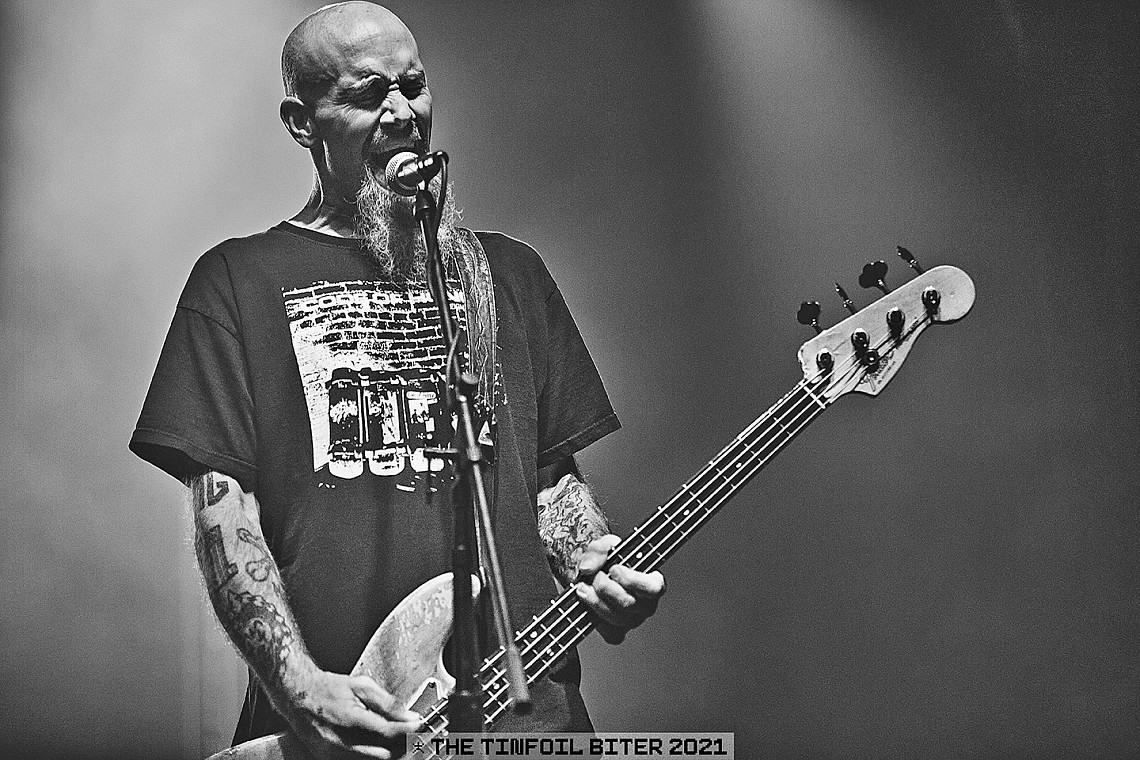
Songfacts: How did the songwriting primarily work when you were in Queens Of The Stone Age?
Oliveri: It was always different. I'd bring in stuff, Josh [Homme] would bring in stuff. A lot of the stuff I write is much better with Josh interjecting his thing onto my songs. Like, "Another Love Song," I had the melody, the vocal, and the lyrics, and he came up with the guitar part featuring the melody that I had with some other cool notes in there. It made the song up here instead of down there. I really believe that it made the song better.
I think Josh is a great songwriter, hands down. Most people that like our style of music would agree that Josh is a fantastic songwriter. He always has been since we were kids. And Brant, too. Brant has a style that he does, and he's great at it. He has since we were very young.
I was a late songwriting blossomer. I couldn't finish a song for some reason when I was a kid. I'd have 10-page songs. I just couldn't finish the end of a song. So it took me some time to find that, but those guys always had it since they were kids.
Songfacts: Two years ago, the Queens Of The Stone Age album Rated R turned 20 years old. What do you recall about the writing and recording of that album?
Oliveri: The writing of that record was very interesting because we had some of the songs written, but the majority of them we wrote in a bungalow up where I live in the High Desert now – in Twentynine Palms. I believe it was called the 29 Palms Inn. We went to a bungalow with supplies: food, drinks, and whatnot. We had five days in this bungalow and we sat there with guitars, amps, basses, and acoustics. They had a little patio. It was cool little bungalows.
And we went there with the idea of, "We need to finish writing a record. We've got six more songs to write." And we came up with "Better Living Through Chemistry," "I Think I Lost My Headache," and things like that. Josh would have this cool initial riff, like say "Better Living Through Chemistry," and I'd come up with this bass thing and add a bridge to it. But the verse and chorus was Josh. I added a jam part to it and I think I added a pretty cool bassline to it. But basslines aren't songwriting. It's guitar or piano and words. But that was one of the ones that we wrote when we were there.
Stuff like "Monsters In The Parasol" was on The Desert Sessions.1 "13th Floor" [retitled "Tension Head" on Rated R] was on a Mondo record. Even on Songs For The Deaf it was like that, too. But Josh had the idea. He said, "I think these songs are worth more than 1,500 pressed on the Man's Ruin label. I think they deserve to be heard by more people."
And I agree, they were good songs. "Monsters In The Parasol" for one, "God Is In The Radio" and other songs on Songs For The Deaf as well. "Hangin' Tree," things like that. I think it was a good idea to do that. We did some Mondo stuff as well. So, songs got to live in a bigger house. It reaches more people on a Queens platform.
Songfacts: Rated R was recorded at Sound City,2 with Josh and Chris Goss listed as producers.
Oliveri: Indeed. We were in Studio B, and bands kind of came and went. We weren't there for that long, but maybe the band Fight or Halford was there for the whole time we were there. I remember being in there and Rob Halford being super cool to us. I'm an old fan of Judas Priest, I just love that stuff. It's good rock and roll. Their early stuff is really, really great. Chris Goss, too.
One of my favorite memories was when Chris asked Rob if he'd sing on "Feel Good Hit Of The Summer." He's not really featured in there, but I have mixes of CDs from every day. We recorded all those sessions from Songs For The Deaf and Rated R. I took a CD home every day to see where we were, because whole different words would come for a song, guitar parts, piano, you name it. So I have all these different versions of these songs on CDs in my house in a box somewhere. And one of them is with Rob Halford being more featured with "COCAINE!" – with the Rob Halford-style singing. Josh didn't want to put that in there. He wanted what he called "the more sinister Rob" for the "Nicotine, valium, Vicodin, marijuana, ecstasy and alcohol" parts. But I liked the "Cocaine" parts with the high-pitched singing.
Stuff like that was very memorable for me – Rob Halford coming in. We asked him, "Hey, what do you want to be credited as?" He goes, "Just put down 'vocals by the Metal God,'" and he walked out!
Many other funny memories and good times, like songwriting in the studio. "Leg Of Lamb" I thought was really a cool song. Something that came out kind of late in the game for the record. It was a "last-minute song" kind of thing, and I think that really turned out cool.
We got stuck on one of my tunes, "Auto Pilot." I have some crazy, happy version of it, very uptempo and it wouldn't have made it to the record. Very candy pop-ish. Not bad, but not what we were going for sound-wise. The song wasn't going to make it, but we went into "late night mode" and recorded it.
I played guitar and Chris Goss played bass, and Josh, we took the drums and he turned them upside down and turned the kick drum on its side so he could hit it with a stick. And the drummer, Nick Lucero, was playing some percussion instrument. We did it live with this really cool, dark-lit setting. I remember it being a magical, cool feeling, and the song wound up making it on to the record.
That's Josh and Chris being the producers that they are – especially Chris. I'm a big fan of his. He's like, "It's a good song, we've just got to find the vibe for it." And we did. And him being a great producer, it turned out great. I would have never thought, "Why don't you play bass, I'll strum on the guitar, and Josh can turn the drum set upside down and play drums on it." And man, was it a good idea.
I had all the bass done and we bought some gear – old white Ampeg gear that was from Rod Stewart or something - and I re-did all my bass parts in a day because I thought the tone coming out of that sounded a hundred times better than the tone I had in the amps I played through. So I took a day and did all the bass again because I wanted to get that tone. Instead of re-amping it, I just wanted to play it again.
Just having the time to accommodate that idea was great, too. The time and money to do that, because it's so far from my grasp at this point in my life. I don't even think about stuff like that. It's like, "It's done! Put it out! Let's get on tour!" You can't re-do the basslines unless you've got the time and money to do so. That was nice being in Queens. It was the best band I've ever played in, in my life, for sure. I've played in some great ones, but that one was quite a lineup and a great time.
Songfacts: How did the whole "Nicotine, valium, Vicodin, marijuana, ecstasy and alcohol" part come about for "Feel Good Hit Of The Summer"?
Oliveri: Josh said he was walking down the road and he heard it in his head, like a list of things. But I believe he got it from a band called the Subhumans. There was a song on a record called Worlds Apart [part of a song entitled "Apathy"]. It's not stolen from, but it's definitely an "inspired by." It's a list of things like that on it.
It's a great song. Fantastic. I think the drumbeat was a Josh idea. The bass follows that drumbeat, and I don't know who came up with putting the kick in between the march, but wow, did it turn out cool. For a two-note song, it's quite amazing. I think it's a great song.
Songfacts: "In The Fade" features Mark Lanegan on vocals. How did he get involved?
He said, "Well, maybe we can have Mark come in." And I was like, "Wow. That would be unreal." Because Mark was working on Field Songs [his 2001 solo album] at the time. I had met him, but only in passing. He came in and was super cool. I was stoked to meet him and it was great having him because he really made the song something else.
But they were trying to write lyrics for it and they were stuck on some things. They went to get some lunch – him and Josh – and I wrote some stuff while they were gone. I had some things, but Mark really made the song what it is. It's definitely a Mark song, for sure.
He's gone [Lanegan passed away on February 22, 2022, at the age of 57]... it sucks, but his music is fantastic, and he will live forever through that. But that song was something else. I haven't listened to it in a long time. I probably should put it on one day. But he really took it to the next level. He'd read lyrics if he was going to have anybody put anything into something he was going to sing. He'd be like, "I can't sing that... it has to be this." And he'd change something. Or change all of it if he didn't like it, which makes sense to me.
On that song, Josh was like, "We've got to have some other bassline and something that carries the verses instead of just these heavy guitars and bass." But Mark really carries that song. His voice could have been singing over anything at that point, whether the bass was good or the guitar was good or not. It could have been great either way.
But that was an amazing day. That was one of the last songs we had left to change, to try to make better. The music ended up being great, and I remember Mark coming down and them getting stuck on it a little bit. They were wondering if they should sing it together, and their voices together sound great.
Songfacts: What made Mark Lanegan so unique as a singer and as an artist?
Oliveri: The vibrato in his voice. The vibrato he had at the tails of words and phrases, the way he held himself...
I know in the early Screaming Trees, he would bang his head and jump around all crazy, but there was something cool and eerie, mysterious, about the way he would stand there and sing, dark. Because he was a quite funny person off stage. He'd make fun of you and make you laugh, and he'd make fun of himself.
He was a good guy, too, he was a trip. Josh was saying at his funeral, "With songwriting, Mark would do this thing where he would hum you something" – because he didn't really play guitar, he sang – "he'd hum you a part, you'd play it on the guitar, and it would be a little bit different, and he'd say, 'That's what I meant!'"
Mark had some great melodies and words. He was a great songwriter.
Songfacts: You sing lead on the track "Tension Head."
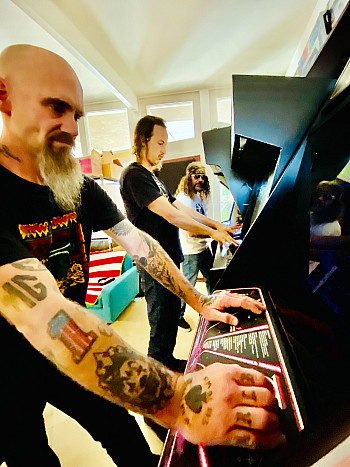 Oliveri: That song, the music was done years before with Mondo [titled "13th Floor"]. But it had different lyrics. There's another version of it with a different singer on the verses. A friend had an Iggy Pop-esque tune with piano – a kind of "Lust For Life" tune I guess. I was living in San Francisco and I wrote the lyrics. I remember being hungover, "on the bathroom floor" kind of thing, and I wrote them down.
I didn't think anything of it but put it on this version we have somewhere out there that never came out – it's a piano song. "The Passenger" is what it sounds like to me.
So those are the lyrics I came up with, what I thought my version of Iggy words would be, but it didn't come out like Iggy Pop at all. I put it on to that music when we recorded [Mondo Generator album] Cocaine Rodeo in 1997. I had the song from then, so it was an old tune. I did them with Josh there and Chris Goss, as well, when we did that Mondo record. We did a few songs for it with those guys.
Songfacts: Can you talk more about the lyrical inspiration behind the track?
Oliveri: "Every day I wake up feeling this way, take it downtown where all the action's going down." Like, being sick and going downtown to score or whatever – that kind of vibe. Getting a better kind of thing. That's what the song is about.
Songfacts: Did you have any idea that Rated R was special at the time?
Oliveri: It was special to us, for sure. We put a lot of care and love into it. We took those CDs home every night. Instead of going home, we ended up going to a hotel that was right next to Sound City. I lived 10 miles away, Josh lived 12 miles away or whatever it was, but there was a walking-distance hotel there, and we'd have a couple of drinks anyway, so we shouldn't have been driving.
So we would get hotel rooms there and we would end up in either his room or my room, both of us listening on a CD player and making notes of what we had to do the next day. We'd be up until 8 in the morning listening to this stuff, and then we had to be there at noon. We'd end up rolling in at 5 p.m. The album was produced by the Fififf Teeners [or the 5:15ers, aka Homme and Goss]. If you rolled in around 1:00 or 2:00, you'd be waiting until 5:00 or 5:15 for Josh and Goss to show up because we would work in the studio all night long.
A very creative time working and still having fun. It was a special record in our minds. I didn't really have in mind, "This is going to be something that people will listen to forever." I just was thinking, "This is going to be a cool record and people will dig it. And the people that do have it will like it, I hope."
I liked it a lot. I still do, I just haven't listened to it for a long time. It was very much Josh, Goss, and myself who finished that and added everything to that record. It was very much a collaboration, for sure.
Songfacts: Who are some of your favorite songwriters?
Oliveri: Dee Dee Ramone was great. He could write a great hook and a great melody. Josh, Mark – people I worked with. I think Blag Dahlia is a great songwriter. You put a guitar in his hand, he'll write you a song right now. It could be a funny song – the lyrics may not grab everybody in the world – but he could write you a tune right now. "Hey, write a song about that amplifier" or whatever. I think Greg Ginn was great. Iommi and Butler, great songwriters.
The Sabbath stuff is quite amazing. I like some GG Allin stuff. I like the first stuff, the Jabbers, which is great, and the last stuff is pretty intense, for sure. I think that first stuff he did in '79 or whatever was quite good – he had some highs in his voice and some good hooks. The band was quite good, too – good basslines. Hendrix was a great songwriter for sure, great guitarist obviously.
James Brown wasn't one of the writers of his music, but his lyrics and the way he would approach songs, I don't think he was a wordsmith as far as schooling was concerned, but to be able to come up with all that melody and be able to do what he did...
We actually played a show with James Brown – the Queens did – and man, was he good. He blew us all away. It was impressive. Twenty-minute medley, and that was it. All these bands, a radio winner show, in an arena somewhere. Man, was he good. Kids that didn't know who he was or just knew him through their parents, they knew who he was when he was done because he just killed it. He made us stop and face the wall when he was coming to the stage! We were not allowed to look at him, which I didn't understand until he was done. I was like, Alright, I'll stop and face the wall. You're worth that for sure. I don't want to mess with your mojo, man. It was the best, it was quite impressive.
Songfacts: Future plans?
Oliveri: We did two new Stöner records. Totally is one of them that just came out. And we did a second one called Boogie Down To Baja, which I don't know when it's going to come out. And I just finished 28 songs – which is two records – with the Dwarves. And I plan on doing a new Mondo record coming up, because we're going to have some time off from Stöner coming up here in 2023. The beginning part of it, we're going to take some time for some personal things and I'm going to do some Mondo stuff. Going to get that up and running and do some touring. I'm trying to stay as busy as possible, stay out there.
August 4, 2022
Nick is an excellent follow on Facebook.
Further reading:
Rob Halford interview
Chris Goss interview
Remembering Mark Lanegan
Tony Iommi interview
Fact Or Fiction: Ramones edition
Footnotes:
- 1] Josh Homme, a desert dweller, started bringing various musicians to Joshua Tree in 1997 in what he called The Desert Sessions. The idea: spend a week in the desert writing and recording songs and see what happens. Each session produces a "volume" - you can call it an album or EP if you'd like - that at first were issued on the indie label Man's Ruin in pressings of maybe a few thousand. The song "Monsters In The Parasol" appeared on the fourth volume in 1998, then was re-recorded for Rated R. The most recent Desert Sessions took place in 2019 with Billy Gibbons and Les Claypool among the participants. (back)
- 2] Sound City was an analog studio in Los Angeles where QOTSA recorded Rated R to 2-inch tape at a time when most recording was digital. It's the subject of a 2013 movie directed by Dave Grohl, who bought their Neve console when it went under. Josh Homme and Chris Goss both appear in the film. (back)
More Songwriter Interviews