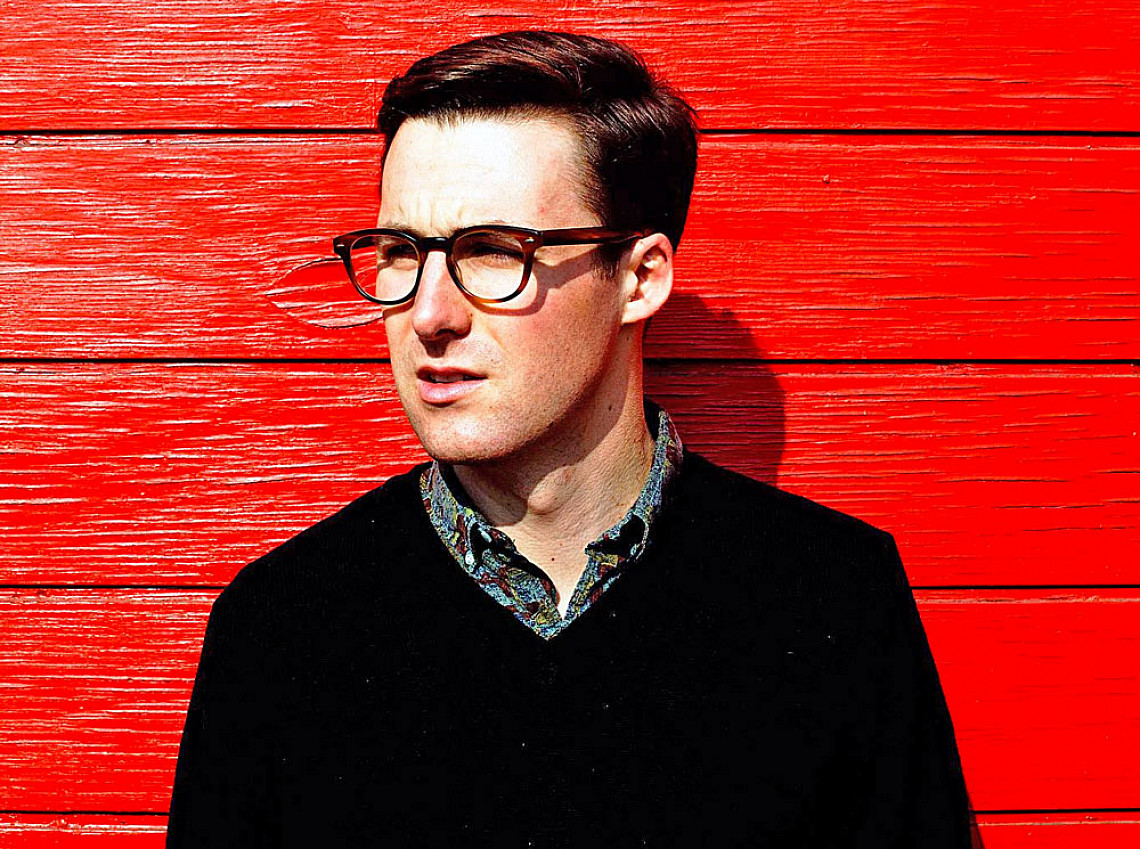
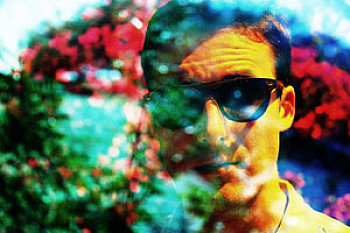
Artists who create the music they love, instead of trying to find sounds that merely sell, always deserve our undying respect. Nick Waterhouse is just such an individualistic performer. When listening to his music, don't be surprised if you get psychically transported to a roadhouse or a smoky old jazz club, because Waterhouse's compositions hearken back to those great old songs of Ray Charles, Etta James and anyone else who could make romantic love feel like a life and death proposition.
Waterhouse is a sharp dressed man who plays a mean electric guitar. He's backed by equally empathetic musicians who add honking horns, churchy Hammond organ and funky beats to his smart songs.
If you didn't know better, you might guess Waterhouse to be a college science major or an aspiring politician. He's as articulate in person as he is soulful when onstage.
 Dan MacIntosh (Songfacts): Songfacts is all about songs and songwriting. And I notice that your music is very, for lack of a better term, retro as far as stylistically. When you write songs, do you hear the songs in that style or do you translate them into that style once you write them?
Nick Waterhouse: I only make songs the way that I think they sound good. So asking me if I try to write them in a style is sort of asking a Jamaican person why they talk in the funny way they do, you know what I mean?
Songfacts: So that's just the way you're wired?
Nick: Yeah.
Songfacts: And when it comes to songwriters that inspired you to want to write your own songs, are there particular songwriters that you really looked up to when you started writing?
Nick: Yeah. There are all kinds. Early, early on I really appreciated a lot of work of like John Lee Hooker, Muddy Waters. Those are the kinds of guys that made me realize you didn't have to be a virtuoso to have a voice. But eventually I started to look towards Bacharach and David, Johnny Guitar Watson to Ray Charles.
What's interesting with Ray Charles, is it's hard... when you're a kid, like I'm fairly young, so you grow up, a lot of things are canonized. But I think the idea of songwriting now, like the canon, is not even appreciated. It's just taken for granted. Like that's the way it is. And a lot of people think of music made in the 1950s, '60s, as just there eternally. There's a reason it's there. It's like Shakespeare, like you can just presume that that's the core of everything, and it just happened by chance. But you deconstruct those things and you begin to realize and appreciate a lot of things. We live in a post postmodern era, so songwriters that are writing postmodern works are often more lionized and covered by press and critical thought than maybe somebody like Ray Charles, because he adhered to something that we all take for granted now.
Songfacts: Do you remember when you wrote a song, the first song that you really realized that you had a talent for writing songs, can you pinpoint that moment?
Nick: Sure. Yeah. I was 14. And to me, it's very similar to how I felt about writing papers at school. I started to realize I was a lot better than other kids at it because the pieces all just, in my mind, it's a system that visualize that isn't even... I can't articulate it. But it made sense to me. And then as soon as I tried to explain it to other people, because they would be like, Wow, how did you do that? It was like, Oh, gosh, I'm not normal. You know what I mean?
Songfacts: Right. I remember I interviewed a rapper one time and he said that he and his friends all tried their hand it, but he noticed that he was pretty good. He noticed there was something that you had ability that maybe you didn't recognize till you tried it. Do you remember any particular songs you wrote early on, and do you still perform them?
Songfacts: What was the song by Paul McCartney, "Yesterday," that when he wrote it he wanted to scrap it because he thought, That's already taken. Somebody's already done this. You have that sort of fear that you don't remember where this came from.
Nick: Unintentionally yeah. I have that all the time. And the scary thing is that I sit around and I fret that it's kind of like people who end up persecuted for something they didn't even realize they did, where I'm like, in a year somebody's going to be like, Oh, this song has a similar chord progression to another tune. But maybe I never even heard that song and it's like the Mayans and the Chinese invented a calendar at the same time and you just have to trust that that's happening.
I have my own system of morals; a man has to have a code, right? Especially in this time. It's a really fractured, really super personal world, it's like an insular world that we live in. So I know how I've arrived at my work. There are times that I've done stuff, tunes that are on the record that I was like, Surely somebody else did this. But the fact of the matter is I couldn't find it, I don't know what it is. And maybe that's the trick of songwriting.
Songfacts: Do you have any favorite songs on the album? Anything you're particularly proud of?
Songfacts: I think that's really interesting what you say, because you have a unique style, at least compared to what's contemporary now, people might miss the depth of your lyrics because they're so focused on, Wow, that's pretty cool. That kind of reminds me of a lot of older music. But you're just as serious as a songwriter as a guy that might be some sort of alternative rocker guy, right?
Hart Crane was an American poet that has been compared to T.S. Eliot for the epic scope of his work. He is associated with both the American Modernism and Romanticism movements. He was born in 1899, and took his own life in 1932 at the age of 32.
Nick: Sure. Yeah. Well, I think I'm also one who's about reinvestigating the accepted narrative of pop music. The same way that Howard Zinn is about American politics. Because American pop music history is this idea that all these serious people play this kind of music. Only intelligent people play this kind. And it's the merry liberal arts rooted in not just certain music, but certain authors. I have references to Hart Crane in my work, but most people don't ever pick up on that, because I'm an anomaly. I'm not in that narrative of American music. So that's what's crazy. I studied English literature and American culture, like the humanities, and I'm about the idea of deconstructing this idea of if you use simple language, you're a simple person. I feel the same way about music and about musical ideas. Because sometimes the simplest language will convey the largest ideas.October 18, 2012. Get more at nickwaterhouse.com.
More Songwriter Interviews