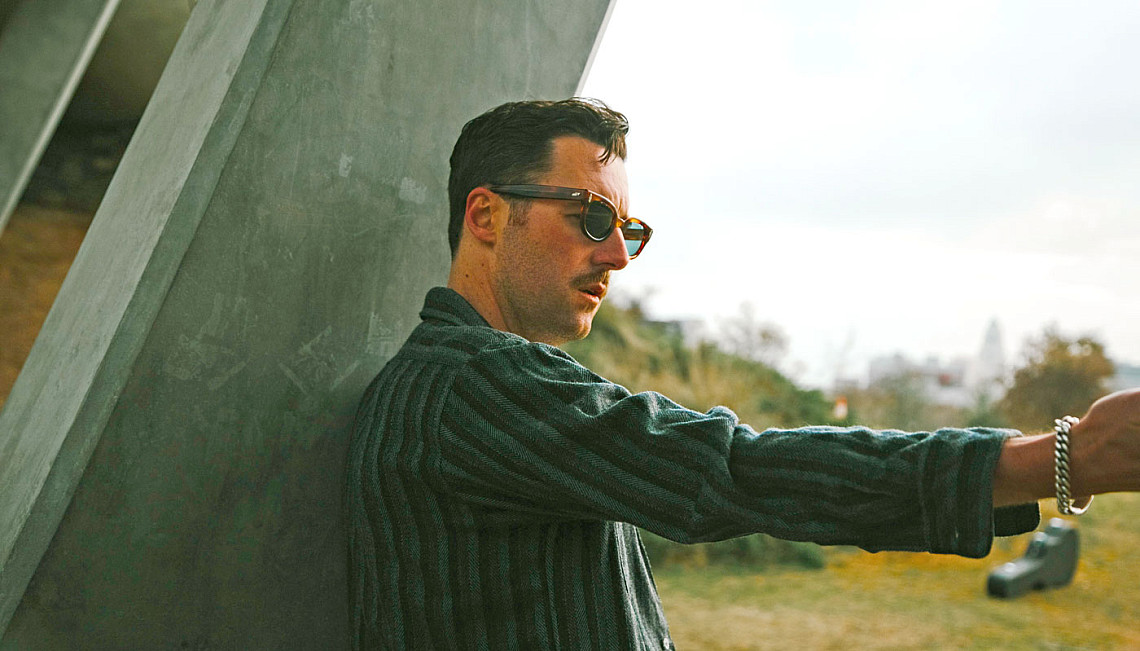
California native Nick Waterhouse is known for his evocative songs, soothing melodies, and crafty lyrics. Honing his chops in San Francisco, he came up along the ranks while simultaneously working in record stores - a music education all on its own. Waterhouse has now abandoned that scene to discover a new life and sound, living in Europe on the brink of releasing a new record.
His nostalgic crooning is reminiscent of bygone music, evoking feelings of carefree youth and whimsy. With blues and jazz-infused songs, listeners are often transported to the '50s, a sound many embrace and something Waterhouse says comes naturally to him. A soulful singer-songwriter with a literary writing style, Waterhouse has a knack for crafting songs that make the listener think, feel, and move, and a passion that propels through his compositions.
Songfacts last caught up with Waterhouse in 2012, shortly after his debut solo album, Time's All Gone. He has since released Holly, Never Twice, a self-titled album, and the recent Promenade Blue in 2021.
In comes The Fooler - a melodic, expansive album that takes the listener on a journey through city streets and broken hearts. It's sitting in a coffee shop and reading a book of poems or curling up with a novel on a rainy morning and not wanting to put it down. It's more than a collection of songs, it's a thought-provoking, meaningful story that Waterhouse constructed in perfect harmony while staying true to his retro musical style.
In this interview, Waterhouse takes us through the making of the album, including the singles "Hide And Seek" and "The Fooler," and details his literary approach to songwriting.
Nicole Roberge (Songfacts): You're getting ready to release your album on April 1. That must be an exciting feeling.His nostalgic crooning is reminiscent of bygone music, evoking feelings of carefree youth and whimsy. With blues and jazz-infused songs, listeners are often transported to the '50s, a sound many embrace and something Waterhouse says comes naturally to him. A soulful singer-songwriter with a literary writing style, Waterhouse has a knack for crafting songs that make the listener think, feel, and move, and a passion that propels through his compositions.
Songfacts last caught up with Waterhouse in 2012, shortly after his debut solo album, Time's All Gone. He has since released Holly, Never Twice, a self-titled album, and the recent Promenade Blue in 2021.
In comes The Fooler - a melodic, expansive album that takes the listener on a journey through city streets and broken hearts. It's sitting in a coffee shop and reading a book of poems or curling up with a novel on a rainy morning and not wanting to put it down. It's more than a collection of songs, it's a thought-provoking, meaningful story that Waterhouse constructed in perfect harmony while staying true to his retro musical style.
In this interview, Waterhouse takes us through the making of the album, including the singles "Hide And Seek" and "The Fooler," and details his literary approach to songwriting.
Nick Waterhouse: Like every record, it takes much longer for it to go from conception to production, physically. That's the problem. It's nice to have it on its way out into the world. I was listening to the test pressing the other day and I'm eager for everyone to hear it.
All of it's a part of one thing. Obviously, the pandemic time was shocking to me. A lot of this record was written through that as a part of this continuum of my position as a singer-songwriter and a person who makes records. The process of this record and the circumstances definitely came out of the pandemic, if only because I started speaking on the phone more to Mark Neill [producer] and that opened me up to working on the record with him and to try a new and different way than I had been making previous records, like Promenade Blue, which came out right at the beginning of the pandemic.
Waterhouse: Going there really crystallized it. The first week of lockdown, I was in the studio finishing Promenade Blue, my previous album. Then that whole spring and summer, I was so focused on wrapping that record with Paul Butler, it was like this transition where I continued writing the same way I typically write, which is all the time and on scraps and little notes to myself, but with this new lifestyle - the shut-in kind. As a touring musician, it was the first year I never went out on the road. Everybody was frozen. I started thinking about songs.
The song "The Fooler" came to me when I went to San Francisco for my first real trip anywhere else. It was the first opportunity where things semi-opened up. I was going to help my friend Dick who owned the record shop I worked at in San Francisco which was ground zero for my career. He's elderly, so me and some friends were making sure he had groceries and supplies. It was one free afternoon I had when I was going for a walk. It struck me how desolate and surreal the street felt, and it was the street that I used to live on. I had this chorus:
Hot and cold
Cool and cooler
I am the fool
And you are the fooler
before that, but the verses really crystallized, and I understood this notion of the chase and the push and pull of what could be a love or an interpersonal relationship. It clicked, and I entered this overlay of seeing a lot of my younger life on that street. That was where a lot of these songs ended up coming from. But I was feeling out where I wanted to go with the storytelling, and it was not a personal way of storytelling. It was the way fiction would work, almost like a musical novel. It's not a "Nick" song. It's not about Nick and someone else, it's just characters in a setting.
Songfacts: The whole album seems like a story, like you're reading a book. I like that aspect of it.
Waterhouse: That was the aim. That's wonderful. I really set out to do that. I had an epiphany and an artistic breakthrough when I arrived at the parameters of how to write this record of what the songs would become. A lot of the concepts of these songs that were sort of loose were coalescing into thoughts I was having because my life changed so radically. It was another way of working. I was able to meditate more about what human relationships were about - my own experiences and people I know. How people affect each other. The thought too in the pandemic was uncertainty, mortality. Everyone was forced to recast what they missed. What do you recall missing? It created realer priorities for the heart. Who do I miss? Who do I want to stay in touch with? What were superficial interactions that I've had? What were real interactions that I've had. That probably informed a lot of my continued development of the narrative of the album.
Songfacts: You have a very artistic and literary songwriting style. What are you most influenced by and how do you usually start a song?
Waterhouse: I studied literature, I focused a lot on poetry, and I had a lot of friends who were writers. If you look in my notebook or the note app on my phone, there's hundreds that look like poems. I've internalized breath, meter, time. Music, which is why I consider it my medium, is miraculous to me. It's tied to heartbeat and breath. Poetry is this natural rhythm inside of everyone physically. If you're quiet, you hear your pulse and your heartbeat. You breathe in time. So literary influence comes mostly from poetry. I really love the economy and beauty of well-written short stories. People like Virginia Woolf, James Salter, Frank O'Hara. A lot of modernists. I love the way their words work and their rhyme. They don't have any music. You can't hear it but can feel it. That probably is a big part of how my songs come together.
I also have another part of my brain that was so informed by listening to records closely that were on 45, a lot of the aesthetic influences that were the golden era of pop and rock-and-roll and soul. I'm not a parts player. It's a whole song. Leiber and Stoller once said, "We don't write songs, we write records. They're like plays." I feel really tied to this tradition of writing records, not trying to be a chordal songwriter first, or a melody writer first. It's words and then the record itself. You could call it holistic but that's a little grandiose, I think.
Songfacts: "Hide And Seek" has such a nostalgic feel to it. We are really transported back in music to that '50s era. Do you aspire to create a certain sound or is it a natural development?
Mark and I were talking about songs we liked. He's in Georgia in the town where Billy Joe Royal and Joe South grew up [Valdosta]. Joe South is somebody I always loved, and there are certain Joe South songs that my unconscious brain was probably thinking of, but I wasn't like, I'm gonna write a Joe South song. Every moment is reactive, so a song like that can come from there, but it's my own story. JD Salinger called it an "inverted forest." All my psychological geography is in there.
Songfacts: Music can really transport us back to places and eras, and your music seems to do that, but also opens and creates new worlds and spaces for people who might not be familiar with those times. It exposes people to different sounds and is a special thing you do.
Waterhouse: It's part of what I liked about listening to music when I was really young. It was a third space outside of waking and dreaming. If you can build somewhere that can draw someone in that way, then you're succeeding, in my opinion. I guess that's what my ultimate goal is, to invoke the same feeling that I would have listening when I was young.
Songfacts: It's funny how I appreciate different sounds more, different music, that I wouldn't have appreciated when I was a kid, or even several years ago. Music can hold more meaning because of the people it was associated with as well.
Waterhouse: It's fascinating, isn't it? I was talking to a friend recently about how they always liked slower music that I had no patience for when I was young, or textures or writing styles that seemed too inaccessible. And now, you almost become a different person as you advance through time. You're like, "I liked salty but now I like sweet." It's cool. One of the more touching things from my career has been how many people over the years have come up to talk to me about not just my music or why they like me, but their relationships around it. Like, "This is me and my significant other's song," or, "These five friends went on this long trip, and we were only listening to your second album the whole time and all my memories are related to that." That's the good stuff.
Songfacts: That's special. Then you realize what an impact you have on people. Aside from the sound, you have a notable format. You open the album with "Looking For A Place." It really invites listeners on this journey. Why did you choose this song to open with and was the placement of songs predetermined?
Waterhouse: The storyline of the record put that song first. Mark and I had all these conversations about this. The phrase he kept repeating was, "The sound is the place." The mood and the scope. It's not that small, but it's subdued and spacious. Lyrically, that song is the beginning of the character sitting somewhere and you're entering their memory with them. It's like the memory is becoming so real, it's like when you watch a film. It's someone on the street and the street colorizes and goes back to the scene of what this entire story is going to be. It sets the scene, it sets the theme. It's circular.
Linguistically, it's told in both past and present tense. It invites the listener to dream with the dreamer as it's beginning. You start to hear who this person is in dialogue with. It introduces who the narrator is and who the other character is. I also wrote all the songs intentionally to be spoken by either character with the other, so you can reverse. It doesn't have to be one partner or the other. It's a dialogue that can be flipped. It really is about the history of two characters and the introduction of the two characters into each other's worlds.
Sonically, it's pretty cool. It reminds me of when you see sculptors working on details, the chiseling of hands that aren't there yet. That's sort of how that story fleshed out. I knew the themes of the story and what the narrative was. It moves in and out of scale. So there's interior songs, there's songs about conflict, struggle, connection - it works and fails. Songs about the outside world ["[No]Commitment," "Unreal, Immaterial"]. And that helps explain exactly what I was trying to say.
Songfacts: "The Problem With A Street" is lyrically provocative and musically enchanting. It has a very seductive sound. How did you write a song like that centered around something so ordinary yet meaningful?
Waterhouse: That song is about the intersection of the cruel, outside world and the interior conflict, struggling with the memory of how a relationship works and also how the environment mirrors it or how your psyche is projecting your problems onto the external world. I was waiting at a stoplight in LA on a busy street, but I could tell in the '40s it was really peaceful. I could tell how messed up that must feel living in the apartment right above this crazy intersection. In urban environments, they didn't plan. I was very fascinated by urban planning in metropolitan developments at university. They couldn't know, which is a lot like what a love affair is like - you can't really know until the crises are occurring, so you couldn't guess that they would make cars that would go faster, and they would expand roads to five lanes, and traffic would become a thing. It's the same crises when you're with someone. And the claustrophobia and energy as with the city.
I love the first record Leiber and Stoller made and these cinematic, score-based pop songs. That was probably a big influence. And then the words were all there waiting for me to use because I had written them all down already. "The problem with a street is it never lets you sleep." I had been trying to do that kind of song for a few years, but I didn't know how to do it until this story.
 Songfacts: "Unreal, Immaterial" is the closing track of the album, but also feels like an introduction. It has a completely different sound than other songs, a lot more rock, and leaves the listener wanting more. What did that song mean to you?
Waterhouse: I call that a turnover song on a record, which is when the LP ends, it makes you turn the record back again and go to track one. That also makes you hear track one again and if you stick with it, hear the whole record again in a different way. "Unreal" was a tune that really is the outside world completely and it has nothing to do in a way with the characters, but it has everything to do with the characters because it shows you what the external world has to offer to the two people living within the story. It also will reveal to you how special and significant the relationship is between those two people because it's going on in the midst of, Mark will call it, Machiavellian horror.
A song like "Unreal," lyrically - I'm telling a story of California. The last verse is about westward expansion. The ruse of the culture, the system we live in, the economy we live in, the environment we live in, being pushed further and further west. In the hope of this fantasy, empty way of being. And that this couple, these two people that are relating to each other in these other songs, are their own world contained almost as a resistance, a cell within that world.
"Unreal" is just a song I can't help but like singing. It could stand on its own. There's a bunch of British bands in the '80s where they had singles outside the album. I keep that in mind, but I like having it as the turnover song. It makes you go back to looking for a place. It's what someone would do when confronted with that Machiavellian horror. You want to daydream again about the meaningful things that occurred to you, which is this human connection that you had that is the antidote to all the unreality of that tune.
Songfacts: This is a complex album with a big theme to it. You've released multiple solo albums and have examined different themes or subjects [Holly]. Do you enjoy this type of storytelling with albums?
Waterhouse: Yeah, I think that's the way I've learned to enjoy albums. When I first started as an artist, my only desire was to make singles, 45s, and have no artist profile. I was like an anti-performing artist. When I put out my first single, "Someplace," I didn't have a band. I just wanted to make 45s and often put them out as "Nick Waterhouse." To justify the endeavor, my grand bargain with myself was, in order to fund making records, I'll be a part of this system which I already don't like or don't believe in. It's a culture rooted in celebrity and image. Even the smallest indie artist has to pretend like they're a celebrity or entrepreneur on some level. The fun that I've had making an album was, let's experiment with a medium. I'm not inventing anything. I understood how I'm an artist as opposed to somebody who's just making records.
Songfacts: How do you think you've grown as an artist?
Waterhouse: I've kept at it, like you're supposed to. I've had the incredible fortune of meeting and working with so many incredibly talented, generous, life-affirming people. And that's really the thing about music to me. The songs and everything I learned about music when I was a kid and reading about music - it's a communal activity. It's not a lone pursuit. That is the difference between being an author and being a songwriter or singer. My growth is from that good fortune. I said it earlier in my career, but I made my first recordings almost like shooting up a flare, hoping somebody would come find me. Now where I am, I want to meet other people who felt the same as me, who had the same dreams I wanted to articulate. I've been very lucky that community is a big part of what made me further develop and pursue bigger concepts.
Songfacts: You've joked a little about the questioning of "the fooler." So leave us with this: Who is the fooler?
Waterhouse: You are the fooler. The fooler is the human memory and the human heart. Just like every good joker, it's there to entertain you and poke you in places that are tender. It's a red herring thinking it's an insult to someone else, and the reality is, the fooler is inside of you. The answer is in that other verse. Sometimes reverie is not your friend, and that's who the fooler is.
March 30, 2023
For album info and tour dates, visit nickwaterhouse.com.
More Interviews:
Joe Henry
Rhett Miller of Old 97's
Alison Sudol
Vonda Shepard
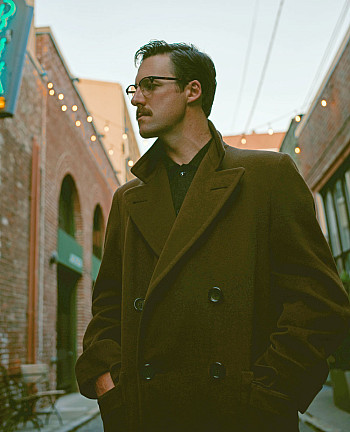
photos: James Juarez (1), Benjamin Heath (2)
More Songwriter Interviews