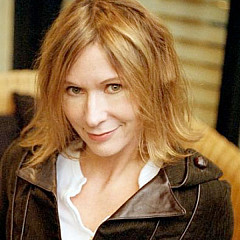
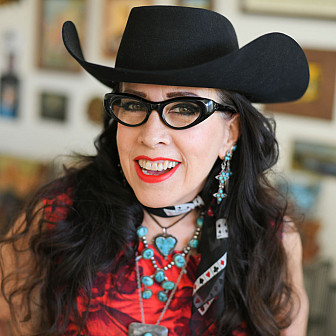
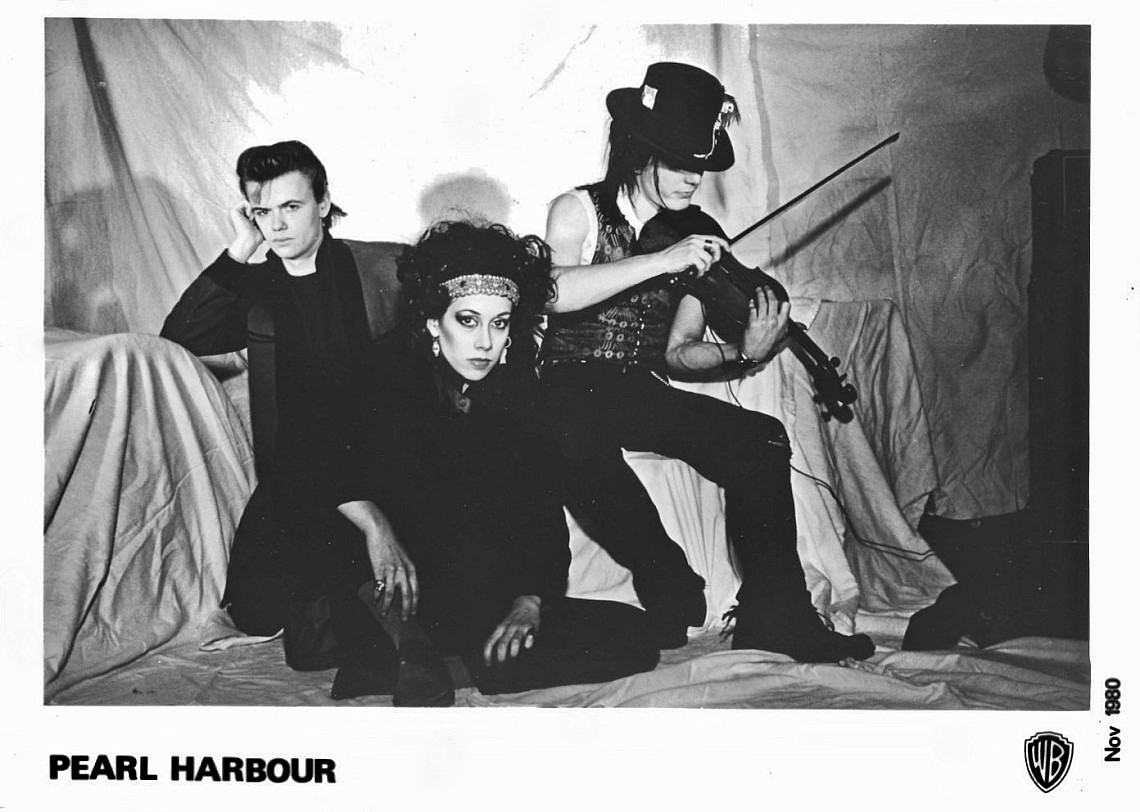
 Pearl Harbour. Photo by Anthony Masterson.
Born on an army base in Germany to a Filipino mother and an American father, Pearl had a nomadic childhood that instilled in her a strong sense of resilience and independence. She left her home country at 17 and headed to the US, where she found her voice in the booming San Francisco music scene of the 1970s. As the leader of Pearl Harbor And The Explosions, she lit up stages with her thrilling charisma. Their debut album, self-titled and released by Warner Bros. Records, featured the cult hit "Drivin'," a local radio favorite.
In 1980, Pearl and her then-boyfriend, Kosmo Vinyl, The Clash's manager, moved to London. There, she made her second album, Don't Follow Me, I'm Lost Too, a tapestry of sounds woven from her deep-rooted love for rockabilly. The album had an all-star cast, a who's who of British rock legends: Paul Simonon, Topper Headon, and Mick Jones from The Clash; Steve Goulding from Graham Parker And The Rumour; Steve New from the Rich Kids; Nigel Dixon from Whirlwind, and the aforementioned Wilko Johnson. But Warner Bros. failed to get behind the record, rendering it a "lost classic."
Undeterred, Pearl forged her own path. She toured widely with The Clash, even performing Wanda Jackson's "Fujiyama Mama" with them as part of a raucous encore. In 1982, she wed Paul Simonon, a marriage that lasted seven years.
Now, in honor of Women's History Month, Don't Follow Me, I'm Lost Too is finally getting the recognition it deserves with a rerelease by Liberation Hall on March 22nd. To celebrate, Songfacts recently caught up with Pearl Harbour to talk about her remarkable life story, from her "army brat" upbringing to her work with some of the biggest names in punk rock, and how she overcame the challenges of the male-dominated music industry in the '70s and '80s.
Pearl Harbour: The Philippines was called "The Soul of the Orient" in the old days because the Filipinos were hired in all the hotels across East Asia to do the entertaining in the cocktail lounges and lobbies. They were the best singers and dancers. I think my singing and dancing skills come from my mother's side, the Filipino side.
Being an Army brat in Germany was interesting because the American PX, where we did all our shopping on the Army base, always had the Top 10 Billboard singles in stock. So, we always had the latest popular records at our fingertips, and we also bought the music magazines. I had four older brothers growing up, and they bought records from all over the place, so I was lucky enough to hear the latest sounds from England, Europe, and the United States.
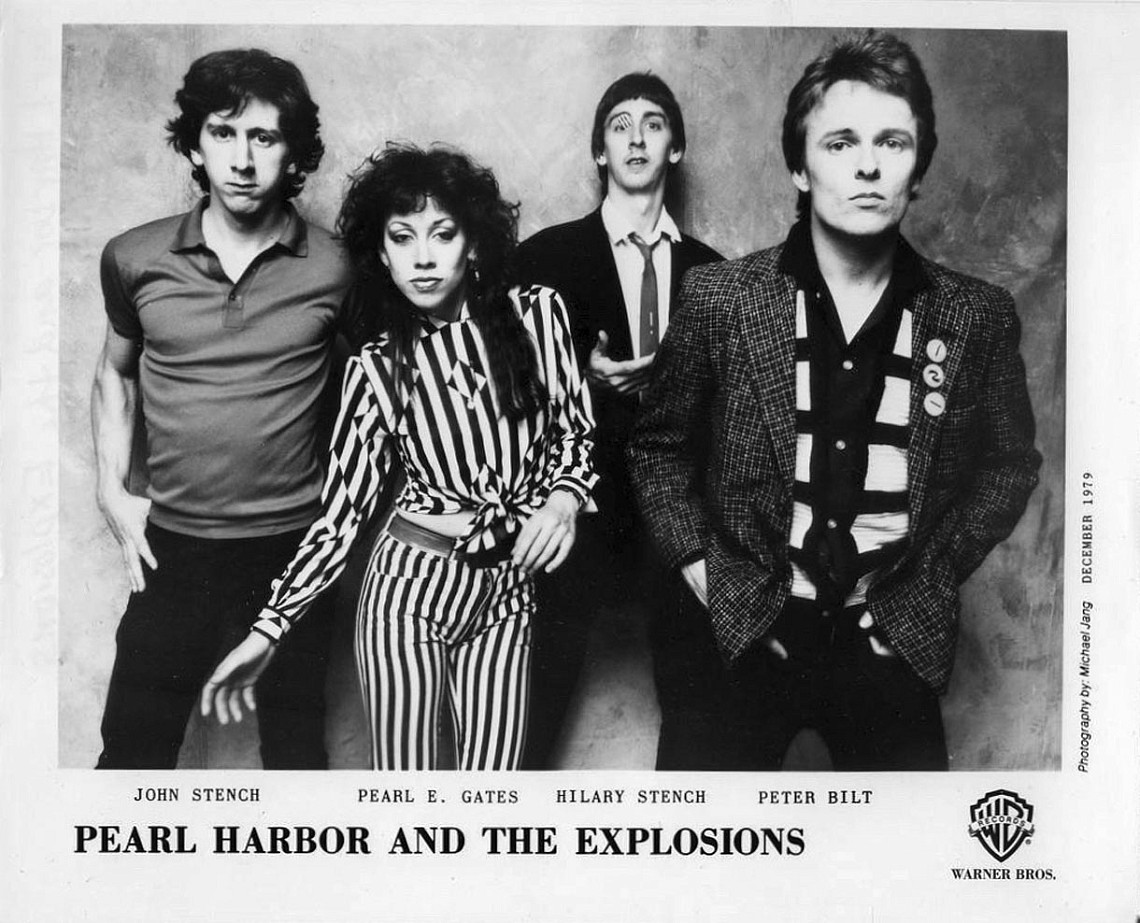
Songfacts: Your self-titled debut album with Pearl Harbor And The Explosions was released in 1980. It was produced by David Kahne, who later worked with some of the biggest stars in pop and rock, such as Paul McCartney, The Strokes, and Lana Del Rey. What are some of your fondest memories of making this first record with your bandmates and David?
Pearl: Honestly, I have mixed emotions about the debut album. I like "Drivin'" because I am basically a rock and roll fan, but too much of the record veers into jazz-fusion territory. My bandmates and David were all on the same page about loving jazz fusion, and they teased me about my love of "mindless rock and roll." That's one of the reasons the band split up after touring extensively, and I moved to London. I must admit that Pearl Harbor And The Explosions was the most successful record I ever made, but I prefer Don't Follow Me, I'm Lost Too. Warner Bros. felt the opposite and threw me off the label.
Pearl: "Drivin'" was the first song that we wrote together. The band was fooling around with the bassline and guitar riff, and we were all excited because it was so catchy. I mentioned that it should be a song about movement, because it was so bouncy, and I said, "How about 'Drivin'?" We all agreed. We wrote the lyrics together in the kitchen in about an hour or so.
Songfacts: Susanna Hoffs, the lead singer of The Bangles, covered "So Much For Love" by Pearl Harbor and the Explosions for her 1991 solo debut album, When You're A Boy. Can you give me some background information on "So Much For Love" and tell me how Susanna decided to cover this track? Did you like her version?
Pearl: Peter Bilt from The Explosions actually wrote the song, including most of the lyrics. I just added some additional lyrics and changed some of his around. He came up with the title and arrangement. I suppose you could say that the lyrics speak for themselves - it's about love gone wrong.
Susanna is friends with David Kahne and I think he suggested that she cover it.
Songfacts: In 1980, you moved to the UK and formed a working relationship with Paul Simonon, Topper Headon, and Mick Jones from The Clash, who had just released their iconic album London Calling. They joined you on your debut solo album, Don't Follow Me, I'm Lost Too. How was it to collaborate with these musicians and witness the vibrant London punk scene up close?
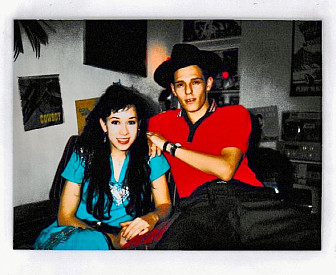 Pearl with Paul Simonon. Photo from Pearl's collection.
"Heaven Is Gonna Be Empty" came together at the last minute in the recording studio. We had finished recording all the tracks, except that one, and I wasn't sure about the music. The lyrics and melody were ready, but I wasn't certain what direction I should take. Mick Jones was in the studio next door with Joe Strummer, so I went over and sang the song to him and asked if he had any ideas. He started playing this country-inspired riff and it fit perfectly! Mick came over to our studio and laid down the guitar track in one take. It was perfect and he really made the song come to life.
Songfacts: Don't Follow Me, I'm Lost Too featured a rockabilly style that differed from the new-wave sound of Pearl Harbor And The Explosions. What inspired you to try out this genre? Your voice suited it perfectly!
Pearl: I have always loved '50s rock and roll and rockabilly music. Rockabilly was mildly popular in London at the time, in an underground sort of way, and it's important to remember that this was before the Stray Cats. I loved going to rockabilly clubs and seeing all the hep cats in their vintage gear dancing and having a ball! There were also loads of rockabilly record stalls in the local flea markets and it was fun collecting these obscure records that I had never heard.
Songfacts: You covered "Fujiyama Mama," a rockabilly song made famous by Wanda Jackson in the 1950s, on Don't Follow Me, I'm Lost Too. This song has controversial lyrics about the atomic bomb, yet it was very successful in Japan. You often performed "Fujiyama Mama" live with The Clash. What motivated you to cover this song, and what does it signify to you as an Asian-American artist?
I must say the crowds went crazy when The Clash brought me out to perform the song with them on their one and only tour there in 1982. Like myself, The Clash were drawn to "Fujiyama Mama" because it was fast and aggressive.
Songfacts: "Everybody's Boring But My Baby" is one of my personal favorites from Don't Follow Me, I'm Lost Too. I love how it captures the rebellious girl-group vibe of The Shangri-Las. Did you write this song with Paul Simonon in mind, whom you married in 1982?
Pearl: I wrote "Everybody's Boring But My Baby" before I met Paul. I wanted to write a girl-group song, and that's what I came up with.
Songfacts: You collaborated with Mickey Gallagher from The Blockheads on Don't Follow Me, I'm Lost Too, which featured a cover of Ian Dury's "Rough Kids." Ian was a legendary figure in British music and culture, and you seemed to admire him a lot. What kind of relationship did you have with him? How often did you hang out with him?
Pearl: I met Ian Dury And The Blockheads at a rehearsal studio in San Francisco when they arrived to do their one and only US tour in 1977. That's how I met Kosmo Vinyl, who was Ian's personal manager. Kosmo introduced me to the band and I loved them so much. They are one of the best bands I've ever heard in my life. Kosmo said if I moved to London, he could arrange for me to work with them. I was lucky enough to hang out with Ian a lot, and he was very kind and supportive of me and my career. He invited me to sing on stage with The Blockheads in 1980, and it was truly an honor.
Songfacts: As an Essex native, I'm in awe of your collaboration with local legend Wilko Johnson of Dr. Feelgood, one of the most influential guitarists in British rock history. How did you get to know him, and what contribution did he make to your record?
Pearl: Kosmo was friends with Wilko, and he suggested that Wilko play rhythm guitar on my album. Wilko liked my songs and he agreed to work with me. Once again, I was the luckiest girl in the world to have him play on every track on Don't Follow Me, I'm Lost Too.
Wilko also did some live shows with me, like The Montreux Jazz Festival and a few London dates in 1981. I loved him so much! He really was the greatest rhythm-guitar player in the world.
Songfacts: I saw your performance of "Be-Bop-A-Lula" with Wilko Johnson and the Stray Cats at the Montreux Jazz Festival in 1981, and it was awesome to see you rocking the stage with them! I'm curious about your experience as a female singer in the rock scene of the late '70s and early '80s, which was mostly male dominated. What were some of the difficulties and benefits of being a woman in rock music at that time?
They treated me with respect and were protective of me. That was important, and as a result, we all got along well in the studio and on the road.
Songfacts: What's the story behind "2 Bullets," the song you co-wrote with Joe Strummer? I know it was originally meant for the 1986 film Sid And Nancy but it was shelved and only surfaced in 2018 on Joe's posthumous album Joe Strummer 001. How did you work with him on this track, and what motivated the lyrics?
Pearl: Joe wrote the song "2 Bullets" for me to sing for the Sid And Nancy film. He told me that it would be playing on the radio in a scene where Sid Vicious was in a hotel room in Texas. We recorded it in a small basement studio, and it took about five minutes. He played me the song, sang the lyrics, and then handed me the words and I sang it in one take. I told him I could do it better, but he liked the way it sounded, so that was that.
Songfacts: As a trailblazing female rock singer and someone who has worked with numerous music legends, I'm really interested in your opinion on the current music scene! Which artists do you like nowadays, and what attracts you to their music?
Pearl: I have always loved old country music, but I really like a new young artist named Sierra Ferrell. She is a great singer, songwriter, and performer. I also love Lucinda Williams, Jennifer Hudson, Mary J. Blige, and Rihanna!
Songfacts: Lastly, among all the songs you have created or performed in your career, is there one you would pick as your personal favorite? I'd love to know what makes that song special or meaningful to you!
Pearl: I suppose it would have to be "Fujiyama Mama" because I have been singing it for over 40 years. The audience always calls out for it. I have a new country band and I'm performing it with them as well. I slow it down from the Don't Follow Me version. I like to leave the audience screaming and calling out for more!
March 11, 2024
You can find Pearl on Instagram
Get Don't Follow Me, I'm Lost Too on Bandcamp
Further reading:
Cindy Wilson of The B-52s
Romeo Void
Jane Wiedlin from the Go-Go's
More Songwriter Interviews