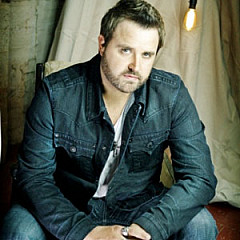
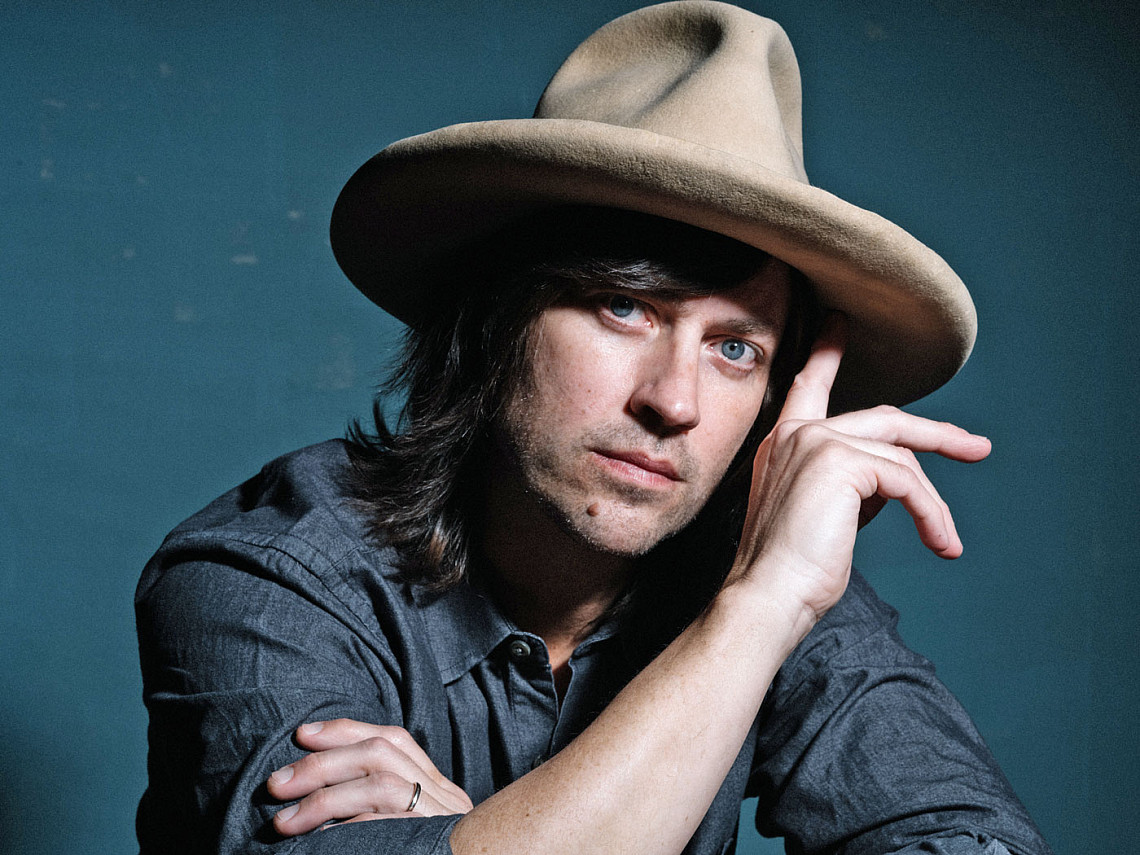
 Old 97's frontman, Rhett Miller, doesn't fit into a mold, nor does his music. A native of Austin, Texas, he got his start with the Old 97's in Dallas, and they've since released 12 studio albums. Powered by Miller's distinct voice combined with clever yet vulnerable lyrics, they were pegged alt-country in the '90s and stood at the forefront of that movement, touring incessantly and gaining popularity with songs like "Barrier Reef" and the fan favorite "Timebomb."
Miller eventually settled in the Hudson Valley area of New York. His songs represent his locations and experiences, yet are strongest when they speak directly to the listener, something Miller has strived for and achieved effortlessly. Weaving in and out of a 30-year career with the band, Miller embarked on a solo career - one that brought the acclaimed The Instigator in 2002, and all its other friends: The Believer, The Interpreter, The Dreamer, The Traveler and The Messenger. Now we see him as The Misfit, the most distinguished and progressive album from Miller to date. Blending influences from folk, rock, and Brit-pop, Miller would be aptly titled "The Innovator" for his drive and intuitive nature in the artistic world. With introspective lyrics and musings on life, he sings about the things people think but don't say. On The Misfit, Miller blends his signature folk-rock music with expansive new sounds and hard-hitting lyrics that capture not just the past several years of an emotional world in turmoil, but the life of someone who has endured.
An advocate with suicide prevention groups, he uses his experiences to help people, first-hand and through his music. Miller survived his own suicide attempt in his teens and has worked to decrease the stigma across the mental-health spectrum, opening up about his sobriety as well. A creative soul, Miller has used his thoughtful and artistic nature for projects beyond songwriting. He's published two children's books, No More Poems and The Baby-Changing Station, and also hosts his Wheels Off weekly podcast, bringing in other artists to share in what it means to be creative.
Songfacts spoke to Miller soon after Thanksgiving, when he had just appeared with the Old 97's playing Bzermikitokolok and the Knowheremen in The Guardians Of The Galaxy Holiday Special. He shared with us how significant that event was, how his new solo album, The Misfit, is his most fitting, and how his creative life has helped him not only survive, but also find meaning.
Rhett Miller: How crazy is that? It's really a testament to this idea that we've been around for 30 years. We kept thinking that somebody who was a fan of ours when they were floundering around in their 20s would come into power and help us out. It's come to fruition a few times now, but [Guardians Of The Galaxy director] James Gunn certainly is foremost among that group of young 20-somethings who loved the Old 97's growing up, did incredible things with their lives, and wound up bringing us along.
Miller: That was so fun actually. The first time was more fun, and as it went on day after day, like anything, it lost its luster. Getting to sit there for three hours and transform into an alien as they apply these layers of latex and do these incredible masks. Each one is a work of art. After you wear them for that day of shooting, they just have to rip it up and throw it away. Each day was a brand new, newly created mask. Especially Ken [Bethea], our guitar player, who was the only one who was a one-piece. For the rest of us, they would glue these different pieces around our face. But Ken had to pull this giant fish head around his skull.
Songfacts: And the Christmas music was great. This gave some incredible exposure to the Old 97's as well.
Miller: Yeah, that's really sweet. And that's what James Gunn said. One of his big motivations to put us in the show was to increase our visibility and renown, and so far, so good. I wrote one with James and one myself. I love the idea that between these two Christmas songs, these might wind up being some level of Christmas classics that get played year after year. How great would that be?
Songfacts: Everyone is always looking for new Christmas music, especially in the contemporary realm.
Miller: The one that James and I wrote, "I Don't Know What Christmas Is (But Christmastime Is Here)," might be a little too contemporary. There were earlier versions of that song that were way more shocking than the one that made it on the show. Disney had to put their foot down. It was so fun to write. There were earlier versions that were way more graphic, about Santa being a serial killer and bathing in the blood of the bad kids. Christmas night, everyone on planet Earth goes into a pit and fights to the death. There was all this terrifying stuff. What we wound up with walks the line nicely.
Songfacts: You came off an Old 97's tour earlier this year and are celebrating a 30-year career together. Do you enjoy the shift back and forth in dynamic between the band and your solo career?
Miller: I think the 97's has to be my primary love, because of the old adage "dance with the one that brung ya." I love both. I love being able to go back and forth. By the time I get fed up having to work within the confines of democracy, then I get to go off and make records in new ways. This new record, and none of the solo records I have made, maybe with the exception of The Dreamer, have been much of me single-handedly creating something. Even then, I had collaborators.
On this newest record, I collaborated with [producer] Sam Cohen, but working with him was really different than working with the Old 97's. I learned a lot from working with Sam. I'd take a piece of a song to him in the morning, the two of us would build a song up as the day goes, and by the end of the day we'd have a rough mix of a song that didn't exist during breakfast. That's something really cool that reminded me of the days when Murry [Hammond, Old 97's bassist] and me were roommates, and we'd stay up all night and write songs together and create stuff on the fly. I've been wanting to bring that back into the Old 97's, though that's a little harder now that Murry is in California, I'm in New York, and the other two guys are still in Texas. Things get tricky as you get older and spread out.
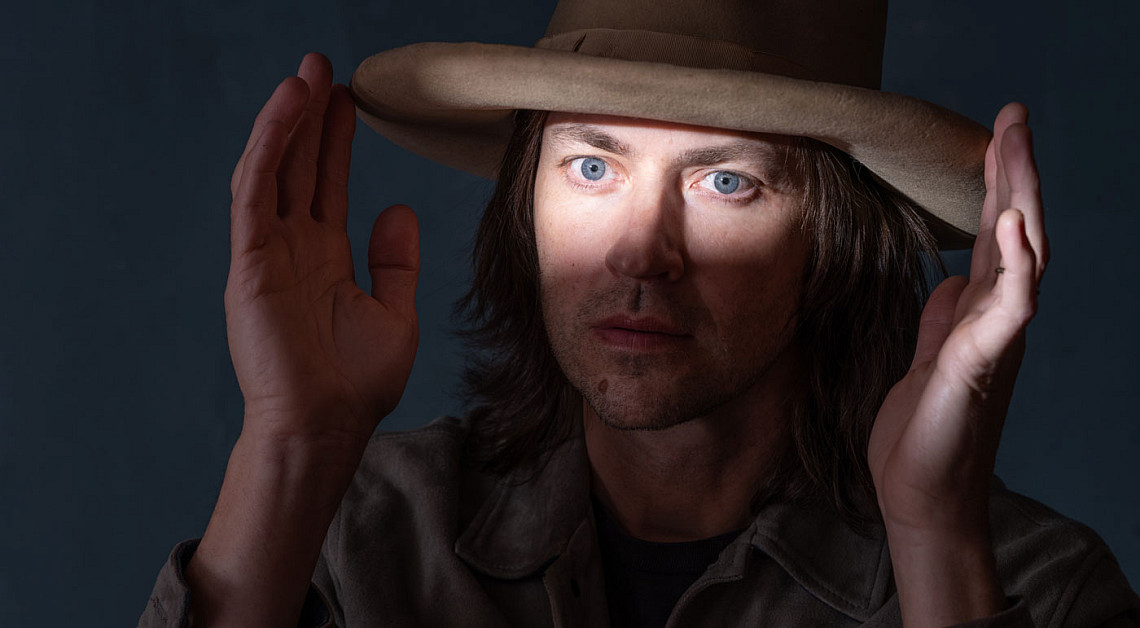 Songfacts: The Misfit has that spark of your signature sound, but on a whole new level, and you really seem to experiment more. The lyrics really hit with some of the emotions people may have been sitting with the past few years and the sounds bring those emotions to life. How did this album evolve?
Miller: Sam challenged me when we were first conceptualizing what the album was going to be. He challenged me to work with sounds that I didn't typically associate my music with. Some of them really were a challenge.
There's this one particular keyboard, the Korg, from the 1980s. It was the exact keyboard that my brother Ross brought home from Arnold and Morgan Music in 1983. He had played it in the bedroom next door to me throughout our teenage years. It was this really loud keyboard that was very specifically mid-'80s and it sounded so synthetic. I remember at the time I was so opposed to keyboards. Now there's bands from the '80s that I can appreciate more than I did at the time - Depeche Mode or The Pet Shop Boys or OMD - that were really keyboard-driven and at the time really drove me insane. Even now, it's not my favorite thing.
But when Sam busted out that Korg, it was like a time machine bringing me back to the '80s, and I had to really get over my immediate visceral distaste of that sound. That for me was a really tough time to be a human being and alive, and the meaning that I found in life and specifically in music was really rooted in guitar-based music. It was very much an "us or them," guitars versus synthesizers world and dynamic in music. I had to get over my preconceived notions about how music should sound. Some of those sounds didn't make the record because it was too much, but there's definitely a couple of songs on there where I let go and let Sam bring me into a new world - a new world from the 1980s.
Songfacts: The title, The Misfit, is from the song "Just When It Gets Good." Do you usually have a title in mind first that fits your naming pattern or do you find it in a song?
Starting in the '90s when all the cool kids were doing grunge or some post-punk thing, I liked folk music and acoustic guitar. Then we wound up on Elektra Records in the late '90s when the bands that they wanted us to resemble more closely were like Third Eye Blind and those kinds of bands that were more pop and just felt shitty and fake to me.
Even into the years when we were lumped in with the alt-country acts, I never felt like we fit in with them. I like British music so much, and my music tends to be minor-chord based and introspective. Even now, we get put on bills with these Red Dirt bands. Invariably, members of these bands will come up to us and say, "You were my favorite band when I was starting out." But their audience doesn't like us or respond to us, and we don't fit in with their music. All these years later, ironically, the biggest thing we've ever done was just over the course of this weekend, when we appeared in this Marvel movie playing aliens. Maybe that's what we were always meant to be - outsiders, aliens. So, this solo record definitely felt like a nice chance to embrace the idea that I've always been something of a misfit.
Songfacts: You write these lyrics, though, that are so relatable and seem to connect. "Go Through You" has the lyrics, "It isn't easy loving you but it's something that I've gotta do," and "Am I in love or in misery?" Does a personal experience drive a song like this?
Miller: The thing you wrestle with when you're writing songs is about trying to be universal. Everyone strives for universality. Part of the reason people say they want to be universal is because then you have a greater chance to reach a mass audience and make money. I think this idea of universality is something noble to want to strive for. You want to build the bridge between yourself and another human being. That is the purpose of art, ideally.
The weird counterintuitive thing I've realized over the years, is that the quickest route to making something that achieves some sort of universality is digging into the details of your own experience. You wouldn't think that. You would think that making broad, sweeping statements would be the fast route to being universal, but really, it's the little details. The minute-by-minute building blocks of your daily life that wind up being more universal and maybe that's because it's just more honest or true.
It's something I wrestle with as I get older. I find that I'm drawn to making songs that make more sweeping, general statements. And it's lazy - it's not good songwriting. I have to try and catch myself. Some of it just slips through because it's necessary. Because every once in a while, you have to land on a big statement because that's where the punch comes in poetry and in song lyrics. You have a bunch of little lyrics and then you pull back and give the drone's-eye view of the situation. It's something I think about a lot and you don't always achieve. It's nice to feel it sometimes when it clicks. It might be the idea that songs work best when you're willing to complain or you feel like you're failing.
Songfacts: "Let Me Go There With You" is another one of those songs. It feels like you're talking to the listener, in conversation, through the tone and emotions it evokes. Was that intentional when writing this song?
We finally went on a little vacation in the fall when the summer burnt out a little bit. We went to the beach with a couple other families we quarantined with in Delaware. I woke up before everyone else and took my guitar down, and thought, The muse doesn't appear unless you give her an opening. I sat down with my guitar and thought, If I can write a song, that would be great, but I won't beat myself up if I can't. Looking out the window at this little Airbnb house with other beach houses, and looking at these windows and imagining other people and the terror that they were feeling with the pandemic.
That line where I knew I was back in was, "Maybe other people have lives of their own." That's always been my entre to writing music. It's all navel-gazing until you glance up and realize everyone else is glancing at their own navel. Everyone else is terrified. It was a great feeling being back in the world of productive songwriters. That song meant a lot to me and I'm really proud of the way it turned out.
Songfacts: "Beautiful Life" is really stunning, it just has a raw ache to it. Did you have a set goal with the sound on this song to contrast the lyrics?
Miller: With "Beautiful Life," I had been sitting on that for a few years. It was the oldest song of the bunch. I remember I had a layover in a New York airport and I wound up sitting in a Brooklyn park on a beautiful spring day, just watching all these young Brooklynites frolic, doing the thing where I imagine I was alone and they were all happy to trick myself into writing this song. I wrote that song and it felt like it needed to be a big exuberant pop song.
I brought it in to the 97's and we recorded a version of it for Graveyard Whistling. It was this really upbeat, strident, happy-sounding song, but it just felt weird and fell flat and it did not make the record, obviously. I sat on it for a while and on the same trip where I wrote "Let Me Go There With You," I wrote a new verse for that song. I wound up performing it during my online gigs during the pandemic and it ended up being the theme song of my online shows. The fans that logged into those shows loved it and embraced it. I tried it a lot of different ways but it wasn't until I brought it into Sam Cohen and he said, "You know what this song needs? It needs to be a lot creepier, scarier, more brooding." I had already decided I was going to do the improv rules with Sam. I was going to say yes, so I followed him down this road.
At a certain point, what he was doing reminded me of the Lou Reed song "Perfect Day." We sat and listened to that song and dissected what Lou Reed did in that song that made it so good, and identified that there was something creepy about it, and that there was a ton of space in it. I think it was because of that song that Sam gravitated towards the giant piano chords that wind up punctuating the production of "Beautiful Life."
Some of the fans from the online shows from the pandemic were disappointed because they were used to me playing it in an upbeat, swingy, poppy style, and what they got was this cinematic, terrifying moment. But I really love it. My two teenagers got obsessed with that recording of the song. Both of them have told me that it's their favorite thing I've ever done and predicted that song and that record, The Misfit, in general, are going to open up my music to a whole new generation of music fans. Your lips to God's ears, kids.
Songfacts: When teenagers say something that positive, then go with it. It must be nice that they appreciate your music.
Miller: It took them a long time, though. When they were little, I'd play guitar around the house, and they would walk up and put their hands over the strings to mute them and say, "Dad, shh." I think they've seen it as some sort of threat, or that music is competition. It takes me away from them. If I go into my office to write a song, or the table to play guitar, or the most obvious of all, if I go away on tour, it's always been something that takes me away from them. They're starting to appreciate it finally. It took me knowing people who can get them on guest lists for their bands.
 Songfacts: The Instigator just had its 20th Anniversary and the opening track, "Our Love," has what I think is one of the most dynamic opening tracks and opening lines. That song captures you right away. What compelled you to write that song?
Miller: Thank you. I can't believe it's been 20 years. I never traveled in my 20s because I was always playing four to seven gigs a week. Finally, the Old 97's had a month off before we made Satellite Rides and I went on a backpacking trip that I might've done when I was 19. I was 29, finally doing it. I wound up in Prague and I went to see a production at the Prague Opera House of Tristan And Isolde, the Wagner opera. I didn't realize it was seven hours long. I was hungry and I was in an opera box between these two German women who took an immediate dislike to me, probably because of my Americanness.
I had a paperback copy of Kafka's letters with me. In between acts, I was reading Kafka's letters and I was reading the program, and doing research about Wagner, who I really didn't know much about. As I researched him, I just realized what a creep he was, politically, with his antisemitism and his friendship with Hitler. I also realized, just in terms of lifestyle choices, how much he had in common with Kafka. They were both these intense artists, who lived and died by their work, and threw themselves into their work. And both of them wound up having affairs with wives of their friends. That connection between the two of them - one of them, a historic antisemite, and one of them, Kafka, my favorite Jewish writer.
I, at the time, had just met the woman I was going to end up marrying. She also had a boyfriend at the time. I was falling in love and it was forbidden and both of these wildly different men were involved in these forbidden romances. It all kind of stacked up and became this song, and it's such a weird song. It's got this historical structure where I'm talking about Wagner and then I'm talking about Kafka, but really, I'm thinking about my own stupid situation. It's one of those things where it should not work, but for whatever reason, it does. And it's certainly helped by Jon Brion's production, which is such a great, tight recording of a song. It's a fun album opener.
Songfacts: It's an incredible opener. And what a great story. Did you make it all the way through the seven hours?
Miller: I did. I made it all the way through. I felt like I was gonna faint by the end of it, from hunger and exhaustion. Maybe that's what makes that shit so brilliant.
Songfacts: You've had a very creative life and that has guided you through your own struggles. The arts can definitely be a healing mechanism. Is that what it's been to you?
Miller: I've done 120 Wheels Off interviews for my podcast about creativity. One of my main themes is that people who wind up living creative lives, whether they're musicians or writers or comedians, that's the thing that has helped them deal with the human experience.
It can be so hard to survive it day to day. Being able to make art is, in so many ways, the answer, and certainly has been for me. I love it. When I get too far away from it, I can feel it, like those six months without writing a song. You can't put too much pressure on your creativity to save you. There's a lot of other stuff that's important - human interaction, therapy, and for a lot of people, I know medication is a real lifesaver. Part of what makes life not just bearable, but meaningful, is the act of creativity. The devotion to it, believing in it, and sitting down day after day to give yourself over to it. It's all part of the same urge to fill in the void, to make sense out of senselessness.
December 20, 2022
Keep up with Rhett and find out how to hear the album at rhettmiller.com.
More songwriter interviews:
Cleto Cordero of Flatland Cavalry
Victoria Williams
Sara Watkins of Nickel Creek
David Crosby
Photos: Ebru Yildiz
More Songwriter Interviews