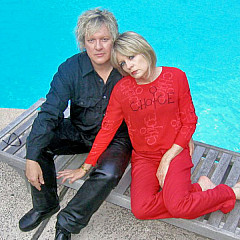
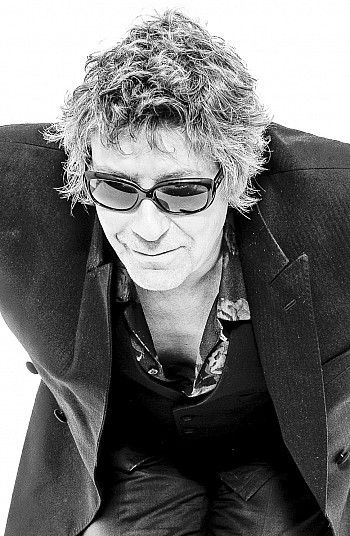
 "Pretty in pink" is a metaphor for being naked. The way Richard Butler writes lyrics, you have to peel back some layers, step into a different light and contemplate a bit before they really sink in. Or you can just make up your own story, which is what John Hughes did when he took the song, about a promiscuous girl who is mocked behind her back, and made it into a movie about a headstrong teen (Molly Ringwald) in a pink prom dress.
That song came from the Psychedelic Furs' second album, Talk Talk Talk, produced by Steve Lillywhite and released in 1981 when they still had six members. Their next album, Forever Now, was produced by Todd Rundgren and holds "Love My Way," written for one of Richard's friends who was struggling to come out as gay. The lyrics hit hard:
There's emptiness behind their eyes
There's dust in all their hearts
They just want to steal us all
And take us all apart
By this time, the Furs were a four-piece and showing more promise in America than in their native England, so Richard and his younger brother, the group's bass player Tim, moved to the States. They earned a devoted following but wore down from the grind. In 1987, Richard developed a heart condition from the stress. After a hiatus, they released two more albums before taking another break in 1991. That one lasted until 2000, when they re-formed to tour with The B-52s and The Go-Go's. Playing their hits was fun again, but they didn't release any new music until 2020.
Made Of Rain, their eighth album and first in 29 years, is out July 31, but four singles have already been issued. Lyrically potent and musically vital, their new material sounds like a progression from where they left off, with all the Psychedelic Furs hallmarks. We spoke with Richard about the new tracks and also explored some Furs classics, including the specific inspiration for "Pretty In Pink."
It was one of those things she said, and I thought, "Wow, I like that," so I just started writing. It's basically a list song with "no ones" put in there.
Songfacts: Have you done list songs before?
Butler: Oh yeah. "All Of This And Nothing" [more on this one later] is a list song. That was on Talk Talk Talk. It was a list of things that a girl left behind after the relationship had fallen apart.
Songfacts: What other techniques do you use when you're writing lyrics?
Butler: Just write. Just writing down ideas.
It's difficult starting on the song. I do a lot of correcting in a way that I'll write down ideas first and then I'll go, "Well that's good, but this is useless," and I'll cross it out and fix it up. I find it easier to fix things than to try and have them in a finished form all at once.
Songfacts: Tell me about the song "Don't Believe," which has a very interesting opening line: "The money's got the medicine and you can't believe in anything."
Butler: Well, that's about the health care system - big pharma and all that. It's just saying that it's difficult to believe in anything. I'm not a person of any faith, I'm an atheist, so there's not that to believe in, but I find myself questioning all kinds of things, especially given this coronavirus. You question the intrinsic goodness of people – what's with all these weird non-mask-wearing deniers? It's crazy.
Songfacts: You brought up faith, and "Come All Ye Faithful" clearly is not a Christmas song but you touch on some issues of faith. Could you talk about that song?
Butler: "Come all ye faithful you holy rollers"... it's a lot about people looking down on you for a lack of faith, and again, to reiterate my own lack of belief.
Songfacts: You wrote "Love My Way" about a specific person. Are there other songs that you've written that have also been inspired by somebody specific?
Butler: "Pretty In Pink" was about a couple of people that I knew, a couple of girls that I knew, not so much as "Love My Way."
Songfacts: Where did you know those girls from "Pretty In Pink" from?
Butler: Oh, just around when I was living in Muswell Hill. One was a friend of my then-girlfriend, and the other was a girl I knew that went down to the same pub that I went down to.
Songfacts: Because it was used in the movie here in America, we always think of the girl as a high school girl, but I guess the girls that inspired it were not high school girls.
Butler: No, not at all. The song is about a girl who sleeps around a lot and thinks that she's popular because of it. It makes her feel empowered somehow and popular, and in fact, the people that she's sleeping with are laughing about her behind her back and talking about her.
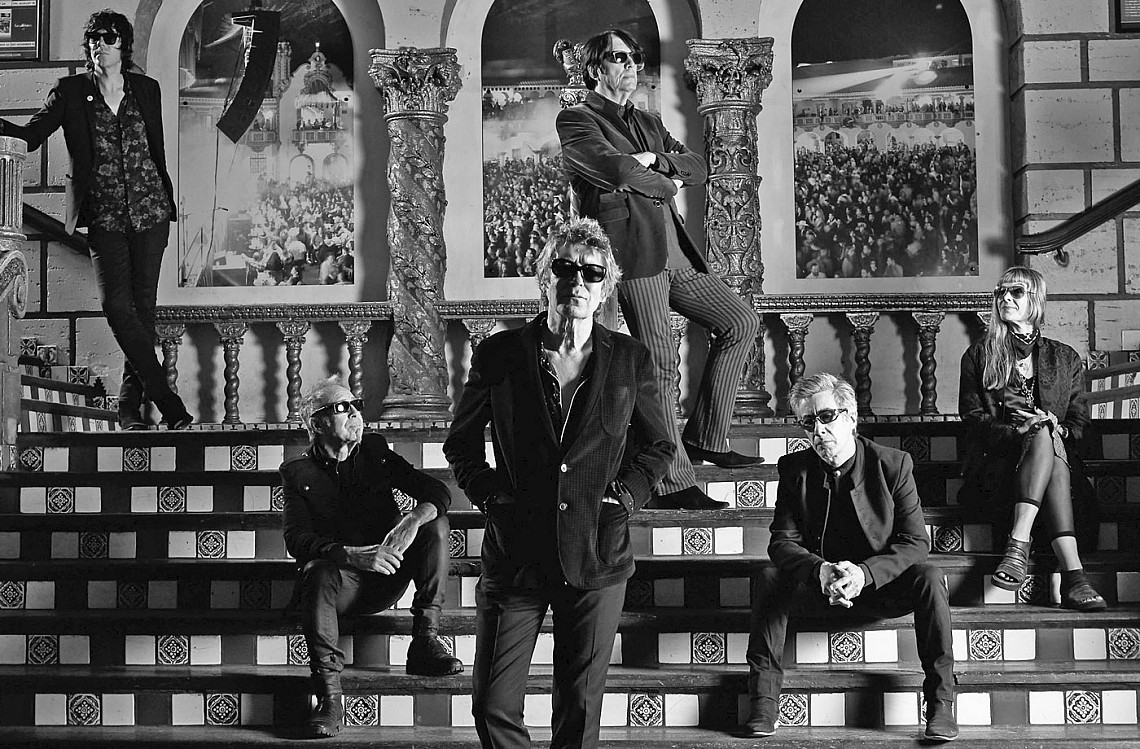 The Psychedelic Furs of 2020 are a six-piece, like they started. Tim and Richard Butler are the only original members, but sax player Mars Williams and drummer Paul Garisto were in the band for much of the '80s. On keyboards is Amanda Kramer, who was part of Information Society when they released their first album. With guitarist Rich Good rounding out the group, this lineup has been intact since 2009. About time they made some new music :)
Songfacts: What got me thinking about how you don't often write about a specific person from your life is when I was looking at some of your paintings, and I realized that you paint your daughter, but you don't write songs about her. What's going on there?
Butler: [laughs] I don't know. I think it's because I don't set out to write about something. I don't go, "Oh I'm going to write a song about Maggie today," or anything like that, or any particular situation. I just sit down and, for the most part, the words just start coming.
I'll listen to the music and let it put me into a certain mood and then write lyrics that are inspired by that mood. I'm not writing about anything or anybody or any situation in particular at that beginning point. Sooner or later it starts to make sense and then that'll be the point where I'm like, "Well, this line has to go because it doesn't tie in with the rest of it and it doesn't make sense next to this line." And then it gradually coalesces into something like a readable, understandable form.
Songfacts: The name "Caroline" shows up not only in "Pretty In Pink," but also in "India." So, who is Caroline?
Butler: No person, it's just I like the name. Mary I think appears in a couple of songs too. Yeah, I like Mary for its very vague religious connotation. But I've used Mary and Caroline, and I think I've used Susan a couple of times too.
Songfacts: It's one of the few things that is like Bruce Springsteen about you: You'll throw in girls' names, very common ones.
Butler: But not guys' names.
[There is something else they have in common. Springsteen didn't say much about his songs until he realized "Born In The U.S.A.," which is about the plight of a Vietnam veteran, was getting badly misinterpreted. After "Pretty In Pink" became a girl in a prom dress, Butler started offering limited insights into his lyrics.]
Songfacts: Speaking of "India," you were not living in America at the time and you were kind of taking a jab at the stereotypical ugly American in the song. Can you talk about that lyric?
Butler: I remember hearing stories about Goa and how all the hippies, mainly Americans, would go over there, and there were needles all over the beach and what a ruin it was.
Songfacts: Did you say Goa? I'm not familiar with that.
Butler: Yeah, it was a hippie destination [in India]. It turned out to be a junkie destination, and a lot of American hippie tourists went there. But it was kind of laughing, kind of sarcastic, tongue-in-cheek when it says, "India, I'm American, ha ha ha."
Songfacts: And then when you came to America, how did your thoughts on the country change when you started living here?
Butler: Well, I was never really down on America any more than I was down on England. When I first came here, I was absolutely thrilled by it - New York was for me, culturally, the center of the world. I loved Andy Warhol and I loved the Velvet Underground, and I was very much enamored with the romance of New York - this gritty, creative city.
When I came to New York I was just blown away by it. I had never seen smoke coming out of the streets. It was like Taxi Driver, you know? It was a pretty amazing place, full of energy and very, very different to London. I kind of fell in love with it.
Also, America enabled us to do lots of touring - we did lots and lots and lots of touring over here and it was a fantastic place to be. I love it here - that's why I decided to live here. I miss England and a lot of things about England, but I'm really glad to be here.
Since 2001, The Psychedelic Furs have been performing "Wrong Train," a song where Butler sings from the perspective of a guy who made some very bad choices and finds his life falling apart in the suburbs. The song has become well known among the Furs faithful and will finally be released on Made Of Rain.
Songfacts: You've talked about how when you write your lyrics, very often, you are realizing some kind of truth about yourself. What's an example of a Psychedelics Furs song that gleaned some insight into one of your personal truths?Butler: I would say "Wrong Train," to a degree.
My first and only marriage was sort of crumbling, and it made me examine in a very negative, pessimistic kind of way the whole move to the suburbs. It made me imagine somebody else's life perhaps, who had moved out and had a similar or perhaps more tragic time of it than I had.
Songfacts: What's the significance of the Made Of Rain album title?
Butler: It was taken from a book by a guy called Brendan Kennelly, an Irish poet who went into a hospital for I think it was a quadruple bypass, and in the space between life and death that he experienced, this character came to him and he called it The Man Made Of Rain. I was particularly struck by the title. I thought it was a beautiful title, very evocative, and I thought it fit really well with the songs on this record.
Songfacts: What's one of the songs on that album that we haven't talked about that you have a pretty strong connection with?
Butler: I love "The Boy That Invented Rock And Roll." It's kind of a list song of different feelings. I thought, "What are these feelings about, what could they be, what could I make of them, how could I tie them together?" And I thought, "Well, they are the kind of feelings that could have engendered rock and roll or the blues for that matter."
A flight of crows, my insect heart
These ticking veins, the godless dark
It's got this very pessimistic, very blues-sounding bass, not in a blues music way but in the feeling, and I thought that could be the sort of feeling that engendered rock and roll, so that's where the title came from.
Songfacts: One of your Talk Talk Talk songs I've always been intrigued by is "Mr. Jones," which has followed you around - you've been playing it in concert for a while. Could you tell me where the title "Mr. Jones" came from?
Butler: Well, I'm a huge Bob Dylan fan and I'm a huge David Bowie fan, and so it was on the tip of my tongue because Bob Dylan mentions Mr. Jones in "Ballad Of A Thin Man," and David Bowie's name is David Jones really.
But it came to be a peculiar thing, like an everyman, like "Mr. Smith." It's just one of those really common names that I took to be an everyman.
Songfacts: There are some lines in there about movie stars, ads, media. Can you talk about what you're getting at with that?
Butler: Yeah. It's basically saying that advertising and radio and pop songs sell you an idea of what love is and what it should be like, and it's largely idealized and very difficult to realize in the real world. It was a criticism of that really. Movie stars and ads define romance, don't they?
Songfacts: Yeah. Romance is kind of an interesting concept with you. You have a different take on it than many writers.
Butler: Well, I wonder what love is and what romance is. I like to question - it puts me in a great space for writing. I've been trying to fit the line, "Love is lost in Sunday clothes" into a song but I can't make it stand properly yet.
Songfacts: The song itself is fairly self-explanatory, but on "Into You Like A Train" you have some lyrics that get a bit meta, where you say, "If you believe that anyone like me within a song is outside at all, then you're all so wrong." Can you talk about that?
Butler: Yeah, it was saying that just because you're a singer in a band doesn't mean that you're going to be able to change the world, and that you might not even want to change the world. Though I suppose in a lot of ways I do want to change the world because I'm very critical of it, and if you would count critical as wanting to change something, then I suppose, I have wanted to change things. But it's saying that I'm not outside of it all, I'm not in a position to be able to judge you because I'm here in it all too.
Songfacts: Did you get the sense that people were looking for answers from you?
Butler: Oh no, I didn't get that at all, especially at the time I wrote that, and even since. That would be the kind of thing Bob Dylan would be more able to feel.
Yeah, nobody was looking at me for answers. They might think I know more than I actually do, but I don't think anybody was looking for answers from me.
Songfacts: The first lines in "The Ghost In You" I misheard for most of my life. I thought you were singing, "A man in my shoes runs enlightened." But you're not, are you?
Songfacts: So it's "running a light and all the papers lied." What is that opening section of that song getting at?
Butler: It's saying a person like me, or perhaps even me, takes chances, runs a light.
It's my little metaphor for taking chances, and then it goes into pretty straightforward, "The papers lied tonight, but falling over you is the news of the day."
Songfacts: In one of your newer songs, "You'll Be Mine," you have the lines, "You can't be surprised when every second has its place and all your days are yesterdays." Can you talk about those lyrics?
Butler: Yes. It's basically alluding to death, and "you'll be mine" is death saying "you will come to me." It's a little grim.
Butler: Have you ever written a song from the point of view of death before?
Butler: No.
Songfacts: What's interesting about your writing is you never know what to expect. You don't have set topics and themes.
Butler: There aren't many love songs in my canon. I think there are songs about love more than there are love songs.
Songfacts: Is there one song that you consider about love that stands out for that specific topic?
Butler: Yeah, I would say "Love My Way" does.
Keith Forsey, known for his work with Billy Idol, produced the fourth Psychedelic Furs album, Mirror Moves. According to Forsey, Butler would give him only one take on each song.
Songfacts: Keith Forsey said that you would sing the tracks on Mirror Moves just once. Is that true?Butler: Yes. But the funny thing with that is on a couple of songs, he wanted me to double it because my voice could be quite raspy and he wanted it to be smoother, so he would have me double it. So, although I really liked to sing the song just once, I doubled a couple of songs on that record, and it was hard work to do it because you sing a line once and then you've got to sing over it exactly the same so you can't really tell. If you're a little late on the word, you can tell, so you have to be quite exacting in it. So, I guess he got his revenge on me in a way.
Songfacts: Is that the way you always work where you will only sing a track once?
Butler: Less so these days. On the first couple of albums, I felt like going over and over and over again it was going to lose some kind of spirit, which I think it can, but these days I'm not quite so fussy about it and I don't find that it does affect it that much, and I'd rather have my voice sounding better, I suppose. But that was very much about my anger in the minute at that time.
Songfacts: Is there one Psychedelic Furs song that stands out to you as a definitive song for the band?
Butler: That's a difficult one but I would say "All Of This And Nothing."
Songfacts: And why is that?
Butler: It pulls it all together. Musically it's very Psychedelic Furs and I like the way it comes in with the acoustic guitar and also leaves with an acoustic guitar, and in between, it's very, very Psychedelic Furs-sounding. It has all the musical elements that you associate with this band.
And lyrically, I like the fact that the verses are very abstract and they're pulled together by the chorus. You only realize what it's really about when you listen to the chorus, because before the chorus comes in it's just a list of really odd things.
Songfacts: What is the song by another artist that had the most influence on you?
Butler: Oh, maybe "Visions Of Johanna" by Bob Dylan. I think the words are great and the imagery in the verses is fantastic. His voice is fantastic on it and the whole song is so beautiful - kind of mournful, but beautiful. The whole mood of it is fantastic.
July 23, 2020
Get updates and more info on Made Of Rain at thepsychedelicfurs.com
List of Psychedelic Furs Songfacts
Interview with Tim Butler
Todd Rundgren on producing "Love My Way" and other stories
Interview with Phil Thornalley
Photos: Reed Davis (1), Matthew Reeves (2)
More Songwriter Interviews