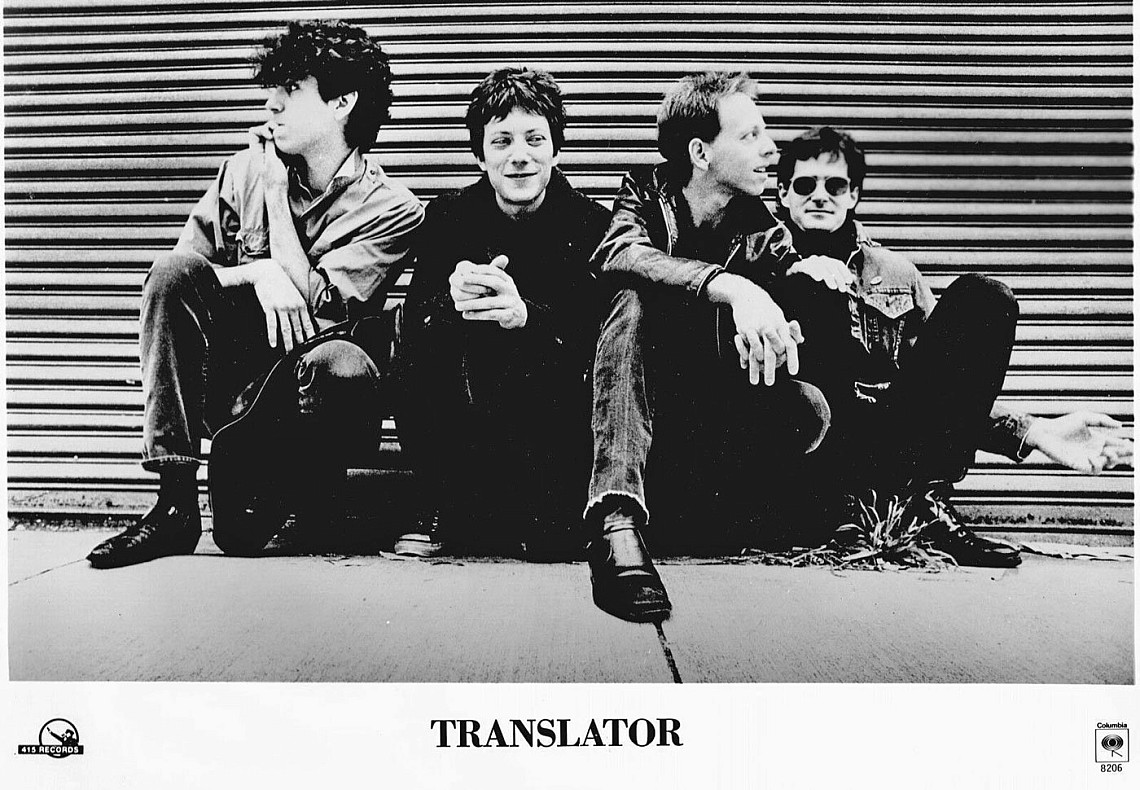
Can you be New Wave without keyboards? Listen to a few Translator songs and you'll probably vote yes.
The group was based in San Francisco and released their first album, Heartbeats and Triggers, in 1982. Despite being a guitar band with no synthesizers, they had a very modern sound that peeled away from the pop music of the day. It put them right in the sweet spot of college radio and made them the kind of band your cool, fashionable friend would tell you about, but they never broke through to a wider audience.
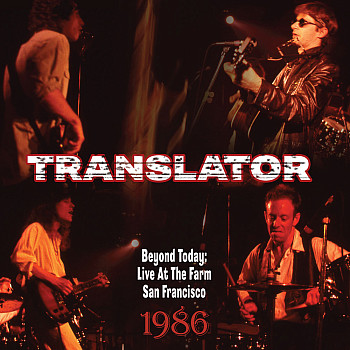
Translator's music has held up well... so well they're still making it. When they called it quits in 1986 after four albums, they went out with a goodbye concert at The Farm, a storied art space in San Francisco. They ended up reuniting a few times (first in 2006), and recently made two new songs that they've tacked on to the CD and digital versions of Beyond Today: Live At The Farm San Francisco 1986, a recording of that freewheeling farewell concert that's set for release on May 9, 2025.
The main songwriters in Translator are Steve Barton and Robert Darlington, who are also their lead vocalists and guitarists. Outside of Translator, Barton has released a series of acclaimed solo albums that push against musical boundaries; Darlington has branched out into poetry and photography in addition to music. They took some time to break down those two new songs - "These Days To Come" and "With Your Dreams" - along with five classics from the Translator catalog, including "Everywhere That I'm Not," which has over a million streams on Spotify.
The group was based in San Francisco and released their first album, Heartbeats and Triggers, in 1982. Despite being a guitar band with no synthesizers, they had a very modern sound that peeled away from the pop music of the day. It put them right in the sweet spot of college radio and made them the kind of band your cool, fashionable friend would tell you about, but they never broke through to a wider audience.
Translator's music has held up well... so well they're still making it. When they called it quits in 1986 after four albums, they went out with a goodbye concert at The Farm, a storied art space in San Francisco. They ended up reuniting a few times (first in 2006), and recently made two new songs that they've tacked on to the CD and digital versions of Beyond Today: Live At The Farm San Francisco 1986, a recording of that freewheeling farewell concert that's set for release on May 9, 2025.
The main songwriters in Translator are Steve Barton and Robert Darlington, who are also their lead vocalists and guitarists. Outside of Translator, Barton has released a series of acclaimed solo albums that push against musical boundaries; Darlington has branched out into poetry and photography in addition to music. They took some time to break down those two new songs - "These Days To Come" and "With Your Dreams" - along with five classics from the Translator catalog, including "Everywhere That I'm Not," which has over a million streams on Spotify.
"These Days To Come"
Robert Darlington: I started writing this song in early 2023 as an anthemic style of song. I was sitting on my bed, strumming my guitar, and the verses were written in only a few minutes. I then wrote the short middle bridge, but was unhappy with the overall song. It needed another part. Steve and I had been talking about writing another song together, but I had decided not to send him this one. I finally decided to attach the song file to a text and sent it, while not expecting much, and he sent back this great finished song. I am so happy that I decided to send it — it really sounds like Translator and shows that our songwriting has not changed that much over the years. Strong lyrics and great melodies are what we always strive for.Steve Barton: Robert sent an acoustic demo to me, probably recorded on his phone. There was no chorus. It had sort of a Velvet Underground vibe, which was really cool. It seemed like an obvious Translator type of song, so I put together a demo of where I thought it could go. The melody and all of the words to the verses and bridge were there. I came up with the chorus and put the bridge in 3/4 time, just to shake things up!
Also, I thought that calling back to "Everywhere" and "Gravity" might be cool, so there I am playing the opening and closing guitar line on the low E string. We also sing the entire song in two-part Everly Brothers harmonies. Once the band played the song for the single, it screamed TRANSLATOR! So much so that we asked our pal and producer of the third and fourth Translator albums, Ed Stasium, if he would mix it. He said yes!
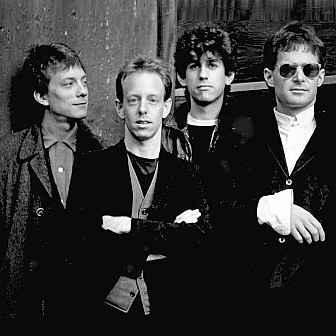 L to R: Steve Barton, Dave Scheff, Larry Dekker, Robert Darlington. Photo: Trudy Fisher.
"With Your Dreams"
Barton: I was playing around with the chords and lyrics for this song in my studio up in Portland one afternoon. When the line "I close my eyes with your dreams" came along, I knew that I was on to something good. The bit about "all the blood in my veins has memorized your name" had been rummaging around in my head for years. It tried to make its way into other songs, but nothing ever stuck. This time it worked.I put together what I thought would be a demo for a solo record, but soon realized that it had a real Translator vibe. So, I got in touch with the others and we finished it together. Along with "These Days To Come," we sent it off to Ed Stasium to mix it. I really like this one — it has such a cool sonic atmosphere.
Darlington: I remember when Steve first sent me a file of this song. I immediately thought it was perfect for Translator. I had not heard it much before I actually recorded my tracks for it, and it was inspiring to add my harmonies and guitar parts. Ed Stasium and I had done backwards guitars on various tracks before, so l added a guitar part at the end of the song, hoping he would do that with it, and he did. Great images in this song add to its melodic power.
"Everywhere That I'm Not"
Barton: I was living in a really cool old house in Echo Park in Los Angeles. The relationship I was in was exploding apart. Translator, still a trio at the time, rehearsed in the basement. It was 1979. This song formed very quickly. I was obsessed with Iggy Pop's Lust For Life album at the time. "The Passenger" has a similar swingy type of damaged swagger. A friend of mine reminded me recently that he and I had played my 45 of "Live" by The Merry-Go-Round the day before I wrote the song.That song also has a strummy jangle. Maybe those two records got into my mind. I also had the Ted Greene Chord Chemistry book, which lots of guitar players had back then. It would have five pages of different voicings to play an Emin chord, for example. I took what that book had to offer and shook up the way I played the chords. Strange inversions and shapes. Unique. For the chorus, I chose to go to typical Amin, G, D guitar chords for contrast. When Larry Dekker came up with the walking bass part, we all smiled and said yes. I also remember that once I had the "I thought I saw you...", "I thought I heard your voice..." beginnings of the verses, I found that starting with the different senses really worked lyrically. I wrote the song in about half an hour in one sitting.
The video was the first one we made. It was really fun to do. We rented a club in San Francisco and invited all our friends for the performance section. Looking at it today, it has such a great low budget feel. Really cool.
Darlington: I started out as a fan of Translator, when they were the best trio on earth. Steve's songs were unique, and the band played with more energy than any other three bands playing together. From the first time I heard it, "Everywhere That I'm Not" was an obvious hit to me. After I joined the band, it was even more fun to play it. The demo we did with David Kahne was so good that it is the final version on our debut LP, Heartbeats and Triggers.
Translator's first two albums were produced by David Kahne, who was also an A&R guy at their label, 415 Records. These were some of his first productions; Kahne went on to produce the Bangles' landmark album Different Light and all those Sugar Ray hits. His client list includes Kelly Clarkson, Paul McCartney and Billy Joel.
"Un-Alone"
Barton: This song began life as a "big open chords song" like the ones I was hearing in clubs when we were on tour. When it came time to record it for our second album, our producer David Kahne recommended making it more of a tight eighth note groove. There was also a middle eight that we cut out to keep it from getting away from the feel of the rest of the song.I can still see us in the studio recording it. I remember hearing the playback in the control room and being blown away as it blasted out of the big speakers. We wanted to hear what it would sound like on the dance floor. That was a moment!
The video for this one, in retrospect, got away from the lyrical idea of the song which is really an existential number, not a break up song. The video should have just been a performance video, not a story video. I don't live in regret, but It is something I would certainly be more firm about today. But 1983 is not today! That being said, we approached making the video with the spirit of "The Three Stooges meet Fellini." Through that lens, it really works! And we did have a lot of fun making it. I'm wearing Dave Scheff's [Translator drummer] jacket in the video.
Darlington: I remember when Steve first played this one at a rehearsal. We changed the key for it, and recorded it with David Kahne. Great melodies and intelligent lyrics were what we always aimed for, and Steve nailed this one. The video was a blast to make, finishing at the church where Alfred Hitchcock filmed The Birds. It's another fan favorite.
"Gravity"
Darlington: I wrote "Gravity" after the line "I'm a dream and you're fading away" popped into my head while I was playing the chords. I write chords and melodies first, and then the lyrics. I realized I had a good chorus, and I wrote the song in about 10 minutes. I took it to Steve's apartment the next day, and we recorded it. The song really came together when the band started playing it, and we did a great recording of it with Ed Stasium for our self-titled third LP."Gravity" was a big hit in the Philippines, and there are Filipino bands covering it on YouTube. I wrote this song, and almost every other song I wrote for Translator, on an unplugged electric guitar that had belonged to a deceased friend of Dave Scheff's.
Barton: Robert and I used to get together for writing sessions at my flat on Dorland Street in San Francisco back in 1982/1983. We had a friendly competition. He would come over with two new songs which we would record on my TEAC 3340 reel-to-reel 4-track machine. It would spark me to write something, which we would record the next day. Or I'd have some songs and he'd follow up with songs of his own. It was a really creative time. Several of those numbers wound up on Translator.
When we eventually worked out "Gravity" with the band, I came up with the signature guitar line that opens and closes the recording. The solo in the middle ends with me playing my wah-wah pedal to evoke a feeling of floating — to go along with the idea of gravity. We sang the song in two-part harmony all the way through. That was an idea we came up with together while making the original demo at my flat.
"Everywhere"
Darlington: I started writing "Everywhere" the night John Lennon was assassinated and I finished it the next day. We were (and still are) huge Beatles fans. Lennon's "In My Life" and "Tomorrow Never Knows" were life-changing songs for me as a songwriter. His death devastated us, and I could only express my grief in song.Other personal issues were also weighing heavily on me, and adding to the lyrical pot. I guess the song is my celebration of life through the tears and suffering of loss. It was my attempt to make some sense out of the tragedies everywhere around me.
David Kahne's demo is the final version on our first LP. "Everywhere" was written in San Francisco shortly after we moved there, on a classical guitar that belonged to a friend.
Barton: When John Lennon was shot, we were just about to have a meal together at a flat in San Francisco. We had moved there in late October 1980, so December 8 was soon after uprooting ourselves from LA. Needless to say, the dinner party ended. I walked up to Cafe Flore in the Castro by myself, where they were playing Double Fantasy over and over again. People were stunned. Robert's reaction was to write this masterpiece.
I don't remember how we decided to have me answer his vocal throughout the verses (Robert "It's only at this moment" then me "I feel my breathing," etc...), but it is very emotional and makes it even more personal and universal. Our vocal harmonies are pure Lennon/McCartney in honor of what had happened. I do remember playing the guitar solo, which I thought should echo the '60s vibe that we were going for with this song. So I channeled Glen Campbell from "Wichita Lineman" and George Harrison on "Baby It's You" by playing the melody on the low E string. When the middle eight changes to the key of A from the rest of the song which is in C, I was thinking of Lennon by playing A7 and D7 as bar chords — striking them hard on 2 and 4, like I would have pictured him doing it on a Beatles record. It quickly became one of our signature songs. The whole band is spectacular on this track, playing as one.
"Sleeping Snakes"
Barton: I am not a huge political songwriter, but the proliferation of nuclear missiles between the US and the then-USSR was obscene. We were all anti-Reagan and that whole gang. It was 1981.Except for the chorus, the song wrote itself really fast — almost like it HAD to come out. I was pleased when I came up with the double-entendre of the last line "bombs away!" I do recall lying in bed with my girlfriend as I was writing the chorus. She was sleeping next to me when I realized that singing the "stop this missile building" line over and over again would make it land on a different beat each time around, until it made its way back to the downbeat eventually. I knew the song was finished when I figured that out. A phenomenal live number for us at the time, thunderous and emphatic.
The video was made up of various news clips and nuclear bomb footage. Plus, some shots of us running around being filmed by a helicopter that we had hired. We were supposed to look like we were in the wilderness of destruction, but I remember feeling like it was more like The Beatles scene in the field for "Can't Buy Me Love" in the A Hard Day's Night film. My own little in-joke! MTV would not play this video. It was deemed "too political." How times change.
Darlington: A song that is, sadly, still so relevant. Steve's lyrics and tight, powerful verses really propel this anthem about the misery of nuclear proliferation. I think the video we made for it is very powerful, especially with its positive ending. I remember thinking that this was an important song for the entire world to hear.
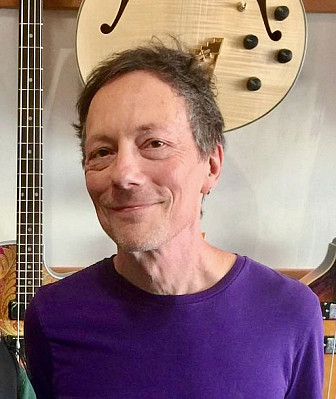 Steve Barton
How has your songwriting changed over the years?
Barton:For starters, when Translator was making records and touring, the songs that I came up with were tailored to the band's sound. Once we were apart, for my solo work I opened up the palette for my songwriting. If I wanted a quiet whispered song, OK! Drum loop? Cool! But really, as I think about this I realize that my approach hasn't changed all that much from when I first started writing songs at the age of 11. I still sit down with my guitar or at a keyboard and see what happens. Sometimes it will be lyrics first, sometimes the music, and occasionally both at the same time. A great example is "Off The Ground" from my current solo album Time Hard Won. I put together the bass loop that runs through the song, added a loud Badfinger-esque middle eight and I was off to the races.Also, singing in my lower register is something that I rarely did in Translator since I had to shout over the power of the band. This song (and most of the songs on this album) are all down in my low voice. I recorded this version of "Off The Ground" at Ron Fair's studio in Nashville with Dave Scheff from Translator on drums.
Darlington: I do not think my songwriting has changed a great deal since I wrote songs like "Everywhere" and "Gravity" for Translator. I write many different styles of songs, and I have always focused on lyrics and melody. My song "I Need A Miracle," on my solo PRISM EP, is a good example of a more recent song that could have been written at any time during my songwriting years. I don't think my songwriting sensibility has changed that much. Also, "These Days To Come," a new song written by Steve Barton and I, sounds like a song Translator could have recorded in 1985.
What's a song by another artist that had a big impact on you as a writer or musician?
Barton: "Someone To Watch Over Me" by George and Ira Gershwin comes to mind. I adore the melody and the great lyrics to this song. The unusual chord choices thrill me.If I can choose a second song I'd pick "Like A Rolling Stone" by Bob Dylan. I remember hearing it for the first time on a jukebox at Winchell's Donut House when it initially came out. I was in elementary school. It blew my little mind and continues to, even today. Hearing the original in waltz time on The Bootleg Series years later really opened my eyes. I have done the same thing where I'll be writing a song with a totally different feel than what it eventually becomes. To hear that the master himself did that too was validation that I'm OK somehow. Hey, I'll take it where I can get it!
Darlington: I think there are two songs that really changed me as a writer, and both were written by John Lennon. "In My Life" changed how I thought about lyrics, and expressing deeper feelings and observations of life through songwriting. "Tomorrow Never Knows" showed me how powerful a song could be, and it let me fall in love with droning, psychedelic music — something that still influences my writing and playing to this day.
April 21, 2025
Beyond Today: Live At The Farm San Francisco 1986 is available at Amazon.
Also check out our 2012 interview with Steve Barton, and our interview with Romeo Void.
More Songwriter Interviews