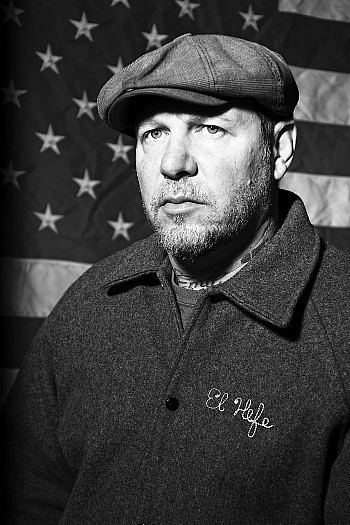
 As a long-time listener of all sorts of different styles of music, it's always been an interesting hobby of mine to try and understand and pinpoint how certain genres (or sub-genres) of rock music were created. And one of the more intriguing styles of music for yours truly occurred during the early '80s, when several bands were bold enough to merge heavy metal and hardcore punk music together - creating a unique style in the process (often referred to as "crossover" or "hardcore metal"), that has influenced countless subsequent bands over the years.
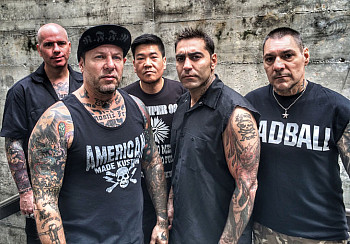
And one band that is often credited for combining both styles was Agnostic Front. Since 1982, the band has been fronted by the heavily tattooed Roger Miret, and have issued quite a few hardcore classics along the way - especially 1984's Victim in Pain and 1986's Cause for Alarm (the latter of which is often heralded as the album in which Agnostic Front fully merged metal and hardcore). And except for several years in the '90s, the band has been issuing albums and touring the world - with their eleventh full-length, The American Dream Died, being released in April 2015.
Miret spoke with Songfacts shortly before the album's release, discussing the origins of crossover, as well as the hard-hitting photograph used for the Victim in Pain album, stories behind several Agnostic Front classics, and listing his favorite lyricists of all-time (some of which may come as a surprise).
Roger Miret: The American Dream Died, recording-wise, it was probably the fastest record we've done in a long time, since the early ones - since Victim in Pain or the United Blood single. It was done quickly, but passionately, so it's a special record to us. It was done in two parts: half the songs were done like you would normally do in the studio, and then the other half were done chaotically, just one or two takes - no click tracks, nothing. And those were the ones I like to call "The Sunday Hardcore Matinee Session Songs," which are the quicker, faster ones.
Lyric-wise, they are very current to what is going on. With what you see going on, on TV and in the world today. So it's a pretty current record. It's kind of a collage of my frustration in the last five years of watching all this happen.
Songfacts: What is the meaning behind the album's title?
Everything else is a materialistic thing, and at any moment, it can be taken away from you. We saw it happen with the housing crisis. It's a statement on how I feel we're slowly losing our liberty, our justice, and eventually, almost everything.
Songfacts: Do you think it is easier being in a hardcore band today, or being in hardcore band back in the '80s?
Miret: In the '80s, when we were in a hardcore band, we were just voicing our opinion and speaking out - like I'm doing today, of course. Speaking against oppression, how to overcome oppression - exactly the same things I'm doing today.
Is it easier? Well, it was different. I was younger, I was more rebellious, my life was simpler because I didn't have children and a bunch of other things I would worry about now as I am older. Which made it easier - we really had that mentality to live fast and die young.
And we didn't have anything like the Internet that back then, so we had to make all of those discoveries on our own. But at the same time, we were very creative because of it. That's what was magical back then: the creativity. You had to go seek everything for yourself and live through those times when it was a dangerous time in New York City. It was very creative, very magical, not only in music, but in art.
Songfacts: Something I always find fascinating is trying to pinpoint which bands were the first to merge heavy metal and hardcore. To the best of your knowledge, who were some of the first bands to merge those two styles together?
Miret: I would say Void. Void is an early band from Washington, DC. They had a split single with Faith. Faith was a lot more hardcore - it featured Ian MacKaye's brother - and Void had a little more of a metallic edge to it. I would pinpoint it to them, and you had your Suicidal Tendencies, but we all kind of started doing it at the same time. You had your Corrosion of Conformitys, your DRIs, your Agnostic Fronts, your Leeways, your Cro-Mags. But for some reason, Void is something that sticks in my mind. I used to cover Void songs when I played in the Psychos - before I was in Agnostic Front. They always had more of a different style.
Void existed as a band for only a few years (1980-1983), and was comprised of John Weiffenbach (singer), Jon "Bubba" Dupree (guitar), Chris Stover (bass), and Sean Finnegan (drums). The band only issued a single official release during their tenure (1982's Void/Faith split LP), but also recorded a full-length that was never officially released (1983's Potion for Bad Dreams).
In 2011, Dischord Records issued a compilation of Void material, titled Sessions 1981-83; Kurt Cobain once listed the Void/Faith split LP as one of his favorite all-time recordings.
In 2011, Dischord Records issued a compilation of Void material, titled Sessions 1981-83; Kurt Cobain once listed the Void/Faith split LP as one of his favorite all-time recordings.
 Songfacts: Can you give an example of an Agnostic Front song that was influenced by Void?
Miret: No, I really can't. [Laughs] 'Cause I don't think there was one. By the time we started with our crossover stuff, everything was in full-effect - all the bands that I mentioned were already playing. We were all doing it subconsciously, without knowing we were kind of mixing stuff. Even the metal bands were kind of exploring the hardcore possibilities - hardcore styles, and vice versa.
Songfacts: Looking back, I was always surprised that there was such a big separation between punk rock and heavy metal, because if you take, say, a Black Sabbath song and speed it up, I think it would sound like a Ramones song. And if you took a Ramones song and slowed it down, it would sound like a Black Sabbath song.
Miret: I always said there were a lot more similarities than there was differences. Because everybody that listened to Black Sabbath, metal, or any hardcore was definitely an outcast, and wasn't socially acceptable. Either way you put it - whether it was punk, hardcore, or metal - everybody wore black, everybody had black tight pants, everybody wore sneakers or boots, black shirts. The only difference was some people had long hair, some people had no hair or Mohawks. And the biggest difference between both was lyrically. That was pretty much the main difference. But as for music itself, it was definitely "outcast" - music that was out of step from society on both ends.
Songfacts: In the audience at shows at the time, how would you say metal fans and hardcore fans got along?
Miret: I think they got along well. The hardcore audience was always a little bit more "evil-ish" in some different way, I guess, but I think they got along well. There was that similarity I was talking to you about, which was aggressive music that they could relate to lyrical-wise. And that same energy that a lot of those metal bands had the hardcore bands also had. I think it was really good at first, and then it started to get too crazy by the late '80s.
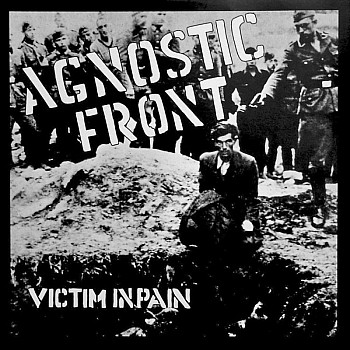 Songfacts: The album cover for Victim in Pain has to be one of the most chilling images ever.
Miret: Yeah. It was a pretty intense photo. But that was the purpose of it. I wanted people to see that and know that that did happen, and it can happen again. And that intense view, that guy just looking at the camera right about the moment he was about to fall into that pit, it was intense.
But I just felt that it was appropriate. That person probably never did anything wrong in his life. That was the way it is. That was sad. But we see it happening all over again, don't we?
Songfacts: What was the lyrical inspiration behind the song "Old New York"?
Miret: That song is pretty much inspired by just thinking about old New York. One of my favorite movies was Taxi Driver. That's why I use that Taxi Driver clip. And that movie so portrays the New York that I loved and adored, and the New York that we lived. That was our New York that we miss so much, and that's what the song's about - it's about how New York has changed so much.
Songfacts: What about "For My Family"?
Songfacts: What about "Gotta Go"?
Miret: "Gotta Go," that's a good one. [Laughs] Vinnie [Stigma, guitarist] likes to say it's about "Gotta go to the toilet."
It's one of those songs like you've just got to leave the situation. You've got to get out of it. Whatever it is, I've got to go, I don't want to hear it, I don't want to hear this, I don't want to hear that.
Songfacts: And from Victim in Pain, what do you recall about "Your Mistake"?
Miret: It's just one of those songs calling out somebody - a friend or somebody out on the scene - on their shit, pretty much, and saying, "It's your mistake." Calling you out on it, and opening your eyes to it.
Songfacts: And lastly, "United and Strong."
Miret: That one is a great song - that is a song about bringing our scene together. That was such a powerful song and a song in need at its time. Back then, the scene got a little bit of division in it, between a lot of different things that were going on. And I've always felt like we need to be united, we need to be strong. Everybody. All types of races, black and white, punks and skins. For everyone. That song is an outcry for us to stick together and get through whatever those tough times that were separating us, to bring us back together.
Songfacts: Who would you say are some of your favorite all-time lyricists?
Miret: Well, my favorite lyricists are great because they write great stories. One being Joe Strummer, because he was a great lyricist, great songwriter, great storyteller. The other being Phil Lynott from Thin Lizzy, who I think wrote some of the most amazing songs. Bruce Springsteen is a great songwriter. And The Who, those guys really said a lot - lyrically, they were pretty intense for their time, their era. They were my inspiration as songwriters. It's weird, because none of them are actually hardcore or punk writers, except for Joe Strummer. But I thought they were always great songwriters.
August 26, 2015
Photos by Todd Huber
More Songwriter Interviews