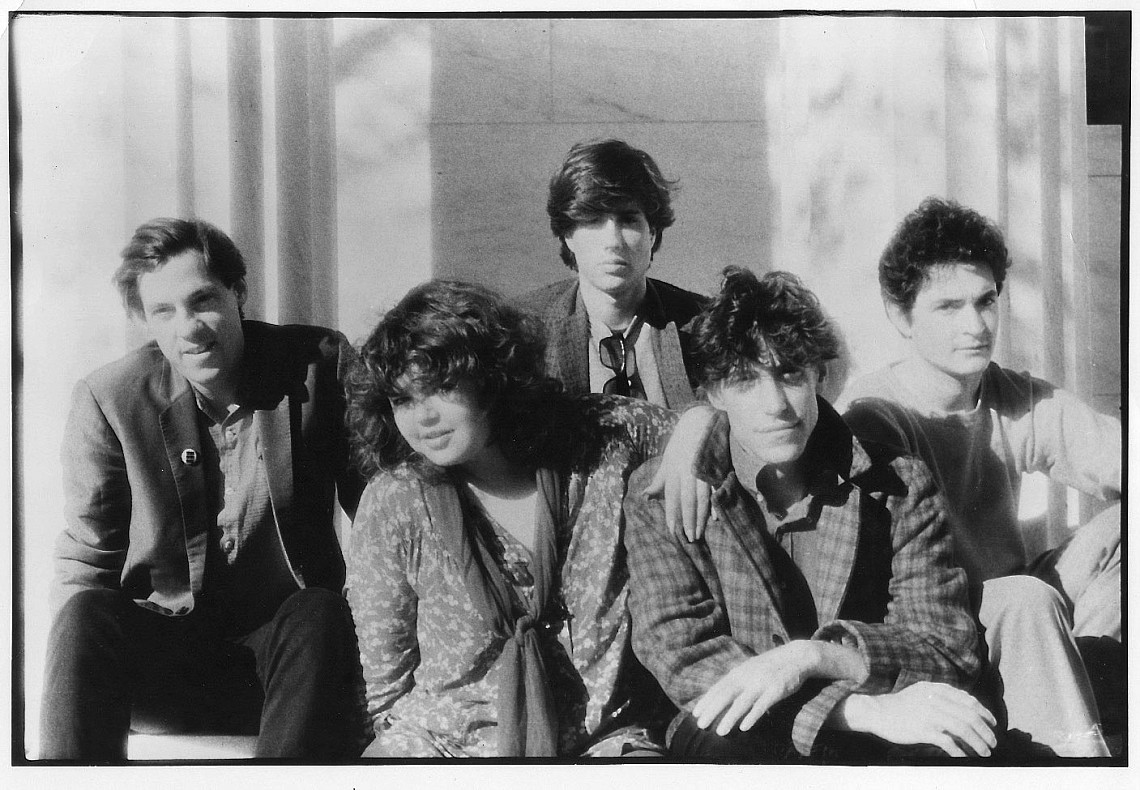
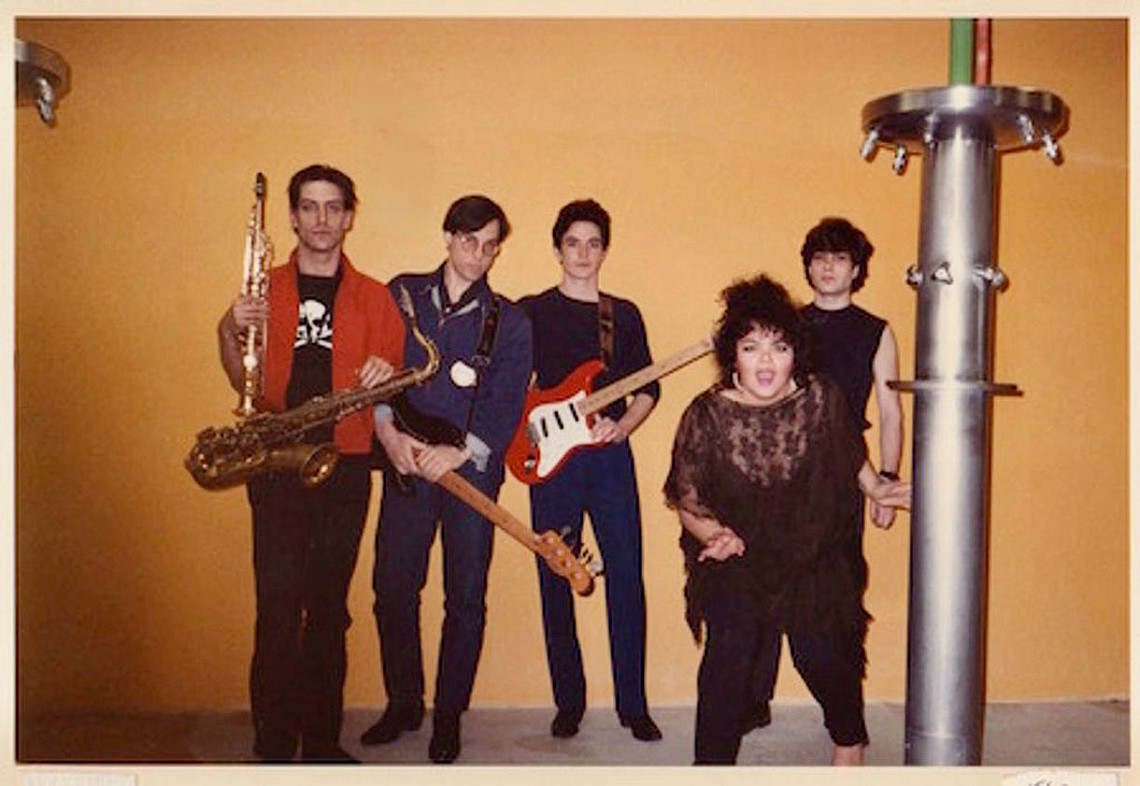
 Romeo Void, L-R: Frank Zincavage (bass), Debora Iyall (vocals), Larry Carter (drums), Benjamin Bossi (saxophone), Peter Woods (guitar)
Any New Wave/Classic Alternative playlist worth a listen will include the Romeo Void songs "Never Say Never" and "A Girl in Trouble (Is a Temporary Thing)," but there are other gems in their three-album catalog as well.
The band formed in San Francisco in 1979, a time when the musical scene in the city had shifted to the middle of the road: Jefferson Airplane had morphed into Jefferson Starship; and Journey and Huey Lewis And The News were staging their assaults. Romeo Void had the biggest impact among the fresh crop of San Fran-based bands that bubbled under, acts with names like Flipper and Wire Train. Their 1981 debut album, It's A Condition, released on the local label 415 Records, earned rave reviews. "It goes beyond art to some form of truth," Creem wrote. "It isn't hedonistic hopelessness, it's explanatory reality focus."
The album got the attention of Ric Ocasek of The Cars, who produced the four-song Never Say Never EP, including the title track. The following year, Romeo Void released their second album, Benefactor. Columbia bought their contract from 415 and initially put their marketing muscle behind the band's 1984 album, Instincts, but then abruptly dropped them while they were in the middle of a tour, even though "A Girl In Trouble" was a chart hit, climbing to #35.
The band broke up in 1985, with Iyall turning her focus to making and teaching art, and also recording as a solo artist. They've had some one-off reunions, most famously in 2004 when VH1 pulled them back together for their show Bands Reunited, but they didn't stick.
On April 22, 2023 (Record Store Day), Romeo Void will release Live From Mabuhay Gardens: November 14, 1980, their first live album. In this email interview, Debora Iyall, bass player Frank Zincavage, and guitarist Peter Woods - the main songwriters in the group - talk about some of their most important songs and videos, and explain what gave them that signature sound.
Carl Wiser (Songfacts): Please tell us about the "Never Say Never" music video.The album got the attention of Ric Ocasek of The Cars, who produced the four-song Never Say Never EP, including the title track. The following year, Romeo Void released their second album, Benefactor. Columbia bought their contract from 415 and initially put their marketing muscle behind the band's 1984 album, Instincts, but then abruptly dropped them while they were in the middle of a tour, even though "A Girl In Trouble" was a chart hit, climbing to #35.
The band broke up in 1985, with Iyall turning her focus to making and teaching art, and also recording as a solo artist. They've had some one-off reunions, most famously in 2004 when VH1 pulled them back together for their show Bands Reunited, but they didn't stick.
On April 22, 2023 (Record Store Day), Romeo Void will release Live From Mabuhay Gardens: November 14, 1980, their first live album. In this email interview, Debora Iyall, bass player Frank Zincavage, and guitarist Peter Woods - the main songwriters in the group - talk about some of their most important songs and videos, and explain what gave them that signature sound.
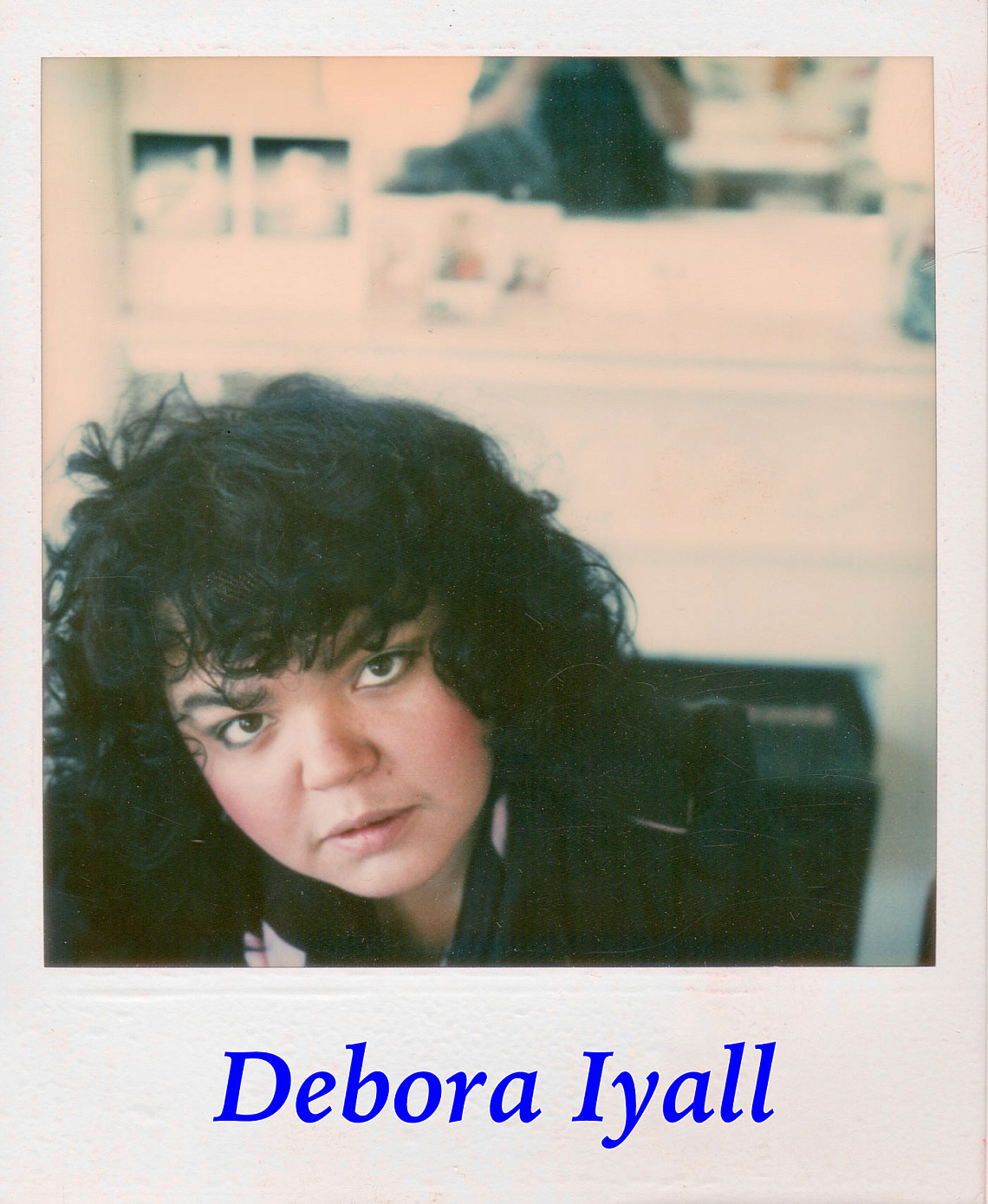 Debora Iyall: Sandy Pearlman1 was our manager at the time. He was a longtime pal of Howie Klein from our label, 415 Records. Sandy knew Richard Casey of Casey Films, who had done all the Blue Öyster Cult videos. I remember being very pleased we were taping to film.2 A certain romance and reverence to the past infused the look of his work with us. I loved that it caught us enjoying each other and the filming process so much.
Even though I was a gun moll on the bed with a gun in my garter, I remember wanting to be more covered up in the band shot at the warehouse. The natural light was terrific. I chose to put on a white cotton blouse under the black 1940s dress with shoulder pads. Performing was always fun for me, catching the light right and allowing your gaze to wander from band member to self to camera. It made sense with the lyrics and dynamics of the players.
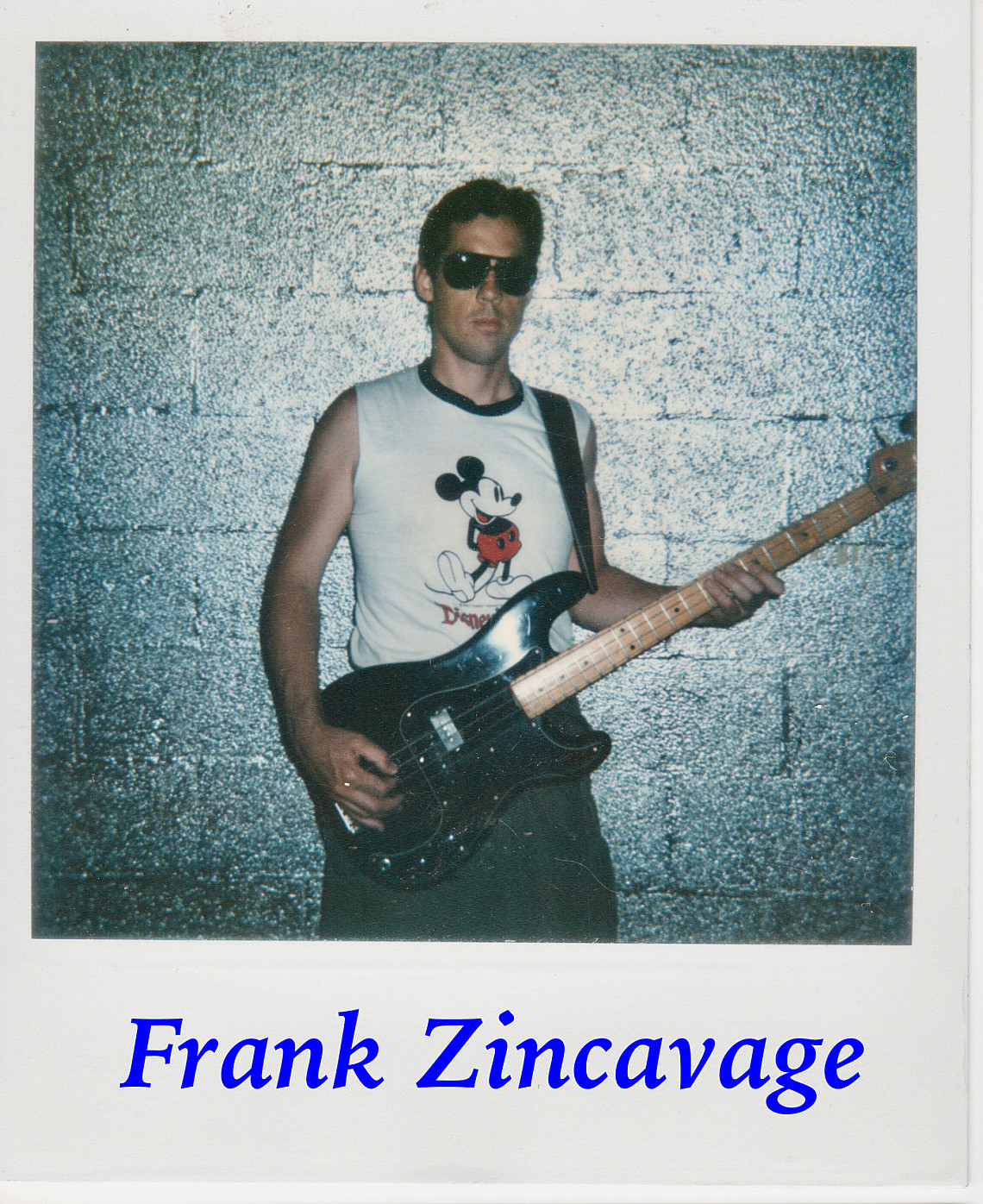 Frank Zincavage: At the time, MTV did not exist. There was some network show called Friday Night Videos that we hoped to have it aired on. The director, Richard Casey, proposed black and white in reference to director Jean-Luc Godard's movie Breathless.
The performance elements were filmed in the San Francisco building where we had our rehearsal space in the basement. That's also where the brick wall was that I spray painted the band's name on. Other scenes were filmed at the band members' apartments and at a neighborhood café.
In Breathless, Jean-Paul Belmondo acts out a long death scene and we replicated that with our drummer Larry Carter near the end. The off-screen dialogue at the very end is a reference to John Lennon saying, "I hope we passed the audition."
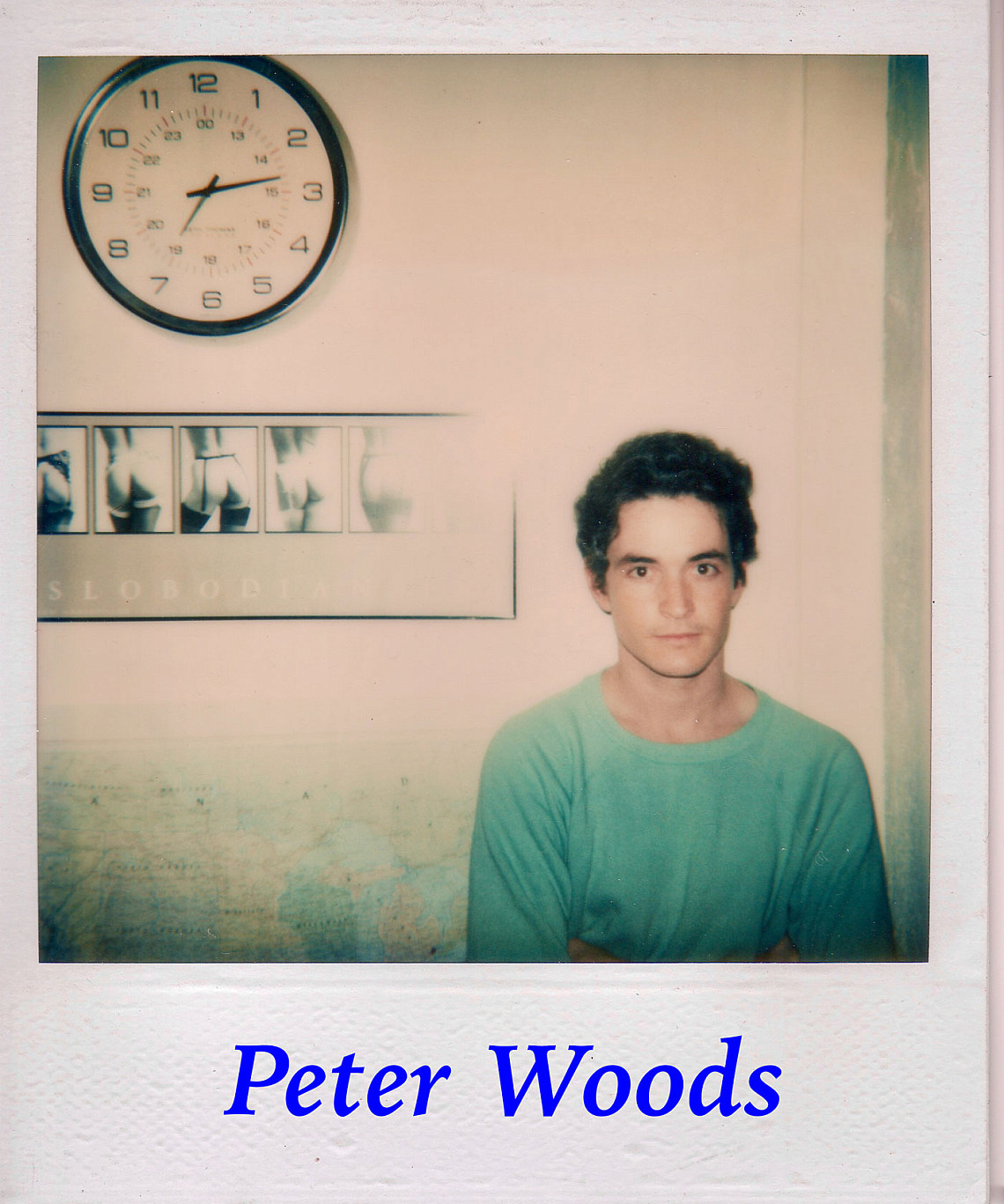 Peter Woods: Fun fact, I asked Richard Casey to shoot the video in black and white. I've always been a huge fan of A Hard Day's Night and I thought the black-and-white aesthetic would add a timeless and nostalgic feel to the video. I think that video holds up pretty well.
Songfacts: How do you feel about the Queens Of The Stone Age cover?
Iyall: It cracks me up! A kazoo! Not too long after they released it, I was coming in the back door of a restaurant just as Josh Homme was leaving through the front. He's an unmistakable human, so tall and red haired. I rushed over and met him outside. I thanked him for covering our song and invited him to my birthday party. They were busy recording, he said it was unlikely they'd make it. With smiles all around I took the opportunity and asked for a hug. That was nice.
Zincavage: It was nice they did a version but it was on a limited release EP/CD so we never saw much in the way of royalties from it. Various people have done covers of the song, but it has such an odd structure. Peter's guitar is seemingly very simple, but it has a unique quality that is very important to the song. Haven't heard anyone yet match that.
Songfacts: Do you think the James Bond people got some ideas from the song? The movie Never Say Never Again came out the following year.
Iyall: No clue, but Garbage did. Unconfirmed of course.3 Romeo Void did go see the movie at a matinee. I forget where, but we had the afternoon free, so we went. It was highly forgettable. Too bad.
Zincavage: I'm sure they did. There are so many correlations between our song and Sean Connery's character that it's uncanny. Ha!
Songfacts: Please tell us about the composition of the song "A Girl In Trouble (Is A Temporary Thing)," and if it's about a specific person.
Zincavage: That song started in the key of A minor, as a mid-tempo rocker similar to an earlier Romeo Void song, "In The Dark." It went through a variety of permutations - the song eventually became more syncopated and ended up as a fluffier pop tune. Debora's lyrics reference a friend of hers that was an independent and adventurous woman. She would get into situations but always managed to find a way to resolve things safely.
The producer, David Kahne, was obsessed with having a radio hit. To me, it seemed he was annoyed that we had such success with our song "Never Say Never," which he wasn't involved with. So, he spent a lot of time screwing around with the production of the tune. Changing the song's chord structure quite a bit. It became a C minor/G minor tune. He re-recorded the drum and bass tracks several times and added wimpy synthesizer parts. But Debora gave a good vocal performance and Benjamin Bossi played a great sax solo which gave it a nice boost. We did make it onto American Bandstand with that song so guess I can't complain too much.
The chorus is C minor/G minor/G sharp/F.
Iyall: I worked from a cassette demo. I remember playing it, and writing to find the phrasing and wording of my lyric ideas. The line, "She's got a way to walk that says 'Stay away' and a time to go 'round the long way," was imagined by me to be modeled on how I viewed Mink DeVille's "Cadillac Walk." Streetwise.
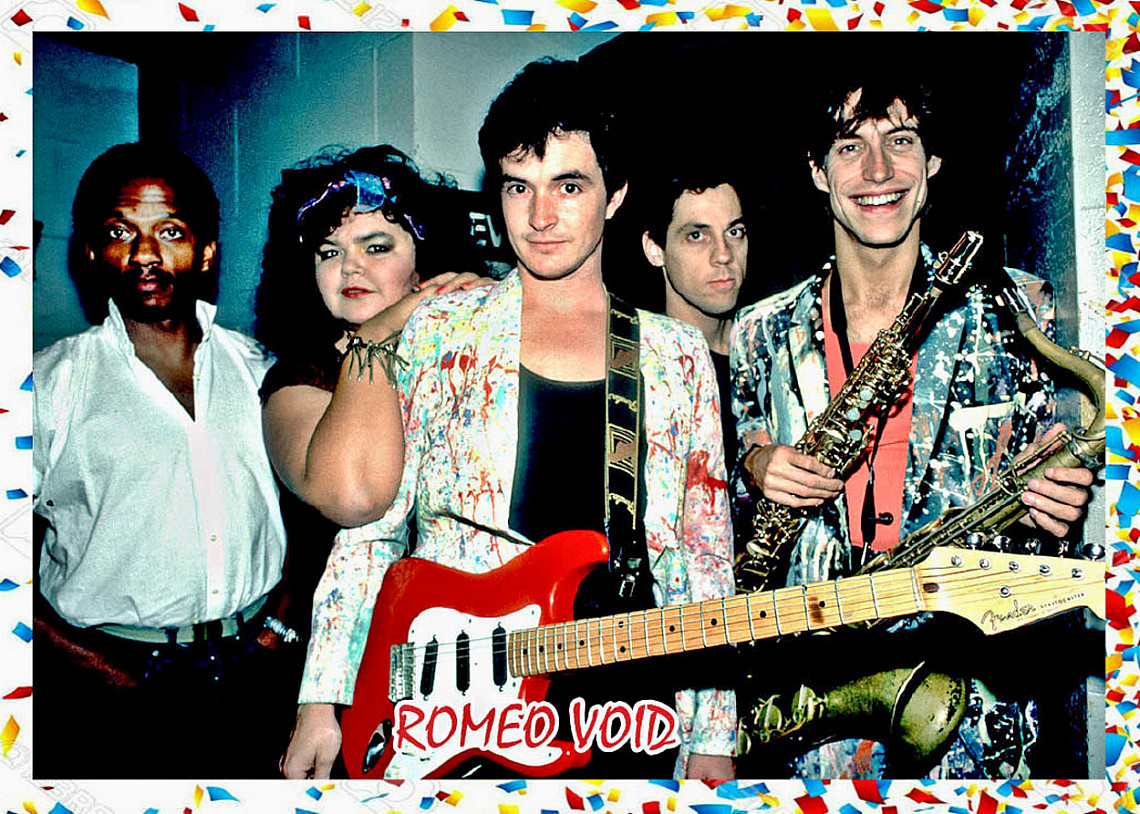 Romeo Void trading card
Songfacts: Musically, what distinguishes Romeo Void?
Iyall: For all of our vanguard ideals and inspirations, we ended up writing some catchy, often memorably unique and danceable songs that are capable of being appreciated on multiple levels.
Zincavage: We were a conglomeration of influences. We never sounded quite like any other band, though there were many references. Debora was a mix of Leonard Cohen, Anaïs Nin, and Patti Smith, and her own adventurous history. Peter brought in his love of The Beatles and Motown. I, as the bassist, came from a Stones/blues background, where the bass was always in the background. But I became a convert to bass as an almost-lead instrument, due to what I was hearing in bands such as Joy Division, The Cure and Talking Heads. Benjamin was a jazz-oriented player, Coltrane and Miles Davis were big landmarks for him. His saxophone became a second voice for the band. We had several drummers, and they were all groove oriented. Our first, Jay Derrah, who's on Live From Mabuhay Gardens: November 14, 1980, was a big Keith Moon fan.
Overall, we were just melodic enough without being too poppy. And we were driving and powerful enough as a live band without venturing too far into the distortion realm of most punk. Debora's vocals and lyrics were unique and poetic. And Benjamin's sax provided a melodic yet sonically abstract element to our sound.
Woods: I think what really distinguishes our music is the fact that each of us came from such different musical backgrounds. We all brought our own sensibilities to the table, which created our signature sound. I'm grateful to have been a part of it all.
Songfacts: How did the songwriting work in Romeo Void?
Zincavage: In the very beginning, 1979, Debora and I worked up basic tunes together. Then it became Peter, Debora, and I working up ideas and fleshing them out at rehearsal. When we started touring, we often jammed on ideas that Peter or I would start, and then the whole band would contribute. "Never Say Never" was created this way. When we weren't on the road, usually Peter and I would work together in my studio, recording demo cassettes that we would give to Debora. We would continue the process at our rehearsals.
On our final LP, Instincts (1984), David Kahne had suggestions he wanted us to try. Often those elements were incorporated into the songs.
Iyall: Frank has it right, it was a trajectory of collaboration and refining parts and performances. My favorite era for writing was the first few years. Frank had this great second-floor Victorian flat above a record store - all wooden floors, bay windows and great light. We'd be somewhat prepared but it was mostly spontaneous.
Frank was good about recording rehearsals or else we might've forgotten some of the coolest licks and phrases that came up. I recall always carrying a yellow pad in which I'd jot things out of my journal. Phrases and words I wanted to use beforehand, then go from there depending on what the music inspired. I'm so grateful for the band's patience and trust in our process, in me, and in each other.
Woods: Usually, Frank or I would come up with a song idea and bring it to the band. He would bring a bassline or a keyboard part, and I would bring a guitar riff or chordal theme. If the idea seemed promising, we would develop it and eventually make a rough recording of the song idea and present it to Debora as a demo. She kept a notebook of lyrics in which she would either use previously written lyrics or create entirely new lyrics depending on what seemed appropriate at the time. Then it would just be a process of refining and fine-tuning everything until we reached a point where we had a workable song.
Songfacts: Please tell us about the following songs, starting with the first release from Live From Mabuhay Gardens.
Iyall: I'll pass on this part. Sorry.
"Charred Remains"
Woods: "Charred Remains" is a personal favorite of mine. It was a musically intricate composition, comprising three distinct sections that blend together seamlessly. The song's verse features an inverted G chord that creates a sense of instability and openness, followed by a solid E chord that resolves the tension.
Props to David Kahne for his excellent decision to remove the drums from the verse when we recorded it for our debut album, It's A Condition (1981). Removing the drums heightened the song's dramatic impact when the second and third sections kick in.
Zincavage: For some reason, I hardly remember anything about how this song came about.
Being one of our earliest tunes, it probably started with Debora and I. Peter and Benjamin bring very nice elements to the tune and Jay, the drummer on the live LP, gives it some drive. I can't hear it as well on the live version but there is a section where my penchant for "Peter Gunn"-type basslines drives the bottom end. On the studio LP, we gave some of the sections more space and atmospheric elements. Debora is in a particularly poetic place. Benjamin provides some nice lead licks to the tune.
"Talk Dirty To Me"
Zincavage: This was my attempt at something in a funk vein. I was thinking of Larry Graham.
Like most of our tunes, it went through some minor variations but stayed mostly like we started it. The backing vocals that appear on the live LP were dropped by the time we recorded it for It's A Condition. Debora gave it a classic Debora approach. She starts off describing an environment then moves to interpersonal relationship commentary. Her delivery has a bit of snarl to it, and a teasing quality. Peter keeps things moving with staccato, funky guitar phrasing. Over time, Benjamin's sax became a second voice, interacting with Debora's vocal, accenting the playfulness of the tune. On this live LP, it hasn't quite fully developed to that point yet.
This song got us our first real break on commercial radio. When It's A Condition came out, KROQ in Los Angeles picked up the song and played it quite a bit. It helped get us our first LA gig at the Whisky A Go Go.
"Confrontation"
Zincavage: I believe I started this one with Debora, then brought it to Peter to finish. There is a definite XTC influence on my part.
But that was the fun thing about us, there was no single person whose influences took over. Debora has a sort of cut up/found lyric quality to part of it - "the mold on the pie"??? Her lyrics often had an element of personal disclosure and that comes up here. Benjamin gets a chance to let loose a bit on sax.
"Undercover Kept"
Zincavage: This was a tune that was created by the band jamming at tour soundchecks. Then we worked on it at rehearsals and finessed it some more during its recording at Synchro Sound Studio in Boston. It was geared towards the dance floor, especially evident in the distinct snare sound. Sometimes the band would find itself grooving on a section and decide to make that the main element of the tune.
Debora was commenting on a variety of things: her friends in San Francisco that were dancers at the "X-Rated" clubs on Broadway, undercover detective activity, and of course, relationships. This was always a fun song to play live as it allowed Benjamin a lot of freedom to improvise.
"Chinatown"
Again, everyone brought their particular approach and style. Peter's chiming guitar parts, Larry's driving drums, Benjamin's soaring sax, and Debora's mix of Native American and San Francisco Chinatown references. It was always a good rocker at live shows. We did a fun video for this where we had zombie-type makeup on for part of it.
April 19, 2023
Get the album on Bandcamp
You can find Debora Iyall on Instagram
More interviews:
Ian Broudie of The Lightning Seeds
Charlotte Caffey of The Go-Go's
Rickie Lee Jones
Photos: Stefano Paolillo (1,5), Frank Zincavage (2,3,4)
Footnotes:
- 1] Sandy Pearlman was Blue Öyster Cult's manager and producer. He also produced The Clash's 1978 album, Give 'Em Enough Rope. (back)
- 2] Most music videos, as the name implies, were shot on video, but if you wanted it to look really good, you shot it on film, giving it a high resolution and artistic texture. The film videos, like "Never Say Never," hold up really well. (back)
- 3] The 1998 Garbage song "Sleep Together" is like an homage of sorts to "Never Say Never." In that one, Shirley Manson sings:
If we sleep together
Will you like me better? (back)
More Songwriter Interviews