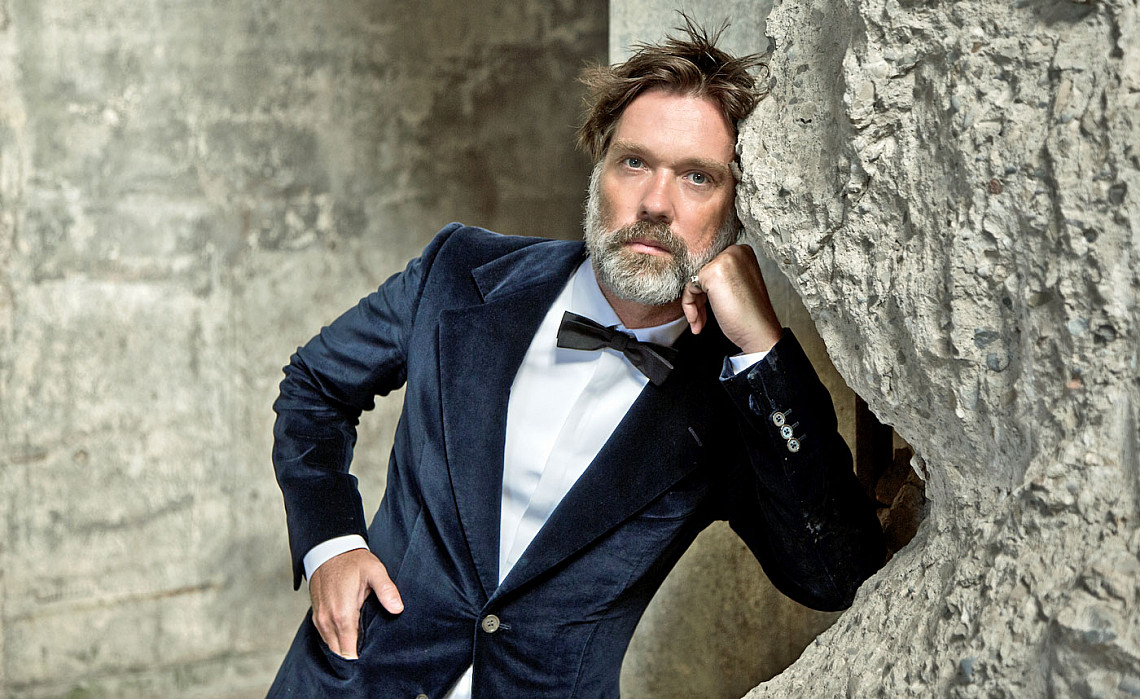
Rufus Wainwright's sublime rendition of "Hallelujah," first heard on the soundtrack to the movie Shrek, is by far his most popular recording. "It got a little bit annoying, because everybody demanded it, constantly," he says, although since Leonard Cohen's passing, Rufus has put it back in his setlists. At this point, he's married to the song in an almost literal way (more on that later).
Those who found Wainwright through "Hallelujah" discovered a catalog of daring, elegant, and mysterious songs. His mark of distinction, what sets him apart from the Sufjan Stevens of the world, is opera. He's always loved it: the orchestrations, the tragic drama, the costumes. It's inflected his work since his first, self-titled, album was released in 1998 after a polar-opposite musical style - grunge - had come to pass.
Rufus is the son of Loudon Wainwright III and Kate McGarrigle, both singer-songwriters of great consequence who passed on their genetic gifts without binding him to a legacy of a Dylan or Lennon. He and his sister Martha, also in the family business, were raised by their mom in Montreal after their parents divorced. When his dad, who had a hit with "Dead Skunk" the year Rufus was born (1973), passed along his demo tape, Rufus landed a deal with DreamWorks Records, which got him the Shrek placement in 2001 and had him cover "Across The Universe" that same year for the film I Am Sam. After seven albums, Rufus went into "pop exile" in 2013 and made two operas before emerging in 2020 with Unfollow The Rules, produced by Mitchell Froom.
Like the best operas, Wainwright's songs benefit from Playbill-like synopses to provide background. Fortunately, he's happy to provide them, as he does here with some of his most intriguing songs.
Greg Prato (Songfacts): I read that "Devils And Angels (Hatred)" was inspired by an opera you once saw. Those who found Wainwright through "Hallelujah" discovered a catalog of daring, elegant, and mysterious songs. His mark of distinction, what sets him apart from the Sufjan Stevens of the world, is opera. He's always loved it: the orchestrations, the tragic drama, the costumes. It's inflected his work since his first, self-titled, album was released in 1998 after a polar-opposite musical style - grunge - had come to pass.
Rufus is the son of Loudon Wainwright III and Kate McGarrigle, both singer-songwriters of great consequence who passed on their genetic gifts without binding him to a legacy of a Dylan or Lennon. He and his sister Martha, also in the family business, were raised by their mom in Montreal after their parents divorced. When his dad, who had a hit with "Dead Skunk" the year Rufus was born (1973), passed along his demo tape, Rufus landed a deal with DreamWorks Records, which got him the Shrek placement in 2001 and had him cover "Across The Universe" that same year for the film I Am Sam. After seven albums, Rufus went into "pop exile" in 2013 and made two operas before emerging in 2020 with Unfollow The Rules, produced by Mitchell Froom.
Like the best operas, Wainwright's songs benefit from Playbill-like synopses to provide background. Fortunately, he's happy to provide them, as he does here with some of his most intriguing songs.
Rufus Wainwright: Almost 20 years ago, my mother and I - Kate McGarrigle - were in Italy, in Milan. We went to La Scala for the first time - which is the world's most famous opera house - and we saw this opera called Armide by Gluck - it's a baroque opera. It was a bit slow-going at first, but at a certain point, it all sort of clicked. It was just an amazing evening at the theater.
The opera is about a sorceress who wants to rid love from her heart because it's too cumbersome, shall we say, and it gets in the way of her evil-doing. So, at a certain point, she summons hate. Then there's this wonderful scene where hate personified rises out of the ground and tries to expunge love from her heart. It just really stuck with me. And of course, with what we're dealing with today, all the gods have to gather in these moments! So, we're definitely in a "baroque" period.
Wainwright: I love Queen, but honestly, I'm not so intimately familiar with their catalog. But I've often channeled his dramatic sensibilities, at least subconsciously, so, I can see how there can be a connection.
Songfacts: The song's video is quite striking.
Wainwright: That video, in my mind, will go down as one of the great triumphs of the COVID-19 period, for me, personally, because we shot it the day before lockdown. We had scheduled two days to do the video, but after the first day was done, it was fairly obvious that the world was shutting down and we had to let everybody go. But thankfully, we got a lot of footage on that day, and it was a very ominous day. It was raining, cold, and windy, which in Los Angeles, isn't common. So there was me dressed in that outfit, walking through the streets of LA and on the beach as the pandemic was taking hold of the country.
Wainwright's debut album is haunted by Danny, a handsome drug addict Rufus fell for who is the subject of "Baby," one of his most enduring songs. "Baby" is a master class in string arrangement, the work of Van Dyke Parks, who pegged Wainwright's talent early on and facilitated his record deal.
Songfacts: What became of the person you wrote "Baby" about?Wainwright: That's Danny. On that first album, there's the song "Danny Boy," it's the same guy. He ended up moving back home to Nova Scotia, where he's from. I think he has three or four kids now and a kind of fulsome life, which is good, because he was very much under threat when we were young in terms of drugs and alcohol. So, he survived - thankfully.
Songfacts: What about the lyric to "April Fools"?
Wainwright: I remember when that chorus came into my mind. I was in the bath, kind of humming along to myself and not really thinking about it, and "you will believe in love, and all it's supposed to be" just kind of shot into my brain. I remember standing up naked in the bathtub and singing it out, then writing the song afterwards. Hopefully, I dried off a bit!
It's about this concept almost like Murphy's Law: If something's going to go wrong, it will. I felt like in my early years, everything was always thwarted for me. Whether it was love, school, or friendship, there was always this sort of negative slant that would occur. Little did I know that years later, I would learn that life is just full of different types of experiences, and sadness and failure is just one of them. And everybody goes through it occasionally.
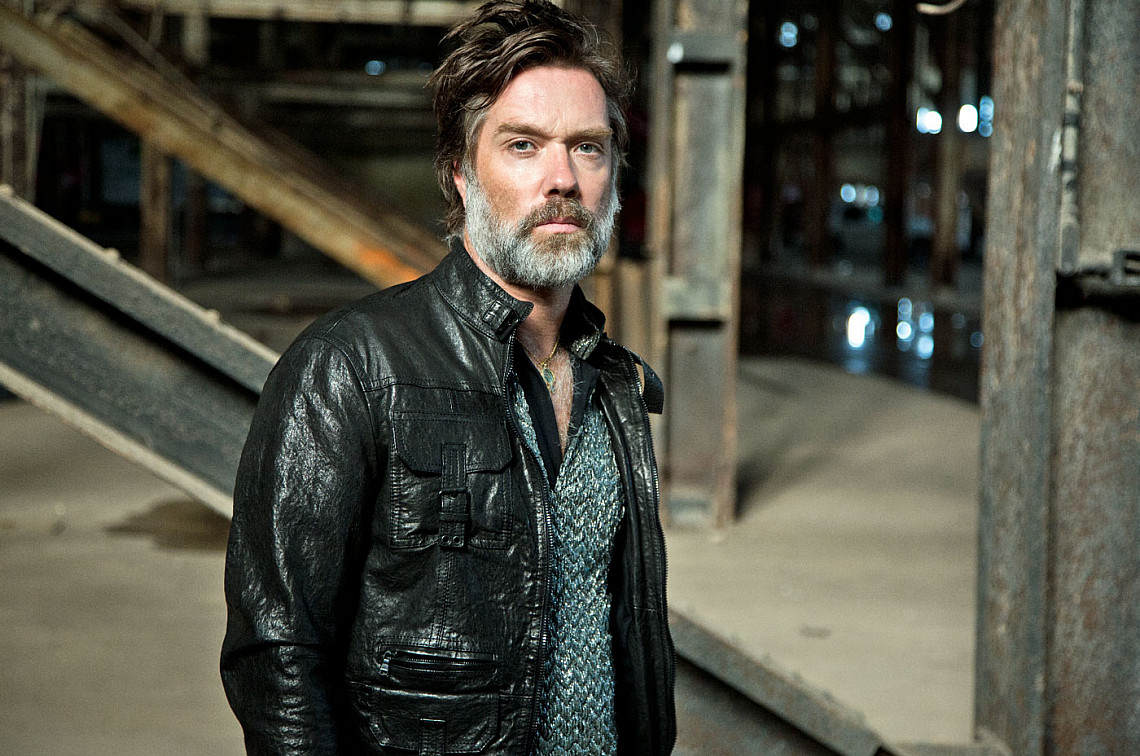 Songfacts: What was the lyrical inspiration for the song "Vibrate"?
Wainwright: "Vibrate" was about a guy that I saw very briefly, although it was very intense for a couple of weeks. I was really in the clutches of addiction - it was probably my highest moment in that realm where time is losing any meaning whatsoever and my consciousness was completely altered at all times.
Anyway, I fell in love with this stripper boy who was very gorgeous and very unavailable, and I think was also somewhat taking advantage of my "vulnerable state." [Laughs] Thankfully, I got a good song out of it.
Songfacts: How do you feel about the song "Hallelujah" today?
Wainwright: Once again, it's in the news. The other day, they played it after Trump's acceptance speech or whatever, so it's part of the vernacular of American and Canadian songwriting at this point.
Look, I've gone through ups and downs. I was very excited initially for the success of that song, and then it got a little bit annoying, because everybody demanded it, constantly. But when Leonard passed away, I had a newfound appreciation for it. I was very thankful for all that it brought me over the years, and I re-instituted it into my catalog. And now, with my daughter being Leonard's granddaughter, I kind of married the song in a way.
Rufus' daughter, Viva Katherine Wainwright Cohen, was born to Leonard Cohen's daughter, Lorca Cohen, on February 2, 2011. The "Katherine" part of her name is a tribute to Kate McGarrigle, who died of cancer the previous year. Lorca and Rufus are raising her with Rufus' husband, Jorn Weisbrodt.
Songfacts: What life experience has been your greatest source of song lyrics?Wainwright: Honestly, I would say almost unconsciousness in the sense that oftentimes when I'm in a situation where say I've walked a long time or I'm on a bumpy boat ride and I have to focus on the ocean, or I'm on a really long plane ride, there are these moments where my brain turns off or has to go more into a survival mode or just get very simple, and lyrics will start to come to me then. Yes, I go through the pain and the happiness and the this and the that, but if I can get myself into somewhat of a trance - and walking would be #1 on the list - then lyrics can come much easier because I'm not focusing on it so much.
So, I would say taking really, really long walks. And when I say "long walks," I mean walks across cities that last 12 hours.
Songfacts: I recall reading that "Heart Of Glass" was an important song when you were young. What's a pop song by another artist that had a big impact on you when you got older?
Wainwright: We have a 9-year-old daughter, and she's listening to a lot of pop music. She played us some things, and they were entertaining. I can't say they're all awful, but I wouldn't say that I was necessarily moved to the core.
I ended up going back to listen a little bit to what I was focused on when I was her age. I went back and listened to a lot of Thompson Twins songs, because I was obsessed with the Thompson Twins when I was her age and I was really impressed with how good their work was, especially the lyrics and the construct of the piece. There's a kind of arch that still is solid, and there was that song "Hold Me Now" which was very simple in a lot of ways, but also, very complex. It still stands up.
Songfacts: You've mentioned "Gay Messiah" as a song that's changed meaning over the years. What's one of your other songs that means something different now?
Wainwright: The big one for me is "Dinner At Eight." It was very much intended as a shot over the bow to my father - kind of a warning, and in an aggressive mood. But the more I sing it and the older I get - and myself being a father now, too - I realize it's just a complete cry for love, and for coming together and coming to terms with the world. So, that song kind of went from an aggressive song to a very sensitive and loving song.
September 9, 2020
Check out our 2014 interview with Loudon Wainwright III, who talks about collaborating with Rufus and writing a song with him in mind. Also see our chat with Tom Bailey of Thompson Twins, who breaks down "Hold Me Now" and goes into detail on how he structures songs. For more Rufus, visit rufuswainwright.com. And here's an excerpt from Greg Prato's book Long Live Queen
More Songwriter Interviews