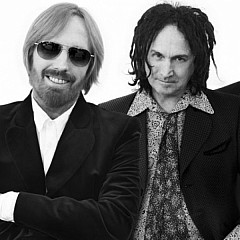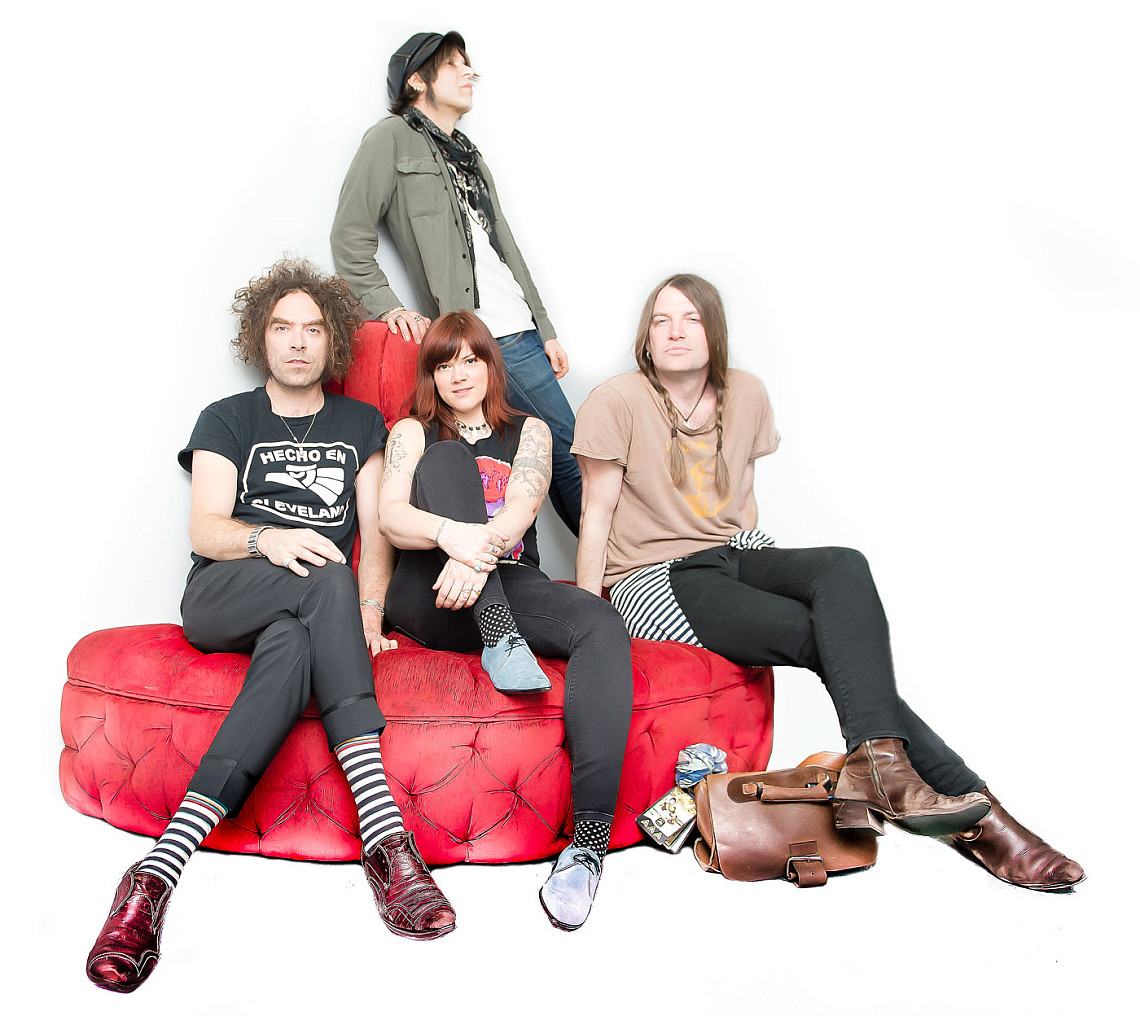
Formed in Portland, Oregon (a city whose considerable quirks are amplified by Fred Armisen and Carrie Brownstein on the show Portlandia) in 1994, The Dandy Warhols played every dive bar they could and soon earned a reputation for having the most interesting nudity-filled live shows on the West coast. Capitol Records took notice and released their major label debut album ...The Dandy Warhols Come Down in 1997. Although the disc spawned a moderate hit with "Not If You Were The Last Junkie On Earth," there were bigger things to come.
They have yet to crack the Hot 100 in their home country, but the Dandy Warhols had a string of hits in the UK, where in 2001 they got a huge boost when their hit single "Bohemian Like You" was featured in a Vodaphone commercial. More than a dozen placements in commercials, TV shows, and movies followed, shooting the alt-rockers into mainstream stardom. Wisely, frontman Courtney Taylor-Taylor used his share of the royalties from the tune to build the Odditorium, a recording studio designed and built in the band's hometown of Portland. The million-dollar complex also features space for web design, video production and band housing, taking up a quarter of a city block.
The Dandy Warhols released their eighth album, This Machine, in 2012 and hit the road to promote it. We had a chance to ask Taylor-Taylor and guitarist Pete Holmstrom some questions about the new disc, their curious keyboard tricks, Ray Bradbury, and the 2004 documentary Dig! that the band now describes as "bullshit."
Songfacts (Trevor Morelli): What does the title of your new album, This Machine, mean to you?They have yet to crack the Hot 100 in their home country, but the Dandy Warhols had a string of hits in the UK, where in 2001 they got a huge boost when their hit single "Bohemian Like You" was featured in a Vodaphone commercial. More than a dozen placements in commercials, TV shows, and movies followed, shooting the alt-rockers into mainstream stardom. Wisely, frontman Courtney Taylor-Taylor used his share of the royalties from the tune to build the Odditorium, a recording studio designed and built in the band's hometown of Portland. The million-dollar complex also features space for web design, video production and band housing, taking up a quarter of a city block.
The Dandy Warhols released their eighth album, This Machine, in 2012 and hit the road to promote it. We had a chance to ask Taylor-Taylor and guitarist Pete Holmstrom some questions about the new disc, their curious keyboard tricks, Ray Bradbury, and the 2004 documentary Dig! that the band now describes as "bullshit."
Pete Holmstrom: Well, it all started with Woody Guthrie, who had a sticker on his guitar that said "This Machine Kills Fascists." Then Donovan came along and put "This Machine Kills" on his guitar. Court put "This Machine" on his for the "Smoke It" video and it's been sitting around since, staring us in the face. It fit the sound of this record and it can be interpreted in many ways, which makes it a great title.
Songfacts: What is the song "The Autumn Carnival" about?
Courtney Taylor-Taylor: "Autumn" is from the Ray Bradbury story Something Wicked This Way Comes and I wrote it with David J Bauhaus. We sat at breakfast pushing small potatoes around on our plates and drinking coffee and talking random topics until we both realized that the words "the autumn carnival" made the hair stand up on the back of our necks, so we thought that was what we should create a song about.
I'm not a person who can just sit down and write a song. I tend to have to wait until I feel something very real and then it just sort of happens.
Courtney: "Sad Vacation" was written by Brent, mainly. For my part, I was writing about how nauseating I find all the current trends in music. I'd always rather be out than in.
Songfacts: What effects or equipment did you use for the lead parts to "Alternative Power to the People?" What is the song saying even though there aren't any lyrics?
Pete: That is a trick on a keyboard that we first used on a cover of "Relax" years ago. Back then it took two of us to pull off. Court managed it on his own this time, to better effect. The title came about when Courtney said he wanted to do a video to this track with tape over his mouth, green screened over all the recent political turmoil. I think "Power To The People" came up and since all the Occupy Wall Street stuff was going on, it was really hard to tell if that was effective. So the "Alternative" was added.
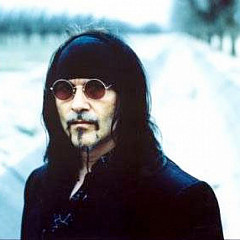
In 2004, filmmaker Ondi Timoner released Dig!, a documentary about The Dandy Warhols and their relationship with their friends in another west coast band, The Brian Jonestown Massacre. Although Dig! was a critical success on the festival circuit, both bands were displeased with how they were portrayed in the movie. The Dandy Warhols lead singer Courtney Taylor-Taylor has stated that he felt pressured to be a part of the film and that Timoner continued to hassle him to narrate it until he finally agreed. In the end, both bands thought that Timoner's depiction of The Brian Jonestown Massacre lead singer Anton Newcomb as a hopeless heroin addict was narrow and unjust.
Songfacts: In "I Am Free," you sing the lyric, "My darkest past is fading fast." Are you referring to a specific incident or time of your life with this line?Courtney: Yeah, after the major bullshit dupe that was Dig! and being lied about and dragged thru the shit so dishonestly in order for her to have a brief career sponged from the genius of Anton Newcombe. It took about five years till I realized that on tour we were back to being surrounded only by people I liked. It was amazing. We did a US tour and we tend to meet new people every day and it was extremely cleansing to find that we were back to meeting really interesting people everywhere again. When you do what you want you will attract people like you. When someone invents a persona for you and puts it into the world you will be surrounded by fuckheads until that false persona is forgotten.
Songfacts: Why did you do "16 Tons" on this album?
Courtney: I didn't write it obviously and there is actually a long standing argument about who did. I think that working for the man was way worse back then than it is now, but any way you slice it, wow, are those lyrics fucking heavy.
Pete: You could say that.
Songfacts: Which song on this album are you the most proud of and why?
Pete:I'm most proud of "Rest Your Head," and I came up with the beginnings of a new style of guitar playing for myself.
Pete: As far as I'm concerned, any way that works is just fine by me. And "Bohemian" funded our independence, we have the Odditorium because of that song and that ad. Most commercials have music in them and I'd rather they had good music.
Songfacts: Who was the inspiration for "Not If You Were the Last Junkie on Earth"? If it wasn't a person, was it some other specific thing?
Pete: It was inspired by a person, and I think we'll leave it at that.
Songfacts: What was the inspiration for "We Used to Be Friends?"
Coutney: The same friend of mine who incidentally I wrote "Ride" about on our first record, Dandys Rule Okay. It was just a little mix-up but it resulted in us not speaking for several years. His name is Mark.
Songfacts: How did it end up as the theme song for the TV show Veronica Mars?
Courtney: No idea. I guess the writer/director thought it was perfect for the show.
Songfacts: Why did you include the line "blister in the sun" in "Love Song?" Is that song about a specific person?
Courtney: "Blister in the Sun" is one of my favorite love songs of all time. "Love song" is about love songs.
Courtney: Yes and yes, and the more shitty and cruel things people do in the name of God, the more Godless they clearly are. I was raised going to a church that was like a club for nice people. Religion should be like that or else it should be criminalized. In some countries, and amongst some races, its a club for sickos sadists and perverts. This world is a mess and was better off before people. Weird, huh?
We interviewed Courtney Taylor-Taylor and Pete Holmstrom on May 8, 2012
Get more at dandywarhols.com
Photo: Eric Bouccan
More Songwriter Interviews