There was a time when a songwriter's worth was determined by the sales of a single. Nowadays, it seems to be all about how many streams a song receives.
And certainly, one of the top stream-earning songwriters is Toby Gad. At last count, his songs have received a staggering 19 billion career streams. Among them are some of the biggest pop hits of modern times: John Legend's "All Of Me," Beyoncé's "If I Were A Boy" and Fergie's "Big Girls Don't Cry" to name a few.
Born in Germany, Gad first found success in Europe, but it wasn't until he relocated to New York City in the early '00s that he slowly worked his way up the songwriter-for-hire ladder, which eventually led to working with those aforementioned artists.
Gad spoke to Songfacts shortly after the release of his album Piano Diaries: The Hits (Deluxe), which includes piano-vocal remakes of hits he penned for artists such as Madonna, Paul McCartney, Demi Lovato, Miley Cyrus, Kelly Clarkson, John Legend, Fergie, and Beyoncé, but with talented up-and-coming singers providing vocals.
And in addition to discussing how such a daunting project came about, Gad also shared the stories behind his biggest hits, songwriting, and a tune he penned that should have become a smash.
Greg Prato (Songfacts): How did the idea come up to do an album like Piano Diaries: The Hits (Deluxe)?And certainly, one of the top stream-earning songwriters is Toby Gad. At last count, his songs have received a staggering 19 billion career streams. Among them are some of the biggest pop hits of modern times: John Legend's "All Of Me," Beyoncé's "If I Were A Boy" and Fergie's "Big Girls Don't Cry" to name a few.
Born in Germany, Gad first found success in Europe, but it wasn't until he relocated to New York City in the early '00s that he slowly worked his way up the songwriter-for-hire ladder, which eventually led to working with those aforementioned artists.
Gad spoke to Songfacts shortly after the release of his album Piano Diaries: The Hits (Deluxe), which includes piano-vocal remakes of hits he penned for artists such as Madonna, Paul McCartney, Demi Lovato, Miley Cyrus, Kelly Clarkson, John Legend, Fergie, and Beyoncé, but with talented up-and-coming singers providing vocals.
And in addition to discussing how such a daunting project came about, Gad also shared the stories behind his biggest hits, songwriting, and a tune he penned that should have become a smash.
Toby Gad: I've had a long career as a songwriter and I've been blessed to have some songs that really resonated with the world. But four years ago I was a judge on German Idol and had an incredible time, and a lot of the contestants wanted to sing my old hits and wanted to also hear the stories of how the songs were created. And then I thought it might actually be good to pass the torch to the young talent and re-record my greatest hits with young talent of today. And so the idea was born for Piano Diaries almost two years ago. I asked a friend of mine, Victoria Justice, if she would want to sing one of my songs, and she really wanted to sing "Big Girls Don't Cry."
So I recorded my Fergie song, "Big Girls Don't Cry," with Victoria Justice, and we released it. And then Kelly Clarkson heard it and liked it so much that she invited us on her television show, and we performed it there. We performed it on KTLA. We were on Good Day New York. We made a lot of press around that first single.
Piano Diaries in general means that my songs are stripped down to just piano. I have this Bösendorfer piano, which I love very much. It's from the '70s. And I have a piano whisperer, Steve Nazlikian in Los Angeles, who spent weeks and weeks with this piano to get the dynamic to be really soft. You can play it really soft, and you get this very warm tone from it.
And this is the signature of Piano Diaries: a very simplistic arrangement on the piano with some real string orchestration that my friend, Lauren Conklin, does on all the songs. She's in Nashville. She's a real genius on the violin, the cello, the viola. So she has played all the string accompaniments, which usually come in around the second verse or the second chorus to make the song grow as it goes. I try to play the piano as minimalist as possible, and I want to leave as much room for the vocal to express itself. So all of these songs are extremely stripped back and are featuring the vocal in a way that I feel the lyric cuts across much better, and you can focus on what the core of the song says.
So with Victoria Justice, "Big Girls Don't Cry" was the first single where we tried this out. It was received really well and Kelly Clarkson loved it. From that point on, Universal Republic, it's a big major label, they were opening up, and they said, "OK, you can use our artist, Camylio, for your next single, 'Skyscraper.'" Which was a big win for me, that a major label would trust me to independently release a song with their signed artists.
I started having a lot of fun with these new originals and began remixing my own old songs, which is really rare. All my life, I've only been creating originals and have never used interpolations or covers. It's always been my songs: I'm a writer, and I sometimes produce. With Piano Diaries, it was a funny challenge because they were all covers of my own songs, so I had to re-record, reinterpret something preexisting and kind of take ownership back on the project. Then on the next song, "Little Do You Know" is a song I wrote with Alex & Sierra after they won X Factor. It was released on Sony Records and it flopped. And then years later, TikTok discovered it, and it became this massive TikTok song. It's one of my biggest earners. I think 7 or 800 million streams on Spotify. I re-recorded it for Piano Diaries with Kiki Palmer and Aloe Blacc as a duet. Kiki Palmer and I, we go way back. I've worked with her when she was 12 years old, wonderful artist.
And then from there on, we just went song by song. From "Little Do You Know" with Kiki Palmer and Aloe Blacc, we did "Untouched." "Untouched" is a hit I had with the Veronicas. It was Double Platinum here, and it's a big Australian anthem, probably the one song I'm proudest of, of the songs I've written. I love the rebellious energy of it. We reached out to a bunch of artists and we found Johnny Orlando. He's a Canadian artist, self-made, has over 10 million TikTok followers, has a big following, and he was excited about recording "Untouched."
So from "Untouched," the next one was "Who You Are" with Louisa Johnson. Louisa Johnson is the youngest X Factor winner in the UK. She's someone I had worked with after she won X Factor, and she was excited to sing "Who You Are." I think she's killing it. She has such a beautiful voice, and she made this song her own. Really happy how this came about. I did a music video with her in the Metropolis Studio in London. Metropolis Studio in London is a studio where, for instance, Queen and Freddie Mercury recorded Innuendo. It's a legendary, amazing studio in a big power plant that has been converted into this complex of dozens of music studios, world class studios. And then with Louisa Johnson, we also began performing the song, which was a lot of fun.
From that one we went to my Beyoncé song, "If I Were A Boy," and for that I asked Angelina Jordan. Angelina Jordan was 18 years old at the time. She's 19 now, and she was signed to Universal Republic at the time, which was amazing because they trusted me with their artists. We recorded it, made a music video in London. We rented a church and did a nice little video production in that church with a cello player and a beautiful piano. We also did an artist version that has a beat to it, and performed it on several occasions. There was one occasion that was really great.
Alastair Webber and Billy Weber, who are the sons of Andrew Lloyd Webber, have created this, I want to say, platform, called The Other Songs, and they have an annual concert now. It's in the Palladium, which belongs to Andrew Lloyd Webber. It's a theater that holds 2,500 people, and it was sold out, and I got to do 20 minutes of my Piano Diaries presentation there. I deconstructed four of my biggest hits and performed them with Angelina Jordan and with Louisa and with Zach Abel and Marisha Wallace. That was the beginning of me really digging into performing these songs. It was so well received, and people loved to hear the stories behind the songs, and having these songs deconstructed and then performed. So that opened a whole new avenue for me.
And after "If I Were A Boy," we went on to my biggest hit, "All Of Me," which I wrote with John Legend. And for that, TikTok suggested we team up with Celina Sharma. It's someone they love – she's an upcoming British artist. And it was interesting, because "All Of Me" is like this male, soulful, big John Legend voice, and I was trying to do the opposite, to have a female interpret the song in her way. She's half Indian, so we also did an Indian-inspired mix alongside that, and did music videos for that as well. That was great.
We released the first eight songs, and then it went on and on and on. Just last month, we released the 16-song version with 17 artists reinterpreting 16 of my most significant songs.
Songfacts: I'd like to get your thoughts on what makes some of the songs you wrote so special. Let's start with John Legend's "All Of Me."
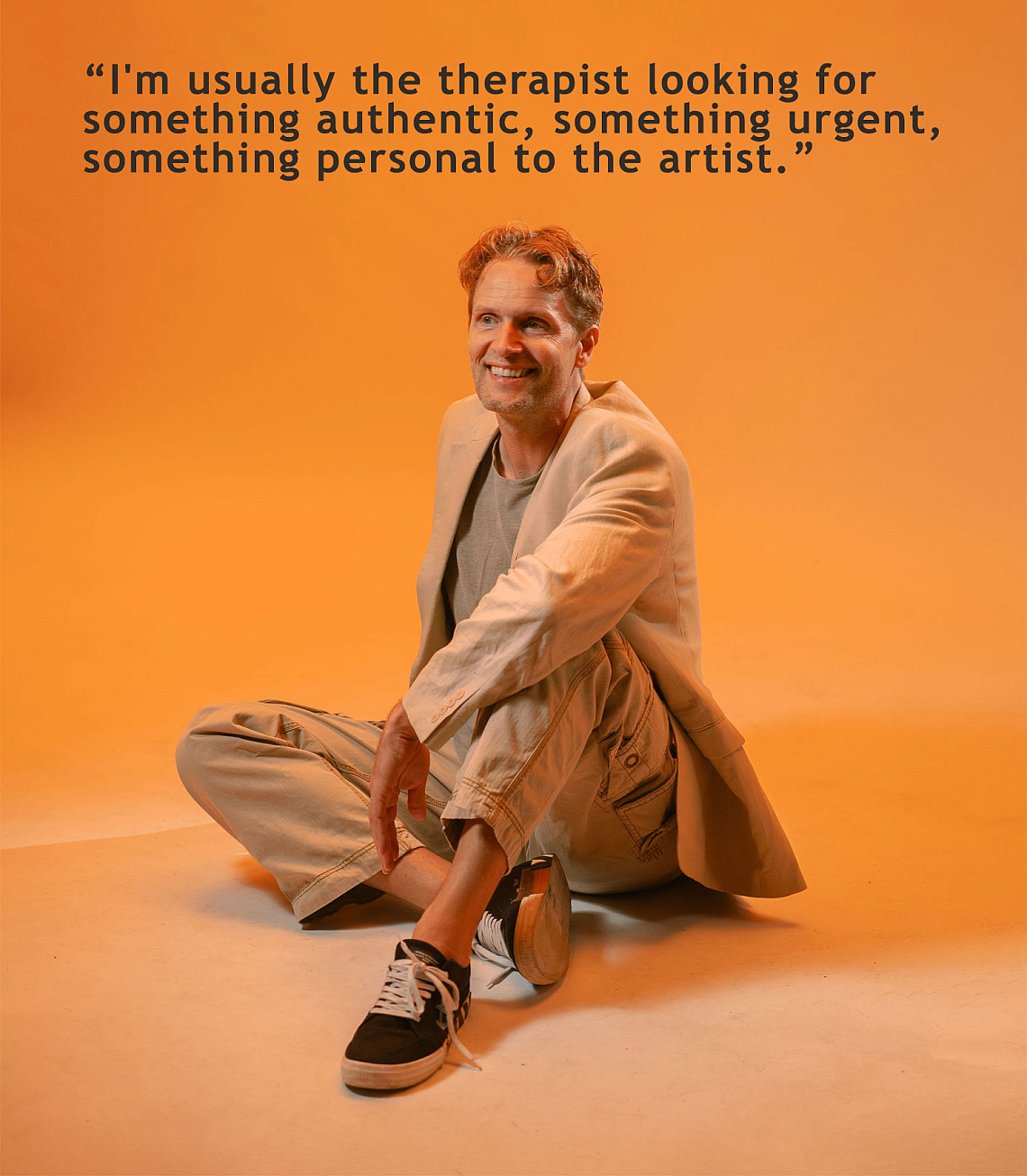
Gad: Well, my songwriting in general, I'm usually the therapist looking for something authentic, something urgent, something personal to the artist. And most of my songs that have resonated with the world are very personal to the artist. If it's "If I Were A Boy" for BC Jean, or if it's "Big Girls Don't Cry," it was very personal for Fergie.
"All Of Me," one day John Legend walks into the studio. It took me years and years to get John to walk into this studio. We had the same manager for years and years, and even before "Big Girls Don't Cry" happened with Fergie, I wanted to work with John. And I asked my manager, David Sonenberg, "Why can't you connect the two of us?" And he just said, "No, John doesn't want to work with you."
John, I think, was the Philadelphia neo soul, very cool artist, Kanye West inspired and so on. I was perceived as the European new pop kid that came into America, and I think that's why John wasn't interested. Even after "Big Girls Don't Cry" became Song of the Year, John still wasn't interested in working with me. And then after I had "If I Were A Boy" with Beyoncé, and it went straight to #1, that's when John thought, "OK, maybe give Toby a chance." [Laughs]
Then he came to the studio. We wrote a few songs. The first song was a song for the World Refugee Day [titled "Peace"] that we performed in Washington, DC. But I think the third or fourth song, that was "All Of Me." He walked into the studio, and John, as you know him, still has strong neo soul roots and is not really open to pop chord progressions. He likes to always have jazzy chords and go to places that I naturally wouldn't go.
But that day, he walked into the studio and went straight to the piano. I don't know if he even said hello. He says, "Toby, I'm so in love. I have this idea I need to show you." And he sang, "All of me loves all of you" – that was what he had. And he said, "OK, I don't know what else to do." And I said, "Why don't you let me sit on the piano?" I thought of my wife, and then I thought of "Love your curves and all your edges, All your perfect imperfections." And then he went back on the piano and added his parts. So we were trading places on the piano, back and forth, and I think within an hour or so, we had written the song. We were pouring our hearts out. It was very honest, very straightforward.
At the time, I didn't think this was going to be a hit song. It just felt like a simple love song that was very honest. And then it took three years, I think. In between, there was a Grammy party where Chrissy [Teigen, John Legend's wife] ran up to me and says, "Toby, I love your song. It's going to be our big song." And so I felt, "OK. They liked the song. That's good." And then when the album came out, it wasn't the first single, it was the second single, and it did go to #1, but only in the Urban Radio Chart, which was a very niche market. It stayed there and nothing else happened, and the song was about to die again. That's when he got the chance to perform at the Grammys. And also, Tiesto decided to do a remix.
When he performed that at the Grammys, the camera caught him singing it in the middle of the audience on a round pedestal on the piano, and Chrissy Teigen with a spotlight on her in the audience. And throughout the performance, you just felt the sparks fly between the two of them. And I feel this is what broke the song into the pop market.
From then on, it began climbing in the pop charts, the Billboard Hot 100. And I think the song might still hold the record as the second slowest climb in the history of Billboard #1 hits. It took six months for it to reach #1, and at first it got stuck at #2, and [Pharrell Williams'] "Happy" was #1. And then after three weeks, it flipped, and we were #1 and "Happy" was #2, and went back and forth. But yeah, that song I never thought was going to be that big.
Songfacts: And what about Beyoncé's "If I Were A Boy"?
Gad: So there was this artist, BC Jean. We met on MySpace. I was starting to get really busy. It must have been around 2007 or 2008 after I had Song of the Year with "Big Girls Don't Cry." Finally I was on the map as a songwriter, and quite a few labels sent me their artists to work with.
 BC Jean was in LA. I was still living in New York, and we had a little place in Upstate New York for the weekends. And I said, "I don't have time for you in the studio, because I have all these signed artists." She was not signed at the time. But I said, "Why don't you come to the little land we have in Upstate New York, and we'll hang out and maybe we'll write a song together." So she flew to New York and drove two hours Upstate, and we sat there on the swing and we wrote two songs, and we got along great.
At the time, I was filming a lot of my sessions – we were hoping to do a reality show. We did song after song. We ended up doing songs in San Diego, in LA, all kinds of places. After 10 songs, I kept trying to convince my management that this is a great artist. We need to get her a deal. The 10th song was "If I Were A Boy." That day, we were in my little Midtown Manhattan studio that I shared with a dusty jewelry designer, and we were on a pizza run. She was unhappy about a boy who didn't reciprocate her love, and in the middle of her complaining, she was like, "If I Were A Boy, I would be..." and I said, "Wait a minute, did you just say 'If I Were A Boy'"?
I was always on the hunt for song titles that feel original, song titles that I haven't heard yet, and are intriguing in a way that you want to hear what's next. So all the alarm bells went off and I thought, "Let's forget about the pizza. Let's go back to the studio and tell me what else you would do if you were a boy."
I got the guitar out. I was a fan of "One Of Us," which was a Joan Osborne song. And I was also a fan of "Wouldn't It Be Good" by Nik Kershaw. "Wouldn't It Be Good" by Nik Kershaw kind of puts you into a "If I was in your shoes" scenario, which I felt resonated with "If I Were A Boy." The Joan Osborne song, "One Of Us," has a chord progression that I really loved.
I had the guitar out. I was questioning BC, "OK, if you were a boy, would you do this? What would you do then?" She came up with amazing ideas, and we came up with the melody. And on this song, we actually started with the verse, which is rare. Usually I start with the chorus, but this is a weird song because we decided that the verse melody and the chorus melody are identical, and the hook of the song is pretty much the first sentence of every line.
So it's a really weird construct, but we wrote the verse and we wrote more and more ideas of, "If I Were A Boy, I would do this and that." And then we decided the chorus will be that same melody, but an octave up. And the verse will be the same melody, but an octave down. We wrote the song really quickly.
This is the one song where I can tell you that while writing the song, I had chills all over and I knew this was something very special and this was going to be a hit song. That's why I was really frustrated after I could not convince anyone to get the song released, or to get BC Jean a record deal.
The people I knew, they were not convinced. I thought she was a star – beautiful, great voice – but it just didn't happen. She had a manager, who didn't want to go for a record deal. He said I should go back in the studio with her. And I said, "No, we have a first single. We have 10 songs. I'm not going back until we have a deal." I was really upset about his statement, that he didn't think we had a first single. I said, "Can I shop these songs?" And he agreed. That was a very high-profile manager – I don't want to mention his name. But we signed an agreement that I can shop these songs.
And a bit later, since "Big Girls Don't Cry" was Song of the Year, I dreamt of working with the biggest stars, which was Beyoncé. So I kind of kicked in the doors at Beyoncé label, management, A&R, publishers, anyone who was connected somehow to Beyoncé, because I was desperate to work with Beyoncé. And I did that every month. I came back with new songs and really tried to work my way in. That was probably the biggest pursuit of an artist that I ever had. I felt I must work with her.
And six months after that, finally I got the call that Beyoncé wants to work with me. She booked me into the studio of Jay Z in Manhattan. The first day, I set up all my things. I waited for her to arrive. There were many rooms in that studio, and I knew she was in one of these rooms, but I didn't want to just open all the doors. The first day she didn't show up, second day she didn't show up, third day, she briefly came in, introduced herself and apologized for being so tardy. Played me a few of the songs she already had recorded, and one of them was "Single Ladies," which blew me away. It sounded like the future. I thought, the bar is really high now.
Then she left again and the next day she said, finally, she has time to write. I played her a few songs that I had prepared that were unreleased, and one of them was "Love Is My Disease," which she recorded later on but didn't use for the album. Alicia Keys ended up putting that on her album. The next song was "If I Were A Boy." Beyoncé listened, and then she said, "Play that again, Toby." So I played it again. Then she stood up and said, "You won't believe this, but I want to sing this song right now." I was in disbelief. I was like, "Oh, wow. This is incredible."
After we had recorded the song, she was graceful enough that we sat at the couch for a little bit and she asked me about my family. She couldn't have been any nicer. Then I wanted to take a picture and she said, "No, it's a bad hair day," and that was the last time I ever saw Beyoncé, sadly. I never got a picture with her.
But then the song came out. It started at #1, and then she performed it at the Grammys. I was in disbelief because the song wasn't nominated - "Halo" was nominated. And then when she went on stage, I was sure she was going to perform "Halo," but she started "If I Were A Boy," and then five minutes later, it was still a medley with "If I Were A Boy," and it just blew me away. That's the story of that song.
Songfacts: Next, let's discuss Fergie's "Big Girls Don't Cry."
Gad: I arrived in Manhattan at the end of 2000 with a lot of dreams and not enough money. And soon, the money ran out, and I put flyers on the traffic signs: "Are you a singer? Do you want to work with me?" And I went to open mics. I was really starting from absolute zero. I didn't have any support system in New York. It was very hard. I was really tested those years, and had also a couple of months on instant soup and a bagel a day. But at some point I got the opportunity to work with an artist who had just left a girl group, the Wild Orchid, and just got out of rehab. I think it had to do with a meth addiction. She came into the session in tears, very distraught. I asked, "What's wrong?" And she said she just broke up with her long-distance boyfriend whom she loved very much. And I thought, "Maybe write him a goodbye letter to explain your feelings."
Then we were at Sony Publishing in Los Angeles. They had an abandoned movie theater on their premises, and we were sitting inside on the carpet floor. Fergie had a bunch of sheets of paper around her and started writing, and I got the guitar and sat on the floor. And then a few minutes later, she hands me what she had written, and I read it, and it's:
The smell of your skin still lingers on me
Now you're probably on your flight back to your hometown
Fairy tales don't always have a happy ending, do they?
And I foresee the dark if I stay
I was blown away by these words. I had chills.
And then I played a few bits on the guitar, and I said, "Can you sing it over that?" And she came up with this very unorthodox but beautiful melody.
The verse of "Big Girls Don't Cry" is really strange. It's not your typical professionally-written melody. It's just a weird melody, but it works, and it has so much emotion. So after that worked, I presented some pop chords on the guitar and hummed a melody, and the words were just pouring out of her: "I hope you know that this has nothing to do with you."
And then, as we had finished the chorus, there was nothing memorable, nothing to latch onto. I felt it really needed a hook, something that people can remember. I had made it my task since I had moved to New York to really study the language, and I spent nights in the Barnes & Nobles just scouring through all the dictionaries and lexica writing down words and phrases. And one of the phrases I had written down was "Big Girls Don't Cry." So I looked at my clipboard and I saw the phrase "Big Girls Don't Cry," and suggested it to Fergie. She thought, oh, "It's time to be a big girl now, and big girls don't cry." That sealed the deal. We were like, "Wow, we have a chorus. It's amazing."
Then I went to the little next corner room where there was a little recording setup, and started putting down the guitar and a little groove. She knocked on the door and said, "Toby, I wrote the second verse." Then I recorded her on the verses and the chorus. And for the bridge, I had put a few chords together and presented those to her, and then she just freestyled over these bridge chords. It just flowed out of her so organically. She was so inspired and so in the moment, and it was so authentic. For a songwriter, this is so nice if an artist doesn't question anything and it just flows out. It's raw and it's honest, and it emotes. It is real.
I have to give Fergie a lot of credit for the words in "Big Girls Don't Cry." I steered it a little bit and I came up with the title, but a lot of the lyric is really her personal suffering and story.
It almost didn't make the album. In the end, it was on the album, and it wasn't her first, second, or third single. It was a fourth single and her biggest song ever, and became Song of the Year, and that was massive a copyright.
Songfacts: What's a song you wrote that wasn't a hit that you really like?
Gad: Well, if it wasn't a hit, you wouldn't know it! [Laughs] I've written thousands of songs. It's really shocking if I go through all the songs.
Here's a story. It has to do with this girl, Angelina Jordan.
When she was 16 years old and Universal Republic had just signed her and sent her over to me to write with, I recorded a song with her that I had written with Charlotte Jane earlier on. Charlotte Jane is a British artist who was co-managed by the manager of Leona Lewis, who I had worked with at the time. So I worked with Charlotte and we wrote a song called "Bad Valentine" that I love very much. It was a song of your worst Valentine's Day scenario where the girl walks out on you and everything was wrong. I love this song. So when I worked with Angelina Jordan, who had won The Voice in Norway at age 8 and had done America's Got Talent at 14 or so – a voice like no other - we recorded "Bad Valentine," and it was incredible. I thought it was the best thing I'd ever done. I emailed Monte and Avery Lipman, the owners of Universal Republic, and said, "This artist is insane, and the song is incredible. Let's put it out." And they emailed back and said, "Yes, this is the best thing she's ever recorded."
A few months later I was on vacation and I get the call from Angelina Jordan, and she says, "My EP is coming out." And I say, "How many of our songs are on there?" And she says, "None."
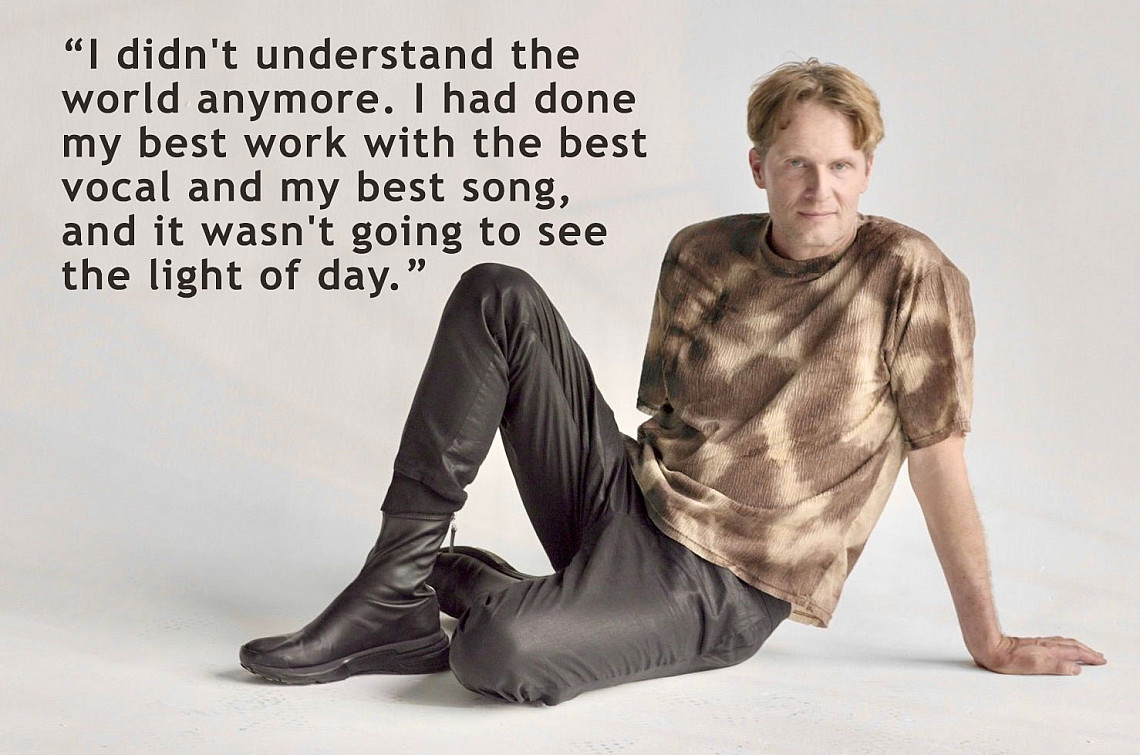
I had a real breakdown. For four or five days, I was in pieces. I just couldn't believe it anymore. I didn't understand the world anymore. I had done my best work with the best vocal and my best song, and it wasn't going to see the light of day. And from that point on, something in me clicked, and I thought, "If I had been Kygo, I would have just gone to Universal and said, "I'm Kygo. I'm going to feature Angelina Jordan. I'm going to release this song as 'Kygo featuring Angelina Jordan.'" But I was this studio rat just writing songs that other people own and perform, or claim ownership.
I knew something had to change. So I started thinking, "How can I create something that is like Kygo? How can I create a brand? How can I put Toby Gad on the map as someone who can independently release artists that are signed to major labels featuring these artists?" And that was also a very big motivation for Piano Diaries. When the idea of Piano Diaries started forming, I thought it was going to be all these orphan songs that I have, like with Angelina Jordan, with James Arthur, with John Legend, with Donna Summer. A lot of artists that I have worked with, I usually write five songs, the label releases one song, and I have all these treasures in my drawers with superstars that I'm dying to release and I can't release.
"Bad Valentine" was finally released in 2024, along with the Piano Diaries version of the song.
At the time it was the stigma where record labels say, "If you release this or if you leak it independently, the song is dead. We will never touch it again." So as producers we were scared that if we leaked or independently released any of that, we would destroy our name and the song would be dead. But I knew I had to change something.It had many iterations. It was a lot of going to different labels saying, "I could do Piano Diaries, I could be Toby Gadd, I could feature your artists, I could release things." And it was, "No, no, no, no."
Eventually, Paul Hitchman at [record label] AWAL was interested in starting Piano Diaries, but that was after I pivoted from the idea of releasing these unreleased gems. I said, "I'm going to start with my greatest hits, and I will release those now with new artists." This was the last 18-20 months now, we did that part.
We have released now all my greatest hits with new artists in the Piano Diaries, and now moving forward, Piano Diaries is going to be originals. We just filmed a music video this week for my next single off Piano Diaries that I'm really excited about, and that is a song I wrote with Donna Summer before she died.
I wrote four songs with Donna Summer – three of them were released on her last album – and this was the one song ["Run"] that was not released, but once again, the one song that I liked the most. And just now, I finally finished the recording and I uploaded it. It's coming out on June 6. I worked together with Bruce Sudano, who is her husband, to make sure that he's on board with everything. And we filmed a music video featuring a 13-year-old dancer who embodies the young Donna Summer. I'm on the piano and we're in a theater, and it's got this big screen behind and it's going to be beautiful. We were so emotional filming this.
Moving forward, Piano Diaries, is going to be, for instance, Armin van Buuren is one of the people I still love writing with whenever he comes to town. And we wrote a song with Delilah Montagu that's coming out soon called "Serendipity." Armin is releasing the dance-techno version, and I'm parallel releasing the Piano Diaries version.
That's the template. That's my future now. Whenever I release pop records or dance records with artists on major labels, I'm going to try to release in parallel my stripped-down Piano Diaries version with me as the artist featuring the singer.
Songfacts: What's a song by another writer that had the biggest impact on you?
Oh, there's so many. I used to get terribly jealous to a point where I didn't enjoy listening to any commercial radio because it would trigger something in me. I grew up with an older brother who for many years was better at everything. Like, my first 10-12 years of my life he was the star of wherever we went. If it was a summer camp, he would be standing somewhere in the corner with a crowd of 20 kids around him.
My parents had a jazz band, and as kids, when I was maybe 5, 6, 7 years old, we started performing in their intermissions. And aside from performing in their intermissions, my brother would also join the band at age 7 and be better than their drummer, so he was a natural superstar talent at the time. Just "the wunderkind." So I grew up with this instilled second sibling syndrome that I need to work twice as hard to be worthy.
So whenever I heard a song of someone that I liked, it triggered something in me and I felt, "Oh my God, I need to best that now. I need to prove my worth." All these other producers, I measured myself with them, which was so toxic. And finally in 2015 I pulled the plug. I thought, "I need to become a human being again, because this music world eats you up. The more you write, the more you need to write."
It's like a drug, really. I've never taken drugs, because my mom took all the drugs she could try and I was appalled. As a child, I could not see my parents on drugs, so I never touched drugs. But music is like a drug I feel, and if you really get into it, and then you get the success with it, you get known for the songs you're writing and it's the one thing where you just endlessly put all your energy into it. In 2015, I forgot that I had a wife and two daughters and a life, and it was really time to stop the music and become a dad, become a surfer, become a human being and do other things.
June 2, 2025
For more Toby, visit tobygad.com.
Further reading:
Desmond Child interview
Laura Nyro interview
Songwriting Tips from Jim Brickman
Songwriting Tips from Molly Leikin
Interview with Nick Waterhouse
Photos: Oswaldo Cepeda
More Songwriter Interviews