"Mother Mother" was one of the most unusual hits of the '90s. Glaringly personal, it's written in the form of a conversation where Bonham's mother wants to know if she's behaving herself now that she's off to see the world. The reply is in the chorus: "I'm losing my mind... EVERYTHING'S FINE!"
As Bonham explains, the song is often misunderstood, and the main video on YouTube isn't the original. Along with the cathartic lyric, the song has another odd element: a violin. Bonham was on track to be a classical violinist, perhaps part of a symphony one day, but then she started writing songs, and that became her passion. Due to her rebellious nature, "rock singer" suited her far better than "virtuoso."
"Mother Mother" was one of the first songs she wrote. It was part of a demo that got her a major-label deal with Island Records straightaway, bypassing the trudge through independents (Island manufactured an indie-artist backstory to boost credibility - more on that later). The song shot to #1 on the Modern Rock chart and earned lots of airplay on Alternative radio. Bonham did two tours of Lilith Fair, but then nu-metal took hold and Island merged with Def Jam. Her next album didn't appear until 2000 and got little attention. She left Island, toured with Blue Man Group, sang with Aerosmith (on their 2004 album, Honkin' On Bobo), and settled in as an independent artist, for real this time.
After a kick in the pants by the pandemic, Bonham put together Young Maestros Vol. 1, an album for kids that's like Schoolhouse Rock, except instead of explaining adverbs, it covers musical concepts like measures and notation, with a focus on what she feels is missing in music education: fun.
Carl Wiser (Songfacts): Tracy, can you please tell me about the song "Mother Mother"?As Bonham explains, the song is often misunderstood, and the main video on YouTube isn't the original. Along with the cathartic lyric, the song has another odd element: a violin. Bonham was on track to be a classical violinist, perhaps part of a symphony one day, but then she started writing songs, and that became her passion. Due to her rebellious nature, "rock singer" suited her far better than "virtuoso."
"Mother Mother" was one of the first songs she wrote. It was part of a demo that got her a major-label deal with Island Records straightaway, bypassing the trudge through independents (Island manufactured an indie-artist backstory to boost credibility - more on that later). The song shot to #1 on the Modern Rock chart and earned lots of airplay on Alternative radio. Bonham did two tours of Lilith Fair, but then nu-metal took hold and Island merged with Def Jam. Her next album didn't appear until 2000 and got little attention. She left Island, toured with Blue Man Group, sang with Aerosmith (on their 2004 album, Honkin' On Bobo), and settled in as an independent artist, for real this time.
After a kick in the pants by the pandemic, Bonham put together Young Maestros Vol. 1, an album for kids that's like Schoolhouse Rock, except instead of explaining adverbs, it covers musical concepts like measures and notation, with a focus on what she feels is missing in music education: fun.
Tracy Bonham: That was one of the first songs I ever completed when I was starting to write songs in my 20s. I must have gotten lucky or struck a chord somehow.
Recently, I was having a conversation with my best friend. She said, "I listened to that song again after however many years, and that song says everything about you, Tracy." I have a hard time communicating in real life and I'm a people pleaser. I want to make sure everybody's OK, especially my mother. I didn't want her to worry about me, but I was a typical teenager, and into my 20s I was getting into a lot of trouble and making really stupid decisions in my life and suffering. I would call home and didn't want her to know about it.
Songfacts: It sounds from the lyric like she was wise to it. Like she was asking if you were causing trouble.
Bonham: She knew me, she raised me.
Songfacts: I didn't know it was possible to play violin and sing at the same time.
Bonham: It is definitely not easy. You have to adjust. It took me a long time to figure it out.
Songfacts: Are there other rockers that played the violin and sang?
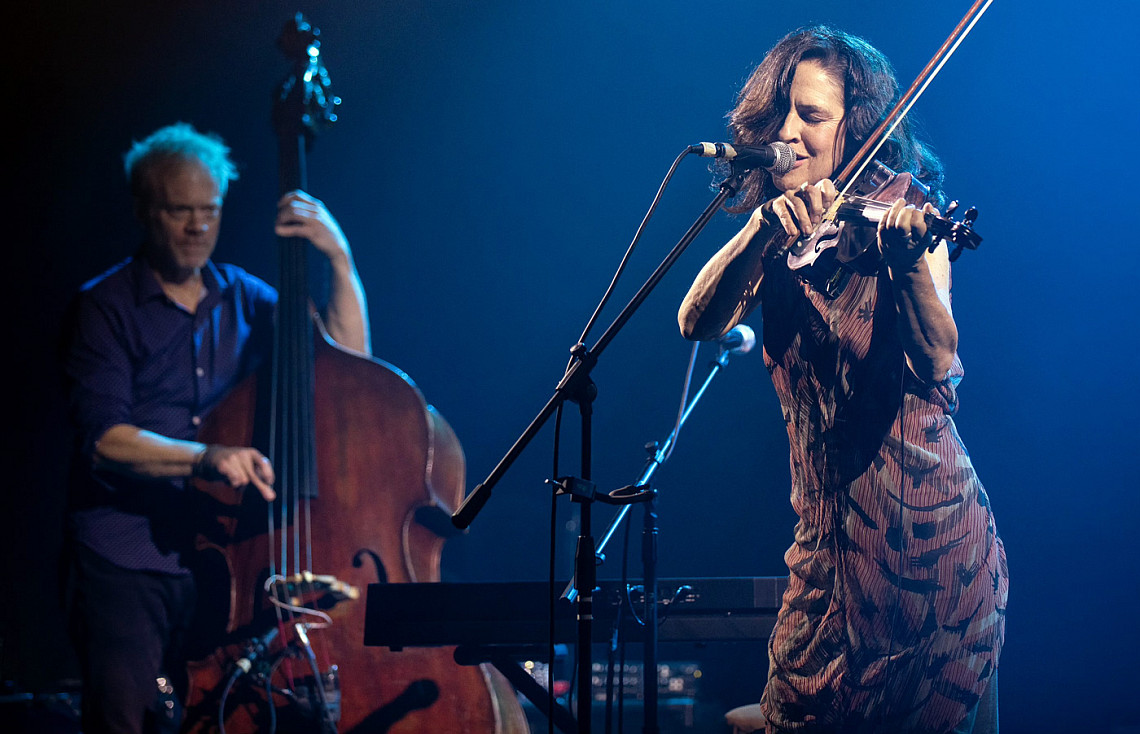
Bonham: Yes. Including one who I was inspired by in Boston. The indie-rock scene was really, really active there, and I would go out and see bands all the time. And there was one band in particular called the Dambuilders. They had a couple records out. They didn't reach high success, but they were really popular in Boston and super cool, and the woman who played violin and sang at the same time was Joan Wasser, who then moved on to become Joan As Police Woman.
When I saw her play and sing, it was so badass. She plugged her violin into a big, huge, Marshall stack, and I was like, That's what I want to do.
Songfacts: Singing "Mother Mother" cannot be good for your voice.
Bonham: True. I suffered a lot actually. I'd been singing all my life, but I hadn't been screaming all my life. So, when I was on tour it really took a toll - I had to cancel a bunch of dates. I even had to get one of those like laryngoscopies and they were telling me that I had possible nodes. I had to go on vocal rest for 10 days, cancel a bunch of dates, and relearn how to scream.
Songfacts: When you sing it now, do you still have to scream it out?
Bonham: Yes, but I do it in a different way, or I sing it. I had to learn how to scream/sing, like a mixture of singing and screaming, but not where it would destroy my vocal cords.
Lorde wasn't born when "Mother Mother" topped Billboard's Modern Rock chart in 1996, but in 2013 her song "Royals" went to #1, making her the first female solo artist since Bonham to reach the top spot. By then the chart had been re-named "Alternative Songs."
Songfacts: I had to look this up to find out if it was true, but that song was a #1 hit on what was then called the Modern Rock chart, and it took 17 years before another female solo artist went to #1 on that chart. Why was that?Bonham: It's funny because I didn't know about that until it happened. Lorde had that hit and then I found out because I was getting some press, some Google Alerts or whatever. I was really surprised, but I have a theory about this.
1996 was a year when there were a lot of female artists, a lot of bands with females fronting them. Then in 1998, things started to change a little bit, and the year 2000 was really when, in my opinion, the door slammed shut. There was a major backlash. We had already enjoyed two big tours of Lilith Fair and women were everywhere. We felt unstoppable and we could scream. Even though we caught flak for it, mostly from the male-dominated music business, we still were enjoying this empowerment.
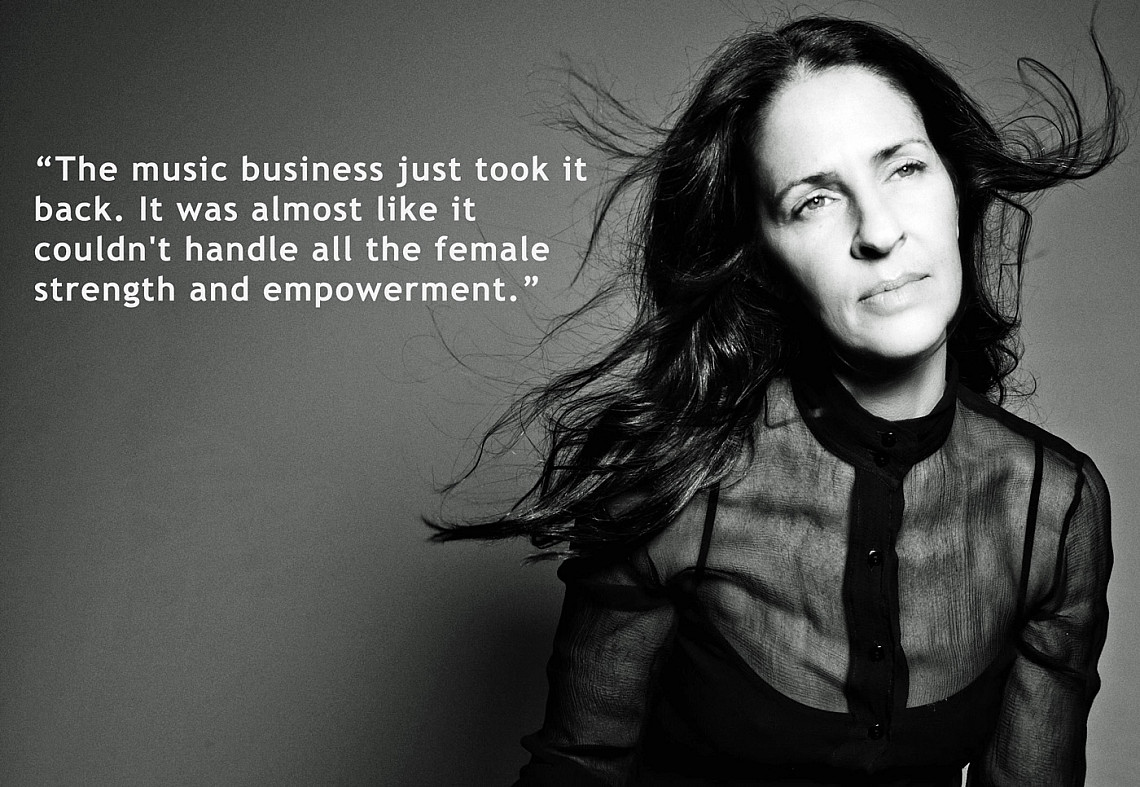
Then the music business just took it back. It was almost like it couldn't handle all the female strength and empowerment, and the backlash happened seemingly overnight. In the year 2000 I remember listening to the radio and all I heard was Limp Bizkit, Korn, all the angry white dudes having their heyday. I knew that the winds had changed in a dramatic way, but what I didn't realize was how long it would take for another strong female solo artist to have a #1 hit on that chart.
That chart started to change too, because "alternative" didn't mean alternative anymore. Everything started to become homogenized. All the big corporations were buying up the radio stations. Everything kind of flatlined.
Songfacts: Tell me about making the video to "Mother Mother."
When I watch it again now, all these years later, I just think it's such a great video because it's not your typical fast-edited, choppy video. It was really slow, I thought it was artful, and there are so many little Easter eggs in that video. The pictures on the wall are all of me and my family. As my stepdad walks through with his golf club, he passes the band, who they don't notice, but the band is on top of the dining table in the dining room, and I'm dressed as a man and I'm the guitar player, but nobody would actually know that. I didn't have a guitar player at the time, so I just dressed up as a man.
That whole day recording that video was so much fun. I love that my mom was so game. I love that my stepdad was so game. It really speaks volumes of what that song is about because I really do love my mom. It's not an angry, "I hate you, Mom" song, which a lot of people misunderstood it to be. It was like, "Yeah, Mom, life is hard." She got into it and she wanted to play the role the best that she could.
Songfacts: Is there another version of the video?
Bonham: Yes. There are two videos out there, and it's very confusing for fans. The original video where I'm in the TV was the hit video. That was the one that was on MTV in heavy rotation. But the confusing part, and something that really boils my blood, is that the alternate version, where I'm inside the closet trying on all these outfits, is the one that became popular because the original video was lost.
I would ask you and anyone else to find the original one, which doesn't have as many hits [on YouTube], but that's the one that was the hit, and it drives me mad that the alternate one is popular.1
Songfacts: Why did they shoot two videos?
Bonham: Good question. I love this story because it's so stupid. My record label thought that the UK - I kid you not - would not get the irony of the original video. Now, if you watch the original video, it's ironic, yeah, we're in a kitschy living room. But English people actually do have a sense of humor.
But what I had heard from my record label was that since the record wasn't doing so well in the UK they had to do some alternate version that would pander to the UK audience. When I watch them back to back, I am just surprised that that would even take place. The first one is much better.
The next single after "Mother Mother" was "The One," which went to #23 on the Modern Rock chart. That was followed by a song called "Sharks Can't Sleep."
Songfacts: How about the video for the next single, "The One"?Bonham: That's a scrap video. Here's the story.
It was also a time when Island Records was falling apart and the head of the video department was nowhere to be found. It was a bunch of really bad situations all falling in at one time.
So we had to scrap the footage from Jake Scott, and then we had to paste together something for "The One." It was directed by the same woman [Pamela Birkhead] who did the closet video of "Mother Mother," and it was just kind of throwaway shots. It was quite a disaster, actually.
Songfacts: Tell me about the song itself, "The One." It sounds like there may be a person behind it.
Bonham: Yeah, the song "The One," and actually the whole album, is about this one particular ex-boyfriend and my life leading up to that, and my life inside that relationship. It was a really destructive, very abusive relationship where I was almost quite literally locked in the bedroom. One of those stories where this person was really manipulative, abusive, degrading. I fell into this trap, and I was afraid to leave because I was afraid of him. So when I speak to him and I say, "You're the one that froze the sun," it quite literally felt that way. He blocked out all of the light in my life for about four years.
Songfacts: Why are you dying to wash your hand? [The line, "Ready to reach new lows, dying to wash my hand."]
Bonham: I'll just say that the bedroom was a scene of a lot of abuse.
Songfacts: Is this also the same person who inspired the song "Sharks Can't Sleep"?
Bonham: "Sharks Can't Sleep" was more of a global thing. It was around that time when I was contemplating what it means to be in a relationship with someone else, but it was less about this ex-boyfriend and more about how people say they're in love and so close with someone one day, and then just turn their backs on them the next day, and that included myself because I was looking at myself and past relationships and confused by the about-face. One day I could feel like I want to spend the rest of my life with this person, and then it seemingly felt like the next day I was moving on, and I didn't have anything to do with that person. So it really felt like the Nature Channel. Like sharks, how do they sleep? How do they go to bed at night? That was the metaphor I was using.
Songfacts: Were you still with this ex-boyfriend when the album was released?
Bonham: No, I was not with this ex-boyfriend. It probably took a couple of years for me to recover from this relationship and get my life back. It probably was four years later when my album came out.
Songfacts: So all this stuff was many years in the past, and you had to be out there singing about it and reliving it.
Bonham: Of course. Yeah.
Songfacts: So, your next album didn't show up, for a number of reasons, until 2000, at which time the landscape had changed a great deal. But you had a great single on that album called "Behind Every Good Woman." Can you talk about that song?
Bonham: Sure. For the reasons I mentioned - the delays and the problems with the videos, and how I suddenly couldn't even get arrested on the radio stations, it had taken the record label that long to release my next record. They had come back to me and said things like, "Look, we've got a second single, and maybe we have a third single, but we don't have a first single to come out of the box. We need a hit single! Come on, Tracy. You've done it before, you can do it again."
So I went back and started writing again with some frustration, for sure, and some anger. Now I'm angry at the music business. Now, I'm angry at the man, but it's a whole new face - it's the music business in general. My record label had been changed from just Island Records, which was a boutique-y, quirky little record label, to Island Def Jam. So now I'm dealing with people like Lyor Cohen, who was the one who asked me to write the hit song. "Come on, let's do this Tracy. Don't you want to be at the party?" That kind of lingo.
I went to write "Behind Every Good Woman," half about "stick it to the man," and also about female strength and still trying to hang on to this feeling of empowerment and having control over my life. When I completed the song, I played it for Lyor Cohen and he was like, "It's the hit of the summer! It's a woman's anthem." He was really excited because he was lost in the idea that this could be a hit and could make the label money. But because of the climate change they just had no way of making that happen.
Tracy is often asked if she's related to Led Zeppelin's legendary drummer, John Bonham. She isn't, but as a nod to her namesake she covered Zep's "Black Dog" in 2003.
Songfacts: There's no violin in that song.Bonham: I think there was no room for violin in that song. I had a whole sonic landscape idea for that song, and it started with the idea of having the organ panned right to left, right to left. That was how the song started: just as a sonic idea. The violin was probably going to soften it, and I wanted it to be really hard.
Songfacts: How do you typically start writing a song?
Bonham: I don't have one way of writing a song. It can hit me in a café if I hear someone use a certain phrase or some words that sound cool together. Maybe there's a sound that strikes a melody for me. In the case of "Behind Every Good Woman," I was sitting in a movie theater, and I heard a recording of something panned right to left, and I had this idea that just popped into my head with the bass line. I go and I quickly write it down because luckily, I have a music training where I can write down the notation so I don't forget about it later. Other times I sit down at the piano and I just see where my fingers want to go and I write the chords first, then maybe a melody, then maybe lyrics. Other times, lyrics drive the bus and I'm trying to fit a melody to it.
Songfacts: I heard a story about how your first EP in 1995 was released on an indie label, but you were not signed to an indie label. Can you explain?
Bonham: Yeah. Back in the '90s, especially early '90s, it was all about being cool and not being a sellout. Everyone wanted to be cool and they didn't want to look like they were on a major label because that would have been really embarrassing, and according to whoever decided, it would have been detrimental to look like you cared and you wanted to be plastered all over the world with your major-label money machine behind you. So the cool thing to do was to have a cool independent history, which I did not have. I had the major-label contract from Island Records and a lot of money behind me.
So the idea with the label and my management was to put out a fake... I mean, it wasn't fake. It was on an independent label called CherryDisc, but Island Records funded it. So it was their way of making me look like I had been around for a while. That's why the name The Liverpool Sessions came up for me, because it was just a tongue-in-cheek joke, as if I had done all of these sessions in Liverpool and had this history, which I didn't. I'd been a musician all my life, that's my history.
Songfacts: You were talking about being in the movie theater and having this sound idea come to you, which makes me think of another song in this chronology: "Just Perfect," which ended up on the Bridget Jones's Diary soundtrack. Can you talk about that song?
Bonham: It was specifically for the movie. My product manager asked me to write a song for Bridget Jones's Diary. I'd probably gotten the script, and I wrote a song that was lyric-driven. It was unlike anything I'd written. I was a little nervous about it because it seemed a little more mainstream than what I had wanted to portray. I wanted to be an edgy artist.
We went into a studio and recorded that as a one-off. Now, I love it because I'm not so precious, but back then I was still trying to be cool. I was still trying to shoegaze and sound like I'm not trying too hard. But that song now I'm really proud of. It's got a very Beatle-esque vibe. It's got kind of a James Bond vibe and I love the lyrics because now that I'm not so precious anymore I can really get behind those lyrics and feel really confident about that as a song and my songwriting. I'm really proud of that message.
Songfacts: Were you thinking more about Bridget Jones than about yourself when you were writing the lyric?
Bonham: Well, you can blur those edges. You can think that you're writing about someone else but it's really about you. I'd have to say most of my songs are about me.
Songfacts: Yeah, I would think so, although when you ended up performing with Blue Man Group, the song you did was written by somebody else, wasn't it?
Bonham: Correct. The Blue Man Group had actually written the song "Up To The Roof," and we did some other songs by them and some cover songs as well.
Songfacts: How did that song come together?
Bonham: They wrote it and they were auditioning singers to come down to their studio on East 3rd in New York City. I don't think I was the first one to sing it. When I went in to sing and to audition, the track was already built. There were tubulums - their PVC pipes - and distorted guitars and their big drums. All I did was go in and sing it, and they were like, "You got the gig." I went on their album and was their guest singer, and then they invited me to tour with them. I didn't have anything to do with the arrangement or the writing of that song.
Along with her Melodeon Music House album Young Maestros Vol. 1, Bonham has developed a whole curriculum to teach kids about music, mashing up her experience as a classically-trained violinist, hit songwriter, multi-instrumentalist, and instructor at The Brooklyn Preschool of Science. She's released a few videos to go along with the songs, including one for "Me Symphony" where she demonstrates how to make music with or without instruments.
Songfacts: I was surprised when I listened to "Me Symphony" because it certainly doesn't go the "Baby Shark" route. It's five-minutes long with symphonic elements, so it's not what you would think of as children's music. Can you talk about that song?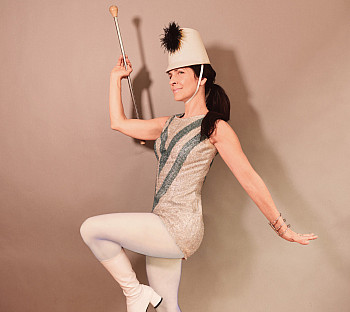 Bonham: I started writing songs for young music enthusiasts a long time ago. It was really inspired by my childhood listening to songs on Sesame Street, Schoolhouse Rock, "Free To Be You And Me," all of the songs from my childhood. So I coupled that with my love for music theory because I'm classically trained and I went to conservatory. So I wanted to inspire and teach, young and old. So part of my new album, Young Maestros Vol. 1, is that desire to teach the fundamentals of music, but also about the art of performance, and "Me Symphony" in particular is about the art of performance.
I tell the story [in the song] like I walk out on stage and realize I've forgotten all of my instruments. What am I supposed to do? The message is that you can make music without relying on your old tricks or hiding behind your instruments. The music comes from within, comes from the moment. It comes from spirit. I get very spiritual when I talk about performance, and I'm trying to impart that onto young people and also people in general. So many fans have come up to me and said, "I wish I would have played an instrument, but my teacher scared it out of me." I want to help people realize that they have music inside of them, and it's really not about what you play or how expensive your guitar is. It's your music, you don't need an instrument. You've got music pouring out of you if you let it.
Songfacts: Did you go to Berklee? [Berklee College of Music]
Bonham: I went to the University of Southern California and then I transferred to Berkee because I was like, "I'm not going to play in a symphony. I don't fit in with the classical people."
I love it so much, but I have a fire inside of me, and all of my markings were like, "Great fire and passion in your playing, but your technique needs work." And I was like, "You know what? Singing is so much easier and flashier and it really gets my point across." So that's why I transferred.
Songfacts: So you didn't graduate from Berklee?
Bonham: No, I did not graduate from Berklee. I went to college for three years and three quarters of another year, and then I was like, "Eh, I can just go and do this."
Songfacts: Getting back to your Melodeon House stuff, I found it quite instructive as somebody who doesn't read music. Can you explain what's going on in "All The Blackbirds" and the concept with the black keys?
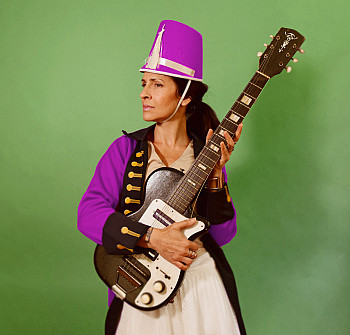 Bonham: Sure. It's one of my favorite songs. I'm really proud of that song. I started teaching young children piano, and I wanted to find the right way to teach a child how to just play a song and have it sound beautiful. I thought the black keys look a lot like blackbirds, and it developed from there. Little kids would really respond to that.
Then I noticed the pattern of the keys sitting in groups of two and groups or three, and that's a really easy way to teach how to play the black notes on the piano. And whenever you play a black note with another black note, it's going to sound good. It's something called the pentatonic scale, but I won't get all nerdy on you.
So if you sit down and play all the black notes, as many as you can, they're going to sound really good together. The idea, then, was to make a song where young and old could sit down and just sound good immediately. So the concept of the black birds sitting on tree branches in groups of two and groups of three just fell down from the sky for me and I started writing that melody, which sounds like a melody that had been in existence for more than 100 years. The song just came together like that and I'm really, really proud of it.
Now I teach it, and I teach it with the fingerings: "Four, five, three-two-one... four, five, three." And if a child or grown-up actually goes up and plays those in that order, they're going to hear the song.
Songfacts: What are you working on these days?
Bonham: I'm writing songs now about where I'm at in my life now. Pre-COVID I was performing these, arranging them, and then getting ready to record them, but COVID hit and things changed.
But the songs are about isolation, loneliness. Finally, after all of these years, after "Mother Mother" and after my second album of being angry at the music business and not knowing how to express it except through my music, these new songs are about learning how to express myself in my daily life and not just hiding in my music. I'm 54, and I'm still learning how to communicate. I have transformed more in the past two-to-three years and learned about myself so much, and this music really exemplifies that. It's all about growth and really looking at yourself, which is really hard, but using those as opportunities for growth.
Songfacts: What piece of classical music had the biggest impact on you?
Bonham: I have a memory of playing a classical piece in an orchestra. I was in the violin section, and there was this piece - more like this nugget - that I'll always remember. I was 16, and I was not making good choices as a 16-year-old. I was trying to fit in with all the classical violin players, but I was also a rebel. But this moment, when I look back at it, really shaped me and it's shaped by whole idea about music and goes along with what I was talking about in performance and when we were talking about "Me Symphony" and how it's about the music inside of you and that present moment.
So, this piece of music that will bring me back to that moment every time I hear it is by the composer Edward Elgar. The piece is called "Enigma Variations," and the movement in that orchestral piece is called "Nimrod," and it's beautiful. I don't know why they called it "Nimrod."2
I love the melody, the way it builds, the way it returns to the melody, the trading off of instruments. I can imagine myself sitting inside that sound. Now again, I'm 16, so I must have had this really profound moment because otherwise I'd have been thinking about boys and going to get a wine cooler and smoke a clove cigarette. But it just hit me. I was like, "Oh my God, music is my savior and it's the here and now of it all."
I go back to that memory and that piece of music, and if I ever turn on that piece of music, I'm always transported back to that original message. I try to share that as much as possible, especially with young people, but I'm assuming it's going to go way over their head, but hopefully you can have a young person stop in their tracks and have that moment of like, "There's a world bigger than me." So that piece will always do it to me.
February 22, 2022
Learn about Bonham's programs for kids at melodeonmusichouse.com
More interviews:
Linda Perry
Paula Cole
Laurie Berkner
Photos: Shervin Lainez (1,3,4), David Young (2)
Footnotes:
- 1] The "closet" version of the "Mother Mother" video has been on YouTube since 2009 and comes up first in searches. The original video, where Tracy is in the TV, has been on YouTube since 2018. (back)
- 2] We often think of a nimrod as being a doofus or a Green Day album, but the technical definition is a skilled hunter. A high school in Michigan calls themselves The Nimrods. (back)
More Songwriter Interviews