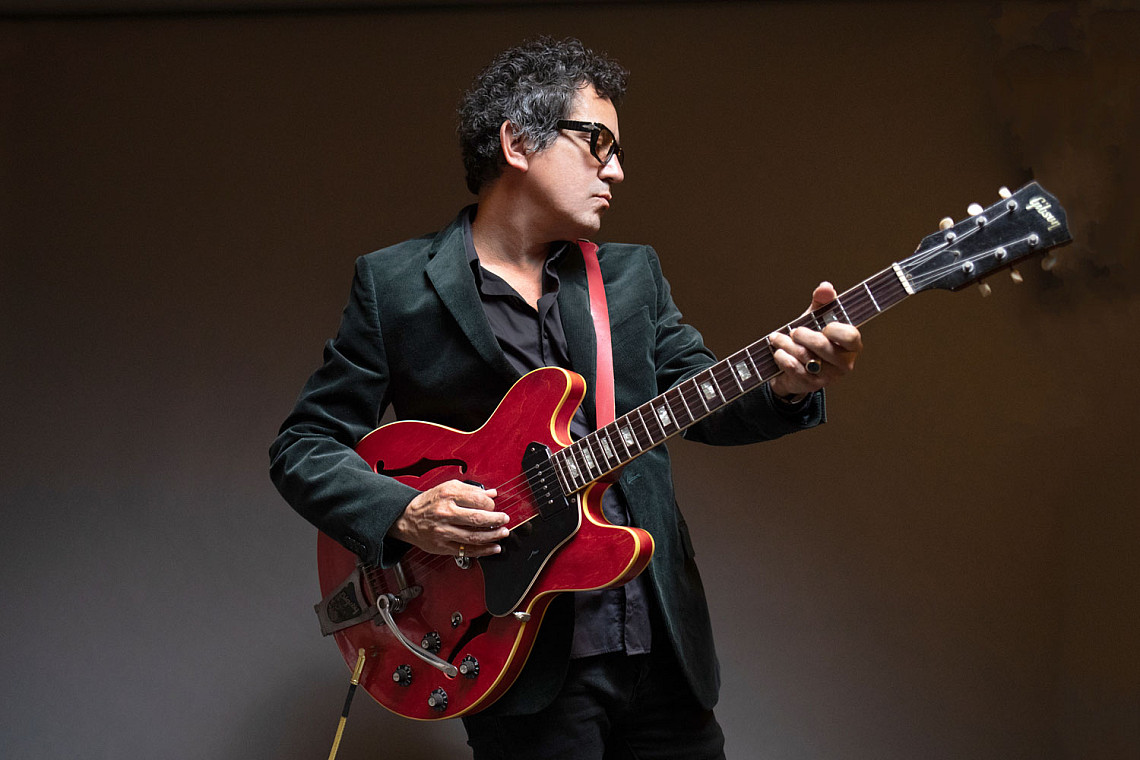
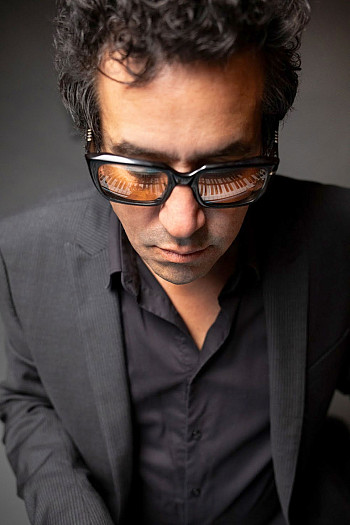
A.J. Croce inherited various music gifts from his father, Jim, one of the most esteemed singer-songwriters of the '70s, known for "Operator," "Time in a Bottle," "Bad Bad Leroy Brown," and many other great songs. Jim was just 30 when he died in a plane crash in 1973 soon after A.J. turned 2.
A.J., who has limited eyesight and was inspired by Ray Charles, started playing piano when he was 10 and was a touring musician at 15. He's released 11 solo albums; his latest, issued in 2025, is the Shooter Jennings-produced Heart Of The Eternal.
It was very important for A.J. to build his own career outside of his father's legacy, so for many years he didn't play his dad's music or talk about him in interviews. But A.J. is also the administrator of his dad's music and wants to celebrate those songs. He started performing tributes to his dad in 2013 and in 2019 launched the Croce Plays Croce tour with full sets of Jim Croce songs.
In this discussion, A.J. talks about his songwriting philosophy, his dad's legacy, and his latest album.
A.J., who has limited eyesight and was inspired by Ray Charles, started playing piano when he was 10 and was a touring musician at 15. He's released 11 solo albums; his latest, issued in 2025, is the Shooter Jennings-produced Heart Of The Eternal.
It was very important for A.J. to build his own career outside of his father's legacy, so for many years he didn't play his dad's music or talk about him in interviews. But A.J. is also the administrator of his dad's music and wants to celebrate those songs. He started performing tributes to his dad in 2013 and in 2019 launched the Croce Plays Croce tour with full sets of Jim Croce songs.
In this discussion, A.J. talks about his songwriting philosophy, his dad's legacy, and his latest album.
Making the Album with Shooter Jennings
It's been a bit of time since my last record, so there was lots of time to write and try new songs and ideas. The longer you have between projects, the more diverse material you're going to have, because you pick up colors along the way from different experiences, you have new ideas, and the longer the span of time between two projects, the more you get to try them out, see what works and what doesn't.So, I came to this project with arrangements for everything, more than just those 11 songs. By the time I met with Shooter, it was pretty well organized.
I first met Shooter through his dad, Waylon, because I had played on a session for him when I was probably 25 and Shooter was 16 or something like that. We lost touch but reconnected a few years ago. It was one of those things where we just had so much in common. Our approach to life, our approach to music and the love of it, for us, it's a calling, and I think we both felt that. We both also had well-known parents, and all that goes along with that. We were fast friends, just like that. Working with him was a pleasure.
One of the reasons I really wanted to work with Shooter was that, in the past, if I wasn't producing my own music, I was working with these iconic producers: John Simon, T Bone Burnett, Allen Toussaint, Cowboy Jack Clement, Mitchell Froom, and on and on. In a lot of cases, with the people I was potentially going to work with on this album, I kind of knew what it was going to sound like before I even went into the studio. I wanted to challenge myself to have something a little more unpredictable, so it wasn't so obvious what it was going to sound like. I knew that Shooter had a bit more of a modern approach to recording than I do, and I thought that would be helpful. I just didn't know what we would end up with. I had a sense of what I would bring into the studio and knew the arrangements would be similar.
The thing that Shooter does that's very much like every great producer I've worked with is, he's very in tune with happy accidents. When he hears something that wasn't meant to happen and it just feels good, it stays. Or we look at what happened and go, "Let's figure out what just happened and make that happen more thoughtfully." I think that's what every great musician, engineer, and producer is looking for: those happy accidents.
The song "On a Roll"
During the Croce Plays Croce tour, about a year into it I was seeing the number of people coming to shows, the places we were selling out, the kind of press I was getting, and the recognition - not just for playing my father's music but for playing my own music, and I think partially from abstaining from his music for nearly 30 years of my career. It was such a natural, obvious thing in that moment. I wrote it quickly - it was a statement.I had some ideas about the groove, where it was going to sit, and it ended up being completely different than I expected. One reason was the organ in the studio was on the fritz, so I went to play the organ and it didn't work. I'm like, "What do we have?" And Shooter brings out a Moog and a Mellotron, and I'm messing around with the Mellotron thinking, "This could be fun." I hadn't done that before, so I said, "OK, this is going to change the arrangement a little bit. Let's see what happens." And that's what we did.
I sang and played live on this album. It's really important that I do that enough on a record where if someone's going to come and see me perform, they're going to hear what I recorded. I really like to make sure that what I'm going to bring to an audience is a little more stripped-down but for the most part is going to be what they just purchased. I think it's really easy in a studio to go in and just add the kitchen sink, and then when you play it, it's a completely different song. Sometimes that's beautiful, but I think if you do too much of it, it fights against you in a live setting, which is really what I'm known for: my performance.
The Song "Finest Line"
The other song like that was "Finest Line," which I was not initially planning on recording as a duet. I had never met Margo Price. She just stumbled into the studio the second or third day of tracking, heard what we were doing and offered to sing on something.I had been brooding over those lyrics for about a year, even though they're relatively simple, because I wanted them to be really effective. I had written it on guitar. The day I was leaving for LA, I was on the phone with my girlfriend and I was playing it on piano. I had played it for her on guitar, but something resonated with it on piano - it was so much more emotional and dramatic. I finished the lyrics on the plane flying out there that day.
When Margo offered to join on a song, I was trying to think where it could be most special to have a guest like her. When I looked at that song and took the verse and broke it in half, I realized it was a really interesting conversation. It answered a question with a question. It had a Gothic feel to it, but it was very much in keeping with a spiritual connection to something deeper. It's a conversation.
I felt lucky that there was an opportunity to explore that - it hadn't even been in my mind that that would be how it was done.
Writing "I Got a Feeling" with Tommy Sims
I had the music for most of this album written first, with a couple of exceptions. That one I had been sitting on for a few months. I had actually written the whole song while I was on the road. It felt really good, but there was something lyrically that was a little too conversational, which is funny, but sometimes you want metaphor, you want it to be a little more esoteric. Being that it was really coming out of that psychedelic soul groove - Shuggie Otis, Chambers Brothers, or Sly from that era - I felt like bringing another writer in with a different perspective and writing in that kind of style would help. So we wrote the lyrics together - I had the music already. Then we thought, "This would be perfect for Robert Randolph." So initially, "I Got a Feeling" was for Robert Randolph, but it didn't work out because something happened with his schedule.I said, "Well, I dig it," and there's a really cool keyboard part in there as well as the guitar part, so I sang and played guitar, then sat down and played the fuzzed-out Rhodes solo in that part after. It just came together. It's something this band does really well together. They're such talented players who have been on so many records.
It's funny to see what a band gels on, which things we all have in common. The drummer is Gary Mallaber, who is on "Moondance" and "Tupelo Honey" and was the drummer on all those Steve Miller Band albums and played with Joe Walsh, Peter Frampton, Bruce Springsteen, and Bonnie Raitt. He brings a rock and roll element to things. David Barard from New Orleans played with Dr. John for nearly 40 years, and with Allen Toussaint, Etta James, Irma Thomas, Lee Dorsey, the Nevilles... you name it. He brings a really great R&B, soulful aspect to it. And James Pennebaker out of Texas came up playing with Freddy Fender, LeRoy Parnell, Delbert McClinton and all these Americana artists. What we found together was this sweet spot: a mid-to-late '60s groove, that early psychedelic soul thing. This band just gelled with that. I don't know why that is or how that happened. They're capable of playing all kinds of music, but with this project it came out on a couple of songs, both "I Got a Feeling" and "Hey Margarita."
Writing "Reunion" with John Oates
I met John at the Ryman Auditorium backstage. We were both singing a John Prine song for a tribute to what would have been his birthday. We just connected for the first time. We both live in Nashville. He came over a couple weeks later and said he had just been with his father, who had turned 100 years old. His father said, "John, I'm ready for my reunion. I'm ready to see the people that I've lost and that I love."It was such a beautiful sentiment and such an understandable perspective from a man who's lived 100 years. It was immediately something we went to. After John told me this, he said, "I think it needs to be kind of a gospel thing," and he was playing something in 4/4. I said, "If it's going to be gospel it needs to be in 6/8." And that's what I did. I started playing that piano part.
He's a wonderful collaborator - a great lyricist but he also really understands music and what can happen when you get to a place as a songwriter and don't want to repeat a chord. You've hit that chord a number of times, how do you make it different? Generally, I do that on my own because usually, the person writing the music for the songs I co-write isn't as involved, but with John Oates, he's such a wonderful musician as well. I don't know if people know how wonderful he is as a player, but he can say, "Hey, instead of playing that B-flat, why don't we play a G minor? It's going to give you the B-flat, but it's going to give you an alternative..." I knew right away where he was going with it. You still hear that B-flat as the third but it's not drawing your attention away from another note. It's almost like an inversion of the chord. For me as a songwriter it's really wonderful to write with someone who also thinks the way I do in that regard.
So we finished the song and immediately went into the studio and recorded it. It ended up being the title track on his last album, Reunion. He did it in a sort of Americana style, and I wanted to treat it a little bit more like a gospel, soul song - a Garnet Mimms, Solomon Burke kind of vibe from the early '60s.
Meeting James Brown in the Early '90s
I lost my voice as a teenager three times trying to sing like James Brown, hitting those high notes. I was at soundcheck, watching how he was working with everyone. This was before I played guitar - I was just a piano player. I was watching him do the things I'd heard about: charging the trumpet player $50 because he hit a wrong note the night before, and all that stuff. I was watching a two-hour rehearsal of him going through everything - he has two drummers, two bass players. Each rhythm section is its own unit, and whoever plays better at soundcheck gets to play that song that night, so they're all vying for the chance to play.After the show he wanted to talk to me. He was really complimentary and super supportive of my playing and performing. We sat together for probably 45 minutes. He was under a salon dryer wearing nothing but his underwear and these big solid-gold cuff bracelets, looking like Wonder Woman under a salon dryer. This is how I meet James Brown: under a salon dryer after the gig, not wearing anything.
I'm like, "What do I say to him in this state?" We started talking, and I asked him about Little Willie John. He was famous for "Fever" and for singing a bunch of great R&B songs - one of the most powerful tenor soul, R&B singers of the '50s and early '60s. He was on King Records, and heard James Brown. When I brought up Little Willie John, his eyes just lit up. He said, "If it wasn't for Little Willie John, I wouldn't be here. He was the man who gave me a shot at King Records."
When Willie John went to jail in the early '60s, James Brown was outside the jail with a sign and a T-shirt that said "Free Willie John," which was really ironic because he had just come out of jail himself and there were all these people there with "Free James Brown" T-shirts. But we talked about music, what was new and old, what was interesting, what drove him, what inspired him. Some people just know who they are at 19 years old - they're fully formed. I think with James Brown it took him a minute - he was a crooner at first and was trying to copy The Five Royales and these different jump/swing bands, and then he found his voice.
"Time In A Bottle"
Music is so much about emotion and mood, what you choose to listen to in a given day. You might wake up and want to hear Chopin études or James Brown or Black Sabbath. Mood is so relevant, and music is really a time capsule. I'm not saying that to connect it to the song, but whether we're aware in the moment when the song comes out, or even alive when it comes out, is really irrelevant. When a song moves us, or when we're in a situation that is really memorable or formative, and that song just happens to be on the radio somewhere - on your first date, driving yourself for the first time, in a foreign country and you walk into a restaurant and it's playing, and it doesn't make sense that it would be there but is the perfect thing to listen to - music is magical like that."Time in a Bottle" has that kind of power. It's been covered many times, but I think my father's voice is still the most powerful version of that song. There's something about the sincerity of it that is undoubtable. There's a difference between being precious and being sincere. There are times when we're so cautious about how we're writing that it becomes a precious piece of music instead of something that's honest and sincere. Being aware of that line and how to make it understandable is something I think my father was really good at as a storyteller and songwriter.
Fatherhood and Music
Of course there is a connection with certain songs for me with my kids. I've toured through their entire lives, so the connection of our communication on the phone has always been really important, just as it is today even though they're all grown up. There's a certain connection and a certain time that we speak before I play that's always been really special, and it's worked with and around the music. It's all connected.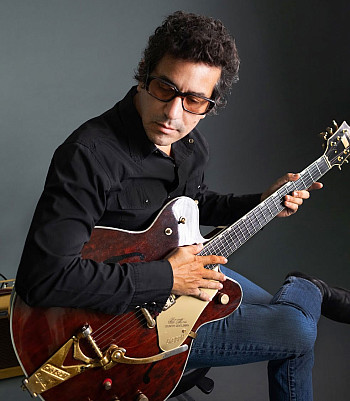
Influence of A.J.'s Mother, Ingrid Croce
My mother really wanted me to go to college. My father's musical legacy did not influence me as much as his record collection. Of course, it influenced me as a human being because it was impossible to escape his recognition growing up. He's still on the radio, and I still walk into a store nearly every day and someone wants to know if I'm any relation if they don't know already.My mother was a fierce critic - that's not to say she wasn't encouraging. She was, and for many years she was probably my biggest cheerleader, but early on, if what I was playing wasn't solid, or the timing wasn't good, or if she didn't like the song, she would say it. It wasn't until I was about 15 or 16 that I started to realize I was a good musician, and as long as I kept practicing every day - as I still do - I could be great at what I do. I could be a great musician.
They're separate jobs: being a musician as a piano player is different from being a guitarist, which is different from being a songwriter, which is different from being a singer, which is different from being a performer. Each one of these skills is unique, and you have to dedicate time to each one independently.
I was influenced by artists who were multi-talented - people like Fats Waller, who could have been a comedian, a piano player, a songwriter, or a singer, and would have been great at any of those things. Ray Charles - his songs on their own could have been enough, or his piano playing, or his singing. People like that bring more than just a two-dimensional facet to their art, and it really requires that dedication.
The Best Deep Cut in A.J.'s Catalog
There are so many - there are 11 albums. I think there's at least a song or two on each record from the very beginning. On the first album, "When I Found Faith" was really strong and ended up on a compilation called Early On. There are a couple of really great songs on Me And The Bar that don't often get played, even though the record was successful. There are deeper cuts on there like "Calling Home," which is an up-tempo, rockabilly thing, but "Checking In" on that album is one I really like.On the following record, "Fit To Serve" is really a sweet song. I could go on and on, but each album is unique in that way.
June 11, 2025
Here's our interview with Ingrid Croce, and our list of Jim Croce songs.
More Songfacts Podcast