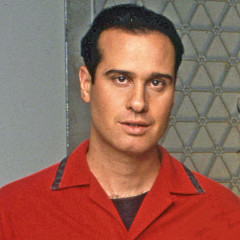
I learned about Alex Forbes from Jann Klose, a great singer I follow whose single "Sugar My" he wrote with Alex. It's one of those songs that gets in your head right away but has layers to it - musically and lyrically - that reveal themselves the more you listen to it.
Well, it turns out Alex has written lots of great songs, including a fantastic freestyle jam by Alisha called "Too Turned On," and the Taylor Dayne hit "Don't Rush Me," which as Alex explains, has an unexpected and powerful inspiration.
Alex is still writing wonderful songs and also runs creativesongwriter.com, where she offers song critiques and coaches songwriting. In this discussion, we tap into her songwriting expertise to break down not just her songs, but tracks like "Big Yellow Taxi" and "Knockin' On Heaven's Door," which you'll hear in a whole new way.
Well, it turns out Alex has written lots of great songs, including a fantastic freestyle jam by Alisha called "Too Turned On," and the Taylor Dayne hit "Don't Rush Me," which as Alex explains, has an unexpected and powerful inspiration.
Alex is still writing wonderful songs and also runs creativesongwriter.com, where she offers song critiques and coaches songwriting. In this discussion, we tap into her songwriting expertise to break down not just her songs, but tracks like "Big Yellow Taxi" and "Knockin' On Heaven's Door," which you'll hear in a whole new way.
Is Alex A Scion Of The Forbes Empire?
No. Malcolm was my uncle, but as my cousin always liked to say, same family, different bank account.Writing "Too Turned On" By Alisha
Up until that point, I had been writing a lot of folk-rock songs, which is really where I came from. I came from a Beatles, Joni Mitchell, Allman Brothers place in my writing. Jimi Hendrix, Neil Young, those were my idols growing up. When I decided I wanted to make a living doing this, I could not get arrested. My voice was not that great.I started listening to things like Madonna and Chaka Khan. I bought the single of "Ain't Nobody" by Chaka Khan and I just went crazy for that song. I love that song so much and I used to watch it spinning on the turntable and just go, "Why can't I write a song like that?" So those club songs started to infuse my writing.
One day this idea came to me walking down the street on 19th Street and 5th Avenue. I was a graphic artist assistant at that point, and this idea came to me. I called it into my own phone machine on the corner of 19th and 5th.1 I was obsessed with this idea. I was going, "Too turned on, I can't turn back..." and it just came to me.
I went home that night and showed the lyric to my friend Shelly Peiken,2 and I said, "This is the first line. It goes, 'Love is a cliff and I'm pushing you over it,'" and she was like, "That's a little violent."
But I loved it and I stuck to it. I went home and I demoed it that night. I couldn't sleep - something was different about that song compared to all my little folk-rock-type songs. I stayed up all night and demoed it, and when I brought it into my songwriting workshop, everybody in the whole room said, "That one's a hit." Nobody picked on it.
I felt it in my heart, but the demo wasn't quite right so I demoed it again. I spent two months' rent on that demo and I sang it myself. The second producer I showed it to recorded it and it became a hit. I was able to quit my graphic art job and do this full time. I haven't looked back.
Are Songwriting Workshops Particularly Harsh?
It depends what you bring in. I think that we deserve harshness if we're not writing up to par. It's the same thing that happens when you walk into a meeting with a professional - they will rip you a new one if your song is not good. I remember being torn to pieces about "heart, apart, start," the typical rhymes that are just not interesting anymore. How can you bring something to the table that's new and fresh?For me, that was necessary. We have to take the criticism. If you're going to be a professional ice skater, you have a coach, and if you're a banker you should have someone to mentor you. That's what is valuable about the process.
Did You Ever Meet Alisha?
Yes. I heard her on the radio. She had a song called "All Night Passion," and that's why I brought it to that producer. I wanted to get it to Madonna, originally. I called up Sire Records and said, "I want to submit this song to Madonna. Can I bring it by?" And they were like, "No, you have to mail it." And I was like, "Mail it? Screw you."I didn't mail it, and maybe I'd be a millionaire right now if I did. But Alisha's producer was more open to meeting with me, and Alisha's parents were working with her at that point and they were great folks. I'm still in touch with her on Facebook.
The Focus On Appearance For Female Pop Stars
That's part of what happened with MTV, and I think that's problematic because people who were all flashy and doing the dance steps were welcomed on MTV over the great singers. I have a song cut by Martha Wash - they replaced her in the video for "Gonna Make You Sweat." She is just a brilliant singer and one of my super favorites of all time. RCA, I believe it was, had the nerve to replace her in the video because she didn't look the part.3 Well, who cares? Some people are just great singers and don't do all the steps and don't weigh 120 pounds.There's the prejudice in this world, and music should be able to overcome our prejudices and it should be able to cut through that. But still there are remnants of that discrimination going on.
"Don't Rush Me" By Taylor Dayne
I met her producer, who was searching out songs because he wanted to sign her. It was a guy named Ric Wake, and I met him when he was 19 years old. He was collecting songs for artists and she was one of the artists he basically discovered. When he found the song "Tell It To My Heart," he brought it to RCA and they gave her a single deal, but it did so well that all of a sudden they had six weeks to make an entire album. Because he had kept this little stockpile of songs that he liked, "Don't Rush Me" got included on that album.Taylor sang the demo, and then when they bumped it up to an album they changed it from a keyboard solo to a guitar solo, but other than that it was pretty much our track. I don't know if I can dig up that demo anywhere, but I loved it.
So that was an incredible boost for myself and Jeff Franzel, who I co-wrote the song with. I think it was his first cut. It got on three different charts: Adult Contemporary, Pop, and Dance. They called it a "crossover hit." It was in many different countries and the album ended up selling like 4 million copies. Those were the days when you could make a living on this. It went to #2 Pop, so that was really exciting.
Also, it was meaningful for me because I had lost at that point seven people I knew to AIDS, and it was very real for a lot of us. I was talking about it with a friend of mine, Tom Finn, who was a DJ at The Palladium and had also, amazingly, been the bass player in the band that did "Walk Away Renee" by The Left Banke. He said to me, "There should be a song about not going too fast in relationships," and I was like, "That is a great idea," and I came up with this concept of "Don't Rush Me."
For me it's a song about people having one-night stands and becoming sexual with others without being careful. So the idea of "Don't Rush Me" was also about that era that was very painful. People were dying right and left of AIDS.
Political Songs
Things have opened up and lyrics have gotten more bold. They had to because the "moon June spoon" era is passed. I'm one who was so much influenced by songs that were more political but said it in a way that was palatable and not hitting you over the head with a frying pan with the politics. But some of them did. Certainly a song like "Ohio" about Kent State. Or "Southern Man" about racism in the South.A lot of songs that I grew up listening to were political but they were also super catchy and still are around to this day. "Give Peace A Chance," "Imagine," those kind of songs for me were hugely impactful.
Dance Songs With A Strong Message In The Lyrics
One that I thought was bold in that direction was "Papa Don't Preach" by Madonna. It's about an out-of-wedlock pregnancy, and I thought that was a pretty bold statement.Pet Shop Boys, I listened back to "West End Girls," which I hadn't realized was so gritty. I was dancing in the clubs to that all the time but I hadn't really absorbed the lyrics until I saw it on the page.
Another one that I think is meaningful is "Chandelier," about someone getting so smashed and abusing alcohol, taking shots and getting so bombed. That's an amazing song musically and lyrically. It's really well written. We are pushing boundaries if we're doing our job and taking a stand, taking a strong point of view.
Writing "I Dance My Dance" With Nile Rodgers
That one started out with three of us: Melissa Sanley, Jerry Barnes and myself. We had the concept, we had the title. We had this idea of it being about individuality and the freedom to express yourself completely and not let other people's judgments get in the way. It's this idea of walking down the street and doing your own thing, being an individual. A bit of a fearless vibe.Jerry has for 20-plus years played the bass in Chic with Nile Rodgers, so he tours with them all the time. They're opening for Duran Duran right now. Anyway, he played those two songs - that one and "Law Of Attraction" - for Nile and he liked them. We were over the moon.
Then Nile took them, made them his, and added lyrics. On "I Dance My Dance" he added the entire bridge - the song was still a bit unformed. On "Law Of Attraction" he added a lot of lyrics and rewrote the whole verse and also worked on the bridge. He also brought his signature incredible guitar sound.
A lot of people know his songs, but they don't realize they know his his songs. One of my favorites that he wrote is "We Are Family" by Sister Sledge. What a great song, and also another song that has a lot of meaning. It's that idea of unity and collective love.
What the world needs now is that sense of connection and unity. I was talking with my therapist and I was saying, "The world is falling apart. What can we each do to bring it together?" And what he said was very wise, which is, music is one way to penetrate people's hearts so through things like politics and divisiveness and all of these subjects that pull us apart, like economics and race, music is one of the things that can penetrate us on that deeper level and change the world for the better, and I'm all about that.
I'm getting more political as I go forward and it's essential that we each do our part to solve these problems that the world is confronting. For example, I have lost many people over my life to drugs and alcohol, some people I've known since I was very young - my brother's best friend for example, lost to drugs and alcohol. It's so painful to watch someone going down that path, and I had my own struggles. I was a pothead for a long time and it didn't help. I wrote a song recently that I might put out called "I Was High At The Time." It's about all the stupid decisions I made because I was high at the time, and all the choices that went haywire because I was not in my right mind when I made them. It's a true story. It's a little close to the bone, which is why I'm afraid to put it out, but I think that we each have to get close to the bone.
Another thing that I've been really upset about is what's going on politically now. I've written many a song on the subject of finding the common ground between people.
Certain songs have a lifespan of 50 years and other songs have a lifespan of 10 minutes. I think there's a way to say it without saying it. An anti-war song for me would be Dylan's "Knockin' On Heaven's Door." It seems to me like he's in a war and dying, and these are his last words. Or "Folsom Prison Blues." It's like, how do we find our own voice and make our own contribution with the talents we've been given that we're channeling? I do feel like we are channeling songs.
The metaphorical universe to me is so compelling. Look at Marvin Gaye singing "What's Going On." He's talking about people warring with each other but he's saying it in a way that is so beautifully poetic and melodic that your mind is being changed, your heart is being moved, without it being preachy. That's a delicate balance. I'm continually trying to learn from from people who can say it with a feather, not a sledgehammer. It's a puzzle.
"Nothin' My Love Can't Fix" By Joey Lawrence
In 1993, when Joey Lawrence was starring in the TV series Blossom alongside Mayim Bialik, he took a stab at music, releasing a song called "Nothin' My Love Can't Fix," co-written by Alex. He was 16 at the time.I wrote that with Eric Beall and Joey himself. I was set up with him by a very nice gentleman named Mark Fried, who worked at Spirit Music Group, and he set me up to write with Joey, who had his TV show. Now, I have not had a TV since I was 16, pretty much. When I moved to New York City from school and then through college, I never got a TV. So I went 25 years without a TV and didn't know anything about Joey or that TV show.
But I got out there, and he and his family are very showbiz-oriented. We sat in a room and we wrote several songs, and we got that one. We thought that the verse was really good but we could not get the chorus. We just kept trying different things, like throwing spaghetti against the wall, and finally I had to fly home. So I came home from LA and I thought my friend Eric Beall would be a great person to bring in because he had another perspective. So we completed the song together and everybody was happy with it.
It came out and it went to #19 Pop, which was great. It was here and gone. If you blink, you missed it, but it was great while it lasted. I think Joey sold like 400,000 albums. Not quite Gold, but I think he did pretty well.
He put this rap in, which was mocked endlessly, but the times were different. It's in a New Jack Swing style, which maybe will come back someday.
He did a video and he did it on the TV show Blossom, which was fun.
Going Solo
It was after that song that I decided to make my own album. I did two albums and promptly derailed myself. I think I sold 2,000 of each, maybe. These were self-released and nobody cared, but I got my creative juices satisfied. That was all it was really good for.It was about self-expression. People might have heard my songs, but they don't know what I look like or who I am because my name is in very tiny letters if at all. But at the same time, sometimes you want to do the kind of songs that nobody may ever cut that are subjects you're interested in or music that your particular tastes run to. It's very freeing and that's the beauty part.
I've kind of come full circle. Now I'm writing with other artists for their projects, like Jann, and they are the front person, but it comes out of a conversation. It's not like when you pitch a song to an artist, it's more like you write it with the artist or with the producer and that way your vision is infused into their artistry.
My voice does certain stuff but it doesn't do a lot of other stuff, and if you're writing with someone who has established their own style and found their own voice as an artist, then my voice as a writer and their voice as an artist can come together and make something that neither of us could have ever done alone.
"Barcelona" By Brofaction
I met the two brothers, Nico and Laurin, at a songwriting camp that I led over 10 years ago. They were very young but you could tell they were burning with it, especially Nico, who's a bit older. I think Laurin at the time was maybe 10 but Niko was maybe 15. Nico and I, and several of the other writers there, wrote a song that the two of them did end up putting out. That was maybe five years ago. Well, then they let me know they were coming to New York, and we sat down and wrote three songs together.I had this experience of having a fling with someone who barely spoke any of the same language. He spoke Spanish and I spoke English, but we did seem to get a lot accomplished with very little language in common. I was on vacation in Venezuela, and it was a flirtation, a one-night whatever rolling around on the beach, and that was the end of that. So I had this idea of writing a song that had this hook like, "How do you say this?" Because that's what you're doing when you don't speak the same language.
So I had that concept, and I have a co-writer outside of Barcelona and I had been in Barcelona. So we started out with this idea of:
Went to Barcelona, phone got stolen
Ended up alone there sitting in a bar
Surrounded by water...
The song came out of that, but I knew I wanted to get the "How do you say?" in there because that had been part of the original concept that had never been realized.
But they're really talented guys - they have great voices together. It's almost like the Bee Gees, how you can't tell one from the other vocally in some cases. They're really neat people.
Songs With The Best Opening Lines
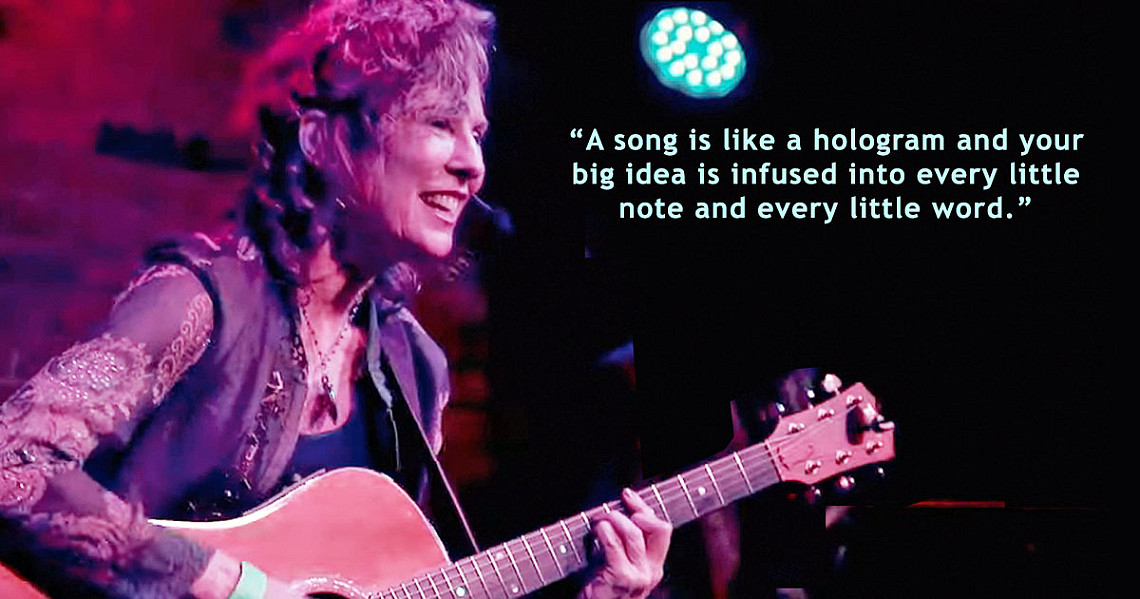
People have so little attention span. I think that's always been true but it's more true now, so you have to grab them and you have to bare some aspect of your soul within literally the first 10 seconds. You have to grab people because they have at their fingertips the ability to move away from whatever you're playing for them and go to something they like more. So what can you lay on the line that is of value?A song is like a hologram and your big idea is infused into every little note and every little word. The whole is contained in the smallest bit of a song. It is a unified whole. That means that what you're leading up to and what you start with are umbilically connected and they are all one piece.
I picked out a few songs:
You walked into the party like you were walking onto a yacht
Your hat strategically dipped below one eye
Your scarf it was apricot
You immediately know that's "You're So Vain," but also it establishes everything about what she's saying about the character. You know she's saying, "you're so vain," because you walked into the party like you were walking onto a yacht. That is just a killer first line.
The song "Big Yellow Taxi" by Joni Mitchell. The first line is:
They paved paradise and put up a parking lot
That is an environmental message right there. You don't realize what you have until it's gone. That's the point of the song: It happens with a man, it happens with your environment, it happens with the birds and the bees that we're killing. It's an environmentally conscious song that's in such a delicious package that you don't realize you're being preached at.
An example that's genius is:
Once upon a time you dressed so fine
Threw the bums a dime in your prime
Didn't you?
I love that song. I worship the ground it walks on because he uses so many internal rhymes:
Once upon a time dress so fine
Threw the bums a dime in your prime
People call and say beware doll
You're bound to fall
You thought they were all kidding you
It's just the genius way it's put together. It establishes the character of this person that he's describing in such a little nutshell.
Hitting The Mind, Heart, And Body
Songwriting gives us so much freedom to throw our spaghetti against the wall and see what sticks. I don't think there are rules as much as it's about, is it working or is it not? It is it hitting someone in the heart and in the mind and in the body?I love songs that are hitting all three simultaneously, so they hit your heart emotionally, they hit your senses, and also your intellect if they're stimulating that way. I never understood certain songs by, for example, Steely Dan. I don't know what the hell they're talking about, but I love those songs. Half the time I'm completely mystified as to what they're talking about. Or Stop Making Sense by Talking Heads. Some of those lyrics, I cannot parse them but it doesn't matter.
I'm more literal than that. I wish I was more imagistic or abstract, but it's just not the way I usually write. But that's OK. We each have our own strengths and we bring something to the table, and that's why it's also good to mix it up with people who are not ourselves. I love the process of collaborating and I also enjoy the process of writing alone. These days sometimes a song is written by eight people, each of whom bring something to the table that the others don't have.
Going To College At Stanford
When I was in high school I saw a slideshow about Stanford and it had palm trees. I was living in a very cold, gray environment and I looked at those palm trees and I was like, "I want to go there." I got into five schools and I went to the one with the palm trees.Well, it took me a little bit to figure out that my strengths were not necessarily those of the school. I was much more artsy fartsy. I wanted to do singing and songwriting and playing guitar and art, so I ended up as a creative writing major, which actually has served me really well.
I have no complaints about it. It's a beautiful place. I also took some really amazing other types of classes: oceanography and Shakespeare. I took some engineering. But in the end, I might have been better off at a school that had more creative leanings.
I wanted to be a painter originally, and draw. I was good at painting and drawing, and I thought that's what I would pursue, but then music is much more fun and much more interactive.
Song Critiques
I've led a lot of workshops and I've been teaching songwriting since 1991. I had just had some hits and they said, "Can you lead a class?" And I was like, "OK."The way one-on-one Creative Songwriter works is that people send me three songs and then I give them super-extra-detailed feedback on those songs, both lyrics and music. I put the lyrics down one side of the page and I put my feedback down the other side, and it's usually about six pages for three songs.
My mantra is "first do no harm," so I'm not ripping people to shreds. It's working specifically to be constructive and actionable. You can go in with a scalpel. I'm not going to say, "Hey, don't quit your day job." I think everyone's art deserves to be honored and therefore my purpose is to find the diamonds and shine a spotlight on those, then see how they can get the rest of the song up to that level.
I make it clear on the first page of the feedback that it's always the artist's prerogative what they want to do with their art, and the artist is always right, in this case. But my ears are attuned to what you'd call mass appeal or mainstreaming, and some people don't want that, they want to be more outside the mainstream, they want to play their own game, and that's fine. As an artist, I don't always want people telling me what works and what doesn't work. I might want to find out by doing a gig.
I have been doing gigs at The Bitter End, which is like a home base for me, since 1984. When you play a gig and you do eight songs, there are going to be songs that people go, "Oh my God, that one made me cry, I can't get that one out of my head." Then there are a few songs nobody mentions ever again, and you're like, "OK, I'm going to pull that one out of this set because nobody even noticed that I played it." That's your spaghetti-against-the-wall thing, what sticks and what doesn't stick. I'm trying to save people that trouble of having to have an entire gig. I can give them that fast feedback.
Songwriters need a structure for support. If you're going to quit drinking, you need to go to AA. If you're going to be a professional songwriter, you need to have mentors, you need to have relationships, you need to have colleagues and collaborators who will will give you the truth.
November 7, 2022
Subscribe to the Songfacts podcast, part of the Pantheon Network
Further Reading:
Interview with Taylor Dayne
Interview with Linda Perry
Interview with Rick Astley
Photos: Arlene Wipfler (1) Cyrille Petta (2), Suzanne Remy (3)
Footnotes:
- 1] Before Voice Notes, songwriters would often call their own answering machines so they wouldn't forget it when a melody or lyric idea struck. (back)
- 2] Peiken's credits include "What A Girl Wants" by Christina Aguilera and "Bitch" by Meredith Brooks. We spoke with her in 2020. (back)
- 3] Other hits sung by Martha Wash but lip-synched by other women in the videos include "Strike It Up" by Black Box and "You're My One And Only" by Seduction. (back)
More Songfacts Podcast