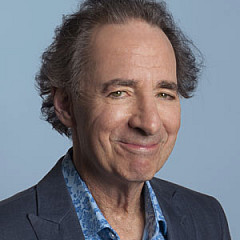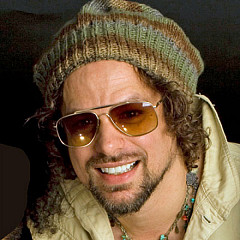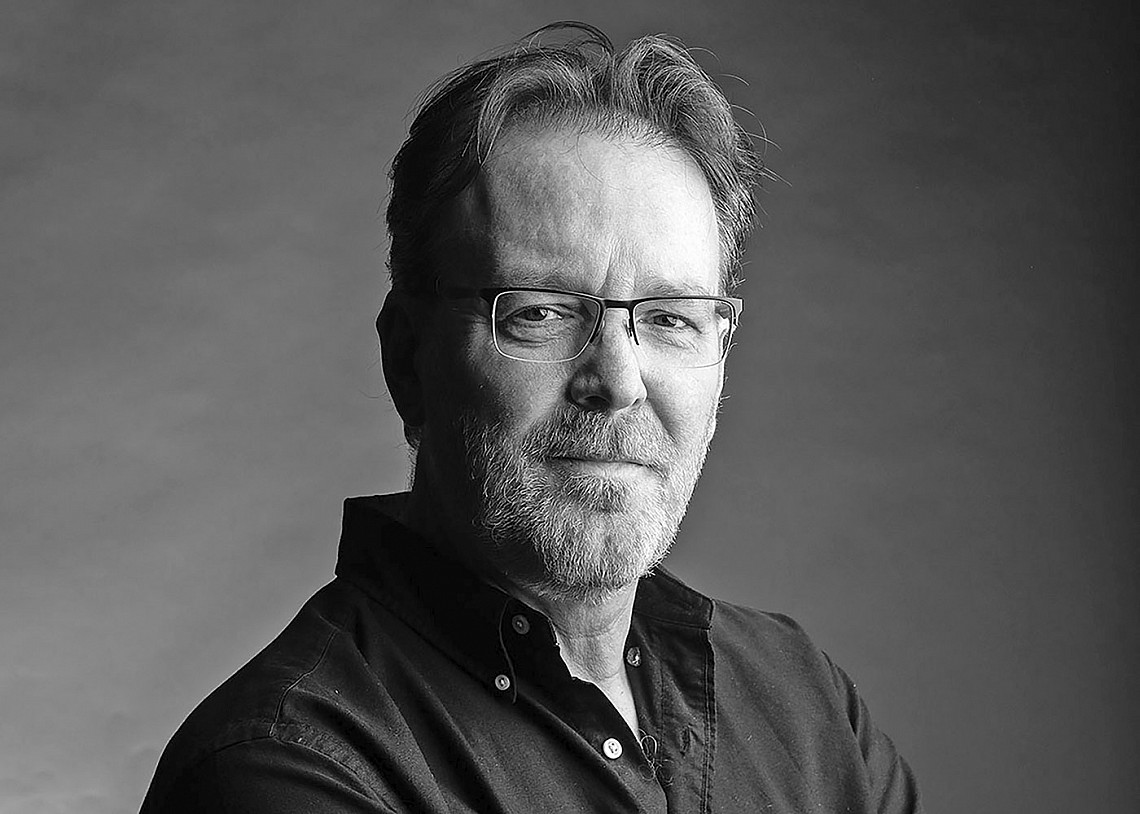
"Amazed" was a #1 hit for Lonestar in 2000, but it's also Chris Lindsey's love story. "That's the exact feeling I had for her," he says of his wife Aimee, his co-writer on the track.
Ever since "Amazed," Lindsey has been a top songwriter in Nashville, with hits for Kenny Chesney, Sara Evans, Keith Urban and many others. He's also host of the Pitch List podcast, now in its fourth season. It's a great listen if you're into songwriting, country music, or just like hearing fascinating stories from an industry insider.
Here, he talks about the ins and outs of songwriting in Nashville and shares a handful of song stories, including how an argument with Aimee gave him some lyrics for the Civil Wars song "Poison & Wine," and how he got away with writing a Tim McGraw song called "Drugs Or Jesus."
Ever since "Amazed," Lindsey has been a top songwriter in Nashville, with hits for Kenny Chesney, Sara Evans, Keith Urban and many others. He's also host of the Pitch List podcast, now in its fourth season. It's a great listen if you're into songwriting, country music, or just like hearing fascinating stories from an industry insider.
Here, he talks about the ins and outs of songwriting in Nashville and shares a handful of song stories, including how an argument with Aimee gave him some lyrics for the Civil Wars song "Poison & Wine," and how he got away with writing a Tim McGraw song called "Drugs Or Jesus."
"Amazed"
I've lived in Nashville for 25 years and I have been very fortunate to be a part of a lot of great stuff. My wife Aimee 1 and I were banging around, trying to get ourselves known and "make it" as songwriters. We couldn't get any of the people we wanted to work with to write with us because we were brand new, so we wrote together. One night, Aimee booked a demo session. She was pretty famous for this: two days from then, she needed five songs, and she's got her publisher on the hook for about $5000 worth of musicians. She did this often and she got a lot of hits this way - no one else could pull this off but her. But she called me up about 8 o'clock at night and said, "I need some songs!"We began as friends. I was married, she had two or three boyfriends. We were really close, then at some point right around "Amazed," it all changed. When I hear that song on the radio, that's the exact feeling I had for her. That's how I felt. That song bottled a unique emotion to me, and I can feel that still. I think what people feel is that.
If You Hate Nashville, Just Go Home
I had been in several bands that had small record deals. I was definitely on the performer side in my 20s, but I had always written songs. I met a guy from Nashville and got offered a publishing deal while out on tour with one of those bands. I quickly realized I liked the writer's style: You get to do all the fun stuff, but then you get to stay at home.Some people really need to perform and need to be on stage. I'm not one of those people. As a performer, it never really caught fire and after a few years of writing in Nashville and gaining some success, I felt this is right and this is what I'm meant to do.
I never wrote country music. I came to Nashville and wrote power pop and organic rock, and they put guitars on it. Although I am a country songwriter, I was never coming from that point of view. I often advise younger writers, stretch it out man, make it great. Make it unattainable to a country artist and they'll want it. They'll want to figure out how to get it into the market. Don't give them something that sounds the same as everything else.
A young male country artist is not driving around listening to country radio. He's probably got rap on or whatever you're listening to. Believe it or not, most people are fans of all genres. If you have a million salmon swimming upstream, there's only one way to notice an individual salmon: if it swims the other way.
If you move to Nashville and it doesn't work out, your hometown will still be there. You can just go back. Just bring the things you need to Nashville, get an apartment and try it out for a couple of years. If you hate it or it doesn't work out, just go home.
But if you want to do country music, you do need to come to Nashville. It is daunting, but if you want to win a Super Bowl you've got to play for a pro team.
Pitch List Podcast
I wanted to make a podcast that I would have wanted to listen to when I first moved out to Nashville. I wanted people to listen and think, He's putting the people on who are doing what I want to do, and giving information on how this works.Being able to interview the likes of Bill Anderson is a beautiful, unintended consequence. Bill has a career of hits spanning over five decades. He started out in college having a big country hit ["City Lights" for Ray Price], then he recorded his own pop crossover song ["Still"]. It's almost unheard of for a country singer to crossover into the pop charts. That's just one phase of his career. Then he did TV shows and won Grammys. It's crazy.
My favorite story I heard was about him and Roger Miller and how they wrote "When Two Worlds Collide" on an 18-hour drive on their way to a gig. At that time there's no iPhones or recording devices in cars, so they sang it back and forth to each other for the whole ride, then they went to a radio station to record it. They knew it was a great song and they were scared they were going to lose it. Nowadays, we just have our iPhones and we can record it right there and then.
There's a writer's tip there: If you wake up with a melody in your head, record it as soon as you wake up on your phone, then go back to sleep.
"Poison & Wine" by The Civil Wars
Inhabiting a land between country and folk were The Civil Wars, the duo of Joy Williams and John Paul White. They came on the scene in 2009 with an EP called Poison & Wine, with a title track they wrote with Lindsey. The song was used in a key scene in Grey's Anatomy, and Taylor Swift lent her support, tweeting, "It's exquisite."
The Civil Wars released two albums, won a raft of awards, then broke up in 2014,2 with Williams and White going solo. "Poison & Wine" is one of the few songs they worked on with an outside writer.
The Civil Wars released two albums, won a raft of awards, then broke up in 2014,2 with Williams and White going solo. "Poison & Wine" is one of the few songs they worked on with an outside writer.
But I had written for years with John Paul White. I started as a fan and tracked him down, then we became friends and we would write three or four times a year. He lives down in Muscle Shoals, Alabama, and he drives up to Nashville. I had a date on the books with him and he called me the day before. He had met Joy at a writers' camp and they just clicked. He called to ask if it was OK and he brought her up.
I was going to write at EMI downtown with them, and I was running a little late. Well, Aimee and I are pretty famous for fighting, and we had about a two-day fight going on and it culminated right before I left. I took the title in based on that fight with Aimee before I left, and there are three or four lines in that song that came out of Aimee's mouth, directed at me. One of them was, "You think your dreams are the same as mine." She threw something at me and screamed that out in our driveway. There are two lines in that song she said verbatim that I took.
So I was completely roiled up. I went down there and threw this title out. I never picked up a guitar, which was unusual for me - 75 percent of the time I'm the music guy in the room, but with those two I had a lyric pad, threw out the title and just started slinging lyrics. It's the only song I've ever been on where I've written most of the lyric, not the music. They obviously had a lot of lyrics too, but it just came to me: "I don't love you but I always will." It's another me and Aimee thing. They brought their worlds to it too, but from my side, it was like "Amazed" after the honeymoon. A more mature love song.
John Paul White is just a monster talent and everybody in town knew it, but he never quite put it all together. Somehow Joy came in and added something to him that just made it all work. She had been making records on her own in the Christian world, but when they came together it was magic.
There's a line in there, "Your hands can heal, your hands can bruise." I remember hearing their first recording of it and wondering if we should have changed that, but it's never been an issue. It's a glance at violence and I don't know how people interpret that. I co-wrote a Tim McGraw song called "Drugs Or Jesus," and that one did get some letters from Christian people. What's the Karl Marx thing? "Religion is the opiate of the masses"? It's exploring that in a country song. I didn't think we'd get away with that and we did. I did another one that Tim recorded called "Good Girls," which is a murder-suicide song, and I didn't think we'd get away with that one and we did too.
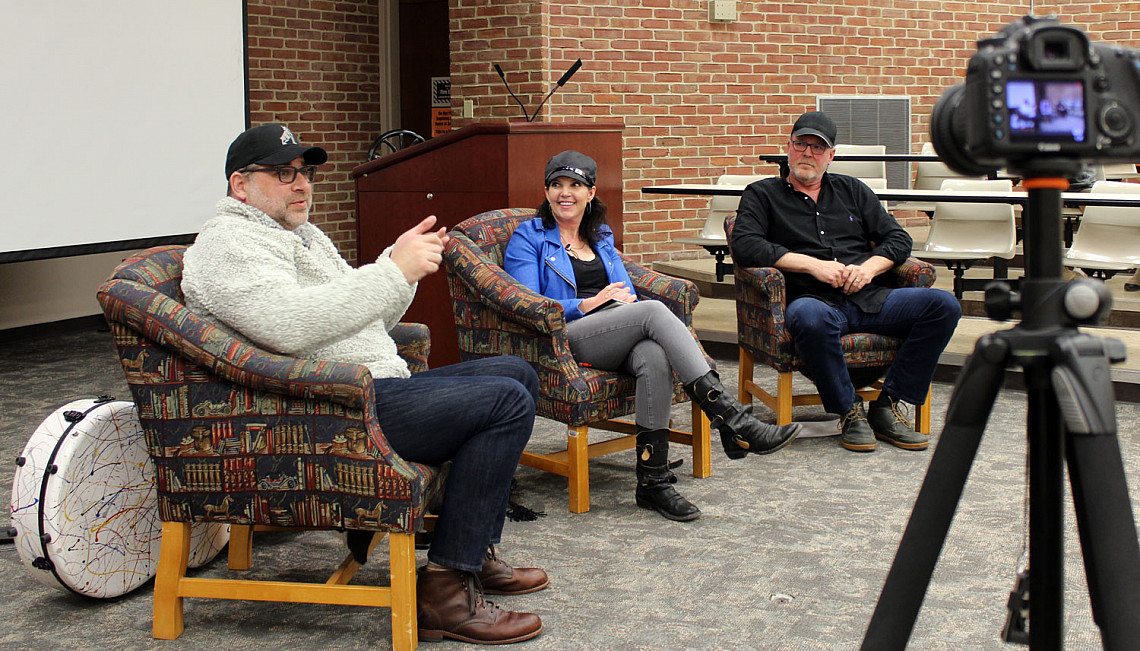 Chris with Aimee Mayo and Barry Dean at the Curb College of Entertainment & Music Business
Write Them And Walk Away
There are many times where I've sent out a song and it comes back with huge changes that I have not necessarily liked. I'm better at having that happen now. I'll count to 10 and listen again, and then give it another try and consider that maybe it's better. Then there's been times where I've heard them and thought, Wow, they've knocked it out of the park. Every now and then though there's one where you're just like, Come on man, we handed it to you.As far as how an artist records the song, you have no control. The only control you have over the song is at the beginning of a song's life when you grant the artist the right to record it. That being said, if there's multiple producers and co-writers, it's quite difficult to keep an artist from a song, although I don't know why you would want to do that.
Part of the Nashville informal education system is that if you want to become a professional songwriter, you cannot become attached to your songs. If you're the artist as well, then that's a different thing and you better protect what you do, but as a commercial songwriter writing for other people, that's not how it works. They could want to change the lyrics, they could want to change it all. What they teach you here is that you have to walk away. Songs aren't your kids. As a professional writer you're going to write 60 or 70 songs a year and you can't be attached to them all.
Often when people first move here they are scared that somebody is going to steal their song. They'll gut it for all of its essential parts and drop it like a dead mouse. The part that you did that was unique or clever they can rip out. You have to get good and not worry about that. People also get precious with their material, and you can't do that. You have to move on and you have to write. You have to write them and walk away.
Podcast Highlights
Some of my favorite podcast guests have to be Bill Anderson, who was just amazing, then at the end of last season we had a guy I wasn't familiar with named Luke Dick who I just loved.We had Ashley Gorley a couple of weeks ago, who's like the 500-pound gorilla Nashville writer for the past several years, putting up numbers that I don't know if any other country songwriter will ever beat. He's had something like 50 number ones and he looks like he's only 35. Just a phenom of commercial country music. He's more successful than I've ever been, and I had a lot of questions. He can really help the listeners.
The bigger names you get on your podcast, the more downloads you get. For our podcast, a lot of songwriters are fairly anonymous, so I need to find a balance between big names and the purpose of the podcast. If I could get Taylor Swift on there for example, that would be great. A big name to get a lot of eyeballs, but also a badass songwriter.
March 3, 2021
Subscribe to the Songfacts podcast, part of the Pantheon Network
Check out the Pitch List Podcast www.pitchlistpodcast.com/
Some Songfacts interviews you might enjoy:
Richie McDonald of Lonestar
Barry Dean ("Pontoon," "Diamond Rings And Old Barstools")
Catt Gravitt
Footnotes:
- 1] Chris is married to the ruthlessly talented Aimee Mayo, a fellow songwriter with a long list of hits, including Tim McGraw's "My Best Friend" and Kenny Chesney's "Who You'd Be Today." (back)
- 2] The Civil Wars lived up to their name. They performed the title track to their debut album, Barton Hollow, at the Grammy Awards in 2012 before introducing Taylor Swift. Later that year, they had a falling out and abruptly stopped touring. The next year at the Grammys, they were award recipients for their Swift collaboration "Safe And Sound," used on The Hunger Games soundtrack. Williams and White didn't acknowledge each other and did some early social distancing at the ceremony. They released their second album later that year but White wouldn't promote it. The track "From This Valley" won yet another Grammy, and in 2014 White accepted the award without mentioning Williams. They made their breakup official in a statement that August. (back)
More Songfacts Podcast