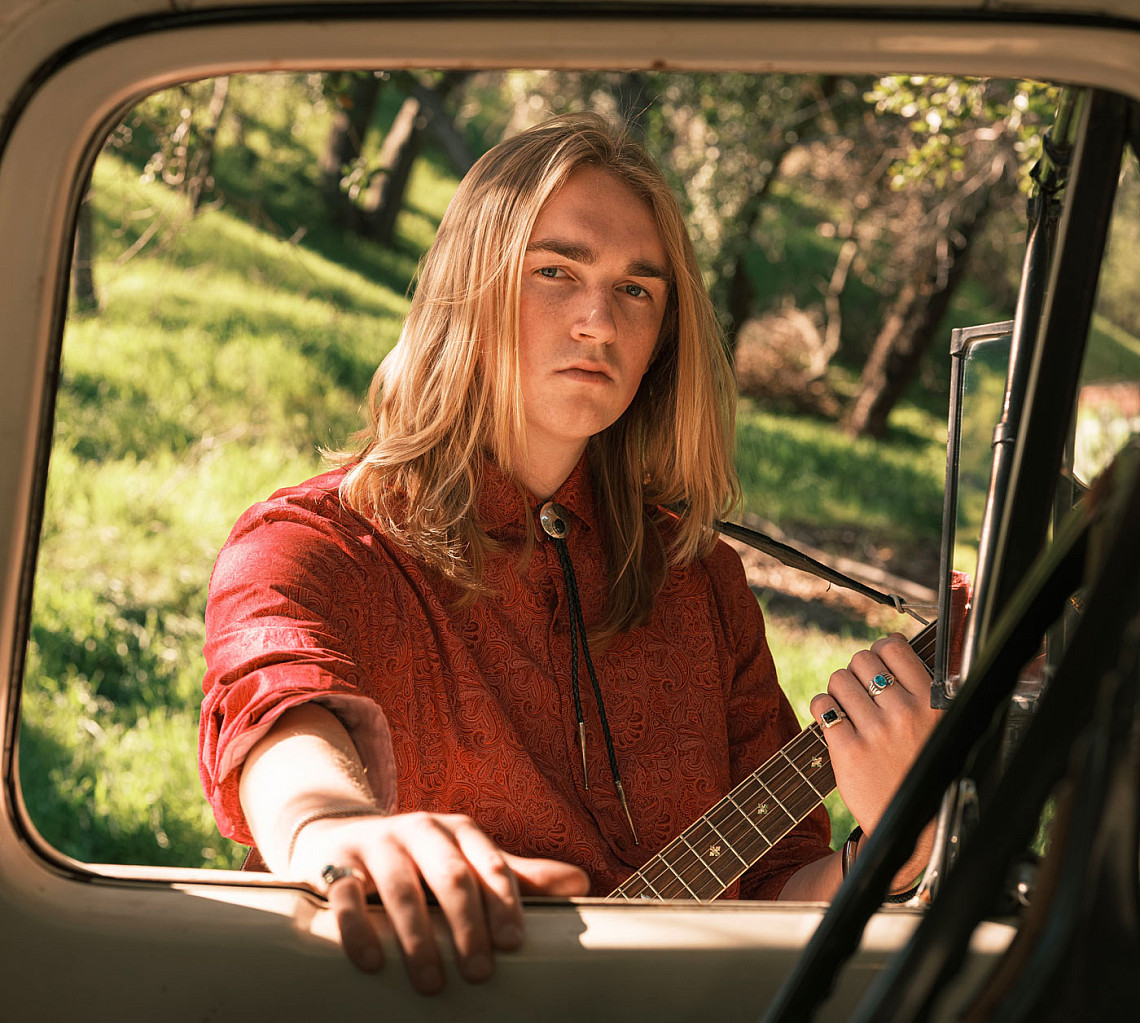
Cole Gallagher has a grizzled and worldly voice that belies his age - he's just 21. He's also surprisingly well-developed as a songwriter, in part because of the company he keeps in the studio: three members of Jason Isbell's backing band, The 400 Unit - Jimbo Hart (bass), Sadler Vaden (guitar) and Chad Gamble (drums) - played on Gallagher's EP The Confluence, which was released on August 4, 2023.
In this discussion, Gallagher explains what makes him tick musically and what he learned from Isbell and The 400 Unit.
In this discussion, Gallagher explains what makes him tick musically and what he learned from Isbell and The 400 Unit.
Recording With Members Of The 400 Unit
I'm a huge Isbell fan, but I did not know who he or his band was before I was recording with them.What happened was, I was doing a record and I needed to find some players for it, and the producer knew this guy Jon Eldridge, who grew up with Sadler Vaden, and Jon was down to play keys on the record. Jon said, "OK, we're going to fly you to Nashville and we're going to cut the overdubs in Sputnik Sound."
I was just a kid. I knew who Sturgill Simpson was and some other guys in that vein of music like Nathaniel Rateliff, and actually a lot of the inspiration of the sound behind the EP - at least the parts that I was able to control within the production that's in there - was to that end, inspired by a lot of Nathaniel's stuff and some of Sturgill's stuff as well. I just love the big sounds, soulful horns and bits in some of the tracks. But it was a friend of a friend's friend who hooked me up with Sadler. Six months after we finished the first record, I got a call and Vance [producer Vance Powell] wanted to produce the one that we're putting out now.
Early Country Influence
I knew of Pink Floyd, I knew of the CCR, big names in rock and roll. Any country bone I had came from like Johnny Cash, and that was it. That was my understanding of country music beyond like CCR - a bunch of dudes from, Lodi, California. And Lynyrd Skynyrd, The Rolling Stones."Stumbling In The Dark"
I wrote it right in the middle of the quarantine between recording the first record and the second one. I was writing really prolifically during that time because there was nothing else to do.For me, the music has to come before the lyrics, so sometimes it's an uphill battle. As I wrote more and more during the quarantine, I got better at taking the idea I hear in my head and putting it into notes that I could understand and finding the sounds I'm looking for. But what was really kind of interesting about this song is, I looked back at the history and Google Docs of the length of time in which it took me to write it, and I started it on June 6, 2020, and then I came back to it on the 7th, back to it on the 9th, back to it on the 11th, the 16th, all the way up to the 28th. So it took me a full month to fully complete that song.
I talked to Jason Isbell about this. I told him, "I start these songs and I just never come back to them and never finish them. Do you ever do that?" And he says, "Nope. Every time I start a song, I finish it. Right there and then. Make it a point to do that."
My brain just doesn't work that way. Sometimes when I'm really in the pocket of writing I can just get it done and it bleeds out from me, but I have to really feel it. If I get distracted at all, it's gone and I have to wait until that feeling that I had about that particular song comes back in order to continue writing lyrics. The music, I can figure out what logically goes next, but until the feeling comes back, the lyrics are tough.
What inspired the song? It's hard to tell. I was thinking about this the other day because I genuinely couldn't remember what it was about. Normally I don't talk too much about the specifics behind what the lyrics mean because I think one of the most important parts of music is the fact that a listener can hear something and they attach their own meaning. Once I put the song out, the song is no longer mine. It's for everybody who listens to it.
Cole's Songwriting Process
I don't know if you use Google Docs at all, but when you look at the history of the document you can see everything that was added in the order it was added, but only by day. So it was cool to me to see the song getting built on the page until it was completely done.It started out with a couple of lines and there were chords over the top of them like you'd see on an Ultimate Guitar tab, because that's really all I knew how to write. It was cool to see that, but then I go back to "Lines In The Sky" and I wrote that at 12 o'clock at night and it was just a completely different story. I couldn't tell you the date right now, but it was done by the end of the night. The song was originally seven-minutes long. Somewhere I have that demo, but it was 12 o'clock at night to four in the morning, then I got pooped and went to sleep.
"Lines In The Sky"
That song has a steady urgency that I think subconsciously was inspired by a Charlie Watts kind of drumming. You listen to any Stones song and the whole way through, it's very consistent drums. He's not doing a bunch of crazy fills.There's a lot of palm muting on that song, and it just kind of chugs along. But it was really when I took that into the studio that it came to life. Jimbo Hart really took the lead. He and Chad helped me take the seven-minute song and reduce it down to four.
It was a huge learning curve for me recording with them live versus the first time I recorded when they sent in their tracks remotely and I got to cherry-pick what I wanted to use. Jimbo sent a couple of different versions of bass lines and whatnot, and Sadler just sent a ton of guitar stuff.
Sadler Vaden
I saw him play the other day at the Greek Theater with Jason, and the dude just blew my mind. I've seen Jason four times now - three with his band and one was in Muscle Shoals at this Iguana party reunion. It was like a jam and I got to play with him. Sadler was taking a ton of leads and I felt like Jason was almost holding back a bit. They have a new member in their band [Will Johnson] and he plays different percussion instruments and guitar as well, so it opened up the floor for Sadler to not have to just play rhythm for Jason. The guy is super talented and it was just a great show. Jason picked up the acoustic a lot more than he normally does but I think that that has to do with their new record.Jason Isbell
I met him twice. First time was at Borderland, which was a festival in New York, and I got to play on the main stage and open up the first day of the festival, which was just an incredible experience. The Revivalists headlined the night I played, and then Barry [Billings, guitar] and I and the rest of the band, we just went to the next day of the festival and I got to go chat with him.I did talk to him a little bit about songwriting, but I felt like afterwards I had picked his brain about all the wrong things. I was talking about personal life, and to that end I did enjoy speaking with him, but I felt like I had missed the opportunity to really dig into the work he's put in.
It's tough, especially now with social media, trying to figure out your direction and how to build a career that could sustain a roof over your head and put food on your plate. And music is like throwing darts in the dark. At least I'm lucky enough to have a really great support system. It's a great team and a lot of family and friends support, but there's always the fear. You still have to book your own first tour. You still have to go hand out flyers on the street. That groundwork is still very important if you are trying to really connect with fans on an individual level.
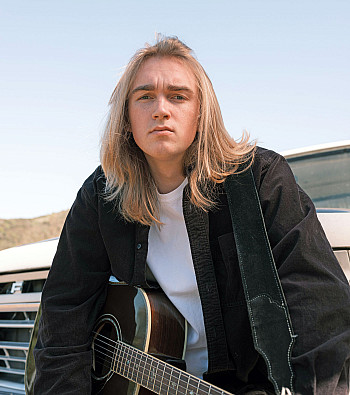
What Cole Learned Making The Confluence
If you are working with guys that are that knowledgeable, especially if you're a rookie, like I was at the time, detach yourself from what you think the song should sound like and give space for the song to grow around the bones you've set in place yourself, because the magic happens in the creation. You don't want to be trying to recreate something.So, honestly, don't even go down that avenue unless you're planning on producing the whole thing yourself. If you find yourself in as fortunate of a situation as I was in, practice as much as possible before going in. I felt like I had wasted a lot of time in the studio because I wasn't quite prepared on a couple of tracks. But just take a breath and enjoy the experience as much as possible because it's a really beautiful thing to create music.
Art is completely subjective. If you hear mistakes and you're singing and whatnot, don't make a thing of it to go back until you're about to finalize everything. And then, go and correct the things you want, but take your live takes as they come. You only get one really, really great take, and sometimes it's hard to tell what that is.
Sadler and those guys have made so much music in their lives. I was like a fish out of water in the studio. I just had to go with the flow because you can't fight the ocean. I enjoyed the feeling of being in that room and watching music get created almost as much as I enjoyed playing it live. There's this high that comes with both. One is like watching something being born, and the other one is like bringing joy to people - they get distracted from whatever problems they have in their lives for just one song. You are helping somebody escape for just a minute.
Discovering His Voice
I got kicked out of my first couple of bands because I basically lied my way into them pretending I could play guitar and pretending I knew how to sing. I was just horrible at both. So I was like, all right, maybe I should actually put some work in instead of pulling a Sex Pistols. So I spent a lot of time working really hard with my guitar instructor, John Klof, this guy named Michael Campagna from South Pasadena Music Center and Conservatory, and then my vocal instructor. I've had a lot of different mentors.I really started to round the corner and realize maybe I could do this. Maybe I could give it a shot.
I've had a really hard time with a lot of folks in my life, but I have a lot of faith and goodwill toward humanity, and sometimes it can be tough trying to be an artist and express yourself. I've never got any super mean or horrible feedback, which has been nice, but I definitely have had my bad days. Even now I still feel like a fish out of water. Before all this, I wanted to be a paleontologist, so my goals have shifted.
I heard Rick Rubin talk about this a little bit: You have to put the listener last, not because you want to, but because you have to. You have to like the song yourself before you can expect somebody else to like it. It's just being mindful of what you're saying so you're being true to yourself - that's really important. The only message I want to send with my music is one that I've received from the music I love, which is that you're not alone. That's all that matters to me is spreading that message as far and wide as I can.
August 16, 2023
Keep up with Cole Gallagher on Instagram
Subscribe to the Songfacts podcast, part of the Pantheon Network
Jason Isbell Songfacts
More Songfacts Podcast