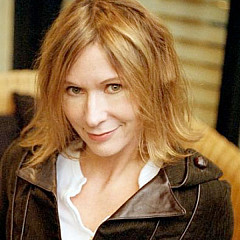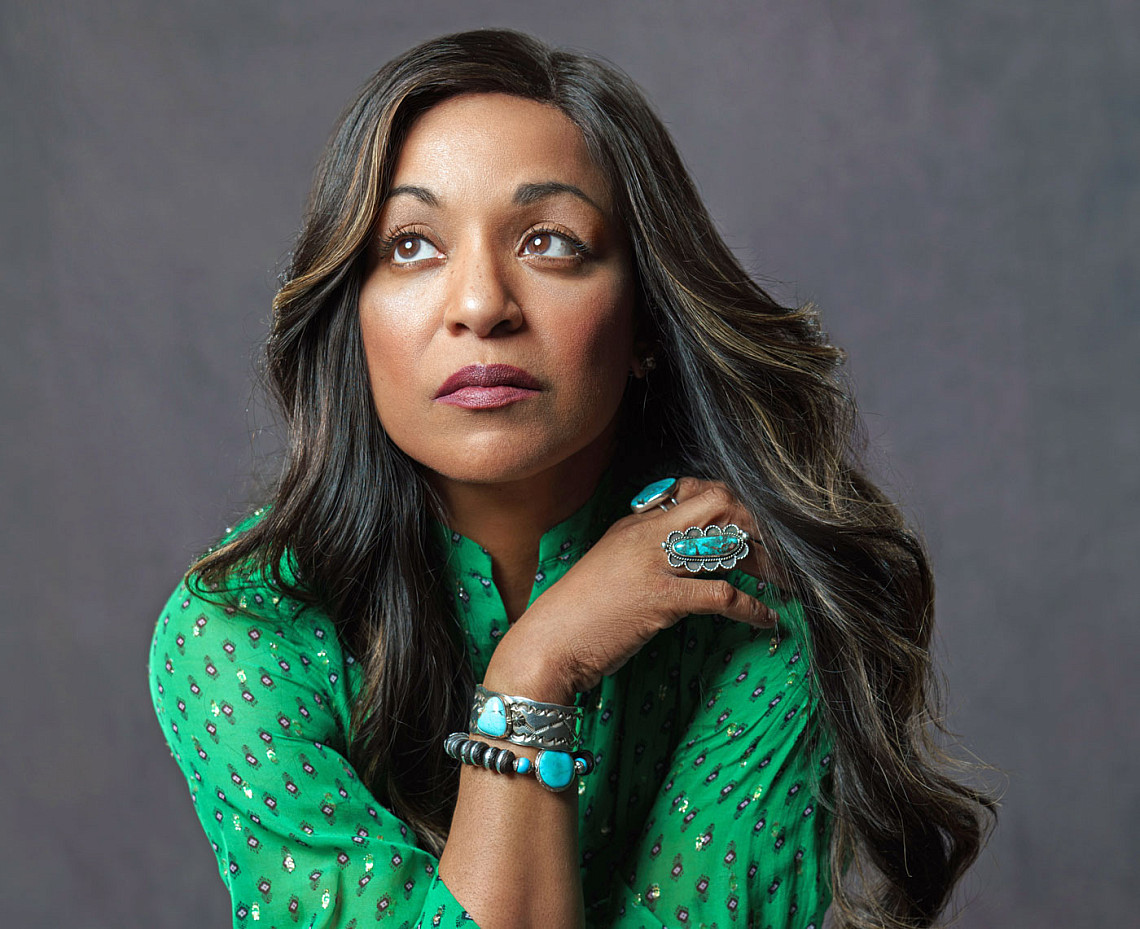
Singer-songwriter Danielia Cotton's latest EP, Charley's Pride: A Tribute to Black Country Music, is a powerful celebration of Charley Pride's legacy and the often-overlooked contributions of Black artists in country music. Released on August 29, 2024, this soul-stirring collection features Cotton's unique interpretations of Pride's classics alongside original material.
Hailing from the small town of Hopewell, New Jersey, Cotton's musical journey is deeply rooted in her family's rich musical heritage - her mother and aunts were professional vocalists, and her grandfather was a huge Charley's Pride fan, which became a touchstone for this project.
Cotton's blend of rock, blues, country, and soul, reflects her experiences as a multiracial artist in predominantly white spaces. Her powerful voice, described by The New York Times as "soulful enough to fill a revival tent," has been winning over audiences. Join us as we dive into Danielia Cotton's creative process, the stories behind her songs, and her journey as an artist who continues to break barriers and redefine genres.
Hailing from the small town of Hopewell, New Jersey, Cotton's musical journey is deeply rooted in her family's rich musical heritage - her mother and aunts were professional vocalists, and her grandfather was a huge Charley's Pride fan, which became a touchstone for this project.
Cotton's blend of rock, blues, country, and soul, reflects her experiences as a multiracial artist in predominantly white spaces. Her powerful voice, described by The New York Times as "soulful enough to fill a revival tent," has been winning over audiences. Join us as we dive into Danielia Cotton's creative process, the stories behind her songs, and her journey as an artist who continues to break barriers and redefine genres.
Growing Up Biracial in a Small Town
I grew up in New Jersey - in what I call a small white town. We were the only Black family. My uncle wears a cowboy hat, and we're so country, because for Blacks that wasn't the kind of genre you'd find us in. My grandfather moved my mom's family there in the 1940s - my mom was born in 1942.I didn't really know much about country music until I decided to do this project. When interviewing my grandmother - who's 103 years old and on the cover - she said, "It was my album. I had it under the bed and he took it from me." When he got into that genre, it was during the civil rights movement, going into a genre that you would not expect.
He did it without thought, just like my grandfather decided to buy 10 acres when he first got there and raised my mom and her family. I'm always like, really? Here? But they did. There were a lot of similarities in the type of men they were. My grandfather had a regal quality that isn't about money. He would always tip his hat, loved a pretty woman, and stayed with my grandmother his entire life.
He did everything with grace, in a respectful manner, and was quiet. He won the respect of the entire town. He wasn't light-skinned - I'm mixed, biracial, because my mom and dad are different - but my grandfather was an obvious Black man like Charley Pride. They chose to make bold moves in those communities without thinking twice, which is probably why they were able to assimilate the way they did.
I thought of buying the "Welcome to Hopewell" sign and donating it for my family, because we really made a name for ourselves there. But I was never raised to be defined by color, which is a big issue. When you're biracial, you ride a fine line where you're not really accepted among blacks or whites. That's always been my path - trying to figure out who I am and where I fit. But my family never told me to be a color. They told me to be true to who I am.
The song "Bring Out the Country in Me"
Growing up, I didn't always think of Hopewell, New Jersey as country, but it kind of is. I grew up in what they call the Sourland Mountains, and I was a little country. When I got to New York and met my other half - an Upper East Side Jewish kid who went to Princeton - he walked down the street completely different. I'd say, "Hey, hi," and he'd respond, "No, no, people don't say hi in New York." I'd want to check on homeless people, but it took me years to adjust. Now I hate that I've become a "numb-er" - I just walk by. But there are moments when I catch myself and go back to being me.The city, it's so big, and everybody was the biggest fish in their town. You might have been the pretty girl in your town, then you walk down the street here and there's some six-foot model. But then you realize, like I did in college, the most popular girl isn't always the prettiest - she has the it-factor. That's who you are, what you emanate. Every girl wants to be you; every guy wants to be with you. That's all just you. To me, that's always somebody who's comfortable in their own skin.
New York made me more me when I went back to being a country girl. The big city lights just made me more myself. When I started to just be me, then I could become a real New Yorker. I feel more at home here now because it isn't about giving up who I am. It was more about bringing that here and adding something to this city.
During 9/11, it felt like being in a small country town. Everybody was so nice. I thought, do we need something like COVID or 9/11 for that kind of community? But it just shows that it's here.
I bring my small-town ways, and they said, "Write something about it." As a singer, I try to give the audience a five-minute rest from whatever's on their mind. Like when you meditate for just five minutes in the morning - it can be so impactful. I try to give them something deep to go into where they forget themselves, like when you read a book.
So for this song, I thought, my first country thing should be about how I was going to be different. You don't want to blend, especially with AI and everything - anything that's going to make you stick out is you being completely true to yourself. I guess the big city brought out the country in me. And I can still be that and live here. It's a happy place.
Covering "Kiss an Angel Good Morning"
From a production level, when you took out everything else and you just heard the drums ...[skatting] I was like, "Honky Tonk Women." And Marc Copely, who I worked with, who is great - he was like my first guitar player when I came out and toured, and just an extraordinary player on all levels - I was like, "Just be Keith. What would Keith [Richards] do here? What would that be like?" And that's how we started.When I was singing it, everybody was like, "It's a little sexy." It's like how sometimes women have to be nice during the day, but you've got to bring it on when you shut the door.
So I went at it like that. And then he was like, start it out like Tina [Turner], like, "Hey ladies... you gotta love him like the dickens when he gets back home and let him know you was thinking about him." In relationships, it's constantly being on our toes trying to keep the other person interested... monogamy does not come natural to anyone.
You really have to make an investment in a person, and like my mother always used to say, "Like is harder than love, and like is what keeps you the whole time." So it's like being attracted to someone, and them being attracted to you. A little spice here and there. So that's how I sang that. Like, girl, you know, the only secret to this is you gotta work at it.
Covering Other Artists
Cotton has covered Bruce Springsteen's "Thunder Road," Tina Turner's "We Don't Need Another Hero," and Prince's "Purple Rain."And Tina Turner - she's Tina Turner. Don't be stupid enough to try to be Tina Turner, you got to take that and put it your way. I'm not even going to go there. When I sang it, it just went to this other place of where it wanted to be in that moment. I don't fight that, which is probably why I was able to do this and get out of my genre. When there's a song in front of you, let it be what it wants to be. For me, that one had this more somber tone because people were still early in mourning her, and that kind of artistry leaving us, and scared that we're not going to have that level again. We have to allow the kind of environment, musically, and in the world, for that kind of artist to come up and be.
Even when I did "Purple Rain," people were like, "Oh, I wouldn't go for that girl." And I was like, "I'm going to go." I listened to it - that song to me is, "I'm sorry. Never meant to cause you any pain." And to me, that was the saddest sorry I've ever heard. Even in the movie, at the end, he is like, "I'm sorry." And I found my way in there. You just have to find your way to put yourself in that story. We're all similar, so every story you can find a way in, if you're open to that. That's how I would do all of the songs.
The Song "Save Me"
At that point in my life, I was still struggling with a lot of things. I'm the first one to say you need a good therapist, just like you need a physical every year. There's drama and trauma everywhere. When you're consistent with therapy, it helps you move through and put things behind you. At the end of the day, we're raised by two people who didn't get a how-to book on how to raise kids, so they're going to mess up. It's not because they want to, and they're going to mess us up a little bit. Then we become adults and we've got to fix it, love them, and understand that they didn't know what they were doing either."Save Me" was about those parts in my life where even when I hit a certain age and thought I had it figured out, I didn't. There's always the next decade and you're like, seriously? Can I go back to 10 and start over because now I know how to do it? Sometimes I feel like if I get lost in my thoughts, I'll go crazy and you wish that people could see inside, and just save you from yourself. But balancing the ego is really our life's thing. Whether your self-esteem is low or high, it's about how you are in the world. I always tell people, it's like a seesaw - we always like it either up or down. As an artist, I love all the wickedy-wack - that little balance place. We're like, I don't want to be here, it's boring, but that's a good place.
At that point, I realized that was a good place, but I didn't know how to get out of the crazy. I'm probably still attracted to the crazy 'cause it just seems more fun. But I think balance is really the end game and the way to find some 'peace of soul' so that you can leave here and hopefully elevate to whatever it is you believe in. I'm trying to not come back here 19 times and do this over again. I think I've always struggled with that, and with the salvation of my soul in a lot of songs, and forgiving myself. The hardest thing is that everybody else forgave you, whatever your higher power forgave you, but did you forgive yourself? That's kind of what that song is about - there's always a beating of the self sometimes.
The Song "Good Day"
That was during COVID. We were all inside, and I had met Jeff Cohen, a great lyricist and songwriter. We had come together to do another project I have - a musical. I said, "Hey, you want to try to write some stuff that I'll put on my album?" He agreed.We came together, and his father had passed, and my other half has mantle cell lymphoma, which there's no cure for - so we had a lot of heaviness around us. We thought, why write a sad song? Who wants to turn on the radio to that? It seemed like during COVID, radio stations and people were saying, don't even send me a sad song.
And then it came... it's going to be a good day... It's going to be a good day. We're going to get out of here. We're going to be able to walk out on the streets again, and it's going to be okay. I think we were more like we could stay here and go with what's being put out in the universe right now, or we can buck it and be like, no, come over here. It's good. Follow us. We're going to the good place. So that was really our own efforts to keep ourselves up.
Musical Influences
I'm lucky that I come from a musically diverse family. My mom's family is pretty musical and my two aunts, one was on the road with Southside Johnny, and the other was in and out of almost getting a big record deal. They're both extraordinary. One's sort of Phoebe Snow-ish - she can harmonize with anybody - and the other's a powerhouse.My brother and I had connected rooms, and he was a young Black male in a white town so he listened to what they listened to. I think for him and me - who are the oldest - rock sounded the way we felt. I wanted to have blonde hair and blue eyes. My look wasn't what I wanted, it didn't look like everybody else or what everybody else thought was pretty. And that music sounded like all my angst. I think the same for him.
But he was deeper than that because my mom was downstairs listening to Nancy Wilson and jazz, and Chaka Khan did this cool jazz album, but then she also had Jonathan Winters and Songs In The Key of Life and Phyllis Hyman, and then he's here with Todd Rundgren, Foreigner, Yes, ACDC... that whole thing going on. And then I would walk down the street to my aunt's house (because my grandfather had all that property and she lived down the street) and she was listening to Dan Fogelberg, and people were like, "Who's Dan Fogelberg?"
I had so much coming at me. And then they had an a capella group that I started to sing in when I was 12. And then at college, there was a jazz trumpet player who was a professor there - Bill Dixon - even though my major was theater I was still dipped in that music. His favorite album was a Johnny Hartman, John Coltrane album.
All of the albums, to me, the way I identified with them, was how they made me feel in my connection emotionally to each thing. And I didn't think about it because I wasn't always listening to one genre that I was supposed to be one type of listener or one type of artist. There were no rules, so I thought you could be eclectic in your taste and in your style.
Developing Her Own Style
I think along the way, people that had difficulty trying to place where I am or what the influences are, it's because I kind of pull it all in. And I think in the end, you are, as a person, a collection of everything that you've been affected by - the people, the environment. So we're eclectic by nature as people. We're just made up of all of our own experiences. So, I think music is very much the same and to try to put it all in one lane it's like an incense album, I call it.David Bowie said, "If you're creating something and you feel completely uncomfortable, and out of your skin, like your feet aren't touching the ground, that's when you got it." When you're not comfortable, this is happening. It's happening. Comfort lanes get boring. So that's my thought on that.
Life Experiences and Musical Evolution
I'm running my eighth marathon because I was a cancer survivor. Thyroid cancer. They were like, "Oh, you got the good cancer." I was like, "Is there any good cancer?"Life has thrown so much at me that a lot of it is just trying to cope with it. I think each person develops coping mechanisms differently. And I think with every kind of question you ask in some way, it always comes back to being the most true to who you are. And following that, following where that leads you, it can be really scary, but I think in all ways, in all aspects of your life, it's the most fruitful, enlightening, and an empowering path that you can take.
And it is scary. And at times feels odd. Because there is only one you, so you're the only one traveling that specific path. But I can't believe it took me this long in life to get it. I'd love to go back and know that from the beginning, but it doesn't matter. It matters that you get it sometime. And that you try to stay true to the course. Hopefully elevate to whatever the next level from this is.
Collaborations and Influences
In the beginning of my career I started off with Kevin Salem, who was just the right person at that right moment for me at the beginning of my career. He really helped me find who I was as an artist. But so many people along the way have impacted me. The impact they've had is that they've given you something. Like you walk away from one person and you take this thing or this nugget that they give you.In life, if you cannot be so steeped in you, and you can stop for a second and just listen and see the other person, there's always something to take from them that will add to you in the best way and elevate you. I think we all have something to offer to each other.
There were times in my life when I let the other people around me tell me artistically where they thought I should go. If anything, what has helped me was listening to them, hearing what they thought and realizing, no, I don't want to go there. And that, in and of itself, helped me find my own voice. And then having the courage to be like, no, I'm not going to go that way.
The mistake people make is, if you're going to walk away from something, or you're going to disagree with somebody, you don't have to make an announcement, you just walk the other way and don't say anything. There doesn't always have to be like, "Hey, goodbye. I don't agree, you're babbity babbity." Sometimes it's just you move on. And people were meant to have that impact and that place in your life at that time, but you were meant to move on. You may meet again, or you may not.
What Danielia is Listening To
I'm always discovering something. I run, so now I don't even know how to run a marathon without a playlist. I love Chris Stapleton, and I love Joy Oladokun. And I even like Breland. I've been listening to some of the new artists in country, specifically the black artists - and Brittney Spencer. There's a whole bunch of great artists in that genre.I've always loved them, but for some reason in my life right now, I'm going back to the Doobie Brothers. I have a little bit of Daniel Merriweather. I have The O'Jays, but then I like Erykah Badu. There's some Stevie Wonder. Coldplay. And there's PJ Morton. I like Jazmine Sullivan.
Eminem gets me up every hill. "Cinderella Man"... it's so the fighter, the survivor. Like you think I'm nothing, oh, I'm about to eclipse you. I love that. I like Bebe Rexha. She and then Dolly Parton did a song together called "Seasons" that I like. I love the Talking Heads' "Once In A Lifetime."
And then there's a few groups like of my level that I like to intersperse myself with - Adam Ezra Group and Alternate Roots.
The Doobie Brothers, I'm just like, "How do you play the piano like that? And how do you sing like that?" I saw them live at Madison Square Garden recently, and their harmonies... I was with the guy who produced my last album, Dave O'Donnell, and I was like, is this recorded? And he was like, no. Everybody up on that stage is like 70, and it was crazy, perfect pitch. I hope music stays at that level of musicality, because being on the road and watching Gregg Allman or Robert Cray go out on stage, they were flawless every night. That level of artistry and command of a stage and an audience... I hope we don't lose it.
Future Projects
I have the music for a musical. The music's done and now it's getting a good book, which I think is a lot of the battle there. It's my story and my other half's story, which is really, a real true Cinderella story, but biracial. It's just got everything in there. Everything!I'm really proud of it. It took me 10 years and it was something I wrote when I first decided to become sober. Instead of a glass of wine I sat at the piano and this came out. And then Jeff Cohen came in, and I was like, could you help me with these lyrics? Only to realize we were writing about a biracial girl and a Jew. And a biracial and a Jew actually wrote it, so it was pretty great.
I love it because I get to tell his side of the story - like a trust fund kid, there's layers there. The sadness that we have from poverty - there's a lot of sadness at the whole other end of the spectrum. And don't believe just because somebody is blessed in a way materially that life is any different or sadder or less tragic. I try to bring that in.
September 18, 2024
Subscribe to the Songfacts podcast, part of the Pantheon Network
Check out our interview with Charley Pride from 2019, the year before his death
Get tour dates at danieliacotton.com
More episodes you might like:
Samara Joy
Jose James
Zada
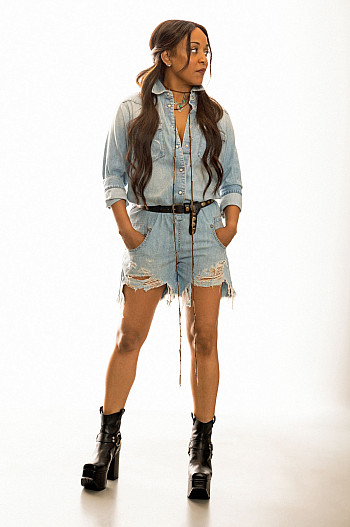
Photos: Chia Messina
More Songfacts Podcast