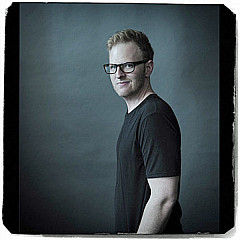
It's true: Shinedown's bass player is named Eric Bass, although he pronounces it like the fish. He joined the band in 2008 and 10 years later became their producer as well.
In 2025 he released his first solo album, I Had A Name, a concept album that occupies its own universe but is based in part on Eric's life. He also working on a graphic novel to accompany it.
In this episode, transcribed below, Eric takes us through the album, talks about some key Shinedown songs, and tells us what he learned from Sylvester Stallone.
In 2025 he released his first solo album, I Had A Name, a concept album that occupies its own universe but is based in part on Eric's life. He also working on a graphic novel to accompany it.
In this episode, transcribed below, Eric takes us through the album, talks about some key Shinedown songs, and tells us what he learned from Sylvester Stallone.
I Had A Name
The whole thing started with a graphic novel that I'm currently finishing. I had these characters in this story that I was quite taken by, and at some point I thought, you know, writing a graphic novel isn't difficult enough - why not write a record to go with it? Just make it a little more difficult.It happened very organically. It wasn't something I set out to do with a grandiose idea from the start to make a record. I just started toying around with the idea and writing some songs. Something interesting happens when you switch from prose writing to songwriting: it becomes a lot more personal, at least for me. It's not that story writing can't be personal - it absolutely is - but you're telling the story of these people. When you switch over to songwriting, at least the way I chose to do it, you're writing in a lot of first-person. At that point, you become the thing you're writing about.
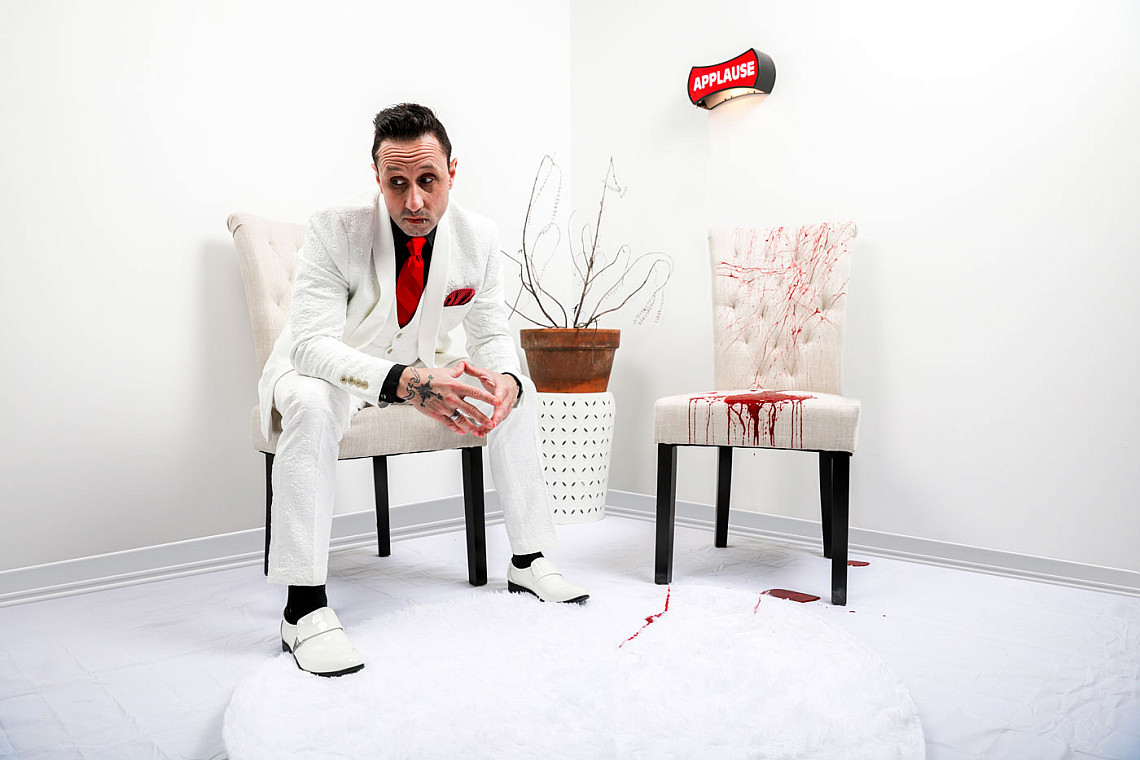
I got through the writing process and was listening back to some songs. I realized I had thrown all my emotional and psychological baggage onto these characters, through these songs. The characters, the story, the world - everything was made up of my DNA a lot more than I thought. That was a bit surprising to me. I was telling a lot of personal things about myself through these characters and this world. It just ended up being this unintentionally self-descriptive thing. That wasn't my intention when I set out to do it - I was just going to write songs about these characters, pick scenes from the story and things I thought were interesting. And lo and behold, I ended up writing this quasi-autobiographical space opera.
Sequencing and Song Dynamics
Yeah, so the record is actually in sequential order. It sort of happens that way, except for "New Gods of War," which drops you into the world abruptly, just so I could tell the listener what's going on, so they could figure out some of the world we were in. That sort of foreshadows a bit. But it's basically in chronological order all the way through the end.I was taking bits and pieces of the story and writing songs about them. The other interesting thing was I ended up creating story moments with songs - story beats that weren't there originally. As I'm writing these songs and thinking about these situations, some things that are going through these characters' minds actually ended up working their way into the story. So, it works both ways.
When it was done, there's a delicate balance of wanting the story to have a chronological flow. You're not getting the whole story in the record, just these beats, but I wanted it to feel more like a story when it does that. Then you also have to worry about, stylistically, how it works from song to song - the normal trappings of trying to figure out an album sequence. That was interesting to try to make sure it all worked out. There was a moment when I listened back to what I had for the record and realized I didn't have what I needed. It was a sobering, gutting moment, but I'm glad it happened because I ended up with some really great songs that didn't exist before. Sometimes you think you're finished and you've worked hard, but then you listen back and realize it isn't what you thought. I didn't force anything, but there were definitely bits and pieces missing that needed to be added into the process.
The Song "Azalea"
The graphic novel opens with her being on the run after having done something terrible, depending on your perspective. I love conflict like that, especially moral conflict in stories. She was formerly very devout. Her mother is killed, and she ends up becoming an assassin, setting out to destroy everyone who destroyed her.In that song, she's on the run, the music is heavy and pumping, and then it gets to that bridge where she has a moment where she's not sure if she's going to escape. She's been on the run, tired, exhausted mentally and emotionally. In that middle section, as the narrator, I'm talking to her, but in essence she's listening to her own thoughts, realizing she can't give up. The thing that's going to get her out of that moment has to do with her faith. It's just a glimpse into the greater story of her realizing that faith is still a source of strength.
For her, there's so much strength in faith that she's forgotten. She has to try to move forward using all the pieces of herself, not just the ones she finds convenient. In that moment, she's summoning the courage, even though she's beyond exhausted in the story - it's easier to feel that in the story than in the song, because the song is short. But in the story, she's really just been through it, and she finds strength enough to carry on in the part of her faith she thought she'd lost.
I try not to give too much of the story away because people still need to read it. But I'm fascinated by that song, especially because in the verses, he's telling his origin story: abused as a kid, ends up a gang leader, takes over everything, develops a need to control the population for his own self-interest. It's pure evil, really.
The interesting thing about that song is he's talking about his disdain for the population, talking about how they need him and how only he can save them. Then, at the end of the song, he has a moment of reflection - these moments of clarity happen throughout the story - where he almost steps outside himself and wonders why he's doing what he's doing. I love that kind of moral conflict in characters. Sometimes it even feels like he's being controlled by something outside himself.
I feel like that sometimes, too. These characters relate to me. I look at a character like DeVarren and it reminds me very much of the depression issues that have come on for me. They weren't there earlier in my life. When I was a kid, I really didn't have that. I had struggles, but I didn't have depression. And then all of a sudden, one day is like, shit. This thing shows up and starts to occupy every bit of my life.
It's hard to talk about sometimes because I don't want to seem like a victim, but this thing shows up and takes over. Then I have those moments of clarity where I can step outside of it and feel what it used to be like when there wasn't this cloud around me. That's where that comes from in the story. The character in the song is me actually experiencing that somewhat where I can step outside of this dark cloud.
Exploring Mental Health Through Narrative Fiction
Just through honesty. I don't really take one hat off and put another one on. We've done it with Shinedown, writing a lot about addiction and mental health. Whether I'm writing in the book or through these fictional characters, I realize I'm writing exactly what I know and feel. Songs and stories that don't pull as much from personal experience don't seem to have the same depth. When I write from deeply personal places, those are the things that reach people.It's pretty elementary. If you're having a deeply human experience and sharing it, people know you're being honest because they're experiencing the same thing. I don't balance anything or change anything. If I'm speaking through a character, I'm still speaking as honestly as if I'm speaking from my own first-person view.
Knowing When the Album is Done
I listened to a podcast with Robert Rodriguez, the film director, and he talked about how when he's done with a film, he never likes it because it looks like something he'd do. Tarantino said the same thing - he didn't like Pulp Fiction because it looked like a Quentin movie. Same thing with me. When I get done with something, I have a tendency to not like it at all because it sounds like I did it.But it's only something I could do. When I listen back, I'm the only person who would have done it this way, so it sounds like an Eric record.
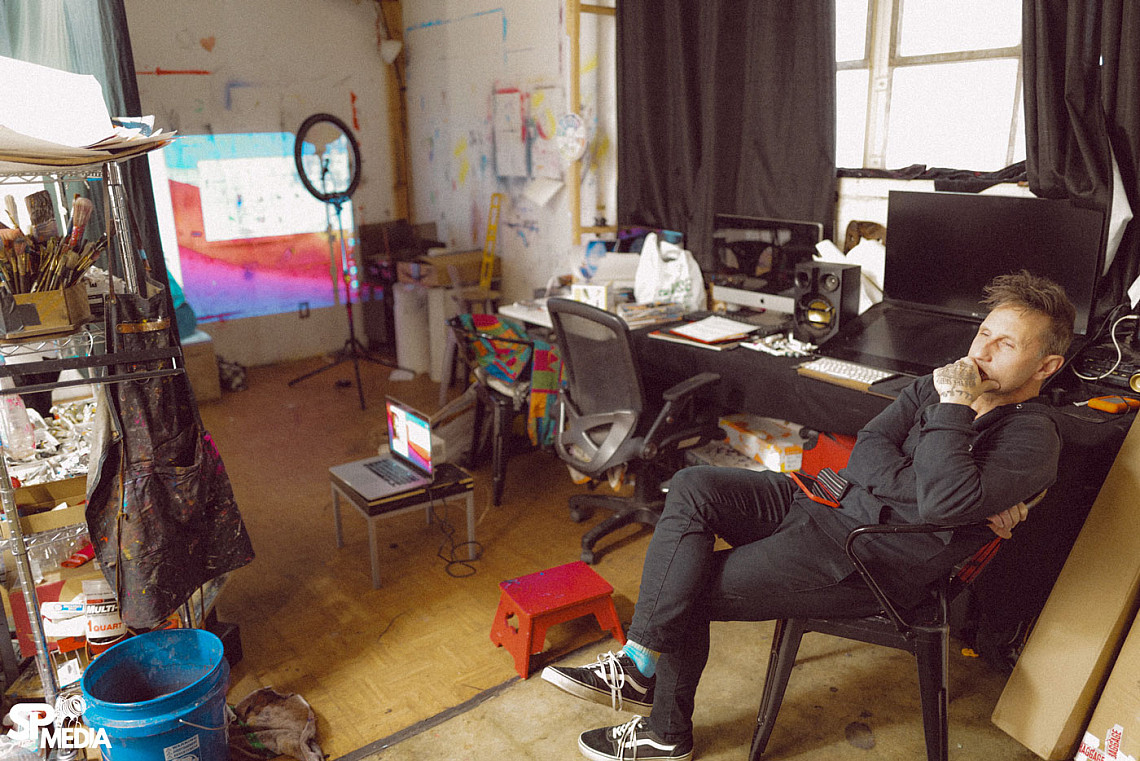
The one thing that made this record very unique is the way I recorded the drums. I said I performed the drums rather than played them because I set them up on stands and played them with my hands - I was in marching band, but my feet are terrible. I played everything with my hands, one section at a time, overdubbed cymbals separately - something that's done quite often now. Dave Grohl is famous for this. It helps with mixing when you isolate the drums.
But it caused me to play things a drummer wouldn't play, and I hit the drums way too hard, choking the tone. That's why they're very dry and aggressive rather than singing. My mixes sound like mine, and my engineering and production sound like mine. It's something I've had to become comfortable with. It's kind of like not liking the sound of your own voice, but I'm the only person who could have made it sound that way.
Shinedown Songs He's Emotionally Invested In
"A Symptom of Being Human." We wrote it very quickly, and it's very on-the-nose for how I was feeling at the time. It's always emotional to play. Live I don't have to play bass on it, so I get to play piano and guitar and enjoy the moment a bit more.There are a lot of them. "Three Six Five," our new Shinedown song. We wrote it about all the people we've lost over the past few years. I've had a lot of death in my family - all the adults in my life just fell away all at once. That's not a unique experience, but it was a unique moment for me. Suddenly I was the adult in the room, which is scary in itself.
That's a very heartfelt song - the lyrics are very close to me, melodically, too. There have been a couple of songs on the new Shinedown record that I had musical ideas for even before we started writing, and that's one of them - the verse melody and chord progression. That song is a lot of fun live and carries a lot of emotional weight.
Collaborating with Sylvester Stallone
Shinedown contributed the song "Diamond Eyes" to Stallone's 2010 movie The Expendables.One thing stands out. We were invited to Stallone's office - to the screening room - and got to sit with him and watch the whole movie. There was no CGI in it yet, just blue screens. Here's Sylvester Stallone, this legendary Hollywood icon, and in that moment, he was every other creator I've ever met: on the edge of the couch, excited, nervously watching, turning around to point out scenes. He wanted us to see where the CGI would go, where things would happen.
If you're a creator, you know what I mean. When you're about to show something to the world, there's an energy you have to bring. It was really pleasant to see. Sometimes you think people in Hollywood have it all figured out, but they're just as invested as the rest of us.
When he closed the door and it was just the five of us, he became just a guy who makes movies - no longer the icon. That was the biggest takeaway. The other thing was, it was refreshing that he hadn't lost his enthusiasm. As you get more successful and wade further out, it's easy to get jaded and stop enjoying what you do. Some people you encounter can make you lose that joy. I think back on that. Here's a guy who's battled Hollywood and he's still enthusiastic about his creations.
I'll reference that Robert Rodriguez podcast again. He's made so many movies, and the only thing he cares about is creativity. He's not concerned about anything else. That was the biggest takeaway.
They call it playing music for a reason. It's play. We forget that.
Tips For Staying Sharp Creatively
I'm not great with routine, which is hard in this business. Maybe it's self-sabotage, I don't know. The two things that help most: being spiritual - finding faith in something greater than yourself, realizing you're not in control and relying on that - that's been wildly helpful. The other thing is exercise. Staying on an exercise regimen.I'm 50 now, working hard to get my physical health back to where it was in my 30s. It's harder, for sure, but it keeps some levity in my life. When I go out and run, go to the gym, or ride a bike, I know it'll be mentally and physically grinding, but when I finish, it puts things in perspective and lightens things up a bit. I get brooding and serious, and that can cause depression, but it's also because of depression. It's a cyclical thing. So, physical exercise and spiritual exercise. When I've managed to be dedicated to both, it doesn't take away all the problems, but it definitely helps keep me sharper and lighter.
Appreciation
I just really appreciate all the people who have enjoyed this record and the Shinedown records and songs I've written. It means a lot to me. Sometimes, being in here working on music, you feel like you're screaming into the void, especially with streaming nowadays. I come from the era of going to a record store and buying records - they were important. It's easy to feel like music has lost its importance, but it hasn't. When I make something like I Had A Name and the audience is as receptive as they've been - good and bad - that makes me realize I did something right. I appreciate everyone who's taken the time, who's listened and taken interest. That touches my soul more than anything else. So, I really appreciate the fans and everyone who enjoys the music.July 25, 2025
List of Shinedown Songs
Wes Scantlin of Puddle Of Mudd
The Metallica Episode
More Songfacts Podcast