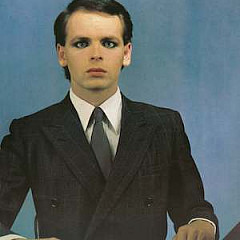
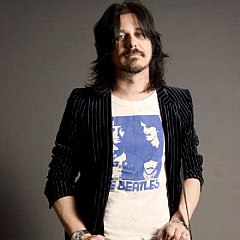
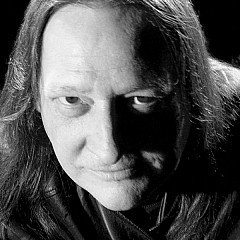
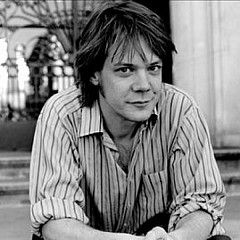
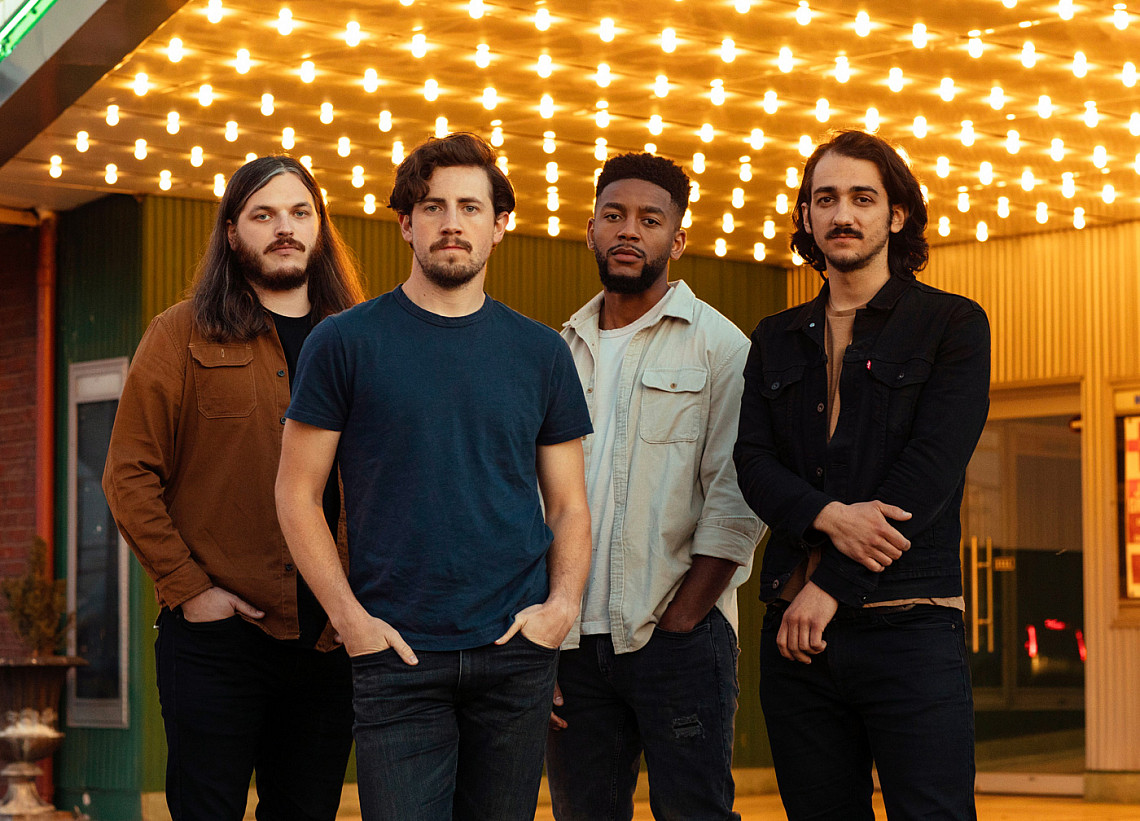
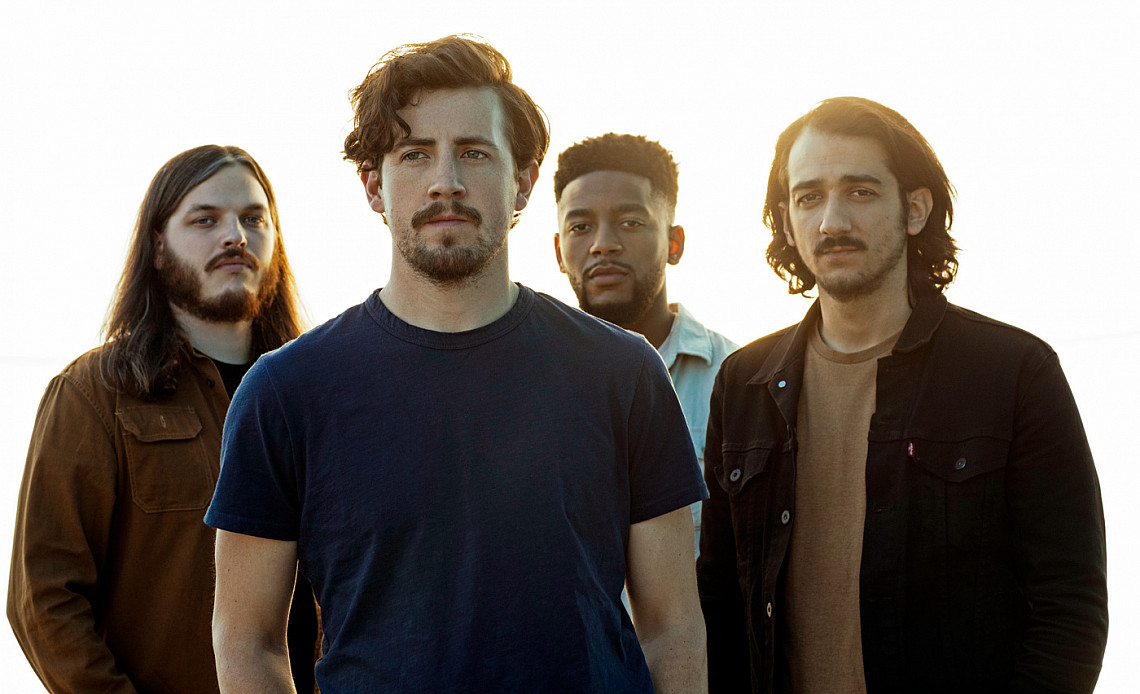
 Back in November 2021, The Heavy Hours came on the Songfacts Podcast and introduced us to their amazing music, including the single Don't Walk Away," their collaboration with Dan Auerbach of the Black Keys. In this episode, the Cincinnati-based rock band is back to take us track by track through their new album, Gardens, composed of songs they wrote years ago, long before they had a management team or a record deal.
 After scraping some money together playing local gigs, the band finally had enough for nine days of studio time in Richmond, Virginia, where they hammered out 10 songs with the help of producer Adrian Olsen (Nate Smith, Futurebirds). The tracks were passed along to Auerbach, who invited the band to Nashville, where they wrote their 2021 Wildfire EP.
But to truly understand The Heavy Hours, you have to go back to the beginning, to where Gardens first took root.
"This album is really important to our story," lead singer Michael Marcagi explains. "It's really important for listeners to have this piece of the puzzle and to watch as the other pieces fall."
This episode truly takes us "behind the music" of Gardens, which was released on February 18, 2022. You'll hear the rough audio clips they had recorded on their phones as they constructed the songs, and hear how they evolved. Without further ado, here's Marcagi and his bandmates, Jon Moon (bass) and AJ Yorio (guitar), taking us through the album, track by track.
"Too Scared To Know"
Michael Marcagi: I like this song a lot because it changes its main melody three different times. It has these three parts to it, and I remember having an idea for one of those parts. I might have been with family or friends at a party, and I just pulled out my phone and I started humming into the microphone and it sounded so stupid, but you can see exactly what point in the song it influenced. And that was a crazy song too - we finished writing those lyrics in the studio and there were some creative ideas thrown around. I had come up with some really asinine lyrics for the end of it, and our producer pulled a book off of his shelf and threw it at us. And he's like, "Come up with something that is actually good, by tomorrow! And Mike will sing that!" We got some crazy ideas.Jon Moon: Yeah. It was inappropriate.
Michael: It wasn't inappropriate, it was just so bad. Really, really fun, though. We were just like kids in this candy shop with all these crazy ideas and all these crazy sounds, but we didn't know enough about the recording process to know how you achieve the sounds. So we would go to Adrian, the producer, and we're like, "Adrian, listen to this Black Keys song. We really liked the drums in this," or something like that. We were annoying him really bad because we wanted really dirty, compressed-sounding, crazy-sounding drums. I think he would take it as a test, like, "Oh, you guys want that sound? Alright, let's see if we can do it."
Jon: And Michael goes, "Yes, then, make the drum sound like this." And Adrian looked at us and said, "That's the most over-processed nonsense, like, what are you talking about?" Then, yeah, the next day, he would do it. So we'd walk in and he’d be like, "Well, look what I did." And he did it.
AJ Yorio: One of the big moments in it is the time signature change about halfway through the song. At the time we wrote it, there was a Mike Mains & The Branches song that does a similar thing, where it changes tempo, and we were in love with that song. So we were like, "How do we incorporate that into a song?" And we did that. It's really fun.
Michael: Yeah, we wanted a song that set the tone for the album, and this was the perfect song to do that. It pumps you up as a listener.
"Take My Heart (I'll Take Yours Too)"
Michael: This song was kinda like the sleeper on the album. I've known AJ since eighth grade. I remember him always playing this lick on the guitar for 10 years, so it's like finally, "Okay, we'll let you use it. Jesus." It was always this really pretty guitar lick, and AJ was in bands in high school and tried to make it into some songs. But the melody was always pretty crazy, and it was probably hard to play it and sing something at the same time.Jon: It needed some help.
Michael: Yeah, and we brought it back one day, and we're like, "Oh that's funny, that's the lick that AJ wrote 10 years ago." Then me and Jon sat down and fleshed out this melody that fits in with the rest of the album, and we ended up really, really liking it. This was around the time where we found out Jon could sing really beautiful harmonies, so we're excited about the song because at the end of almost every verse and on the chorus, it has this long, drawn out three-part harmony, which is really fun. So it was a newer type of song that we hadn't really tried to write before and it ended up being really cool.
"Back Porch"
Jon: This is my favorite song on the album, I think.AJ: I was in the practice space, sort of playing around with it, and I had some melody ideas and some lyrical ideas, and as soon as I shared those, Michael popped up, and he's like, "Everybody hold on." And he made us all do a four-part harmony. He just heard the potential for the harmonies in here, and obviously, you can hear those on the recorded track with Michael and Jon.
Jon: We probably weren't very good at singing harmonies, but I was just in the beginning stages of actually learning how to do it.
AJ: But it sounds great, though.
Jon: Oh, one of my favorite parts of the song in the studio was towards the end. On every song, we kind of laid out all the rhythm tracks and all the things you would expect to be in a song. Then towards the end of the day, we would always record percussion or just random things, things that were more creative or things that we didn't necessarily know we wanted in the song at first. One interesting part of this song is the bells - these massive chimes. You'd like whack it with a metal hammer. Adrian went in and put the bells on at the very end at the big crescendo moment of the song. I just always loved that sound. It was really fun to watch it get recorded.
Michael: We never had access to instruments like that, so we kind of went buck wild. Then on the drive home, we were like, "Oh, shit, we gotta learn how to play this live."
But "Back Porch" is funny because we tried to write songs that would have these huge, really loud choruses or super memorable licks, and "Back Porch" didn't really have any of those. It's just a pretty simple two-chord song that doesn't really even have a true chorus. So in our minds, it was just a pretty song that we really liked and meant a lot to us, but by no means was going to be this single. But then we got home and showed the album to our friends and family, and for some reason, I would say 90% of the people we showed this album to were like, "Yeah, 'Back Porch' is the best song... that's the single." That kind of caught us by surprise.
It's not a very produced song at all. It's like an acoustic guitar and a bass and a lead guitar. It's a very simple drum beat. But it kind of became a bigger thing than we expected.
"Wasting All Our Time"
Michael: There were no super hard feelings, but the four of us at the time felt like our friends were giving us a lot of shit for spending so much time with this silly band or whatever. Kind of along the line of "prophets in our hometown."In a way, we wrote this song in an angsty, mid-20s, young 20-year-old kind of way, like, "F-you to getting a normal boring job and just settling down - we want to go chase our dreams." And we might be wasting all our time, but this is what we want to do. It's probably my favorite song on the album. I think it started out when AJ had this little riff or this little melody, and it was kind of slow, in the same vein as "Back Porch." Then me and Jon sat down with it for a little bit more and cranked it to 100, and we were like, if we're gonna sing a song about wasting our time, we want it to be the most in-your-face, rock-and-roll banger that we possibly can.
We were really influenced by J. Roddy Walston and the Business on this one. If there's ever a song where we can be messy and not exactly play the right notes, and it doesn't matter if I just sit up there and bang the keys on a piano and scream in the microphone, this is it.
AJ: My initial vision for the song was something along the lines of a slower tempo, and then Michael sang it much faster and helped turn it into a rock-and-roll song.
On Taking Inspiration From Other Bands
AJ: Any band who says they don't do that is just flat out lying. It's so natural to be influenced and to fall in love with other bands and artists, and for that to impact how you write and how you create. We were listening to a bunch of our favorite bands that are still our favorite bands today, back then, and of course there were ideas in those songs that we thought were really cool and we wanted to make our own and put in our own songs. I think that's just music.Michael: The best part about music is being 16 or 17 years old in high school and hearing J. Roddy Walston or Delta Spirit for the first time and being like, "Oh, man, I've never heard anything like that, I want to make something like that."
And even if you set out to copy them, you're still a different person, you still have a different voice, and you still have different ideas. Like, you can't even replicate it. We've always been super open about who we're influenced by because those bands that we look up to have done amazing things and have essentially influenced us to even start a band, so hopefully one day there's a weird 16-year-old that hears our music and wants to make a band.
"To My End"
AJ: My favorite part about this one is towards the end at the guitar solo with Michael's vocals. He starts vamping and getting a little loud. And I really like the chorus dropouts.The song was kind of influenced by Chris Isaak's "Wicked Game." We watched the music video for that song for the first time in the studio, and I remember I had never seen the music video for that song - that was funny.
Jon: I remember something funny about this song. Back at the time when we were writing this album, a few months before we stepped into the studio, I was kind of known in this band as a music-theory stickler. I didn't know much about music theory at the time, but there were certain chords to me that were off limits, like you could only use the chords in the major scale. So we were working on the verse of the song and then we're trying to figure out a chorus, and I went out of town or something, and I came back into town, and Mike and AJ sat me down like, "Jon, we were working on the song, and we worked out something that sounds really cool for the chorus, but it doesn't follow normal chord theory." And I was like, "All right."
So the song's in E, and instead of the chorus starting on the major five chord, it actually starts on a minor fifth. And it worked, it sounds great. I got over myself.
AJ: It took us a long time to write this song because we had the verse that we messed around with for like a year and could never write a chorus to it. The problem was we were kind of obsessed with 1-4-5 rock-and-roll music. We had to break out of that mindset and open up this whole world of other chords. But it's a little risky going from that major to the minor because, in my head, that's very much what a musical would do. And Mike and Jon and I hate musicals. We don't want to do anything resembling a musical.
"Distant State"
Michael: All of the meat and potatoes of this song happened inside Jon's head, and he brought it to practice one day and he was like, "Guys, I've got a song I want to show you."AJ: We were kind of done writing the album, this was like an add-on. We expected him to come out with a guitar and sing a 1-4-5 song, but he rigged up his phone to his amp and he had a backing track almost, and he made us leave the basement.
Jon: I'm still this way. Anytime I have an idea that I want to bring to the band, I get so nervous, even though they're the best friends I've ever had. I just get nervous. To me, the harmonies were a really big part of this song. I was listening to a bunch of The Head and the Heart and I wrote the song. I was like, "I really got to accentuate this harmony, so when I show it to them, I have to pull off the harmonies." But I can't - I don't have someone singing with me. So I recorded myself singing the main melody and playing some chords and then I blasted that over speakers and sang the harmonies to that. That was my presentation. But Michael can tell the rest of the story.
Michael: First of all, this was before we had the technology to record multi-track recordings. Jon had to play his accompaniment, so he makes us leave the practice space, and he's like, "I'll get it all set up and then you come back in and I'll be ready to go." We were like, "Okay, this is really weird, Jon. You can just show us the song - you can record it. I don't know why this has to be a big production." And he was like, "Look, this is in my mind and it's the only way it's going to work."
So we leave the practice space and we come back in. Jon didn't even have a guitar. He was sitting on a stool and very proper and he was trying to sing with his hands behind his back. And this was at the time when that yodel kid [Mason Ramsey] from Walmart sang that weird song and got all famous. Jon sang it and did a great job singing harmonies and everything, but for some reason, we kept calling him Walmart boy, and we called the song "The Walmart Song" because of the way Jon presented it and was singing all weird and looked like the Walmart kid. So, Jon, who is terrified of showing us his song ideas - what do we do when he delivers us this beautiful song? We make fun of him and call him the Walmart kid.
The song was beautiful and we loved the song, but we ended up bullying him and calling him Walmart Boy, and the song was called 'Walmart Kid' for years. Even when the song went to get mastered, we got a call and he's like, "You guys really want this song to be actually titled 'Walmart Kid'?" It got sent to be mastered under the name "Walmart Kid," and we were like, "Oh man, we've got to be better friends."
"Distant State" was the name of it all along, we were just too bad of friends to ever call it that.
"Waste Away"
AJ: This was cool because this was the first song that we wrote, and it was an idea that Jon brought to us. We had just recorded our first record ever, in Nashville, and this was in 2016, 2017, and that was super fun. It was sort of bar band - a little country, a little classic rock. And then "Waste Away" was the first song that introduced this new direction that we wanted to go in, and it was very Kings of Leon and very Fruit Bats and Wide Open Landscapes, a lot of reverb, electric guitar that was cool - we were moving away from our first record sound. Then it totally changed ...it changed into a Mariachi song at one point.Jon: Yeah, the song had three lines. It's very much like a Kings of Leon song originally, and then it was almost a beachy kind of song at one point, and then we landed in a much more natural place, which is like this unconventional rock song that's got a lot of bar-song-type vibes but also some weirdness to it.
AJ: We added some guitar tracks a couple of weeks ago and rearranged some things, but it was good to spend two years away from it - we figured out exactly what it needed.
I am so glad we had the opportunity to revisit some of these songs. The main thing we didn't want to do, which I think my personality would naturally want to do, would be to go back and re-engineer the thing and overthink. We didn't want to go back and change everything and lose the magic of what we had down there, and what we had when we were two years younger. There was something that we captured down there that we didn't want to lose, so we kind of made sure to pause and put the brakes on and be like, "Okay, I know we have the ability to go back and change some things, but that doesn't mean we should."
But there were also some things that, just due to the fact that we didn't have that much money back then, and we only had nine days that we never really got to explore, we were like, "Let's pick three or four songs that we had run out of time or ran out of resources to hit the first time. Let's do the things we always wanted to do and not touch anything else." So, we did a good job of pulling the reins back and not going too deep into the world of, "Oh, we can do this, and we can change this," kind of thing.
"Skinny Heart"
AJ: "Skinny Heart" kind of falls in line with "Waste Away" and "Wasting All Our Time." We were going to a lot of J. Roddy Walston and Delta Spirit concerts, and these concerts that were very different from the shoegaze, indie-pop thing, where everyone is just kind of in the crowd looking down. That's not really exciting to us.Then we found these bands that went out on stage and blew your freaking mind and got everybody moving. We had never really seen that before, where it's a lot of energy and so fun. It was a really fun time to go and see a band for an hour and a half that was just keeping the momentum going in this really cool way where they get the whole crowd to buy into what they're doing on stage. We wanted to do that. There weren't a lot of bands, at least in the Cincinnati music scene, that were doing that, and we wanted to bring this raw energy. Honestly, we're not inventing anything new. It's 1-4-5 rock songs - it's what freaking Chuck Berry did in the '60s. We think that energy is really, really fun, and something that is really easy to get behind and really fun for us to play. So, this song fell in line with that vision of, "Let's make some songs that are fun to play and fun for people to listen to." It's as simple as that.
AJ: The Lumineers are a perfect example of that. They're not over-engineering anything. No one in the Lumineers is going to be known as the best shredder in the world when they're done playing, but everyone is going to remember those songs.
Jon: And the lyrics reflect that, too. The lyrics in "Skinny Heart" are kind of tongue-in-cheek and a little jaded and sort of call out different demographics. But this album has it all. Going back to "Take My Heart (I'll Take Yours Too)," those were extremely personal, super-deep lyrics, and then you've got songs like "Skinny Heart." I like how this album is the same sonically, but it encompasses all different life stages and things.
Jon: The album is a specific snapshot of that point in our lives. I don't think that we would write lyrics like this, moving forward, which is why I'm glad that people can hear it. Some of these songs are very wordy ....
Michael: And I was like, "Yeah, I've got to go back and relearn a lot of these words."
"Spend My Money"
Michael: This song has been around since the very beginning of the band. It was so long ago that, at one point, AJ sang this song when we used to play it live. So, I got the idea for the song, but no lyrics.Jon: ... and we didn't have a chorus yet, either.
AJ: Yeah, so I would kind of mumble on stage, and this was like the very, very first iteration of the band - I was actually the lead singer until Jon and Mike sort of told me, "Hey asshole, you can't sing. Michael sings a lot better, let's take your ego off."
But this was that one song that I was holding on to and I would sing live. It was super weird - I remember I sang "spend my money" as the chorus for no particular reason, and then Michael came up with these pretty beautiful lyrics that retained "spend my money." Lyrically, it's kind of the softer parallel to "Wasting All Our Time."
Michael: I don't even remember it that well, but I do remember it as being along the same lines as "Wasting All Our Time." Maybe we were going through more than we realized, but I think we were just going through a phase of your mid-20s when you're trying to figure out what you want to be and what you want to do with your life. We were kind of in this middle ground of having friends that are going off and getting really good jobs and starting to settle down as people. Everyone's changing in their mid-20s, and we felt this pull of, "Do we give this dream up and settle into normal society or do we stick to our guns and this is what we want to do?" We were going through some deep, theological issues.
AJ: We made this record before we knew about counseling.
"The Runaway"
AJ: This song was probably our biggest struggle out of all to get it right on the album. We had so many different versions of it, and we loved it. And live, it just translated so well - we had this awesome, loud guitar solo and that's something that came very natural to us. But we were kind of struggling to translate it to an actual album setting. It took us a long time and a lot of different versions, a lot of different lyrics, but we wanted this song to be just a story. This doesn't come from a place of like, "This happened to us," or anything. We always wanted to write a song that was just about a story out of our imagination, and that's what we did with this one.It's so fun to play live, and now that it's done and completed and mastered, this is the song I might be most proud of in the end because it was such a hard one for us to get right. Now that it's finally done, I'm glad we worked through it and didn't kind of give up on it.
Jon: We wrote the lyrics, we wrote melodies. Pretty much the only thing that has stayed the same from its original tracking back with the rest of the album is the chord progression and some of the rhythm tracks. We added some guitar, we added some rhythm guitar, we added new vocals, new harmonies, new lyrics. I mean, there are some similarities that stay in the choruses and stuff, but the essence of what made this song so great live still remains. All the areas that went over so well live remained intact. We didn't really mess too much with that and those melodies - the lyrics in some spots are still very similar to what they used to be.
AJ: The most powerful part about this song when we play it live is the emotional punch of the chord progression and the dynamics, and what the song evolves into by the end. And even saying all that, we realized that even the lyrics could be improved. Scrapping the lyrics and re-writing them could actually improve the song's impact. So, it was weird striving and aiming toward this ethereal goal, but I feel like we got it.
"When I Fall In Love"
AJ: We snuck this one on the list ...Jon: We were very sneaky - we kind of went around our whole management label. When we were doing the overdubs on all the other songs, or a couple of the other songs that we wanted to do, we were like, "Man, we've always been in love with this song." It was technically on the first album we ever released.
AJ: It could be the first song we ever wrote as a band.
Jon: Legitimately. It's such a singable song, so we were like, "Let's record it while we are doing these overdubs and let's see if we can get our management, once it gets finally mixed, to add it on to the record." And now it's on the record.
AJ: It's a great song. It's weird, like it's been around for so long and I've heard it so many times that I really can't give a proper assessment of it, but it's one that we will never get tired of playing.
March 1, 2022
More on The Heavy Hours at https://theheavyhours.com/
Subscribe to the Songfacts podcast, part of the Pantheon Network
More Songfacts Podcast