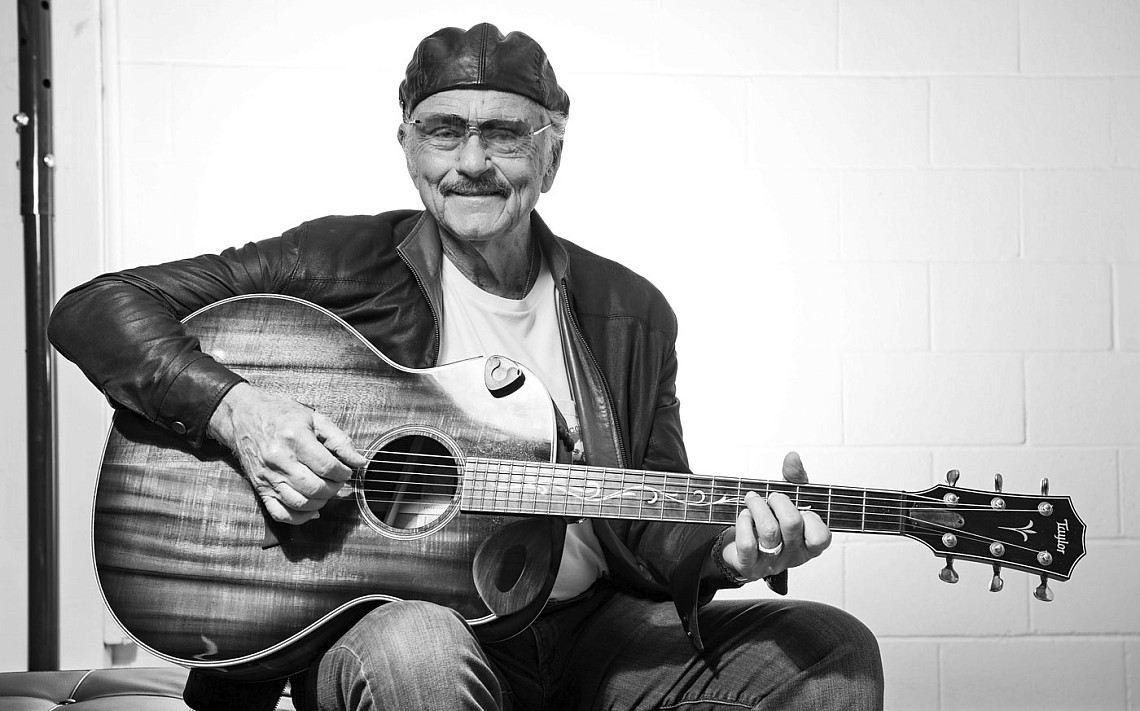
Jesse Colin Young made his mark with The Youngbloods, best known for their 1967 hit "Get Together," one of the great flower-power anthems of the '60s. The first time we spoke with Jesse, we got the story behind that song and found out how he feels about the way his generation developed. In this chat, we go a bit deeper, exploring some of his other hits as well as his collaborations with Carly Simon and Michael McDonald.
We'll start by discussing his 1982 album, The Perfect Stranger, which features top session players like Steve Lukather and Russ Kunkel. His primary collaborator on the album was Wendy Waldman, who later co-wrote the Vanessa Williams hit "Save The Best For Last."
We'll start by discussing his 1982 album, The Perfect Stranger, which features top session players like Steve Lukather and Russ Kunkel. His primary collaborator on the album was Wendy Waldman, who later co-wrote the Vanessa Williams hit "Save The Best For Last."
It was probably easiest with Wendy Waldman because she played a Wurlitzer piano and I played an acoustic guitar, so we had a little mini band. Wendy and I just sparked off each other right away. I had never really sat down and written a song with somebody else and tried to dig into some emotional place like we did when we wrote "Long Nights Coming." My father-in-law was dying at that point somewhere in Southern California and I was flying down to work with Wendy and I would go to the hospital and see him, so there was all kinds of deep stuff for us to get into and it was really easy - we were just simpatico. But I haven't seen her since - she's a wonderful writer. I think five of the songs are written with Wendy.
Writing The Perfect Stranger Track "Fire On The Water" With Michael McDonald
With Michael McDonald, I thought, My God, that keyboard style is so complex and jazz-informed. I can never keep up with him on the guitar, I'm just not that vessel. So I took my old Youngbloods bass down there. I hadn't met Michael, but I loved his music.I just showed up. They give you an address - I wonder how we did it without having cell phones - and you show up at his address. He came and welcomed me, and he had a nice, wonderful set-up for writing in his house with a beautiful keyboard sound coming over the sound system. He was moving so fast musically. Once we got the idea of what is something that is quintessential, that doesn't work, we settled on "Fire On The Water." The song just came, and I played very little [laughs]. He was moving so fast. It was wonderful.
It was delicious. And it was over way too soon. I wish we had gone at it again. That was just one beautiful afternoon. I just got on the plane and went home the next day, but it was a lovely time. To listen to him sing all day as we put it together was a great joy, and to watch it fall together and to be there with him lyrically and be able to catch his drift and then step in.
Funny, I saw Kenny Loggins doing his final dates at the Beacon Theater a few months ago. We were having dinner, and he said, "You know, I'd never written with Michael either, and I drove up in his driveway, and I heard him playing - the doors were open in his house. Before I set foot in his house, I knew where that melody was going."
Collaborating With Carly Simon On "Fight For It"
I wrote the song as a duet, but I didn't think of who until we got around to recording it. And I thought, Wow, if this is the duet, I know the woman who comes from this place, who's tough like this and would fight for a relationship. And I knew that was Carly.I've known her from the folk days when she was one half of the Simon Sisters, and I opened shows for them when I was just starting out. So, Michael [producer Michael James Jackson] reached out to her and she said yes. We flew to New York and my plane was late. By the time I got to the studio, she had half the vocal done. She knew exactly what to do. Yeah, she was the right woman for that - she was that kind of gal.
Political Songs
It's gone through a lot of different changes, but whenever the message wanders into things that are more difficult or more political, people seem to be less interested, and that always confused me. I wrote a suite called "American Dreams Suite." It came out on Elektra [in 1978], and it kind of predicted what's happening now. I had a wonderful career up until that point - it kind of stopped my career [laughs]. I remember hearing someone at a radio station say, "Oh man, it's political," and it never found its way into a lot of people's homes.Musical Highlights From Jesse's '70s Output
Someone asked me, "Don't you think that you shaped the California sound when you made Song For Juli [Jesse's 1973 album]? And I may have had a part of it. Van [Morrison] for a while was out there in Marin (county), but I was way out in West Marin and I think he was wanting to get some of the magic out of the trees out there too. But I had just run out of steam with The Youngbloods and thought I need something new. I wanted to engineer and write the record, do it all myself and see what happens. So Song For Juli does have a sound to it. And I think part of that is Mel Martin's beautiful horn charts. There's a section on two thirds of those tunes, it's just beautifully done, that I never imagined. But my sax player, Jim Rothermel, who played all the beautiful flute solos... wow.So I just followed my heart and my ears. Love On The Wing [1977] came at the end of my Warner Brothers five records - I got closer to my country roots on that record. Songbird [1975], really the heart of it was a song called "Before You Came." I visited the Black Hills. In the spring, the AIM (American Indian Movement) guys and gals had taken over a town in the Black Hills. I asked somebody how to get to the town and they said, "Don't go up there, they'll shoot you." And I said, "I don't think so." I thought about it a little bit, and I had some friends in the American Indian Movement and many of them who grew up on the Pine Ridge Reservation, and I wanted to see the Pine Ridge Reservation, so I drove through it in my motor home with my ex and our two little kids, and I saw the poverty and the desolateness of it. And when I got home to California, we saw these rock formations in the Black Hills that looked like Native Americans - a group of them standing holding blankets over their shoulders. I walked out on the ridge and I looked down into Drakes Bay and there was a four-masted schooner there. I thought I had all of a sudden stepped back in time, and that I was watching the first landing of white men. That's when "Before You Came" started. That dream was a magical experience for me. It turned out that four-masted ship was a Japanese training ship. For training sailors, I guess, for their Navy.
The "No Nukes" Movement
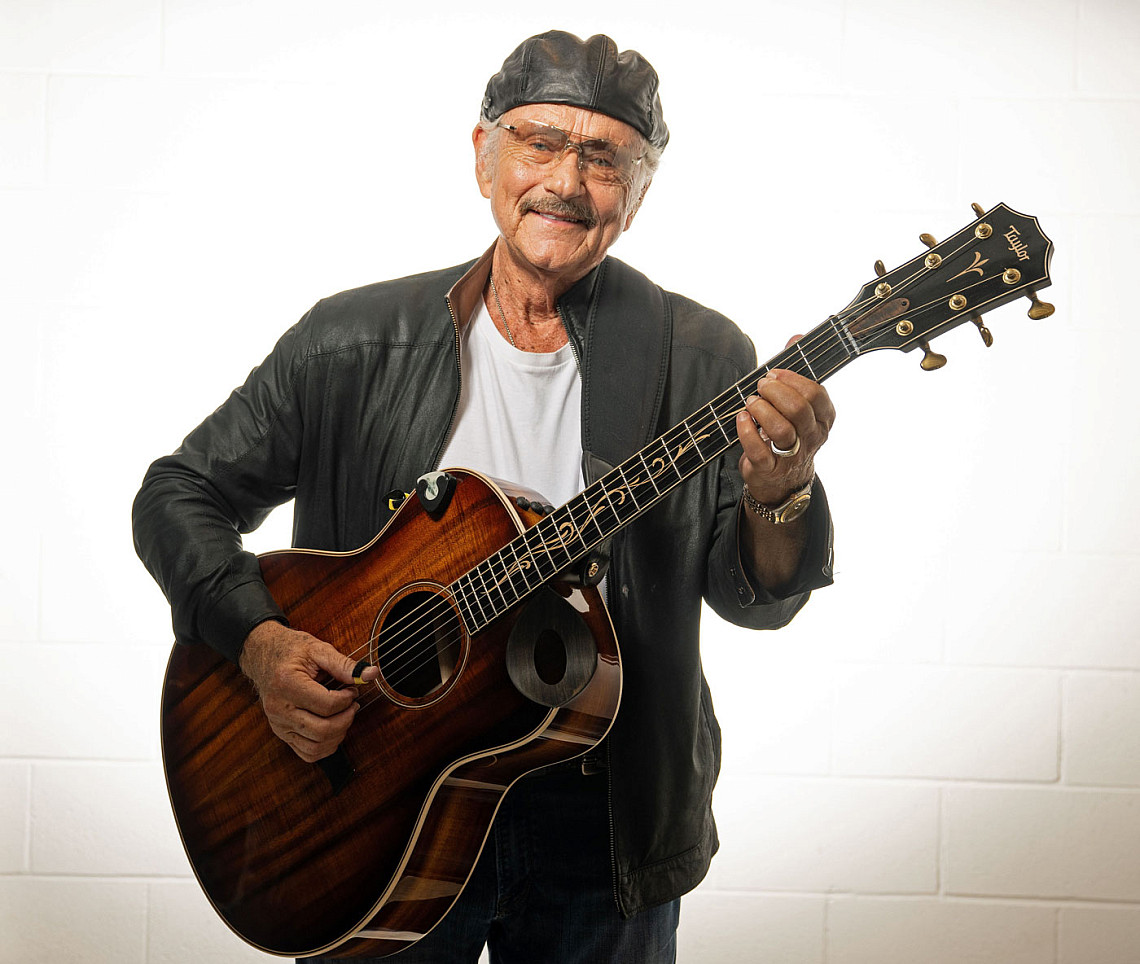
Along with artists like Bonnie Raitt and Bruce Springsteen, Young supported Musicians United For Safe Energy (MUSE), which promoted alternative energy sources and opposed nuclear power plants, which they felt were dangerous and environmentally hazardous."No Nukes" was very important to me. I was a big supporter of that and really, it was very successful. By the time we got to Madison Square Garden, a quarter of a million people came out to Battery Park that Sunday afternoon. After those six days of shows, there was not another nuke built for 30 years in the United States. So, sometimes it's wonderful to have a success like that - people come together and own the power that they have when they come together.
I don't know what we're going to do now. Everybody seems to be running off in their own corner and not talking to each other. So we're in trouble.
Legacy Of "Get Together"
It's just an amazing piece of work. You know, I didn't write it. Dino Valenti wrote it. I was wandering in the Village on a Sunday and went down to the Cafe Au Go Go, thinking it was probably dark and I could rehearse the band, Youngbloods - we were a house band there. And no, they were having an open mic. I walked in and there was Buzzy Linhart on stage singing "Get Together," and I felt my life change. And I knew this song and I were to be partners in a path, and I ran backstage and said, "Oh man, please I need the lyrics," and Buzzy wrote them out for me.I took it into rehearsal with The Youngbloods the next day. It's so beautifully written:
Love is but a song we sing
Fear is the way we die
We can make the mountains ring and make the angels cry
It's beautiful stuff. It sounds like some angel was whispering in Dino's ear. It has a lot of power because it's about something that is in every human heart - all of us would love to have a peaceful place to have a home, raise a family, work at something we love. That yearning, I think, is universal.
Free Music In San Francisco
Free music was the best. We flew into San Francisco for a gig, and we'd had "Grizzly Bear" out - that was the first single - and "Get Together" was released and it was a big hit on the north coast between San Francisco, Portland and Seattle. So we walked into San Francisco to this hit record. And of course, it was 1967, the Summer of Love, and it was the perfect song, so we were part of the soundtrack. We went home, packed our stuff and moved immediately to Marin County so we could be part of that wonderful scene.Free music, we played a lot of it. We would set up at the end of the street - I forget the name of that street, but it had a parkway in the middle. Somebody knew someone who had a flatbed truck, and we owned a PA, so our guys would just pull up, set up the PA and somebody would bring a generator. Then we'd start playing, and people would come.
When there's no money involved, the music is kind of a sacred covenant between the audience and the artist. The free music was the most magical. And the people, their energy was making it happen as much as ours.
I missed that. A couple years ago when I went on tour with my daughter Jazzie, I got to play in the park in San Francisco once again for free. This time I got paid, but I never got paid before. Some rich fellow started the Hardly Strictly Bluegrass festival, so I got to sing with my daughter, who's the youngest of my kids. I played music with all of them, and she's my youngest, and we played together there in the park, the people, free to them. There's nothing like it.
How The Music Industry Has Changed
The industry is taking the money out for the artists. I don't know how young people or young musicians are dealing with the payback for being able to reach a lot of people with a very infinitesimal amount of money unless you're a huge star. And probably most of the people who play music in our country - 90% are weekend warriors, I think - they can't make a living at it. If you could sell a few hundred thousand records in the '70s and you had a decent record deal, you could make a few hundred thousand dollars. If you built studios and made records, it disappears quickly, but it was a living. And then the concerts.My daughter's just finishing her first full-length album, Jazzie Young. She's got some things on Spotify, a couple of EPs that she did, and this will be the first full-length. She's got a beautiful voice, a wonderful writer. It was wonderful to be able to take her out with me and to be part of the show. Her learning to use ear monitors and all the things that are done these days. But she's on fire. Songs just keep coming out of her. Beautiful. Not so much for me. I'm at the end of writing my memoir. I guess I've been at that for at least a year. During that time I haven't even completed a song. I'm hoping when this is done, the channels open back up and I can write songs again. But, I gotta get this finished.
Songwriting Process
A lot of my songs would come to me just from something new on the guitar, some chord, or a way of putting chords together. I used to play the guitar early in the morning before the day gets rolling and all the little things that need to be done pile up into a to-do list. That was my time to come up with something. Now I can record it on my phone. If I don't record them, they're gone. I need to be observing that ritual again, of playing first thing in the morning before I engage with anything else and just letting something new come to me.Songs He's Proud Of That Most People Haven't Heard
"American Dreams Suite" is one of them, but that's a whole suite of songs on one side of a record [American Dreams].I wrote some material on this last album I made with my youngest son, Tristan. I made an album called Dreamers in 2019. There's a song on it that I did with Johnny Cash's daughter, Rosanne, "While Texas Is Drowning." They had tremendous amounts of rain in Houston and all over the Gulf states. Rosanne had shown me the words:
While Texas is drowning
Is nobody listening to the voice
Of the mother who cries and petitions?
We need to listen. The storms are getting worse - they will get worse until we pay attention and actually do something and stop global warming. We're really hurting the future of those to come after us: our grandchildren, even our children. We need to do something radical and we need to do it quickly.
What He Hopes Listeners Take From His Work
I want it to touch them in some way. That's been my job, and it's been a wonderful job. A mother did write me and she loved the Elephant Mountain [1969] record and she would play it. She said, "I was cleaning my house, and the song "Ride The Wind" came on. The doors were all open, and my little 4-year-old was running around, and then all of a sudden I lost track of him, and I didn't see him in the house." And she went outside and found him swinging from a limb on the tree saying, "Mommy look, I'm riding the wind." So it's touching people that thrills me.July 8, 2024
Subscribe to the Songfacts podcast, part of the Pantheon Network
Check out our interview with Rosanne Cash
Photos: Brent Cline
More Songfacts Podcast