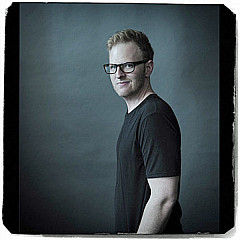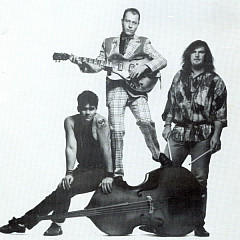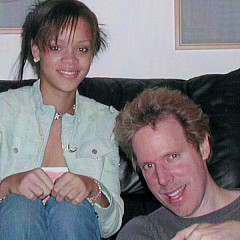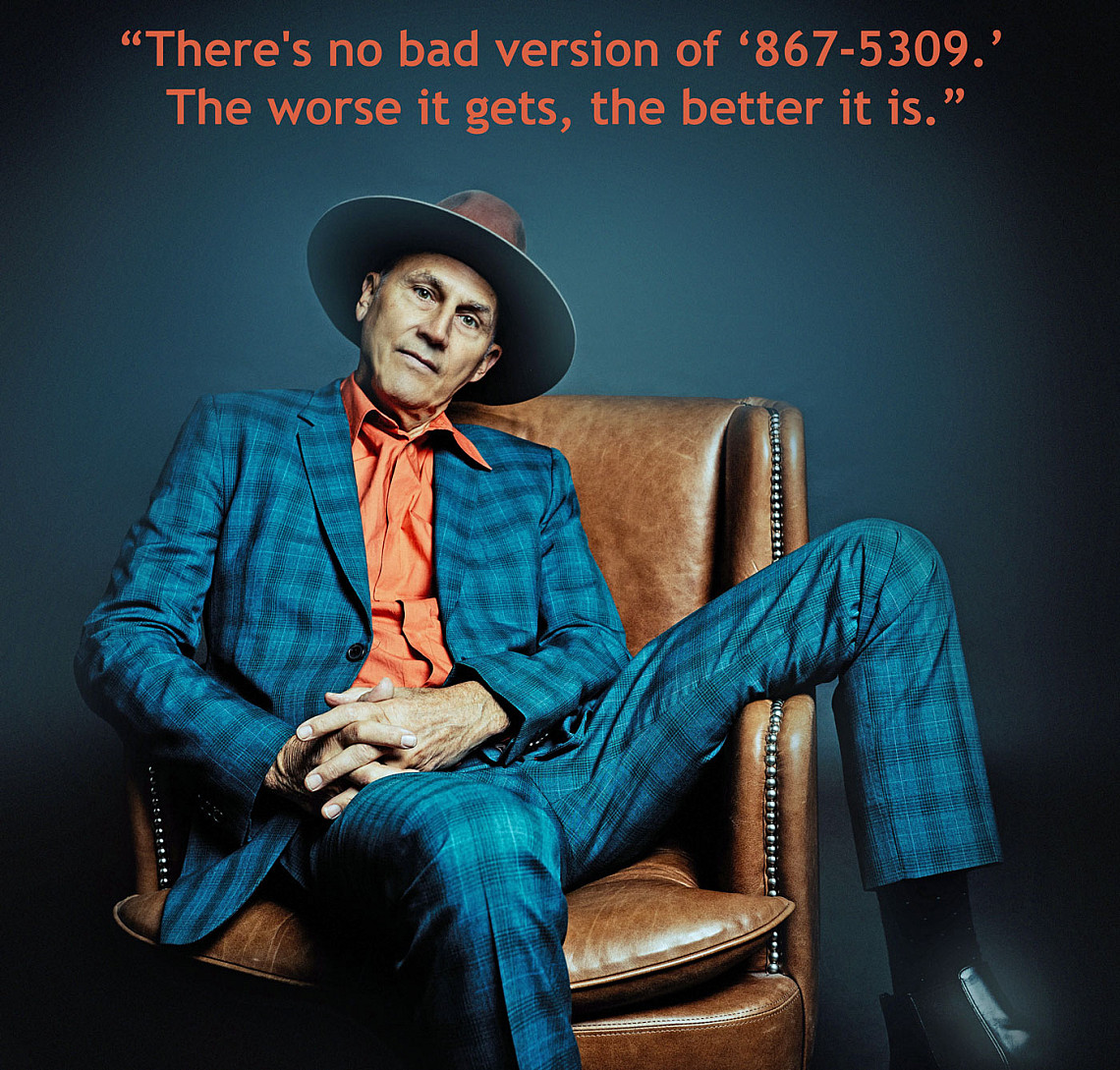
We have Jim Keller to thank for the most famous phone number in the world: 867-5309 (back then you didn't have to add an area code). He wrote the 1982 song "Jenny (867-5309)" with a songwriter named Alex Call, and recorded it with Tommy Tutone, the band he was in with Tommy Heath.
That one-hit wonderful song was a blessing and a curse: It brought the band a lot of attention but caused friction when their record label pushed for more like it. They split up a few years later, and Keller found himself looking for work (Tommy Tutone later re-formed without him).
In this conversation, Keller shares his thoughts on that famous song and explains how he ended up working with the famed composer Philip Glass. He also talks about his latest solo album, End Of The World.
That one-hit wonderful song was a blessing and a curse: It brought the band a lot of attention but caused friction when their record label pushed for more like it. They split up a few years later, and Keller found himself looking for work (Tommy Tutone later re-formed without him).
In this conversation, Keller shares his thoughts on that famous song and explains how he ended up working with the famed composer Philip Glass. He also talks about his latest solo album, End Of The World.
Making the End Of The World Album with Byron Isaacs
Byron and I have been writing songs together for over 15 years. He lives down the street, and we're connected at the hip.Most of the songs on this record weren't written by sitting in a room together. We used to do that, but Byron's busy with the Lumineers and others. Now, Byron will come in, or even join on FaceTime. He might add one line to a song or suggest a chord change. With pop songwriting, one tiny shift can make a big difference, and Byron brings that. His ear, both lyrically and harmonically, is invaluable. I tap into that whenever I can. Most everything I write, I run by Byron in some capacity, and he always brings something important.
The Song "No Time For That"
That song came out of a jam, which isn't unusual. I jam all the time, once or twice a week. I just call whoever's in town and ask who wants to play. I use it to play mainly new songs, and I don't record anything. Everyone knows we're just playing, and whatever happens stays in that room. Periodically, I'll come up with something, start playing, and I'll have my tape recorder running.That song was from at least 15 years ago. I came across it and had totally forgotten about it, then finished it with Richard Rudolph, a great songwriter. I sent it to him, and he said, "Hang on, I've got some ideas," so we finished the lyrics together. That's not unusual - some of my songwriting comes from playing with other musicians in a room and seeing how things work.
Coming Up With Songs
Whatever gets recorded is a reflection of a combination of things. Sometimes it's what's happening at the moment - politically or otherwise. The current state of the universe definitely influences some songs on this record, and others are more personal, or just pop songs. I use "pop songs" loosely. I saw David Byrne at Radio City, and he's one of the greatest pop songwriters. People think it's art-rock or whatever, but they're brilliant pop songs. I've always been fascinated by what works in a pop song: chord changes, melody, arrangement, voice... it all comes together. Sometimes you get lucky and something really good, maybe even great, comes along.We started figuring out what songs we liked, and in this case, it was me and Adam [Minkoff]. We recorded with just Adam, myself, and a drummer, so it wasn't unlike the other records I've done live. This wasn't completely live - my vocal's always live, which is important to me because I need to see the drummer playing to really have an organic sense of what's happening. We cut with drums, bass, guitar. Adam played a lot of the instruments and keyboards. We had fun with it.
The records I did with Mitchell Froom were quick - done in five days and celebrating at dinner five days later. This was a longer process, very different, and very fun. At this stage, for me, it all starts with a song. If you're lucky, you find great, talented people to work with, and everyone can express themselves in the process.
Jam Sessions
They aren't just in New York. For years I had a locker at our studio in LA. Every time I was in LA, I'd ask who wants to play. I was in San Francisco for a while and did it there, too. There's an incredible community of musicians in America and everywhere else. I've done this in Europe as well.The musicians never get the credit they deserve. You go to an off-Broadway play, and you get a program listing everyone; you go to Radio City Music Hall, and you don't know who's in the band. It's criminal, especially with digital music where there's not even an album cover to see who's playing.
I worship all these great players. I always try to bring in people I've never met; some hear about it, give it a try. I love being in a room where people don't know each other. Everybody knows when something special happens. You don't discuss it, you just know it was great.
There's no end to the joy. I'm in my early 70s, and there's no sell-by date on that. There are guys who are 20 and guys who are 70, and it makes no difference. It's a real benefit that you can keep doing this as long as you can stand up. Those sessions mean a lot to people, and people comment on it - the process of meeting people in a space where it doesn't matter what you're doing, you're just there to make music. There's no pressure, no rehearsal, no songs to learn. It just goes where it goes, and people really appreciate that.
Working With Tommy Heath in Tommy Tutone
That's complicated. It was the first band I was in. I'd moved to California and worked as a carpenter to pay the rent. Then I met Tommy - he'd been doing it for years. In many ways, he was like an older brother because he had much more experience. He saw me at a bar singing my songs and thought, "Let me grab that guy," and pulled me into his band. We started working together, combining our different backgrounds. The interplay between us was special - Tommy worshipped all the roots bands and early stuff, and I didn't care what someone else played. I'd just play it my way.The best stuff is where Tommy and I butted heads. "867-5309/Jenny" is a perfect example. I can listen now and literally hear Tommy doing that, me doing this, what I brought lyrically and otherwise. It was a great experiment that didn't last long, but it was fun while it lasted.
After that song, the label began giving the band songs that didn't feel right and caused friction.
Pressure to Revisit That Style
I don't have a career in that sense - nobody's leaning over my shoulder asking me to do something. That's the good and bad news about music now. Record labels are scrambling. For young artists, it's not like the old days when you'd get a record deal, quit your job, and make a living as a rock star. Now, you tour, probably don't make money, and you use your own money to make records. It's a totally different paradigm. What's great about my position now is, I do whatever I want. If a song makes me happy and makes the people around me light up, then I'm happy. My records may sound different each time, but who cares? I wasn't selling a million records before, so there's no pressure to do that again. The joy is just in doing it for myself and my peers. That's very different from young artists now.Managing Philip Glass and Rufus Wainwright
It's a completely different side of the brain, and I shut that off when I play or write. They're separate worlds. I did that for 25 years, and it worked, but when I go back to the music, I have to shut the door on business to dig into something different - a shift from a world about others to one about yourself.People often ask what I learned from Philip. We had a business relationship, and Phillip said, "I get up every morning and I work hard." As a writer, everything starts with a song. You have to show up, or nothing happens. Phillip wrote every day of his life, no matter what. That work ethic stuck with me.
At the beginning of your business relationship, Philip was impressed that I came to him and said, "I'm self-taught, let's work together," instead of saying, "I love your music, I want to do this."
I was a broke musician - anyone who's a musician or married to one will understand. I was desperate, playing gigs and trying to get production deals, but I couldn't pay rent or get health insurance. I happened into a situation where Philip needed someone to run his publishing. I met his manager, producer, lawyer, passed those hurdles, and ended up with Philip in his kitchen. I said, "This is who I am. I'm older than everyone else you're talking to. I'm not a lawyer, and here's my background."
He appreciated that I didn't go to college - I learned it on the street. The funny part is, I told him, "I'll work for nothing, and if you don't like it, I don't lose anything." He loved that. He asked, "Jim, do you know anything about my music?" I was sweating and said, "No, I don't." He said, "OK. When can you start?" I thought for sure he wouldn't hire me, but he did. That's Philip. He didn't need someone blowing smoke, and he saw in me something he could use, not someone who knew every note he'd played.
Beyond "867-5309"
There's a song called "Modern Girl" from one of my earlier records. There are many ballads I love because they're very personal. When I play, I can almost go anywhere and everyone knows "867-5309," but "Modern Girl" does something to the room. I think in another time and place it could have been a hit.What part of "867-5309's" origin or afterlife do people get wrong or never ask about?
"867-5309"
Everyone wants to know, "Was Jenny real?" There were about 25 Jennys.The core of the song came from Alex Call. He was in a band called Clover in California, where Huey Lewis came from, and John McFee from The Doobie Brothers. Clover was where Alex and I wrote together. If I hadn't walked into the studio that day when Alex was playing the basic groove and chords, it wouldn't be the same song. Alex doesn't get due credit because he wasn't in the band, so his name isn't mentioned as much, but if it wasn't for Alex, the song wouldn't exist.
We made up funny lyrics that day, then realized the song was good and made the lyrics more acceptable. Everybody's had fun with it since.
Like "Louie Louie," there's no bad version of "867-5309." The worse it gets, the better it is. Alex came up with the rhythmic structure of those four chords. I don't feel like I own it - it belongs to the universe, and I'm lucky to be part of it.
The Song Jim Wishes He'd Written
First thing that comes to mind is any Ray Davies song - there's about 100. "(What's So Funny 'Bout) Peace, Love, and Understanding" by Nick Lowe. Those songs are goalposts. You can write something that's just a rock or pop song, like Elvis Costello did, or with the sincerity Nick Lowe brings. The best pop songs have that dynamic. If you're lucky, you get both going on in one song. That's the one that comes to mind.Advice
I stopped playing for a long time, but I had a full life, getting married and having a daughter. Not everyone makes a living playing music or finds a path forward. The advice I give others is: have fun playing music, make sure you're doing it for that reason. Toward the end of Tommy Tutone, we were trying to please the label, and we shot ourselves in the foot. Tommy and I always had trouble getting along. If we'd stayed with what made us happy, we'd probably have been better off. We had no management, no producer, no label people to guide us, and that can be hugely important. If you're smart or lucky enough to surround yourself with people who give good guidance, it makes a difference. We didn't, and drove it into a tree. We had a good time, but it wasn't made for longevity.What Jim is Most Proud of
My family. My daughter is 27, she's an artist and loves what she's doing. It's fun to see that. Then, it goes to the songs and the joy of creating and appreciating having that in my life. When I was a kid, I'd tap on the table with my fingers, and my parents would smack my hand. I was too young to tell them I was singing a song with my fingers. I'm lucky to have this thing I'm part of, something that's always in my life. What a gift—not everyone has that.November 7, 2025
More from Jim at jimkellermusic.com
Also check out our talks with:
Pete Droge
Jesse Colin Young
Mike Stoller of Leiber & Stoller
Photos: Jimmy Fontaine
More Songfacts Podcast