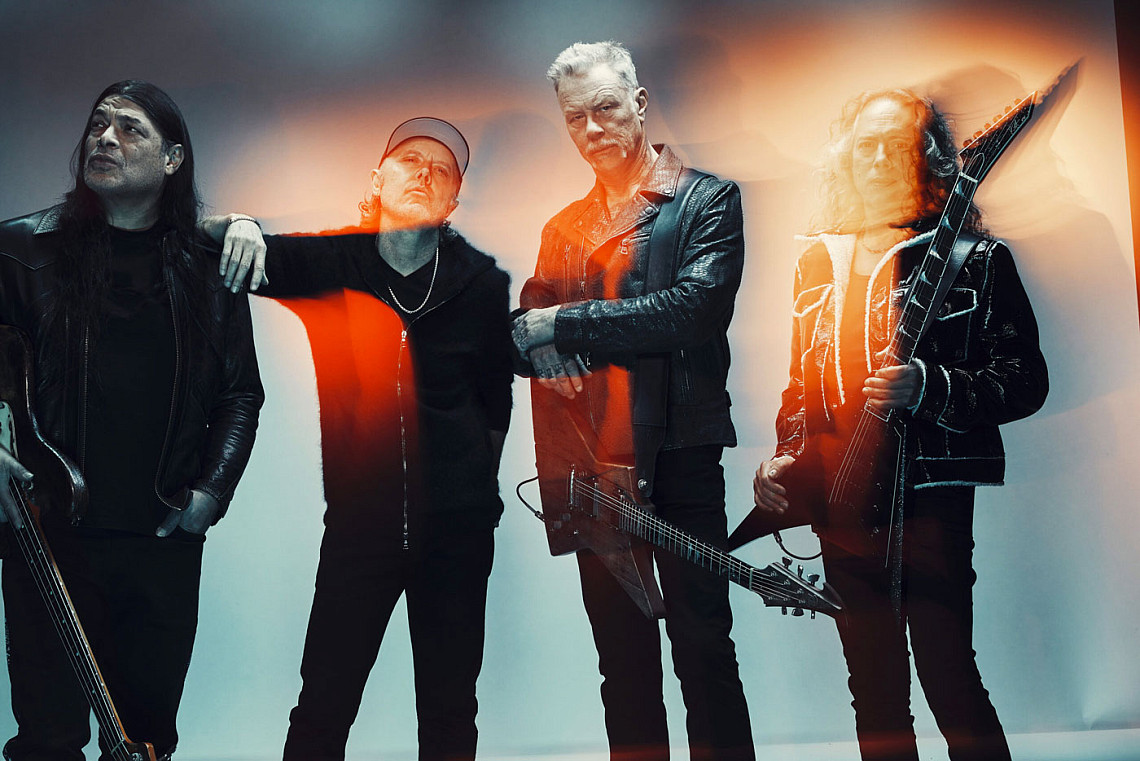
In August 2023, Metallica launched an official podcast, The Metallica Report, hosted by two longtime members of their camp: Renee Richardson and Steffan Chirazi. Renee runs the band's All Within My Hands foundation and has been interviewing and covering the band since her days as a DJ in San Francisco; Steffan is a British journalist who started covering the band for Sounds in the '80s and was later poached by Metallica to run their official magazine, So What! (yeah, Metallica isn't just a band - they're an organization).
We're thrilled to have Renee and Steffan as guests on the show to glean their insights into Metallica's music and find out what's happening on the M72 Tour, where the band play two completely different shows in each city, with film screenings and other events in between. After hearing this episode, you'll get a clear understanding of what motivates the band and might even give their Lou Reed collaboration another listen.
We're thrilled to have Renee and Steffan as guests on the show to glean their insights into Metallica's music and find out what's happening on the M72 Tour, where the band play two completely different shows in each city, with film screenings and other events in between. After hearing this episode, you'll get a clear understanding of what motivates the band and might even give their Lou Reed collaboration another listen.
How Stef And Renee Joined Team Metallica
Renee Richardson: My maiden name is Rottenbucher, so I did radio as Renee Rotten because that's what they called me in high school. Then I rebranded as Renee Richardson when I moved from an Alternative station to a AAA station where I had to be a little more friendly.My history with the band, I worked in radio in San Francisco for many, many years, and was a fan of the band and everything they did. The radio station didn't play Metallica, but I was still a fan and over the years would go see them live and got to know the management team. I interviewed Lars and possibly even Kirk. This was early 2000s when I was interviewing the band, but I lived in San Francisco and was on the radio in San Francisco starting in '95. Any time I could see them live I would go to that show. Radio people always like to get their way into concerts, so I was always working an angle to get my way into a show.
Flash forward to changes in radio, consolidation, eventually I leave radio. All this time, I had worked for nonprofit organizations as a volunteer and lending my voice to things, so I transitioned to a development director of a small music school in San Francisco called Blue Bear School of Music, and was learning everything I needed to know about fundraising and running a 501C3. In that time, Metallica was forming their foundation, All Within My Hands. So being friends with management, this came up and I was like, "Oh, I can help you figure this out and put some pieces together for you guys."
Over time, it became apparent that they needed someone to run the day-to-day of the foundation and that I was a perfect fit for that, and I was excited by that. And at that point I had moved very close to HQ, so I came on board to be administrative for the foundation.
When we started talking about the podcast, it seemed a very natural fit. And Stef and I got along immediately right when I came on to the organization - he was one of the first friends I made.
Steffan Chirazi: When I was 15 years old I bullshitted my way into the music press. I was already aware of Metallica's No Life 'Til Leather demo that had gone around the mean streets of Surbiton and Kingston, so we were already aware of that. The first free album I ever received as a "rock journalist" of nearly 16 at that point was Kill 'Em All. I got taken on "professionally" - beyond internship - in 1984, and the first feature I ever did was for Ride The Lightning. That was the first time I went on an airplane - I went to Paris to do that and met Cliff Burton, met all of them. When Cliff heard I was moving to the States he gave me his phone number and said, "Call me, I'll show you around." In the meantime I interviewed them for Master Of Puppets. This was all for the Sounds newspaper, which was one of the big three along with Melody Maker and Kerrang, which was the heavy-metal big brother, if you will.
Cliff introduced me to a bunch of people, and he obviously didn't come back, which is a great shame. I still miss him to this day. [Burton, Metallica's bass player on their first three albums, died in 1986 in a tour bus accident when the band was traveling in Sweden. He was succeed by Jason Newsted, whose first album with the band was ...And Justice For All, released in 1988. On that album, you really can't hear his bass... more on that later from Stef.]
But I did a lot of reporting on them and sort of became the go-to chronicler. The great thing with this band is that if you were to give them a soft ride, they'd look at you and think you're a twat. So you'd push them and push them, and I was able to get more out of them because they expected deeper, tougher interviews.
Over the years I went all over the place with them. In '99 they officially gave me So What! magazine as the editor. Tony Smith founded the magazine, but he'd taken me on as a freelancer for pretty much every issue.
For better or for worse, we are family. We are a band of brothers.
Incident At The Kiev Diner
Renee: What got me hooked on Metallica was a concert. My cousin took me to see Metallica with The Cult at Brendan Byrne Arena. I was a fan of The Cult. This was 1988-'89. So I went to that show and was like, "Metallica... whatever." I go to the bathroom when Metallica's coming on and I just hear this power coming through, and I'm like, "What the fuck is this?" I ran out, and that was it. I fell in love their performance, their music, everything. It was the live performance that sucked me in.Stef: I was at that gig, and after the show, I took Lars to the Kiev Diner in the Lower East Side - it's long gone now. We got out of the car, and I remember one thing specifically: He was wearing unscrupulously short running shorts for somebody's after-gig. And one of his skinny little T-shirts.
So we're in there, and the next thing I know, the limo driver has gone thumping into the wall of the restaurant, the glass window. Apparently, he was getting out of the car and he got clipped and somehow flew into the window.
The Lower East Side back in '89 was OK, but you're near Alphabet City, not far off from the ABCs - the locals come out. It's like 1:30 in the morning and they start coming out. I put Lars behind the cashier and said, "Don't move." I go outside and the driver shouts, "Whatever you do, get the $2000 check out of the glove box!"
Suddenly, everyone starts congregating towards the car. Now, that night, they gave out ...And Justice For All leather tour jackets to the crew. Mine was in the back, so I say I'm going for the check, but I go into the back for my jacket, and this lot starts coming into the limo behind me. I'm like, "Get out!"
I get the check, get the jacket, call the tour manager on the restaurant phone. We got out of there, but I will never forget that show.
I thought The Cult that night were absolutely shite. It was one of the only super-negative reviews I've ever given anyone. Zero rating. But that was an excellent tour.
Songfacts
Renee: My history with Songfacts, being a radio DJ, you are taking in songs from every genre, and maybe some things I'm just not hip to or don't really care about. You're playing these songs on the radio, and the fastest way to learn as much as possible is Songfacts. I was also doing music news for radio stations and little segmented pieces where I needed to know my facts, and I'm not the kind of person that remembers details very well, so Songfacts became very handy as a radio DJ to formulate your thoughts around the music that you're playing, get new ideas, find out new things and then piece things together so you tell a good story on the air.That's how I came to find Songfacts, and I'm so glad it still exists.
The Metallica Report
Renee: The format of the show is a weekly news update, but all inclusive. We really want people to feel as a fan, as a band member, as a part of the crew, that everyone is included in this, and we piece together each show around different things that are going on. So right now it's very tour-centric. Each stop, Stef and I are recording from the tour and we're pulling in pieces that we think people will find interesting. People can also send us a little audio questions that will get answered for them. It's a weekly show where Stef and I take you on a deep dive of Metallica, and you're a part of the the program.Stef: My deep dive with them has always been as a chronicler, and to get into the psychology of what they do and the mental side of who they are. I really want people to feel that they are sitting with those band members for that moment. That's a very key part of this show. People should feel that we're in their living room with them. I want them to feel by Week 20 that they have to make me a cup of tea.
...And Justice For All
Stef: I think the whole Justice album was an exercise in grief and an exercise in defiance and power and sadness. And ultimately, triumph. It was a an extremely potent, powerful, confusing album in many ways, emotionally. They were paralyzed with grief in many ways but they knew instinctively that they had to go on. Cliff wouldn't have had it any other way. That's the truth. He would have looked at them and said, "You're a bunch of pussies, what are you doing? Don't sit around moping. That's not what this is about."But how could you not be poleaxed? It was an incredibly traumatic, emotional thing to go through.
Jason's bass does not appear on the record, which I found out to my chagrin when I turned up in Detroit on the Monsters Of Rock and me and a friend went bumbling into his room. He's like, "Hey you want to hear it? I've got the final."
He put it on, we listen to [first track] "Blackened," and I'm like, "Wow, this is fierce."
He goes, "You hear anything? There's no bass." [Newsted's bass was buried on the song but it did earn him his first songwriting credit with Metallica. When we spoke with him in 2013, Newsted recalled writing the song with James Hetfield. "I was actually composing a song with James from Metallica and he was approving my riffs and saying, 'This is going to be a Metallica song,'" he said. "It was a very, very big moment for me, because I was getting approved from The Man to have my first chance on having one of my compositions on a Metallica record. So that was a very special time."]
If you ever wanted aural proof of the transition, that would be it. Jason really came into his own on The Black Album, which was when you really start to hear him, but the work they did together on the Justice tour, those were hard miles and they all deserve a tremendous amount of credit for getting through them. It was intense, and that's why those shows, like the one Renee saw, were so fierce. The flaming star was coming alive. They were exploding, but there was an undercurrent of unprocessed grief.
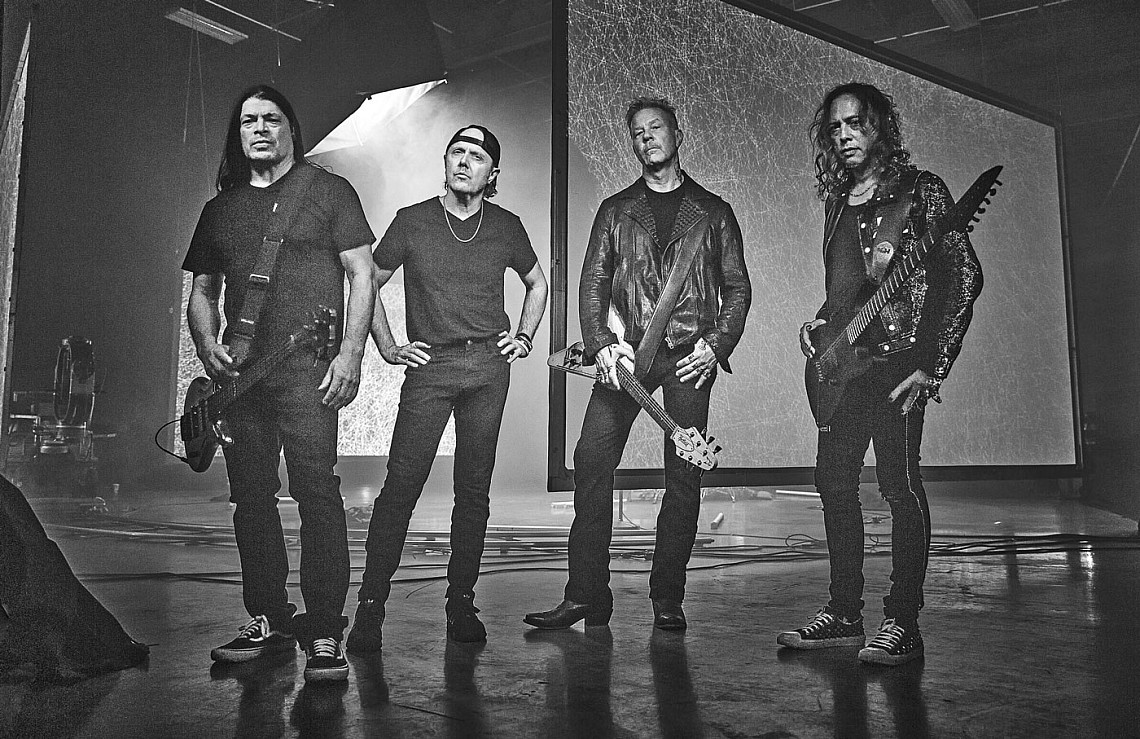
Metallica Bass Players: Cliff Burton, Jason Newsted And Rob Trujillo
Stef: Cliff was a river in the way he played - he had a lot of flow to him. He was a finger player, so he's plucking a lot. That gives a different feel. He was very much a connection point, so that bass flows. You listen to "Orion," it flows. You even listen to "Master Of Puppets" as a song, it flows. "Ride The Lightning," it flows. There's a connection.Jason was a brilliant bass player, but much harder. Jason came from Flotsam And Jetsam, and it was only later that he was able to express other sides of his playing. Like a lot of bass players, Jason loves jazz music, he loves reggae. That started to come out later, but when you heard him on the Justice tour, he felt an obligation to really bring the metal and to bring the energy. Like a soldier, he felt the obligation to take that on. He made it a huge commitment. So when you listen to the Justice tour, it's very, very hard. Relentless. And then when RT came in - Rob Trujillo - who by the way is the longest-serving bass player by some distance, you're back to more of a river, more of a connector in the aural sense. But what Jason did at that time was so important.
Hazing
Stef: I always like to sneak in the dressing room when it's quiet, when there's nobody in the dressing room. I've actually got a stash of pictures over the years of the dressing rooms in various places when it's quiet, because I think it's a really interesting moment. And I do remember seeing in the bathroom, three toothbrushes and one [Newsted's]. It got to be like that.But you think about it, they're in their early 20s. We're all fucking around in our early 20s. There's always someone being a bit dicky to someone else until something happens. It's youthful dickheadedness.
Renee: Boys are mean.
Stef: I never separated anyone's toothbrush, but I understand the sensibilities that happened. But That's a lot of unprocessed grief, and it was heavy.
The Most Underrated Metallica Song
Renee: "All Within My Hands." It's a great song and I'm so glad they chose that song to name the foundation. I think it is a completely underrated song and I love it in all its forms. I love it acoustic from the 2018 benefit, and I love it with the San Francisco Symphony from 2019, and I love the album version. So yeah, that's the most underappreciated.Stef: That's a great choice. We're talking about emotions in records, and this band wears their heart on their sleeve in their albums, and St. Anger was another absolute powder keg of emotions. Just massive tension on that record. It's the "lost" Metallica album for me, or the least appreciated, but it is the most definitive of where they were at that time as people.
That song in particular is just anger and sadness and defiance - it's all of those things. The struggle is encapsulated so clearly in that song, even the way it reaches that frenetic climax. It builds and builds and builds, then it's like there's nothing left in the tank. At the gym, when the trainers say, "Come on, this is the last minute, give it your all, don't leave anything behind!" Well, this left nothing behind. Not a squeak left. It's a great song.
There's another great song on that record: "My World." I love the album, but I like the outliers.
The Lost Riff
Stef: I think the riff that's been lost to all time is "The View," which is on the Lulu record with Lou Reed. Now, whether you like Lou Reed singing with Metallica or not, that's a very personal choice, but that riff is absolutely huge, and it's such a lost riff because a lot of people won't listen to it.There was a seating area above where they were all rehearsing, and I was sitting observing - like a crow's nest almost. I watched him walk in, look, turn around and walk out, and everyone's like, "What the fuck?"
He came back in, and I remember Big Mick Hughes [Metallica's engineer] was sort of a mediator with Lars when they were talking with the band, and he goes, "Let's just see how it works."
So they played, and within half an hour, the smile on Lou Reed's face was wider than the building. By the end of those performances, he goes, "We've got to do an album together. I want to make music with you. We've got to do something together."
I always felt Lou Reed was very good at picking the energy to feed off, and I think at that point of his life he wanted that renegade energy. Metallica have an insatiable energy and hunger about them to do stuff. They do it because they have no choice: They're not going to sit around and count their money, it's not what they do. Their heads are always ticking with something, there's always a riff. There's always something. It's insatiable. He loved that energy and wanted it, so that's how Lulu came together.
It was fascinating. I'm one of the rare ones that managed to observe it. I usually stay out of the studio because I don't want to hear things until they're done, but this was one where I wangled my way inside because it's Lou Reed. You want to watch and learn, and it was incredible.
S&M
In 1999, Metallica released S&M, an album where they're backed by the San Francisco Symphony.Stef: That's a great period in Metallica's history. You have to take it from the mid-'90s to really get to the symphony album. In 1993, they're coming off a time when they were the biggest band in the world. It's so insane that Kirk Hammett goes back to SF State for a semester or two just to re-acclimatize to humanity. He put himself back into school to keep from going off the rails. So this is a mind-blowing thing.
What's the one thing that this band doesn't want to do? They don't want to just exist as the biggest band in the world. They want to keep challenging. So they go exactly the opposite way. They decide to cut their hair, experiment with makeup, and really get into some serious songwriting - not that they haven't before, but not making The Black Album 2 is my point. So they were constantly on the lookout for new. What's going to excite us? Where can we go? Where are the projects? Where can we find the stimulus?
You've got to remember as well, Cliff Burton was instrumental back in the day in introducing James to classical theory, so he helped sow those seeds. When you listen to Metallica music, the arrangements are very much made to work with classical music. There are some people who say that it isn't, but they're just not listening properly.
So it became, "What can we do next?" And this project presented itself with Michael Kamen. It was another extension of who Metallica were at that time. The previous year they'd done the Garage Inc. album of covers, a double album. You had Load, you had Reload, it's like, "Where else can this crazy ship go?" And there we have it. It was tremendous.
You had some brilliant songs like "Bleeding Me." It's almost written for those sorts of arrangements. It was a really great thing. It was weird - the first few notes you're like, "Whoa!" It's weird but it works.
I love them for always looking to do something other people wouldn't. I love them for making albums that have only a couple of songs less than six minutes. Add this to the table of great experiments of bravery that worked.
The M72 Tour
Renee: A lot of this was born out of the 40th anniversary San Francisco takeover they did. When they were celebrating the 40th anniversary of the band, they did a whole thing in San Francisco. They had shows at the new Chase Center where the Warriors play basketball.That worked so well. We had events going on at night in San Francisco in different parts of town. We had cover bands playing shows, we had a philanthropic talk that I did in the Mission in San Francisco, we had a beach cleanup. We had a volunteer day at the food bank. The mayor, London Breed, she proclaimed it Metallica Day. It was a big weekend of activities. So when it came time for the M72 world tour, they knew they could do a takeover. Let's continue with that model - we're going to be doing no-repeat weekends, so why not fill it with all the things that people would enjoy.
Metallica fans come from all over the place, so I think they feel an obligation to make sure everybody's got something to do and has a good time. There are club nights - OTTTO and Bastardane, the two bands of the kids of Metallica members, are going to be playing gigs. Stef is hosting an interview with Ross Halfin, the photographer, on certain dates. For All Within My Hands we're doing some food bank volunteer hours in the various cities.
And then one of the things that was a big surprise in Europe, we started these pop-up shops so people can go to these locations to buy their merch, not having to wait for the show. Because if you've ever been to a Metallica show, the line goes around the block for your merch.
Stef: There's also film screenings - the three Metallica movies playing back-to-back on every in-between day. There's three cover bands playing as well. There's a lot going on.
One thing to know about Lars: Lars is the biggest Metallica fan there is. And Lars is someone, who, if he invites you into his house or if you hang out with him, he is a very committed host. So he does, as Renee said, feel an obligation to make sure everyone is entertained and kept busy.
I think the idea is, if you're going to go to two shows, make a weekend of it and let's make sure we're looking after you as best we can. That's definitely the driving motivation behind it. It is unique. I can't remember seeing anything like it. If you go to two shows, you get 32 songs, give or take one or two if they're feeling particularly great, but usually it's a straight 32 songs over the two shows. But even if you only go to one show, you're still going to get a unique gig. It's great there's no repeats over those weekends.
It's pretty exhausting actually. They work hard for it. They eat properly, they trained properly, they treat themselves like a sports team. They rehearse the night before the first gig, so technically they're doing two-and-a-half gigs in four days. It's an operation, and the crew is just incredible. That crew is just out of this world. There are feats of engineering that I still don't understand.
September 15, 2023
Find Renee and Stef on The Metallica Report. Like the Songfacts Podcast, it's part of the Pantheon Network. Here's where you can subscribe to the Songfacts podcast.
Also check out the Metallica Songfacts, and our interview with longtime Metallica producer Flemming Rasmussen.
Photos: Tim Saccenti
More Songfacts Podcast