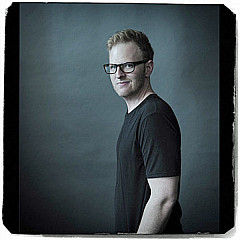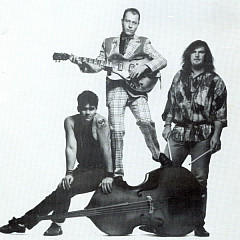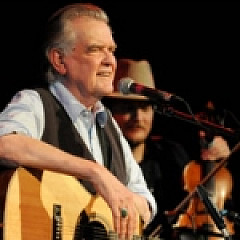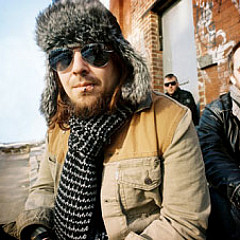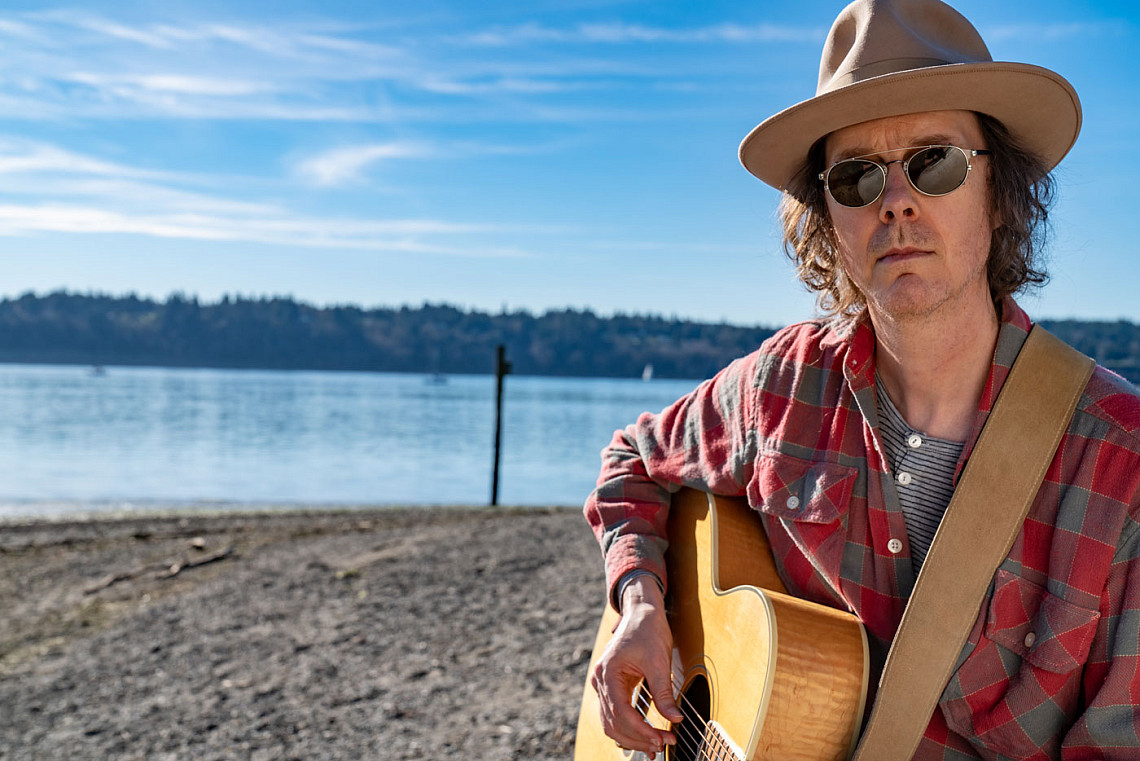
It's been 30 years since Pete Droge hit the airwaves and the Hot 100 with his first single, the sardonic "If You Don't Love Me (I'll Kill Myself)." That song ended up being his commercial peak, but certainly not his artistic apex. He's made a lot of great music over the years, including a 2003 album with The Thorns, the group he formed with Matthew Sweet and Shawn Mullins.
Droge's music has gotten more personal over the years, and he's collaborated more often with his wife, Elaine Summers; they've released various albums under the banner The Droge & Summers Blend. In 2025, Droge released Fade Away Blue, an album that reflects on the search for his birth mother and his gratitude for his adoptive parents. The transcript of this episode is below.
Droge's music has gotten more personal over the years, and he's collaborated more often with his wife, Elaine Summers; they've released various albums under the banner The Droge & Summers Blend. In 2025, Droge released Fade Away Blue, an album that reflects on the search for his birth mother and his gratitude for his adoptive parents. The transcript of this episode is below.
Pete's Adoption Journey
"Song for Barbara Ann" is the keystone song of the album. It was the first song written, all the way back in about 2012, a couple of years after I started to really dig deep into my adoption. Previously, I had never thought much about being adopted. Around the time I turned 40, I began a lot of soul-searching and realized that being separated from my birth mother and the experience of adoption was a major thing. I learned about ambiguous grief and adoption trauma. There's a writer named Nancy Verrier who talks about the separation of the baby from the mother being experienced as trauma, which impacts development. I started to unpack a lot of that around 2010, and a few weeks after all that was unearthed, I decided I was ready to search for my birth mother.The silver lining was, that very night, I was on the phone with my grandmother, who is now 98. We talk all the time. My birth mother's brother, my uncle, is just eight years older than me, so it feels more like having a long-lost brother. They welcomed me into the family with open arms. Shortly after that, I was on a plane bound for Appalachian Ohio, where I got to learn not only about Barb, my birth mother, and her story - which shows up in the song "Gypsy Rose" on the album - but also about my family history. I found that to be a healing process, to learn where I came from and to be with people in whom I could see myself reflected.
That was all around 2010. It took a couple of years before I felt ready to write about that experience, and that first song was "Song For Barbara Ann." We started recording it for a side project I have with my wife, Elaine Summers, called The Droge and Summers Blend. We cut the basic track in 2013, but ultimately decided to hold off on it because it felt like it belonged on a Pete Droge record, since it was so personal.
We held off, and around 2015 put the whole Droge and Summers Blend project on hold because I started experiencing chronic fatigue. After trying to keep things going for a couple more years, in 2017, I went into semi-retirement and stepped back from my career. During these "fatigue years," which are still ongoing but to a much lesser degree now, I continued to write. I asked myself, "If I could only do one thing, what would it be?" That was to write songs. During that period, Elaine and I wrote a lot. As songs took shape and I thought about how an album would come together, it was all built around "Song For Barbara Ann." I wanted an album where all the songs could live alongside that one, so that helped narrow things down. I wasn't going to just throw in a random party anthem with that song on the record.
With that song being so direct and personal, that kind of became the MO for Elaine and me as we developed the rest of the material. In the past, I've tended to be a bit more cryptic and poetic, but with this album we wanted to be direct, truthful, and honest.
There are other songs, like "Lonely Mama," which talks about not getting to meet my birth mother. I followed it with "Song For Barbara Ann" at a recent show and said, "This was such a significant life experience that it warranted not one, but two songs." And "Gypsy Rose" tells my birth mother's story around the time she had me, which I gathered from her friends and family. On the flip side is the lead track, "You Called Me Kid," a song of love and gratitude for my mom and dad. I wrote it a couple years after my dad passed in 2015. I'd had the title for a long time because he used to call me "kid." I thought that would be a solid title and eventually it became that song. Sadly, my mom passed away three days before "You Called Me Kid" was released as a single in June. I was able, at her bedside, to play her a soft, mellow version of the song.
Those are the cornerstones of the album. I didn't want to make an entire record about adoption, so the other songs chosen for the record drop into different periods of my life. "Sundown At Francis Nash" is about my wild, drug-filled, psychedelic teenage years. "Fading Fast" is about touring relentlessly in the '90s. "Taking Leave Of My Senses" addresses substance abuse issues I've dealt with. It's a largely autobiographical record, but not strictly a concept record, though there is a thread throughout.
The album's also been described as dreamy and cinematic, with different snapshots from my life. There are songs that reference specific places and memories from Bainbridge Island or Eugene. "Sundown At Francis Nash" - Francis Nash was a military base on the south end of Bainbridge Island, aimed at boats coming through the passage. It's an abandoned space with a big reservoir, underground rooms, and a radio tower. In the song, I see myself in the radio tower, looking down at the evergreens and the Olympic Mountains. It was a really trippy place where some of us used to party, and that's a very specific Bainbridge Island memory the song is based on.
Working with Producer Paul Bryan
The album was recorded with Grammy-winning producer Paul Bryan. All the material was written before Paul was involved. To deal with my fatigue issues, I cut all my tracks up here in my studio. Some started as quick demos. For example, the basic track for "Lonely Mama" was just a sketch I recorded on cassette four-track. "Fading Fast" began as a demo. As I listened to them, I realized, This is the record. Paul wasn't involved in the writing but came on board after I had guitars, vocals, and sometimes Elaine's harmonies in place. I'd send the tracks to his studio in Los Angeles, and we used a plugin so I could hear his mix in real time. That's how we worked.Paul was impactful in his instinct to keep things simple. He heard what I'd created and felt a lot was already there, so we just wanted to add one more element. On "Fading Fast," we brought in Jay Bellerose on drums and percussion, and Paul added his bass. Instead of adding lots of ear candy and details, as I tend to do, he suggested being economical. For "Fading Fast," just a small, ratty electric piano was all it needed, which Lee Pardini came in to play. That was Paul's influence - keeping it simple.
His sensibilities on bass took things a little outside roots rock norms, being a bit more inventive. Paul's a jazz producer, with experience in harmonically rich, adventurous albums, so he's got a wide musical palette. He was also a great collaborator on mixing; I've produced and mixed myself in the past, but he really loves mixing, and he's great at it. That collaboration was important.
Pete's Chronic Fatigue
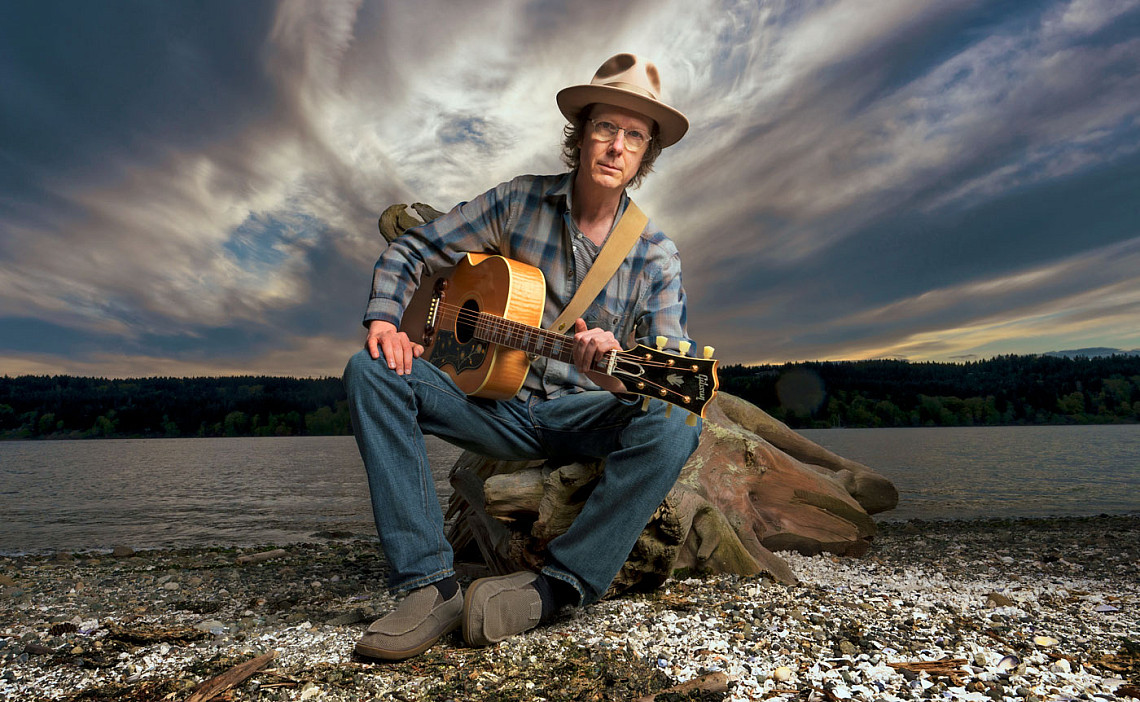
When I started feeling well enough to think about making a record, I didn't have the energy for a traditional studio process. That's when I realized some of my demos sounded like actual records - they had that X factor. I can't define what it is, but you know it when you hear it. I could record on my own schedule, set up some mics, record a few takes, then rest, go back to it later. Once we had the idea of working remotely with the rhythm section and other players, that was the magic ingredient. Without it, making the record wouldn't have been possible, so I'm grateful we found that path and happy with the result.I was really hoping to do a live studio album next, because there's nothing like that buzz and interaction. But for this album, the musicians - like Jay Bellerose (T Bone Burnett's drummer), Lee Pardini (formerly of The Band of Heathens, now with Chris Stapleton), Greg Leisz (on a million records) and Gabe Witcher on fiddle - were so good, they found the pocket and groove around what I set. It's not easy to do, but they're seasoned pros, and the record wouldn't be what it is without that caliber of player.
How His Songwriting Has Changed Over The Years
Certainly there's more attention to lyrical detail now. In the early days, I moved fast and took a play from the Neil Young playbook: work fast, trust your instincts, move on. Back then, while partying and touring in a fast-paced world, it was easy to just finish a song and move on to the next. Now, I co-write a lot - six out of 10 songs on this album - with Elaine Summers, my partner. We're more about the Leonard Cohen method: work and refine.Elaine is a lyrics-first person, while I'm a groove-and-feel person. She listens for meaning, I focus on the pocket and the band. Our process often starts with my initial melodic seed, sometimes just mumbling with a hook. Once that's established, she's focused on finding the core of the song and its message. We spend a lot of time refining lyrics, chiseling away unnecessary words, and tweaking melodies and phrasing. Sometimes the collaboration is central, other times, as with "You Called Me Kid," I wrote it solo. We just take it case by case.
It's important to pair subject matter with the music, or sometimes do the opposite: happy music with sad lyrics and vice versa. Usually we don't set out to write about a particular topic - it just unfolds. For "You Called Me Kid," I wanted to write a song for my dad after he died and had the title, and the rest followed. "Fading Fast," which I also wrote solo, started as an improv that grew from the lyric "pulling out of Omaha." That set the path: on the bus, cornfields, remembering that feeling. "Gypsy Rose," with its free-spirited lyric, became about my birth mother. Elaine actually suggested the title on a walk.
It's always a little different, and that's what we love about songwriting. Sometimes there's a core idea right away. Other times, it reveals itself as we work.
"If You Don't Love Me, I'll Kill Myself"
I wasn't surprised by its reception. When we first played it live — even opening for B.B. King — I could feel it had that thing, the X factor. When we cut the record, it felt like we captured something special. Our producer Brendan O'Brien called me "one take Susie" after nailing it on the first take. So I wasn't surprised it did well.It started to get traction at radio, then someone told me it would be in Dumb And Dumber with Jim Carrey, and the song kept picking up steam. It didn't really fit with the rest of that album, which is why it's first on the record — it had nowhere else to go.
I wouldn't write that lyric today. It took about three minutes to write, thanks to the rhyming dictionary, and the song just fell out. I've wondered if the suicide lyric held it back or rubbed people the wrong way.
We now adapt the chorus to "If you don't love me, I'll love myself." We never announce it beforehand, and every time, the audience cheers at the change. We recorded an acoustic version for the deluxe double vinyl that includes the adapted lyric.
It was exciting to have a hit — it opened a lot of doors. I hope people discover the rest of my catalogue and see there's a lot more to my songwriting than a three-and-a-half-minute tongue-in-cheek romp. But if that's all people know me for, that's OK too.
Hidden Gems in the Pete Droge Catalog
One I love performing is "Under the Waves," which had a pretty good life - it was maybe a nano-hit. It was featured in "Grey's Anatomy" a couple times and some movies.There's a song on the Blend collection, "Give Me Time." It's a slow, beautiful track. I was surprised not to hear more feedback about it. It just has a deep emotional resonance for me, and I love it.
The Song He Wishes He Wrote
There are so many. I recently watched the Billy Joel documentary, and it was amazing to hear Paul McCartney say the Billy Joel song he wished he wrote was "Just the Way You Are." For me, the first song that popped into my head was "All I Have to Do Is Dream" by Felice and Boudleaux Bryant. It's simple and beautiful, with an amazing bridge. Songs like that feel timeless and deceptively simple. Easy to hear, hard to write.What's Next
We're gearing up for some dates on the East Coast in September. In October, there's a string of dates around the Northwest, with The Triple Door in Seattle on October 10, which is tentatively set as the release party for the reissue of my debut, Necktie Second. I'll put together an all-star Seattle band for that. Most shows lately have been acoustic duos with Elaine, so a full rock band will be fun.I have a new booking agent, and we're planning short runs, not the marathon tours of my younger days, due to health issues. I want to stick with this record for a long time. Nowadays things are so front-loaded. Singles come out, then the record, and that's the cycle. We want to go old-school. We're proud of this record and want to take it everywhere we can. I'd love to get back to Europe, the UK, and Australia, where I toured with The Thorns.
I'm not in a hurry to make another record, which is unusual for me, because I love the studio, but this album is so important I want to devote time and energy to getting the word out. There's so much noise out there, and we're determined to let people know this record exists. "You Called Me Kid" and "Song for Barbara Ann" have already touched people, and the feedback has been amazing - people telling me it filled their hearts in places they forgot needed filling.
That feels great, because it's easy to get wrapped up in external success: sales, awards, etc. I'm well under the radar of blockbuster sales, but I'm happy just to stay connected to the beauty of making and sharing music that can make people feel something. It doesn't have to be a million people for that to be a beautiful thing. I'm determined to share this record and its stories. So thank you for the great questions and this conversation.
September 16, 2025
Subscribe to the Songfacts podcast, part of the Pantheon Network
Further Reading:
A.J. Croce
Jesse Colin Young
Julia Cannon
Get tour dates at petedroge.com
Photos: Lance Mercer (1), Rick Dahm (2)
More Songfacts Podcast