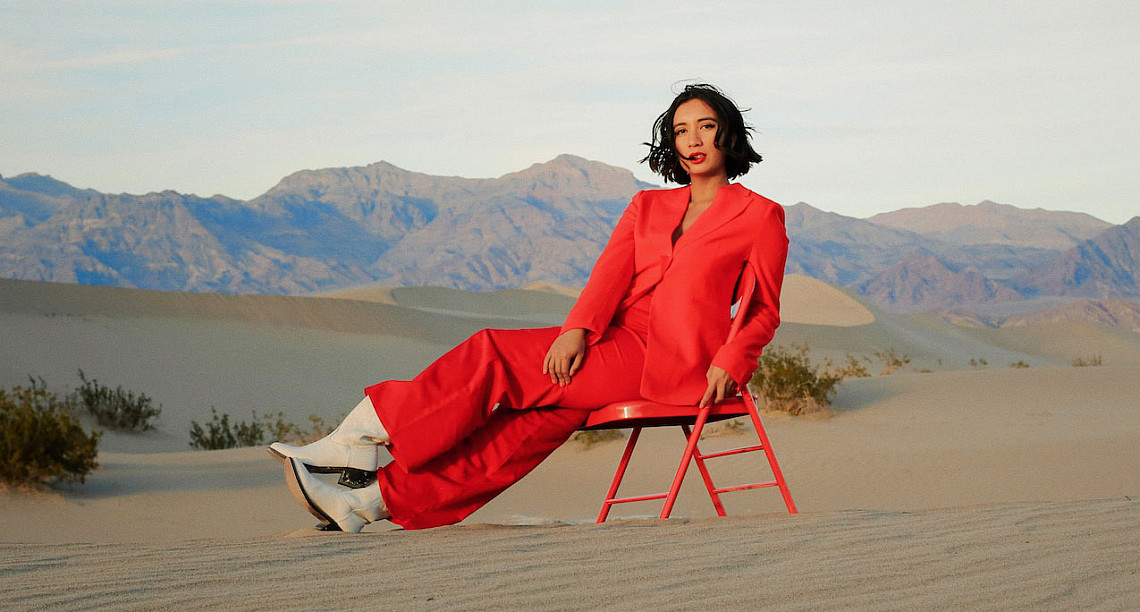
Just one year after releasing her debut EP, Raye Zaragoza was thrust into the national spotlight when her song "In The River" became part of the soundtrack to the Dakota Access Pipeline protests near the Standing Rock Sioux reservation in 2016. The following year, she issued her full-length debut, Fight For You, which strengthened her reputation as a social-justice artist with songs about indigenous rights and female empowerment.
These days, Zaragoza is opening up about her private struggles on her new album, Hold That Spirit, set for release on August 11, and proving she's not afraid to get personal and bare her soul through her art.
Beyond talking about new songs like "Joy Revolution" (feat. Milck) and "Not A Monster," this episode goes into some of Raye's more personal moments, including breaking off a wedding engagement and using those funds to produce this album, as well as her battles with an eating disorder.
Zaragoza's music is inspirational and honest - a testament to how we are not alone in our struggles.
These days, Zaragoza is opening up about her private struggles on her new album, Hold That Spirit, set for release on August 11, and proving she's not afraid to get personal and bare her soul through her art.
Beyond talking about new songs like "Joy Revolution" (feat. Milck) and "Not A Monster," this episode goes into some of Raye's more personal moments, including breaking off a wedding engagement and using those funds to produce this album, as well as her battles with an eating disorder.
Zaragoza's music is inspirational and honest - a testament to how we are not alone in our struggles.
Shooting The "Joy Revolution" Video In Milck's Backyard
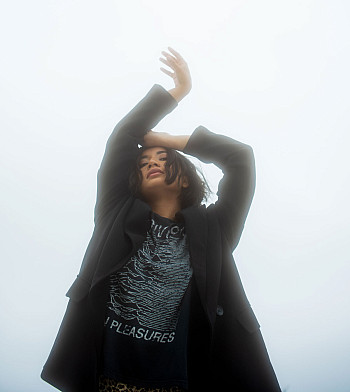
The video for "Joy Revolution" features me and Milck [Connie K. Lim], who's the other artist that's featured on the song. We had this single coming out and I didn't have any visual content for it, and it was all moving really fast, and I was kind of panicking. I was like, "Gosh, I gotta make a video for this." So I called Connie and I was like, "Hey, if I show up at your house with my cell phone, could we make a music video? It could just be us singing into hairbrushes, like putting the iPhone on a tripod and like that'll be it. Everyone says that DIY videos are the way to go right now. We don't need to do anything fancy."I really wanted to respect her time too. I'm like, "Let's just make something real quick." Then I get to her house and she's in total director mode and she's like, "We need to have a shot here and a shot there." She had the idea of shooting us singing into the phone, but it looks like our heads in the clouds. And then, "Let's do a couple with us both in the shot over here." It was all in her backyard. We ended up, almost on the fly, storyboarding this entire video that's pretty much just us having fun.
Whenever I'm with Connie, we have a blast. Every time we've ever written a song together, been in a studio together, we were dying of laughter - just cracking each other up. We both think that each other is the most hilarious person, which is funny because neither of us are really comedians - we're like full Americana music artists, pop artists. But we think of each other like total comedians, so we have so much fun. And then I was like, "What if we have a shot where there's rocks, inspired by Everything Everywhere All At Once? And what if we have a shot just of our feet?"
That's kind of how it came about. It was all very on the fly. But I just wanted to capture this energy of two women in their 30s having a slumber party, having fun.
The Message Behind "Joy Revolution"
Milck and I are both known to be social-justice artists. We write a lot of songs about social-justice issues about, for me, indigenous rights, immigrant rights. We're both AAPI [Asian American and Pacific Islanders] artists, so it means a lot to us to comment on a lot of these current events happening in the world. The song that kind of put me on the map as a social-justice artist was a song I wrote about Standing Rock in 2016 ["In The River"] about fighting for indigenous rights and land rights, water rights. That's really been where my passion has lied for my whole career, and it still does.If I could speak for Connie, I think it's the same for her. She's very passionate about all the causes that she sings about. When we were in this writing session for "Joy Revolution," I was talking about this quote I heard - I don't even know where I heard it - about how existence is resistance for people of color, and also how your ancestors fought for your laughter for generations. I think about my grandmother, like literally this generation in my family, she was working in the fields at the age of 14. She's not around anymore, but I know that she sees her grandkids running around in her pool and having all this fun, and it's like she worked so hard for that. That was all her hard work.
There's this air about the world at times, especially during the pandemic, where it's like we do not deserve to have fun - we need to really be very diligent about improving the world around us. Joy and fun has been put on the back burner because there have been a lot of reasons and there have been a lot of things we need to focus on. But those two things can exist at the same time - we can fight for our rights, we can practice safety and everything around Covid and we can be very mindful of how we show up in the world while also experiencing the small joys in life, like hanging out in your friend's backyard, making a play with rocks and having slumber parties and finding that childlike joy within you. You can do that while also fighting for these very adult and very important causes that we do as adults, but we still have to find that inner child within us every day just for our own mental health. And that's pretty much what "Joy Revolution" is about - it's about how existence is resistance, and our ancestors fought for our laughter and we deserve to experience it.
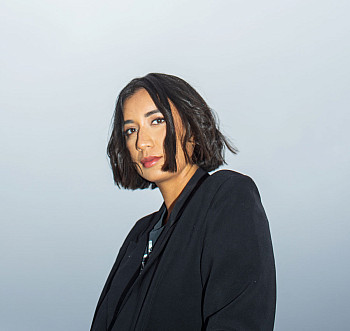
Exchanging A Wedding For An Album
I was kind of surprised by the reaction I got from a lot of people when I told them that I ended an engagement. They looked at me and they're just like, "Oh my gosh, how did you do that? That's so brave. Congratulations!" Almost in awe of how much bravery it takes to cut off a path when you're so deep in it. In that moment I wasn't even thinking about how brave I was being. I was really more in a place of self-preservation, and I was in such tunnel vision to get myself to a better place that I didn't even think about it being a brave move. I just thought about it being the only move.But I learned that just because you made an Instagram post about something and everyone congratulated you about it, and you got a lot of likes on it, and it's going to be very embarrassing to take it down and explain to everyone why it's down, you have to stand by yourself. You cannot make decisions based on how they look, based on what other people are going to perceive, based on how much it's going to embarrass you. You have to do what's best for you, and in the end, what's best for you is going to be best for your family. And it's gonna be what's best for the other person involved.
Things got super rough at the end of this relationship where it almost didn't feel like a choice, it felt like the only path I had to do. I got to this point where I was like, "I can take every single cell in my body to try and make something work that's not working, or I can honor the voice inside of me that knows what's right and I can do that." It's wild when you listen to that voice, how everything really aligns and everything kind of breaks free and you feel so much better and so much more in your truth. So what I learned is that you have to listen because if you don't, that voice is gonna get louder and louder and louder and louder until it starts giving you headaches. It starts giving you anxiety or depression. You have to listen, and it's so hard, but sometimes there's never a good time to listen. But it's better to listen now than to listen in three years.
Defying Expectations At 30
I had all these expectations for myself of what it means to be a 30 year-old woman. Being single at 30, there's a lot of stigma around that even now. As a very career-oriented person, my music career has been the focal point of my life ever since I was 19, and yet, the accolades I got for getting engaged were so much bigger than anything I got from any album. I got phone calls and comments from people I haven't heard from in years. I mean, family, friends, people came out of the woodwork and were just like, "Congratulations, this is like the biggest moment of your life." And I couldn't help but feel like, But what about everything else I've accomplished? Isn't that cool for a woman to do? I might be 30 and not be on a path of marriage, engagement or whatever, like I thought I was supposed to be, but I'm releasing my third album, and as women, we should celebrate those things too. We need to celebrate all of it - nothing is better or worse in this path or that path, or both paths, but there are so many things to celebrate as a woman. And it doesn't only have to be the path of engagement and marriage, at all times.Her Evolution As An Artist
With every album I've gotten closer and closer to writing about myself - writing from a very personal place. I've gotten more vulnerable with every album. Fight For You - my first album that I released in 2017 - was very much about how I was relating to the world around me. It was definitely an album that I wrote inspired by the Standing Rock Movement, fighting for Indigenous rights, and finding my voice as someone in the social- justice world, and finding how I relate to the outside world.And then Woman In Color was about how I relate to my identity and the way that I perceive myself as a mixed-race person, as a woman of color, and my place in the world. So Fight For You was about me relating to the world around me, Woman In Color was about me coming to terms with my place in the world, and then Hold That Spirit is about grappling with my internal reality. It's not about as much of the outside world as it is about the world inside. And I think that ends up relating to the outside world. It has a lot of similar themes from my last records, but this album is so much more personal than any of my other records. My spirit isn't mixed-race, my spirit is just a spirit. There's no box around that. There's no real identity to that.
Hold That Spirit is so much about all the things that defy a lot of the things I was grappling with before and now it's really about going inward, and all the emotional things that I've gone through in the past couple years over the pandemic, this engagement, expectations of myself and spirituality and finding a way to stay centered within myself through all of that I went through.
Bringing A Dark Secret To Light
For the past decade I was like, "I'm gonna talk to a therapist about it and the world doesn't need to know." Eating disorders don't feel cute to the person on the inside. It feels very ugly, shameful, gross, and it's this secret that we keep from everyone, and it's almost like our little secret that we get to funnel all of our stress, all of our insecurities, everything - we get to funnel that into disordered eating and controlling behaviors around food. It's like this dark secret that we don't even dare share with the world.I was reading about how many people who struggle with eating disorders hold it back from their therapists. It takes years for people with eating disorders to even open up to a therapist about it. I've been in therapy since I was a teenager and I never talked about my issues with disordered eating until maybe the past five years. It just didn't even feel like a problem, it felt like something that was a part of me that was always gonna be a part of me. I was like, "I'm always going to have a difficult relationship with food. I'm always going to be anxious eating in front of people. I'm always going to cancel plans with people to go to the gym. I'm always going to pretend like I ate before and then not eat, and just all of these things."
I definitely identify with the archetype of orthorexia, which is something that is recently being talked about. When I was younger it was either you're anorexic or you're bulimic. I never dealt with purging, and I also never really identified as someone who was anorexic, so I was like, "I'm fine." I remember looking up on Google and learning what a subclinical eating disorder is, which basically means that you have an eating disorder, but it's subclinical. So you're not at the place where you need to be hospitalized or you need to have real intervention. I literally gave myself this peace, being like, "I have a subclinical eating disorder, but it's subclinical so I'm good."
I'm gonna hang on to this word subclinical, it's not clinical. But over the past few years, this word orthorexia has come up on Instagram, and it's a mixture of a lot of things. Pretty much obsessing over health and wellness to the point that you have entered into a very bad mental state where you're obsessed about food, fitness, wellness, and it consumes your life. And I've dealt with that on and off since I was 16. But pretty much on.
Her Eating Disorder Inspired "Not A Monster"
When I was writing this album, my biggest orthorexia eating disorder flare up happened during the pandemic, which is something a lot of people with eating disorder propensities and struggles experienced because you're in your house, the world is out of control. What can you control? Food or whatever it is for you - working out your body. I really got pretty deep into that eating disorder mindset during the pandemic - the whole six months to a year that I hardly saw anyone, my new activity was I'm gonna get as skinny as possible. I'm going to eat hardly anything, and that's gonna be fun. It's gonna be great. It's gonna be what I do over the pandemic. Like, this person learned how to make bread. I'm gonna get really thin. It's like, "You learned how to make bread. I learned how to never eat bread ever." So I got really deep into it and it was really bad and then I decided to actually seek help after the pandemic, and I started working with an intuitive eating coach and eating disorder recovery coaches. I've gotten to a point now that I feel healthier than I ever felt when I was 16."Not A Monster" came about because I was in a writing session with my friend Anna [Schulze], and I just broke down about it and I was not having a good day. It was one of those days where I felt like I couldn't be present because my brain was so fixated on all these obsessive thoughts, and I just wasn't in it with her. I was so sad about it and she was like, "Let's just write about this," and we wrote "Not A Monster."
The song is exactly what it sounds like. It's about how even when you struggle with something like this, you are not a monster. If you're not rail-thin, you're not a monster, you're beautiful, and that's something that I've taken a long time to figure out and I'm still figuring out. But these lyrics, it's like, "your hands wrapped around my throat, what you want. I don't know." A lot of people with eating disorders describe having an eating disorder voice - it's almost like this second voice that you deal with every day, which is exactly how I felt. It literally feels like there's this friend/enemy with you at all times with their hands around your throat and they're controlling what you do and you feel helpless.
So I really wanted to write this song and put out this song because I feel like this is something that's not often talked about in music. So many women struggle with it. So often when I confide in people about my struggle, they're like, "Me too." I wasn't ready to do this in my past few records, but I am ready now because I did that five years of therapy around it. I did the coaching, I did the healing, and now I'm ready to share it. But I was not ready to share it until I was at a place where I felt really good and in a better, healed, mental state.
I've been warned by many people that it's very difficult to talk about eating disorders and that you shouldn't talk about it in your art. Yes, it is very triggering for people, so I understand that. But for me, hearing people talk about it and sing about it is so healing. One of the actresses on Brooklyn Nine-Nine [Stephanie Beatriz] was so open about her eating disorder and about how when she got married she was very mindful about not dieting to fit into her dress. I felt so seen by her talking about that as an actor. I always told myself that one day when I'm in a place where I can, I need to talk about this publicly, and I don't know why I've been warned so many times that it's dangerous to talk about or people aren't gonna understand. It's one of those things too where it's a very nuanced and strange mental illness, and I hope that we can talk about it more so there's more understanding around it because they're becoming more understanding around it especially given the words like orthorexia in the past few years that I've discovered has helped me get healthy. So maybe it'll help others get healthy too.
Getting Over Her Fear Of Collaborating
In my early 20s, I was very afraid of collaborating. For some reason, I was very afraid of co-writing, collaborating, and delegating. I was very dead set on being this solo singer-songwriter who didn't need anyone's help. I don't know why. I took an unconventional path - I didn't go to college, and I decided to do the singer-songwriter thing instead. I really wanted to prove to the world, to myself, to my parents, that I can do it all on my own. I don't need anyone's help. And that's how I was in my early 20s.Late 20s - I love collaborating. I wanna co-write every song. I feel like I hardly ever write songs alone anymore. I mean, I do, but I love writing with other people. I love collaborating with different producers. This record, Hold That Spirit, has five or six different producers on it. It has six or seven different co-writers on it. All women. I love collaborating now. I wanna be a part of a machine. I wanna be a part of something bigger than me. I don't wanna be an island. I learned that in my 20s and I wanna expand on that in my 30s. I want to collaborate, I want to meet more artists, producers, writers, you name it. And I want to create things with other people. That was a big lesson of my 20s that I'm excited to bring into my 30s.
July 12, 2023
Get tour dates and album details at rayezaragoza.com.
Subscribe to the Songfacts podcast, part of the Pantheon Network
Check out our episodes with:
Vashti Bunyan
Ayla Schafer
Michelle Willis
More Songfacts Podcast