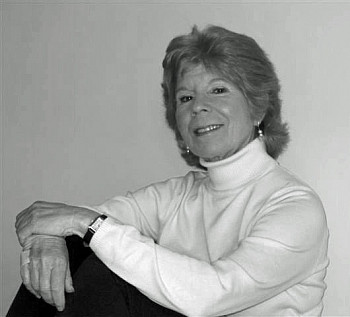
Molly Leikin has been a successful songwriter for five decades, starting in the early '70s. Over the next 10 years, her songs were recorded by many popular artists, and now she's turned her attention to teaching the craft.
Molly is what she calls an "assignment writer," so she can't tell you how to find inspiration, but she can tell you how to structure a song, where to start, and what goes into crafting it. Much of this is covered in her book Insider Secrets to Hit Songwriting in the Digital Age, but she offers some excellent tips and insights here.
Molly is what she calls an "assignment writer," so she can't tell you how to find inspiration, but she can tell you how to structure a song, where to start, and what goes into crafting it. Much of this is covered in her book Insider Secrets to Hit Songwriting in the Digital Age, but she offers some excellent tips and insights here.
Breaking Into The Music Industry
It was pure chutzpah. I was a social worker, that was my day job, and I wasn't very good at it because I really didn't want to be there. Whenever I could, I signed out saying I was going to visit the home of one of my welfare clients, but in fact, I was going to see the music publishers in Hollywood... this was in the '70s.So there I am in my miniskirt with my boots and I'd stop somewhere and glue on my eyelashes. I had to look like everybody in the music business, right? So my social worker clothes were in the backseat of my leaky red Volkswagen bug, and there I was at these music publishers. And my fingers were very short Corey, so I couldn't play the guitar, but the baritone ukulele only had four strings and I could play that. So here I am in my miniskirt with my boots and my eyelashes, carrying a baritone ukulele and knocking on doors. And they thought, who is this? Should we call security?
But my big break came when I got stuck at the corner of Hollywood and Vine, and I noticed there was a long line of songwriters with guitars standing in the street. I asked them, "what's that?"
"Well, it's the Friday songwriter meeting. Everybody can come, you don't have to be a staff writer at Warner Brothers."
So I just showed. I came back every week with another song. They didn't use it, but they liked my spunk, and the leader of the meeting was Artie Wayne, who was vice president at Warner Music Group at the time. All my friends were getting signed as singers-songwriters, and I wanted to be signed there too. I didn't want to be a social worker, and believe me, the welfare department was very anxious to get rid of me. So I told him, "I turned down two staff writer gigs to work with you." He was so flattered and he says, "Okay, then come sign with me." The fact that there never were two other publishers urging me to sign up with them never entered into the dialogue. That's between me and God. That's how I did it.
Fall-back Plan
The truth is I never had anywhere to go back to, so I had to move forward. I decided this is what I'm gonna do and all kinds of people said, "Go to medical school, become a lawyer." And I said, "I'm not a doctor and I'm not a lawyer. I'm a songwriter, and this is what I'm here to do, and if I don't do this, there's nothing else for me."I was just so possessed with being a songwriter. I took every class I could take. I listened to what people told me when I played a song and they said, "Line two should go up there, or down there," or whatever it was. And at first I thought, What the heck do they know? And my mentor said, "Molly, he's vice president of Warner Music, I'd pay attention." So thank God for my mentor.
I just learned to write songs. I hung out with all the good songwriters in LA. They taught me what a hook was. You can't have a song without a hook. You can write one, but don't expect any big success on the charts.
The Laurel Canyon Scene
I was not hanging with Carole King and Joni Mitchell and the rest of them. I was driving up and down Laurel Canyon and I was looking for them because I was sure, Corey, that they were desperate to have my 12 songs about Fig Newtons, and I thought for sure this would change their lives. So far, I've kept my phone on - I haven't heard back from them.Molly's Brady Bunch Song
I met the producer of the Brady Bunch records and I wrote some songs for them, and that was the first time I'd ever had a song on TV. And I didn't think I'd live - I had rocks in my pockets to keep me from floating away. Not only to be on TV, but to be paid for a network performance - my God, does it get any better than that?I was writing it with Annette Tucker and Arthur Hamilton, who were two legends at the time, and the three of us wrote that together. It came from my title book. I was taught early on to keep track of all your ideas in a notebook with rings around the edge so it can't fly away. And I really don't trust phones because you know what happens to data - it just disappears. So I have a title book, and whenever I go to a writing session and we say "What are we gonna write about?" Here's a title.
Keyboards And Choruses
Nobody seemed to love my baritone ukulele so I switched to the keyboard. The keyboard is a wonderful instrument because all the notes are right there in front of you. Most people who play guitars - and I'm not talking about the geniuses - but most people who just go to a guitar store and buy the guitar, play chords, so you're getting chords, you're not getting a melody. But when you pick out the individual notes of a melody on a keyboard, you got a melody. And the lower part of the song ideally is the verse and the higher part is the chorus, and the range is an octave in three for most people, and for those of us who don't sing, you have to stick to that, otherwise nobody's gonna be able to sing your song.So I learned that as I went, and to this day I always start any song with anybody with the chorus. Because if you've got a hit chorus, you got something. It can only get easier in the verse, and then you add the bridge. So write your chorus first, make it easy.
I just listened this morning to the Top 10 country songs on Billboard. Every single one of them has a killer, killer chorus, and you can't not sing along. If you don't have a sing-alongable chorus these days, especially a very rhythmic one, you got nothing. So give 'em a chorus. When you're a megastar and you want to write endless verses of prose with no hooks at all, hallelujah, do it then. But if I own CBS or one of these megacompanies and you come to me looking for a deal, it's business, baby. If you don't have hooks, if you don't have hit singles, I'm not gonna sign you.
How Pitching A Song Has Changed
We used to make a little demo - piano, voice, guitar - take it to our publisher. If the publisher liked it, he'd make a demo... And I say he, because in those days everybody was a guy. He'd make a real demo and pitch it to an artist who would then have his or her producer make a record. Now, the songwriter has to make the whole record. It's not fair, but that's the reality.And because so many people are intimidated by that, they go buy digital audio studios and they spend all their time trying to produce a record rather than write a song. So I say, write the song first, start with the chorus, and then go to your Pro Tools and turn it into a record. But if you're starting from the record, what do you got? You got chords. You can't hum a series of chords, but you can hum a melody.
And these days, rhythm is absolutely essential, no matter what the genre - gospel, pop, rock, everything, country - rhythm, rhythm, rhythm. The new country songs, every single one of them, in 30 seconds there's the chorus.
How Long Do You Have To Hook A Listener?
It's 6 seconds. It's the same amount of time that you give something when you're surfing the web and you're looking for tires. People do not have any attention span now. We're all so crazed by what's going on in the world. We want it now.Why It Was Important To Write The Book
There was no book about insider secrets to hit songwriting in the digital age. There are lots of books with rock stars who say "write a hook," but this is the whole gamut, and I specifically focus on pop and new country songs where the song is the most important.You don't have to write songs to be in the music business. There are lots of ways to make money in the meantime. And meanwhile, you sharpen your songwriting chops and you notice that in a 15-second commercial, there's no warm-up, it's boom! Here's the product. "Like a good neighbor, State Farm is there." The whole 15 seconds is the product.
I'm a passionate songwriter. I believe in craft. I want all this generation and the ones to come to learn the craft of songwriting - it seems to have gone out the window. I don't hear runs anymore, and that's part of the craft. And the people I interviewed - Michael Silversher and Patty Silversher, who have been the king and queen of children's music, particularly at Disney - they're the biggest songwriters since the Sherman brothers. And Michael Silversher told me he never pitched a song to anybody, they all came to him. Now, have you ever heard of that? I've never heard of that. Well, he did good work. And Patty, his writing partner, you want something done? You call Patty. It's done. Your job as a songwriter is to write the best song you can, but that's not it. You don't just go hire someone to pitch your songs, because who knows who they are?
Advice For New Writers
I have personal consultations with songwriters all over the world and I tell them, write your fingerprint, don't try to be somebody else. We already have Taylor Swift - she's brilliant. So don't try to be her, be you. What do you have that only you can write because nobody but you is you. Write that. Melody. Rhythm. Lyrics.Sensitivity And Songwriting
When I was a kid, it was always, "Don't be so sensitive!" I never heard the end of that. And in fact, I even hear it now. I get upset about stuff that you get upset about, but as songwriters we are missing the top layer of our skin and our nerves are just popping out, ready to be trampled. Well, that's where the songs come from too. You don't get a song from a guy who goes along and does the same widget job every day. But someone who's sensitive and is in a crisis is gonna write the best thing you ever heard or the saddest thing you ever heard.As the audience, we look for the extremes. Most of us in 2022 on a scale of 1 to 10, we live somewhere around 5 or 6. Everything's fine, nothing's really terrible. When we listen to music, when we read books, play video games, go to the movies, we want to go to plus or minus 15 instantly. So don't write songs at 5 or 6, write the extremes. Write till you bleed.
Story Of The Song "Walk This Path Alone"
I have a very talented client and she sent me a lyric with that title. She was looking for a melody and we wrote the song together, and it's very sad and very beautiful and kind of hopeful, misty, and I love that song. You know, if I had to take five of them with me to heaven and St. Peter asked me, what did I do with my life? That's one of the ones I'd play for him.Assignment Writing
I'm an assignment writer and I can get into any mood to complete the assignment. Here's the role. Say the lines. Take the direction. Get off the stage. It's a role as an assignment writer.See, I don't sing, so I have to be able to do other things that some songwriters can't do. Sometimes I've had clients who are singer-songwriters with gorgeous voices, but their songs tended to be all over the place and the hook wasn't really strong enough. So I'd say, "I'm changing that, move this up, say this twice, take that out," and they wouldn't do it. They didn't know how to do it because the songs came to them, came through them, and they didn't really know the craft of songwriting, so that was as far as they could take it. But I don't sing, and my advantage is you can ask me to write a song about anything and you'll have it at the end of the day.
Writing From The Heart
You can tell when you're writing a song for money, as we say. Write from your heart - write from the deepest, deepest, deepest part of your soul, and if you tap into the parts of yourself that are caving, that are trampled, that are joyous, that are hopeful, you're tapping into that on behalf of everybody else out there who doesn't write a song and doesn't have the ability to express themselves. So that's your job: to give them a chance to sing what they feel. And that's the truth.Be real. There was a songwriter named Mac Davis who was punning on the idea of having hooks in a song, and his publisher kept saying, "Mac, you need a hook." So as a joke he wrote a song called "Baby Baby Don't Get Hooked On Me," and son of a gun, the thing was a hit.
But I have a fingerprint, you have a fingerprint. Although we're unique, we share the same human values. I'm terrified about the world. I'm mad that my gas is $7 a gallon. I'm worried about the air. I'm terrified for the next generations after us. We all share that, and we're mostly sliding along, pretending that we're OK as long as we have our music. For me, it's when I'm on the freeway. And at 65 [MPH] that keeps me going. I do the hand gestures and people in the car think, whoa, what happened to her? What was in her coffee this morning?
But it's wonderful to have music. The songs are my friends, they're my family, and I long to hear the new ones where there's a title or a line that just is so strong that I have to pull over to the side of the road and take a breath. That is what we're all looking for.
I'm especially fond of the calls and emails and texts I get from people I don't even know. We all share these certain sentiments, and that's how we connect with the world. It's like joining hands, if you'll forgive the cliché.
I was living in Steppenwolf's guest house. I woke up very early in the morning and the air in my kitchen was brown. It was brown! And there was a knock at the door, it was a short little fire department lady saying you have to get out of here. I said, "Okay, I'll take a shower and have breakfast and I'll come." And she just yanked my shirt and I could barely reach my purse, and we just got out of there in time. So I'm here. I'm meant to be here. I'm meant to do something. In my book, I talk about using your extraordinary adventures in your songs.
August 8, 2022
Get Insider Secrets To Hit Songwriting In The Digital Age and more information about Molly at her website, songmd.com.
Subscribe to the Songfacts podcast, part of the Pantheon Network
More Songfacts Podcast