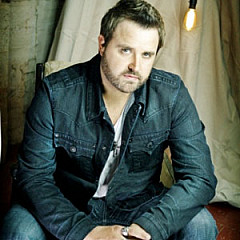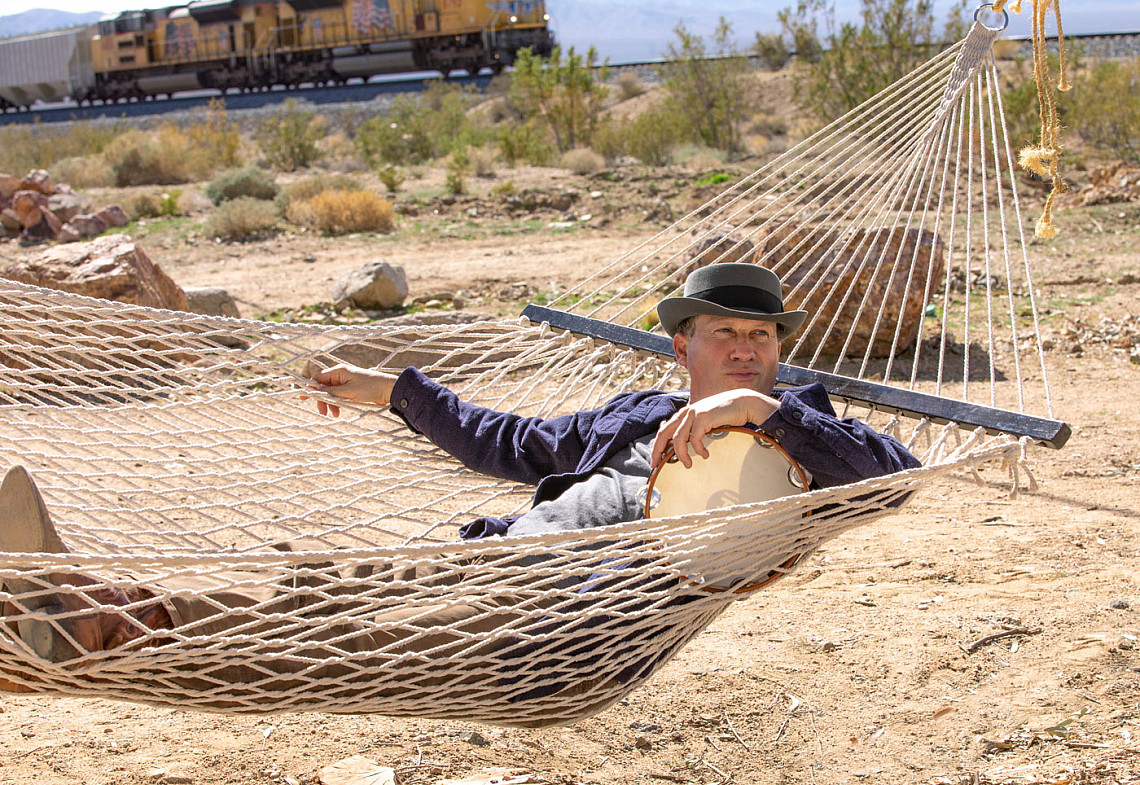
The Tano Jones Revelry first got our attention in 2021 with their snappy take on the Christmas classic "Little Drummer Boy." Their single "Light It" was also released around that time and has become a streaming favorite, with millions of listens. In 2024 they released the album Spinning North, produced by Andy Patalan of the band Sponge.
In this conversation, group leader and songwriter Tano Jones takes us through some key tracks on the album, and shares some of the wisdom he's accumulated on his journey.
In this conversation, group leader and songwriter Tano Jones takes us through some key tracks on the album, and shares some of the wisdom he's accumulated on his journey.
Making The Spinning North Album
It was really an interesting writing process, an interesting recording process. I started it before COVID, and as I look back I realize that the writing changed as much as the country did and as much as the world did. All of us were affected similarly by this crazy situation that none of us knew was coming, and none of us expected, that ultimately wreaked havoc on the world. And I was no different.Going into the writing and the recording phase I was really in a good space. This is my fourth album and I was really prepared for it - I knew what I wanted to do in terms of the songs. I recorded 17 or 18 songs for the 10 that I ultimately chose, so songs went down real easy.
As things progressed, and as I began to get into the whole lockdown situation, I noticed that my writing began to change a little bit and the recording slowed down. I, like so many, was looking for ways to stay busy, stay relevant and really be industrious relative to the writing process. So the studio actually became my safe place, if you will.
I have three boys and I was married at the time, which foretells some of the songs that I'll be talking to you about a little bit today, and sort of what happened to me and to our family at that time. But ultimately, the pre-COVID period would have been the sunny days and COVID was obviously the darker days and the storms and everything associated with it.
The Song "What About Me"
"What About Me" was a song that I really conceptualized and had notes on before COVID hit. I hate to put it in terms of COVID, but it did have such an effect on things. As I was thinking about that song and thinking about that tune, I was wrapping my head around this idea that there are forces not only in our country but certainly in the world that look to divide folks and divide people, and it's been going on for quite a while. As I started to write that song it went down this direction relative to the idea of me versus we."What About Me" is a misnomer - it should be "What About We." I believe that we're all much more similar than we are different. I believe that we all want love, we all want wellness, whatever that means to us. And then I feel that we all work very hard, we all put forth a tremendous amount of effort for those that we love, whether you're single and it's for a parent or a grandparent or a neighbor, whether you have children, whether you have a spouse, whether you have an aunt or an uncle. So many of us work for others and for the wellness not only of ourselves, but providing for others. I feel in my heart that there's a true nobility in this idea that we all want wellness, we all want greener grass and a bluer sky, and for me, that's where Spinning North came on.
We're all spinning north. We're all trying to get to a better place and do good work. So there's this combination of philosophically how I have felt looking at how we're coping. It was crazy, right? Nobody called up and said, "Tano, in two months, your whole family is going to be locked down and your whole life is going to be thrown into turmoil." Same with you I'm sure. We didn't see it coming.
So I was thinking about a lot of those things - that division, and then at the same time, this idea that as Americans, we have a great history of working hard. My grandparents were immigrants that came over from Europe and worked their way up, and my folks are very industrious, really hardworking. So I've been around folks that have really worked hard, and I've seen how they've raised families and so forth. So it was this idea of coping through that and persevering.
As I continued to write and then record, I remember specifically presenting it to Andy Patalan, my producer on the project, and him talking about this idea that your song's not done, which hit me right between the eyes. He just goes, "Your song's not done." And I'm like, "What do you mean?" He goes, "You're not done talking with whatever you have to talk about."
So I went back to my writing room and I thought long and hard. A lot of writers - and I've done this in different songs and different albums and things - will present a situation that's not hard. For me, it's not hard to find drama in life. If you're just observant there's so much going on, so it's not hard to find that. What's a little trickier is making a decision to propose, contemplate, or initiate a possible way forward. You've talked to hundreds of writers, so you probably know where I'm going here.
I had the C section, the bridge, and then the D section. I thought a lot about history, I thought about the Depression. If you look back in history there was influenza - we call it the flu now. The COVID of my grandparents' generation was influenza and it killed millions across the world. So I just started to think about that.
Driving to the studio and driving to my sister's house, I passed the military cemeteries. It was a combination of all these things, hearing about the "Greatest Generation," what does that mean? You dig into it and you realize that other generations had two world wars they had to get through and they had really tough times with depressions and so forth, but at the end of the day they came together. That's really what the D section presents, and really what I present in that tune.
We've gotten great feedback from around the world on it, which is really cool. We were given this geography on the rock, and I feel it's our responsibility to tend our garden. So for me, that D section is basically a call to Gen Z and other generations about looking after each other, and that's the work that we need to do to go forward.
How Perseverance Ties Into Tano's Musical Journey
You have to persevere to complete a song. You have to persevere to figure out how you want to produce it, get it recorded, present it. So the act of writing and having the fortitude to stick with it is a whole lesson in perseverance, and I think whether you're a painter starting a painting or a mechanic working on a car, whatever the project is takes persevering, takes discipline, takes some guts.You put yourself out there and then at a certain point you write a song. You listen to it and you're like, "Is this any good?" So persevering through that whole psychology.
I like to write around albums. Relative to that, I think that persevering towards a cohesive package is hard.
My manager was talking to some folks in Nashville about my music, and he was looking for some help with social media, and they couldn't figure it out. They're like, "This isn't country. We're not exactly sure what bucket it fits into." Persevering through not being able to fit in a bucket for some artists is a big deal. I'm all about trying to be unique and do your own thing, but clearly, this particular collection of songs was challenged by this wild and crazy thing that we had to persevere through relative to COVID and lockdowns. And for me, being the leader of my family, it was crazy.
Is "Love Is Free" About Loyalty And Redemption?
Yeah, very much so. I was married for 25 years, and in the middle of COVID, my gal couldn't take it anymore and she left. This is a song that I had written probably two or three years before COVID. It was something I had thought about quite a bit, not relative to my wife, but really more of an observation and a statement relative to what I think should be obvious for many in this day of Tinder.I'm divorced now, so you'd think I'd know all sites, but I don't. In this day of being able to date online and find people online, I'm the product of parents that were married for 50 years and grandparents that were married for 60 years. That's really what I saw my whole life.
Relative to loyalty, you find out real quick that money is not what relationships are about. It's that deep connection.
The Revelry comes out of this idea. If you look it up in the dictionary, it's going to talk about partying, basically, about having fun and drinking and carousing and wildness. But my take on revelry is, it's about the best things that are free. If you've ever witnessed the birth of a child, or you've ever smelled a child two days after he swaddled, or if you've been lucky enough to fall asleep on a beach and wake up and watch the sunrise. Or if you've been in a 108-degree day in Phoenix, like I was last week, and you open a Silver Bullet out of a can, really cold. Or going with a 10-year-old to a baseball game. Your feet in the grass... all these things that many would say are cheesy, but there's so many examples of beautiful moments. So the revelry is about celebrating all those things that are free that we take for granted. Great water. People laugh, but I'm in the Midwest by the Great Lakes, and I never take it for granted until I go to Phoenix or Las Vegas or some of these areas that don't have as many of these natural resources.
So "Love Is Free" is about appreciating what you have. Even more so than loyalty, it's an intelligence. It's an appreciation, a passion, a love. And the ability to recognize the simple beauty that's in front of us. Our neighbors in our neighborhoods. There's so much wellness all around us. It's a reminder to be observant and appreciative.
The Song "Days Like This"
That song was written right in the middle of COVID when I discovered that we were having a hard time with our family. It was like doing the news live. So, yeah, that was interesting.I was married in a Catholic church but I was raised Eastern Orthodox, which I like to say is Christianity with better costumes. That's what I tell my boys. But my ex-wife was Catholic, and before we were married we had to sit down with a counselor two or three times and he would talk to us about what it was to be married and to have faith. And if you didn't hear it once, you heard it a million times: It's not going to be easy. You're going to have areas that should be easy, but invariably as years roll by you'll have situations that you'll need to address. So my mind went back right to the beginning. It was weird. Right as I was getting close to the end, I had these flashbacks, if you will.
This line "the crosses to bear" came into my head from these talks with this priest before we had gotten married. I never thought I'd have to write those lyrics, but those were very poignant, very heartfelt, very true, and it was tough, too.
I will tell you one thing that's interesting that I have never shared. As songs get more and more personal, you make decisions on what you're going to share or what you won't share. That was real personal for me, and ultimately it's a part of the story of Spinning North. It's a part of getting through the difficulty, and the optimism and nobility of persevering and getting through that swirl. I wouldn't be true to the title of my project if I didn't include that song. There's a lot of pain there for sure - it was a tough one to get down. But I'm glad that I've chronicled that time of my life.
Tano's Start In Music
My mother said I was a really loud kid, so that must explain some things. I was that 10-year-old that was singing to the radio and changing the lyrics. I was grabbing the mic and saying to my father, "Mr. Jackson miscounted. There should have been six." Growing up in Detroit around the Jackson 5, I was like, "I should have been in the Jackson 6."I was always musical. My older brothers had several bands. They took over the basement, and really, my whole childhood, I was hearing music after school blasting through the house before my folks got home from work. It wasn't until my sister Lisa bought me a guitar when I was 16 that I started writing. Writing came easy to me. Coming up with ideas came easy - it's sort of conceptualizing and visualizing.
It wasn't until my early 20s that I wrote and recorded, and that sent me in a direction. I had bands in high school and in college, but the early 20s was when I decided that this is what I wanted to do. I wanted to put myself out there and go forward in this space. That interestingly birthed the song "Clairvoyant," which is one of the tunes on Spinning North. I can remember that feeling and that sort of psychosis, if you will, of being in your 20s and thinking, What am I supposed to do with myself? What's my path? How am I going to get from A to B? Just trying to figure it out. And then, the aunts and the uncles and the parents and the friends, everybody has an opinion. When you tell them what you're working on and what you want to do, you read their facial expressions and it's like they just ate a dead rat. But I'll tell you what's cool though: As time goes by, having that fortitude, that commitment, that strength of conviction, that perseverance to say, "No, this is what I'm going to do."
I use the term "Sturm und Drang," from the German "storm and stress." The psychological spaghetti of trying to get yourself through the 20s, trying to set out on a journey.
I've got six brothers and sisters - there's seven of us kids. I had really supportive brothers and sisters, which was really cool, and that helped me get through it. But I felt like I was shot out of a shotgun and trying to figure out what pellet to follow. And then once I got going down the road I just engaged and embraced everything that was creative and continued to push.
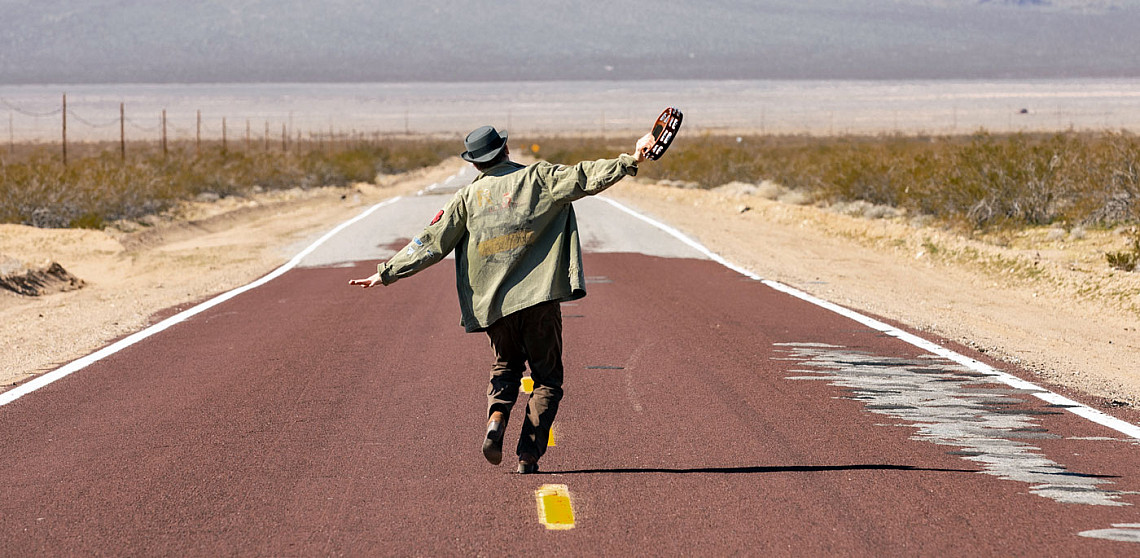
Forming The Revelry
I thought about a group of musicians and a really talented producer. I mentioned Andy Patalan, who is also an artist and a guitarist in the band Sponge. Vinnie Dombroski, the guy that formed Sponge and is the lead singer, he's like a local god to all the musicians in Detroit. He lives not too far from my studio. Vinnie played drums on a couple of songs, and I was shocked that he would do it. A lot of people don't know he's a great drummer in addition to being a talented singer.So that was one part of it. The other part of it was, I wanted to create a collection of music that was unique but not pretentious. I have written songs in my life that people are like, "What in God's name is that? What are you even talking about?" But I wanted to create a collection of songs that were accessible, if you will, meaning I wanted people to feel comfortable to come into my house, grab a glass of wine, grab a beer. It's safe. It's cool. You're in good hands. Sit down, chillax. I've got some cool rhythms. I've got some really warm melodies I'm going to roll over. I've got some cool harmonies that I'm going to bring in and I'm going to start you with some really gentle lyrics and then hopefully you're going to dig in a little bit deeper and you're going to find something there that's going to sit with you the next day.
Rhythmically, melodically, from a sense of harmony, I feel that the music needs to do its job and, like the label on a bottle of wine or the color of the glass that they pick, nothing's by accident. And similarly, this idea of Spinning North is around this idea of allowing you to come in and feel good and then the next day or the next week or the next month, you'll go, "What is that song 'Clairvoyant' about? What is that D section about?" Maybe it's something that sticks with you, and maybe you find a really warm, positive attribute there that you can go forward with.
One Of Tano's Favorite Songs We Might Not Know About
Interestingly, I have a song that I'm in the process of rearranging. I'm sensing a theme... It's another song about difficulty and making choices about coming together. It's on my second album and it's called "Walls Fall Down." It was when the wall between East and West Germany came down.I think about the similarity with "What About Me" in the most interesting way. Maybe that says something about me, but yeah, "Walls Fall Down" started as a song many decades ago about the reunification of Germany, and it morphed into what is a mother with an American soldier there thinking, and then it continued to morph into this idea around having faith in each other and coming together. This is a song I hope to roll out maybe in 2025, possibly 2026, as I rework it and reproduce it.
Staying Motivated
I am a half-full guy, as I like to say. I wake up and I feel that there's so much more work to do.We're on a timeline. We've never met each other before, but how cool is this that somebody somewhere decided that you and I would meet because we were born within this timeline and on this particular rock in this particular geography. So as I think about where we're at and where I'm at, I really think about how can I be useful, and this really inspires me.
Music is just so awesome. Music is sense memory, right? You can hear a song and you can place yourself somewhere - you can think about the relationship you had with that guy or girl at that time, and what it smelled like, and what it looked like, whether it was a car or a house or a beach or wherever you were. What a beautiful thing to be able to bless others with.
I'm a huge Al Green fan, and I have a teenager who plays baseball in high school. The other day he comes home from baseball and he starts singing Al Green. Obviously all these songs were created before he was even alive, and I'm thinking, What a beautiful thing that generationally you can create music that blesses others and connects. And in a way, by him singing that song he's connecting to me. That's his way of saying, "Hey, I love you, pop, and I'm vibing with you, and we're gonna vibe off of this music."
So anyway, through this beautiful, wonderful, methodology and gift of music, what inspires me is the ability to continue to love, warm, improve the human condition. That idea that we need to get along, we have to get along. There's so many ways through music to continue to propagate that concept. It's funny, Stephanie. I'm inspired by the difficulty I see around me - that's what really inspires me. I see opportunities for inspiration and an elevated consciousness. Sort of aha moments when people can come together. I don't know if it's in my mind or if my music has the ability to do it, but it is what inspires me.
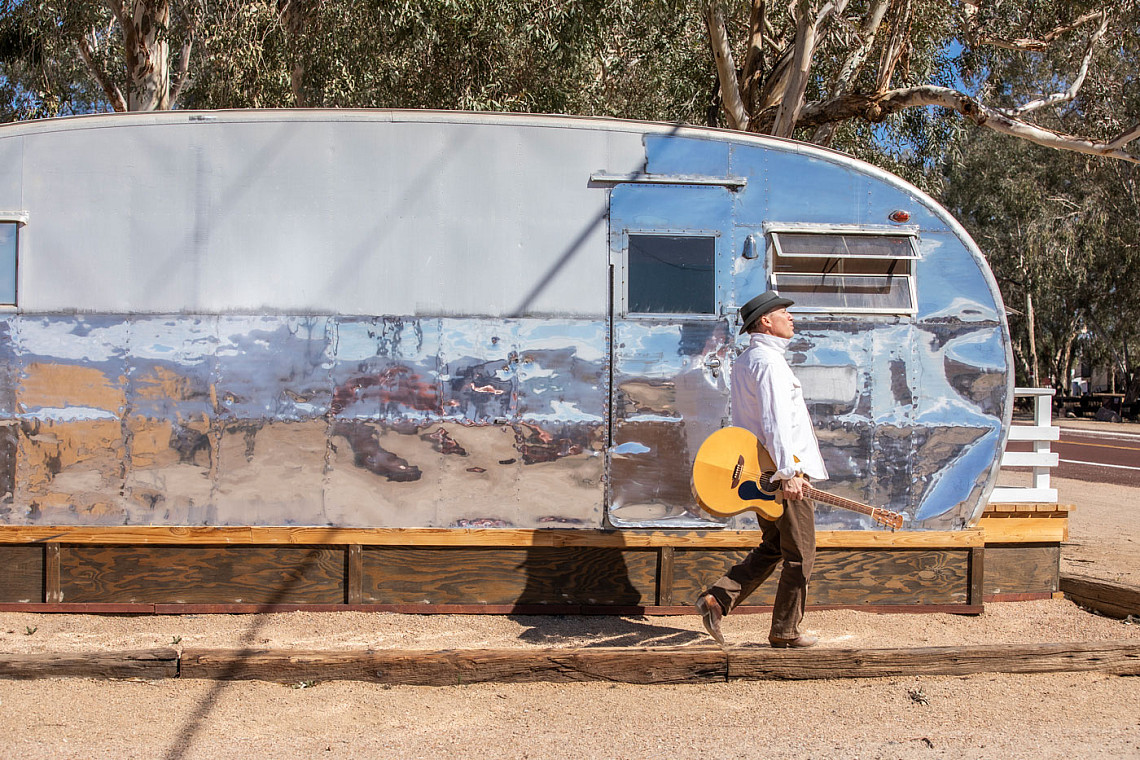
Influences
I grew up in Detroit, and Aretha Franklin was larger than life musically. Her father was a very influential figure in the church in Detroit and really across the country. Her music was everywhere growing up, everywhere.And Bob Seger in our town was probably like Springsteen in New Jersey. In the Midwest and in Michigan, the only thing missing was a crown. As a younger man, I wouldn't have realized it - I would have picked some artists that are more esoteric. I would have answered that question differently.
Advice For His Younger Self
My first note would be trust your instincts. My father, who has passed, was an entrepreneur, and he would use that word instincts when I heard him mentioning it to my older siblings, but I didn't really understand what he meant. I couldn't admit that I didn't understand what he meant until I was out in life in situations. And boy, looking back to those days when I was in my teens, I'm sure. And then that time in my 20s that I told you that song "Clairvoyant" is about, I must've listened because I became positively stubborn and trusted what I felt was inside.So trust your instincts. There's a lot to be said for that. The other thing, that I didn't do so well when I was younger, is researching. It's so important to get information relative to whatever you're going to do in life, career-wise. But in terms of music, I could have read more, I could have understood the business more. Understanding the world around you is important, and one has the opportunity to read and to sift through all those that came before. In doing that, it makes you well-equipped to go to battle.
Upcoming Projects
Right now I'm in a mode of releasing and promoting. We have a song, "Daisy," which is on several radio stations. We have a really nice grouping of terrestrial radio stations across the country in markets like Boston and LA and Austin, so that's exciting. So we're going to continue to promote that and to go work in those markets. Then we'll be releasing more music that I'll have to go promote.But I'm also writing right now. I'm writing my next album and working through that. I've actually recorded two of the tracks. I'm ferociously grappling with that and working through that. So I'd like to continue to write and record, and to tour in the upcoming months, and I'm working on a series of chapters of a book, and we'll see what that manifests into.
I always get into these discussions with myself. "Hey self. Is this something you need to write down, self? Or is this something that you need to manifest in a song?" It's a totally different medium. I like to write poetry. I like to doodle and stuff. We'll see if that manifests itself in something written.
July 29, 2024
Subscribe to the Songfacts podcast, part of the Pantheon Network
Also check out:
Narada Michael Walden
Oteil Burbridge
Vashti Bunyan
More Songfacts Podcast