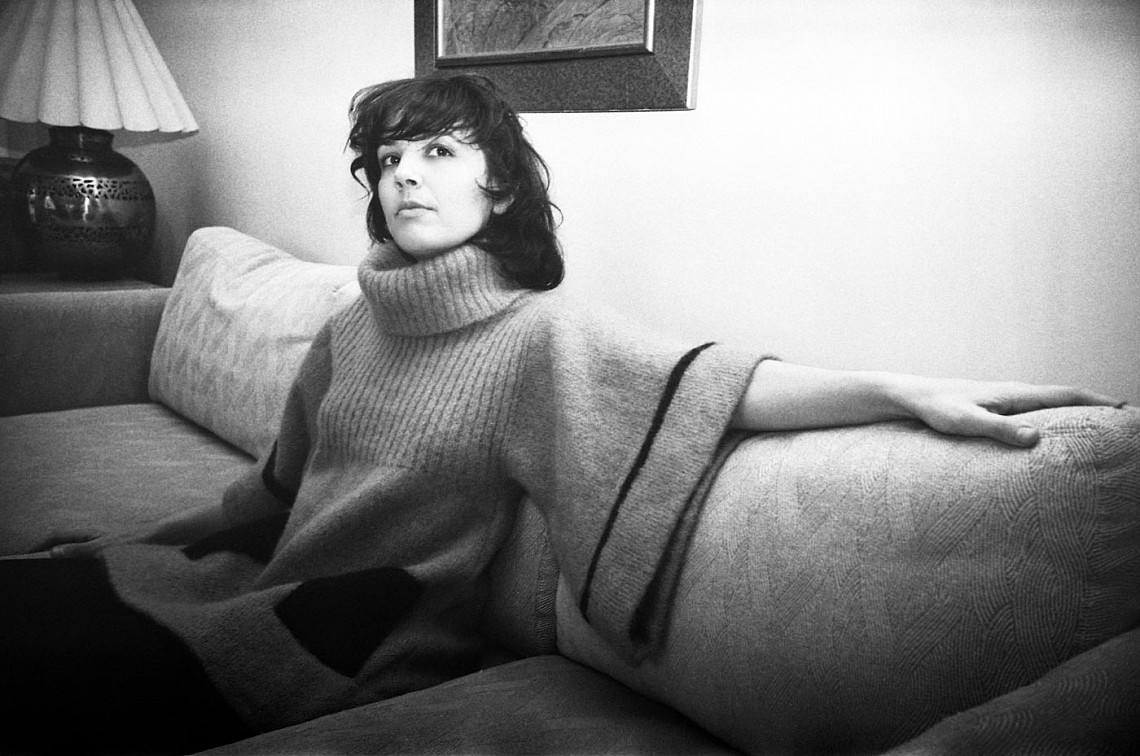
 Today's episode has been a long time coming. I first heard the name Tristen on the Songfacts Podcast last year when I interviewed Aaron Lee Tasjan, who couldn't get enough of her 2017 Sneaker Waves album.
 "She's able to write from her shadow-self perspective in this way that I really identify with," Tasjan told us. "These are things I would probably be more comfortable pushing down in some way, or forgetting about, or trying to ignore, and she'll just bring that right to the forefront of the song, but she does it with so much compassion for herself and for others."
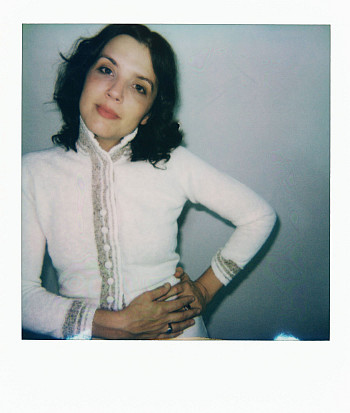
Tristen, a Chicago native, came to Nashville years ago as a confident young songwriter. In this episode, we chat about that journey, her latest album Aquatic Flowers, and her love of Eastern philosophy. If that's not enough, she even shares Louie Anderson's views on paprika!
What Attracts Singers And Songwriters To Nashville?
For me, I grew up in Chicago, and I was always a songwriter first and foremost. Even when I moved here, I wasn't even really convinced that I was going to be a recording artist. I thought, I'll just go down and write songs. I know I can do it, I can do it well, I can do it easily, and I'll go down and try to figure out how to do that. So that was the draw for Nashville, but it was also a draw because I came down and made a record with someone here, and I loved how it was a small town, and it was a lot cheaper than living in Chicago. So it was also attractive in that sense.When I moved here in 2007, I used to work waiting tables three days a week and had a couple of roommates, and all the rest of the time I could go to shows. You could really see a local show here every night of the week, and the bands are really good. Chicago is a big city, but it's not like it is here. There's a lot of great music here every night of the week. It's very impressive, and it's a part of a culture that's been around for a long time because there's always been an industry here supporting that. So what you have is a lot of musicians living here and raising their families here, and a lot of children who are raised in a musical household. It's just part of the culture here.
Outside of the fact that there's the industry part of it, there's an organic musicians' culture here, which is why I've stayed here and I haven't left. I have built a life here and not necessarily career-wise. I'm tied here, but not musically - I own a vintage store here, so I'm tied here for that - but I just couldn't leave my friends.
Was Songwriting Always Her Plan?
I didn't know that I was going to make it. I did know that I could write songs, and I was already performing and I already had bands and a manager living in Chicago, which was kind of a desert. So I already knew I had talent because I was uplifted in almost every community I had as a singer, but then also as a writer, I just knew I could do it.It's not an easy thing to just sit down and be able to do, so if you can do it on demand easily, and you know that about yourself and you have the libido to do it, you should. That's something I talk about a lot, the desire. The libido is such a wonderful way to describe the drive you have to work on things and to get better at it. Most people who are really good at anything just have the desire to work on it.
So coming down here, I just knew that I could come up with melodies. If I needed a melody, I could come up with it and I could write lyrics, and I knew that I could do it because I had written so many songs. I started when I was a teenager and it was super easy for me, but I didn't know that I would make it. I just wanted to give it a shot.
That's where I was at in my life - I was a really good student in college. I wasn't a good student in high school, but then I went to college and I studied things that I was interested in, and I did well. It was a lot of writing and I can write. So, I had the option of getting a fellowship and going to grad school and keep doing that, which I also enjoy, or I can give this really wild thing a shot, which is trying to be a songwriter and trying to do my music as a career. I really didn't know that I could do it, but I knew that I wanted to. I'll go wait tables, I'll sell shoes, I'll do whatever I need to do three or four days a week and not have a lot of money and run around town. And really quickly I met a lot of people that I'm actually still really good friends with because that's how this town works. If you can do something and you know you're good at it, it's easy to find people to support you, either in a band or as co-writers.
How Aaron Lee Tasjan Helped Her Through The Pandemic
He's great. Aaron and I really connected. I followed him when his first album came out and I loved the music, and then he messaged me during the pandemic when I was feeling really depressed, and he was like, "I just love your music." And I was like, "This is great. Thank you. I think I won't quit." He's so wonderful that way, and I really needed to hear that from somebody at that point. It was so isolating and everybody didn't know what was going on, and it's just hard.There's a folk tradition where if you hold on to gifts, bad things will happen to you - there's all these really gnarly stories about it. There are also a lot of Native American cultures where you're not supposed to hold on to gifts. So when someone pays you a compliment, if you hold on to it, it rots inside of you. If you just take it and you don't give it back. There's so much power in that, and Aaron really sets a great example of being a cheerleader for other musicians, and I respect it so much and it inspires me to be that way.
We've only got each other at this point with the way that the economics of the music industry are devastated and have been co-opted. Everybody's kind of working for free, and there's this vow of poverty we're expected to take, and all of these terrible conditions for creating. The thing that keeps me going is friends, people that I respect, saying, "I love your record." That's worth more than anything else - someone that you admire and respect saying, "I really love what you're doing," and meaning it, and saying it because they want to, and not having it be an obligation to say it.
How Jung Love Inspired "Complex"
I spent a good year or so being very much into Jung and listening to my favorite podcast, This Jungian Life. Starting around 27, I did some Eastern philosophy to get some self-work and some understanding and self-awareness. Life has a way of hitting you over the head with the same issues until you address them. Some people, they just get hit over the head forever, but you can repeat bad behaviors and bad patterns up to a point, and your late twenties is really a good time where you start to address that, hopefully. I've worked later in life on figuring out some issues with self-help and therapy.I like James Hollis - he's a Jungian analyst and his writing is amazing. His interviews are not as great as his writing, but his books are really incredible. They talk about your parents and your relationship to your parents, and something called the shadow, which is when your parents basically look to you to fulfill an unlived dream, and that's the shadow at play. So, your very first relationship where you're forming who you are and what you think about yourself, and what your goals are going to be, is very much dependent on what that primary relationship showed you. If your parents were musicians that didn't have a chance to do it, or they wanted to be a pitcher in Major League Baseball, there's the influence of the shadow.
But also there's that feeling of having bad patterns - the same relationship pattern playing out over and over again and happening quicker as you get older and being able to see the signs and recognizing in yourself the way that you work against yourself. You can become stuck and you want things, but you can't get them because you're stuck in patterns.
I was listening to a Louie Anderson interview, and he was talking about how his father being an alcoholic was like nuclear fallout. When you have abusive parents or a narcissistic parent, or you have any of those dynamics in your house, it's like your skin begins to melt when you're in your late twenties. You start to say, okay, well, my life is affected, and you're not really aware until you play out all these experiences over and over again.
On Writing Aquatic Flowers
I'm a steady writer. Even if I'm not really sitting down, I keep track of things so that when I do go to write, I have some stuff to work with. A lot of times I can sit down and finish something, but a lot of times, the initial seed of inspiration just happens - like I'm giving my kid a bath and I start singing this thing.The process for Aquatic Flowers was a little different than the other albums. I spent the last 12 years getting my process to a place of comfort for myself with trial and error. One of the things I did on Sneaker Waves, which is the record before this one, was go in with 30 songs and have two week sessions, and come out of two weeks of sessions with a lot of stuff that was hard to finish. Maybe eight of the songs lasted or kept my interest, and then I wrote three more and finished it. That album was too much to go in with because it was so cut off between writing and recording.
In between albums we usually do this thing where our fans can request covers, and then we make a really quick recording of it and they can dedicate it to somebody - it's really cute. It's an exercise for us, though. We have a day to do it, and we do all these covers, and it's really fun.
But through that process, for this record, we said, Look, we're not going to bite off these huge chunks of music. We're just going to pick a couple of songs, have sessions, finish them, pick a couple of songs, have sessions, finish them. We really were only working on two to three songs at a time. I always try to record 15 or 16 - for all the little problem children. There's some great songs that you get in the studio and something cooks wrong and you get to the final stages and you're like, "Ooh, a little too much paprika in that one." Another Louie Anderson reference because he thinks paprika is the funniest spice.
"Baby Drugs"
On top of that, it's a very strong relationship between the addict and the enabler. If you have it a little bit more together and you enjoy being in a caregiving role, which I think I fall into, you find yourself surrounded with extremely creative people and find yourself in an enabling role, and that's the whole vibe of "Baby Drugs." She's just an enabler.
One of the hardest things to come to terms with when you're dealing with an addict is to just let them go and know they'll do what they're going to do and bottom out. A lot of times, the bottoming out is when people die, and it's horrible to let go. But one of the themes you see when you learn and experience relationships with an addict is at a certain point, you've lost the person anyway when it gets really bad. They aren't who they were. Physiologically, the chemical makeup in their brain has changed, but also, they're stealing from you, they're lying, they're manipulating, and they just end up taking a lot. But I think it's totally natural to feel like you could save somebody and to still love somebody despite all of those things and for it to be actually the hardest thing to do. I couldn't imagine if it was a child.
I just keep thinking of this movie Beautiful Boy with Steve Carell as the father, and his son is a meth addict. I just couldn't imagine it being your child. Because, ultimately, the entire basis of your relationship is feeling responsible for them, keeping them safe, but you would have to actually at some point let them go.
"Baby Drugs," though, is still a naive young girl thinking that she can save him. She still believes love can conquer all - "I will never falter, I will never fear because I've seen the demons love can conquer disappear." I know that my love can save you, and I can heal all these deep wounds that are making you want to do all these destructive things. I can save you. You just have to listen to me, I'll take care of you. I've seen marriages that are 50 years old where the wives are still protecting the husband from the children. And there's a whole lot of huge lies happening there that just stay, and it's a very intricate, deeply woven scenario where there's a whole lot of mental gymnastics going on to make excuses for this person that they've been married to for 50 years.
There's so many examples of that in my life and family and, those excuses and all that, it's just classic enabler. The movie Phantom Thread kind of touches on what we're talking about, but ultimately the partner feels very needed and that becomes a part of the dysfunction of the relationship. They love to feel needed and be in control, and the addict needs them, and as long as they're addicted, there's a role for everybody. It's just hard when there are children involved.
"Cool Blue"
And interestingly enough, what you learn through Jung and these other psychotherapists is that you are going to pick relationships that are comfortable for you, not necessarily healthy for you. If you grew up with a certain dynamic, the very first dynamic where you developed who you were, who I is - when kids figure out who they are, they call themselves by their first name, they talk in third person - you're going to find that relationship that's comfortable. If your primary relationship is with someone who's abusive, you're going to find that particular way that you were abused, and you're going to find that comfortable situation where you always feel like shit, because someone's verbally abusing you or whatever. Then you hate it and you're unhappy and you're trying to figure it out. Realizing that you're not picking partners based on what's good for you, but you're picking partners based on what's comfortable for you, how you're used to feeling about yourself, it'll be a big revelation.
But back to "Cool Blue," I was very into the idea that we sometimes fall in love with an ideal person who's not who we are, and I definitely picked somebody that was way more stable than I was because I felt it was more attractive than the self-loathing that comes out when you pick your partner. It's also wondering where those emotions go because some people are more emotional than others. Do they just get stuffed inside and then they come out in other ways? Road raging or whatever people do for fun.
I was also reading about boxing culture. Someone did a study and determined that sports were so popular in male culture because it's the only acceptable place for men to be emotional in society. You see all these guys raging out, playing sports, and that's the only outlet they have for all these emotions, and the rest of the day they just stuff them down. I know friends that process things way slower, so they have all these emotions and they come out in a different way a month later, but I'm not like that. I'm like whatever is happening is just coming out at everybody and then it's gone and I'm fine.
So, that song is definitely autobiographical and also about the challenge of being a really emotional, passionate person, and trying to explain that to somebody who's very stoic and hardened and stiff-upper-lipped. You feel like you're this crazy person, but then you get around someone who's as emotional and wild as you, or wilder, and you're like, "Oh, I've got it together."
Tristen's Picks For The Songfacts Podcast
I'm absolutely obsessed with Cate Le Bon. Oh, she's amazing. She's like the closest to Bowie you'll get these days. I love her very simple arrangements, but these amazing melodies.Erin Rae - great melodies, great songwriter, and she's got a new record out, too.
Oh, and The Colonel! He's amazing. He's from Jackson, Tennessee, and he's like the closest to Buck Owens I think you can get these days. Great songwriter.
February 14, 2022
Follow Tristen on Instagram
Subscribe to the Songfacts podcast, part of the Pantheon Network
More Songfacts Podcast