 In August 1971, the Nitty Gritty Dirt Band recorded their seventh album around a novel concept. Having seen mixed commercial successes prior to the effort, they had no way of knowing they were about to create something that would get about as close to timeless as modern music can get.
The idea was like a front-porch picking session at a much broader scale. The Dirt Band, having formed in 1966 and consisting of relatively young men, would bring together three generations of musicians to record folk, bluegrass, and country songs. It all fit around the themes of the classic, mystical American song "Will The Circle Be Unbroken?"
The effort brought musicians of varying levels of notoriety out of career stasis. None of it was as organized or as mechanically produced as we'd expect in the modern music industry. This was very much bringing together a bunch of legends and asked, "Well, what would you like to play?"
It was destined to go disastrously bad or brilliantly well. Fortunately, it went the latter route.
Will The Circle Be Unbroken went Platinum, gave new life to many musicians, and introduced a few niche performers to the broader listening public.
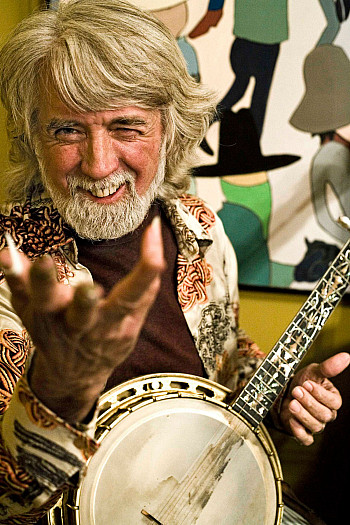
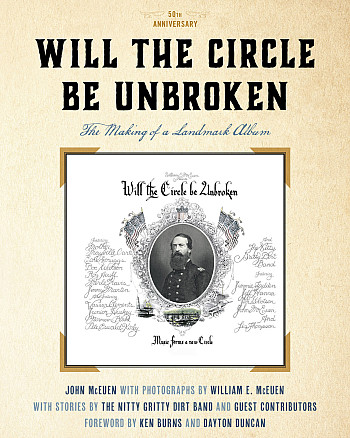
Now, 50 years later, Nitty Gritty cofounder John McEuen has gotten together with many of those who worked on Will The Circle Be Unbroken to release a book about the making of the album. He got together with Songfacts to discuss that book and share some other memories from his long tenure in American music. Turns out he's got some great Linda Ronstadt and Dolly Parton stories as well.
John McEuen: It was my idea. It just seemed like a logical way to tell the story, to take my brother's (William McEuen) photographs and use them to get into some history about world travelers and various people, to get deep into the history of the record and 1972. I think people like to know that.
Songfacts: When Nitty Gritty made Will The Circle Be Unbroken, you were all young, ambitious guys in an ambitious, competitive industry. Yet, you all willingly took backseats to let old legends take center stage. Where do you think that humility came from?
 McEuen: Oh, I don't know if there was a choice. I mean, what are you going to tell Maybelle Carter? She didn't know there was a choice either [laughs]. She said, "I want to do 'Wildwood Flower' now," and you did it.
It was a frenzied group of people and we wanted them to do what they do. We wanted to get that to our audience. I thought there was value in that and wanted to find a new audience for them.
It seems to have worked. Years later, Doc Watson told me, "I have to do 'Tennessee Stud' now during every show." Earl Scruggs said they got a tremendous amount of work on the other side of the road after that. So, everybody that appeared on the album benefited.
Songfacts: Very cool. The camaraderie that comes through in your book just really struck me, particularly considering the cutthroat aspect of the music industry.
McEuen: You ever hear Hunter S. Thompson's definition of the music industry? He said, "The music business is a cruel and shallow money trench, a long plastic hallway where thieves and pimps run free, and good men die like dogs. There's also a negative side."
Songfacts: In addition to the parts you wrote, the book has many accounts from other people involved in the making of the album. What was it like hearing their perspectives so many years after the album was made?
McEuen: Well, you know, it is not my album. That is not my story, solely. I wanted to have the Dirt Band guys have something to say. Gary Scruggs was very important to the whole thing. He wrote a great piece, though I thought he was a little crazy about not wanting anyone to edit his words. He didn't want anyone touching anything he wrote.
Marty Stuart. He was 12 years old when the album came out, but I wanted his voice, and I know he's a great writer, which he proved to be.
Rita Forrester, she's the granddaughter of A.P. Carter. She was important. She became a friend when I stayed at Maybelle's (Maybelle Carter) house a couple years ago. Boy, was that something. It was like staying in a museum. Rita manages the property. She's the sweetest lady I ever met. I was admiring the dinner plates they had there. She told me that A.P. (Carter) had said when he got into the music business that if he could just make enough money, he'd buy restaurant plates, because they don't break.
She told me, "These are the restaurant plates he bought." And, boy, they were thick and heavy. I got home a week later, and in the mail was a package of cookies and a restaurant plate. Now I've got an A.P Carter restaurant plate, and that's as good as a Grammy.
Songfacts: In the book, you provide story-portraits of many of the figures involved. They are informative and heartfelt and one of my favorite parts of the book. One that really struck me was about Merle Travis. Could you talk a bit about him here?
McEuen: He, like Vassar Clements and Earl Scruggs and Maybelle Carter, you wouldn't know that they did what made them popular. He was just like a guy - a refrigerator repairman or a plumber or something. "Oh, yeah, I play the guitar a little bit."
And Vassar, you wouldn't even know he played the fiddle if you didn't ask or didn't know. These people are people first. I just had to describe them a little bit. They were very nice.
Now, Roy Acuff, the King of Country Music, he was a little different. He was a star when he walked around. But he was nice, he was OK, he was just a little bit like that photo in the book. A little bit distant at first. You know, "What are you boys recording in here? Let's listen to some of it." But after he heard it and said, "Hell, that ain't nothing but country music, let's make some more," well, we were part of the club.
And Junior Huskey, he was, "I have so many basses, I've got them all loaned out, if they ever came home at once, my wife would divorce me." That's just not something you expect to hear from the number one bass player.
Norman Blake, he loves music, but he doesn't talk a lot. He was just a nice guy.
Jimmy Martin, he'd say, "I'm the best bluegrass singer in the world." And the funny thing is, everyone would just agree with him. "Oh yeah, that's right, Jimmy." Five or six years before he died, he put up a big tombstone that said, "Here lies the world's greatest bluegrass singer." He had that attitude with his music, and it was great.
Songfacts: In the book, you mention that you wrote "Dismal Swamp"1 before getting with Nitty Gritty. Do you recall what inspired that song?
And they did. And I won. So I figured I better stick with this group as a way to play my song for people and to maybe get some work. Les and I were good friends. We're still friends to this day. He plays with me now.
Songfacts: Why did you base the song on Dismal Swamp?
McEuen: Well, it was the first place that George Washington surveyed in Virginia. It was one of his jobs before the presidency. He was a surveyor, and it was an interesting place. It was told to me by an old merchant seaman that worked for my father. He said, "You don't want to go to Dismal Swamp. The islands float around."
It was also the first big land scheme in America. "Buy land in the Dismal Swamp Land Company!"
Songfacts: You knew this as you wrote "Dismal Swamp?"
McEuen: No, not all of it. I knew some of it. I didn't know the part about George Washington, but I knew about the floating islands and stuff like that.
Songfacts: Speaking of songs, how about "Will The Circle Be Unbroken?" What do you think it is about that song that makes it so timeless?
You know, you can find yourself singing that song, because it's about your mother going away and what a sad day that is. That song never hit me as hard as it can until my mother died and I had to sing it at her funeral. Then I went, "God dang, this is an important song."
She requested me to play that at her funeral.
And here's the weirdest thing: I didn't find out until I was writing this book that "Will The Circle Be Unbroken" was not an A.P. Carter song. It was collected by him, and he added a couple verses, but it was originally recorded in 1915 by a guy named William McEwen.
Songfacts: Wow. Any relation?
McEuen: No. None that I know of. Spelled with an "Ewen" rather than "Euen." But that happens all the time with that name.
Songfacts: That is bizarre.
McEuen: It is, really. It's making the hair on my leg stand up now. My brother didn't know that. He died before I could tell him.
Songfacts: That is amazing. That is truly a bizarre synchronicity.
McEuen: It is. It's like, "Wait a minute, come on, don't do this to me." Make it John Smith or something.
Songfacts: In the book, there's a part where you're talking about "Soldier's Joy" and how satisfied you felt as you were sitting in the studio listening back to your recording of the song. What did you appreciate so much about that recording?
McEuen: It was perfect. I wouldn't change a note. The arrangement works. It's hard to arrange something for three instruments. You have to keep it interesting.
Earl [Scruggs] loved that recording. He was really proud of that one.
Songfacts: Does that still stand out to you as one of the recordings that you're proudest of?
McEuen: Oh, yeah. My top five favorite recordings. One, I think I'm the first banjo player to play with Earl Scruggs, and two, I did a fine job. I don't say that about everything I do, but I say that because he said it, and his son said it. "Daddy loved that song. He played it every now and then."
And it was done in one take. I don't know if I said it in the book, but I asked Earl, "Well, you want to do it again?" And he goes, "I don't reckon why. Did I mess up a part of that?"
"No," I said.
"Well I don't reckon why."
Songfacts: In the book, there's a photograph of you playing at a show at the Aspen Inn. You remark that that night you had to "play yourself out of a corner." I was amazed that you could remember so clearly a show from 50 years ago, and I'm wondering if you remember all your performances that clearly. And what did you mean by playing yourself out of a corner?
McEuen: I don't remember every show. I played over 10,000 shows, you know.
But playing out of a corner. Well, it's like you're improvising, you have an idea of somewhere to go and you can't get there, so you have to back off. It happens in milliseconds. It's really exciting, but you're trying to keep from making mistakes.
Gary Scruggs used to tell me, "I like it when you try to do something and you can't do it because what you end up doing is better than what you intended."
It's more inspirational. It's more fun.
In May 1977, the Dirt Band became the first American act to play in the Soviet Union, a conglomeration of Communist nations headed by Russia and existing from 1922 to 1991. The Dirt Band played 28 sold-out shows and appeared on Soviet television before an estimated 145 million people. The isolationist Soviet Union went through remarkable lengths to keep outside influences from getting in, but their rivalry with the fellow world-power United States added another level of severity to the separation. The freedom and individuality of American music were seen as direct threats to Soviet cultural authority. Writing about one of the Dirt Band shows, The New York Times quoted a Soviet police officer saying, "The noisier it is, the friendlier it is."
Songfacts: What was it like to be the first American act to play Soviet Russia?McEuen: It was like a whole other country. [Laughs]
There were so many things, you know. One was the obvious lack of freedom of the people that was exhibited by the audience.
I recall how hungry they were for American music. They couldn't import American music or British music.
They had "bones records." They'd tell the government they had to go to London to get special X-rays because they didn't have the machines there. They'd get permission to go to London. They'd take the X-ray film to someone's house, all of this prearranged, and they'd record a record onto the film so it'd be like a plastic record. They'd record the album onto the plastic X-ray film and they'd take it back to Russia and smuggle it in. It would only play maybe two or three times.
That's the amount of trouble they would go through to get American music. Voice of America was the only other avenue, but it would get jammed a lot of the time.
The Russian towns only had one radio station and they played only about two or three songs an hour. They did the farm report, and they did propaganda, they did news. And the music they played was not American.
When were were there, we played a Chuck Berry song and a couple Linda Ronstadt songs. The crowd went nuts. We did 28 sold-out shows, and they went over so well that they didn't let an American group in for seven or eight years.
I remember the distrust of the government by the people, and the belief in the government by another faction of the people. Finding out that only 3 percent of the people were Communist Party members was a surprise. Three percent of the country was ruling the country.
Here it's only 1 percent, so it works out better. [Laughs]
It was really a constant awakening. I described that much better in my book, The Life I've Picked. The chapter is called "The Red Brick Road."
Songfacts: That shows you the power of music, man.
So, Nitty Gritty opened for The Doors. That was interesting to me because it seems like there's a very different vibe, both with the bands and with the audiences. What was the chemistry like in that situation?
McEuen: It wasn't anything more than we were with the same agency. The agency would tell the guy that was buying The Doors what their opening act would be. People didn't worry about it. They just took it.
Some people said it was like fire and water, and yes it was. It was more fun opening for Bobby Sherman.
Songfacts: Why is that?
McEuen: It was a female audience. It was just more fun.
Songfacts: What was the live audience for The Doors like?
McEuen: Half the audience was pissed off, disgusting, like tattoos or whatever. You know, the dope-smoking crowd. And the other half came with that half. They didn't realize Jim Morrison was as disgusting as he was.
Songfacts: That's actually really interesting, because now there's so much media that you always know what to expect. But back then, a lot of people wouldn't really know what Morrison and The Doors were about until they got there.
McEuen: Right. Just like Alice Cooper and the snakes, right? They had to do their stupid show. I can't think of one Alice Cooper song, but I know he carried a snake with him.
Songfacts: So, this next one might be pushing your memory a bit, and I apologize if it is, but in the book you discussed when you were playing Playboy After Dark. You said in it, "One wonders if it really mattered. Did it do any good?" I was wondering what you meant by that.
McEuen: Well, did it matter if we did it or not? Would I have one more dollar to my name now, or was that the one that put us over the top? Like Steve Martin hosting Saturday Night Live, that was a big deal. That was a difference in his career. Was Playboy After Dark a difference in our career? I don't know. We just played.
Barbi Benton was in the audience, so that was a success.
Songfacts: There's a really fascinating anecdote in the book where you talk about how the technical aspect of producing the album sleeves slowed down album sales. Could you just discuss that a little bit here?
McEuen: It took five or six weeks to make a shipment of 25,000 Circle albums. They couldn't put them out at 1,000 at the time. They had to make them all and then ship them, and they'd sell them the first week.
So the next five weeks there wouldn't be any records in the market. They'd make another 25,000, then ship them out. They'd sell by the first week. They'd have to make another 25,000. Five weeks with no records in the stores.
By the fifth or sixth time they made 50,000. Well, they took a little bit longer to sell out, maybe two weeks. Then they had to make another 50,000. Well, that's 30 weeks. Six times 25 is only 150,000.
That's why it took two years for this to become a Gold record, because they just couldn't make them fast enough. And then it became Platinum.
Songfacts: Do you think you would have sold more if the process hadn't slowed you down?
McEuen: I don't know. That might have helped it. But it doesn't matter because right now the Circle album is in the Top 20 on three different Amazon charts. It keeps going. Every now and then it'll go down to 35 or maybe 40, but then it goes back up to eight or 12 on the Bluegrass or Folk chart. And Amazon is a good indicator.
 Songfacts: What does it feel like to have been part of something that is such an enduringly popular work of art?
McEuen: I'm just trying to get my brother's photographs out [with the book]. He produced the album and managed the group, and I played with the group.
It was like a third-person thing. Like, "The people in that group were unusual. The guitar player was such and such. The banjo player was..." Oh, that was me.
It feels great. I'm really glad I asked Earl Scruggs if he'd record, and Doc Watson, and my brother. We asked Earl Scruggs if he would get me Maybelle and Jimmy Martin.
It was amazingly easy. Eight weeks after I asked Earl if he'd record with us, we started recording. Five days later, we were done with 36 songs. It was like we weren't doing it, like we were channeling it or something. You know, we were in the position that this had to be done, and from what the reactions have been, what the reviews say, what people say... you know, I've had people come up and tell me, "Do you know how hard it is to split a three-record set when you get divorced?" I've had that said to me twice. Maybe three times.
Men have told me they fixed their relationships with their fathers over listening to this album.
This album has a following. It's like The Dark Side Of The Banjo. Like, The Dark Side Of The Moon. It's in the Grammy Hall of Fame and the Library of Congress. You know, "Mr. Bojangles" is in the Hall of Fame, too.
Songfacts: In the book you mentioned a song titled "Collegiana." You mentioned that you worked as hard on that song as any other song on Rare Junk, and you really loved it but the audience just didn't seem to care for it.
McEuen: I think it had too many words. It was only recorded by the Paul Whiteman Orchestra in 1928.
Songfacts: As your career went on, did you develop a better sense for what the audience would or would not like?
McEuen: No. We had some songs that we thought people would like, and we're glad they did. And we had some songs that we liked that we thought people would like, and they didn't. So we didn't do those.
It's like "Dust In The Wind." They said, "We need one more song for the album. Why don't we do that one we rehearse our vocals for before we go on?" That was their biggest hit ever. Kansas. It was, "We'll just throw this on there."
When the record company told us "Mr. Bojangles" was going to be the single, everyone was depressed. We thought it was going to end our career. How can you have a song that's about a dead dog that's almost four minutes long? It's not electric. It's not a dance song. But boy were we wrong.
Songfacts: So, in addition to the book, what do you have going on right now?
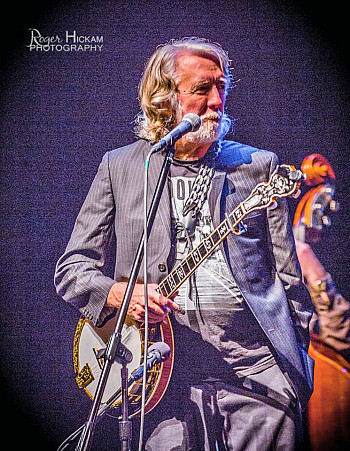
McEuen: I go out with Les Thompson. He's the original bass player with the Dirt Band. He's been playing with me for the past eight years. We do a video show, a multimedia show that takes people through the Dirt Band leading up to the Circle album, with pictures behind us. The pictures from the book 15 or 25 feet on the screen, and we tell the story of Will The Circle Be Unbroken and we play my favorite Dirt Band music and my favorite music from my solo albums.
Songfacts: What would you like people to know about the book that we haven't covered?
McEuen: It's like a map for the Circle album. You try to figure out what's on the three-record set. Where is it going? What is it doing?
One guy told me, "This is like a documentary, but it's a book." If you play the record and read the book, it's like watching a documentary. It just tells you more about the Circle album. I felt over the years after doing about 10,000 interviews that, since that was always a question that was asked, there might be a book there, and the 50th year seemed appropriate.
I can't believe it's 50 years. Half a century. It's like Dark Side Of The Moon. Next year is its 50th year. Isn't that amazing?
Songfacts: It's interesting because I'm a child of the '90s, but where I grew up, we listened mostly to '60s music, and that wasn't too unusual, really. It's really interesting that the music is old and yet it's still new. There are young people listening to it every day.
McEuen: A lot of effort and work and time was put into the music of the '60s, '70s, and '80s. A lot of angst and a lot of emotion was put into music at a time when the music business was changing so that the artists could actually get what they were doing on a record. And it worked, what they were doing, because it spoke to the anxiety and the angst, and the problems, and the good things in people's lives.
Have you ever heard "Will You Still Love Me Tomorrow" by Linda Ronstadt? I was in the vocal booth when she cut that. I was laying on the floor.
I just went to the session because they had free food. There was no money. Nobody had money. So when somebody was recording, you'd go to the studio if you knew them. But I went to hear her recording, too.
I was sitting in the vocal booth with headphones on, and Linda comes out, "Oh, I have to sing now."
I got up and said, "OK, I'll leave."
She said, "No, you stay here, I'll sing to you." And she sings, "Will you still love me tomorrow?" Yes! Yes, I will!
It is like the hairs standing up on my arm. It was wonderful. She was just ripping that song apart.
You don't have music like that anymore. Some of it's good. Like Taylor Swift. She's like the new Dolly Parton. Dolly was a woman that was writing her own songs, and she had to use whatever she could to get out there.
You know, I opened for her about 40 times. It was really fun. I'd go out and play the encore with her.
I had my kids on the road with me once and was doing about four runs with her. It was one of my son's birthdays, so she said, "I'm going to sing 'Happy Birthday' to you."
It was in Fort Worth. I said, "Dolly, this is the worst audience of yours that I've ever played to. They hate me. You don't have to do 'Happy Birthday' tonight. Do it tomorrow night."
She goes, "John McEuen, you don't know Dolly Parton very well. I said I'm going to do 'Happy Birthday,' and I'm going to do it. And if that audience doesn't like it, they can take this red dress of mine and shove it up their ass."
The audience was rowdy for her, too, and I was in the wings watching, and she looks over and she says to Don Warden, her road manager, "Don, did you get the check?"
He nodded "yes." He picks up the money. She said to the crowd, "Thank you! Goodnight!"
November 14, 2022
Get John's book Will the Circle Be Unbroken at his website.
Further Reading:
Interview with Loreena McKennitt
Interview with Jerry Douglas
Interview with Benmont Tench
Footnotes:
- 1] The Great Dismal Swamp lies in Virginia and North Carolina, with mysterious Lake Drummond at its center. To this day, scientists have yet to sort out how the lake was formed.
The swamp encompasses around 750,000 square miles. Today most of the ecosystem is part of the Great Dismal Swamp Wildlife Refuge, but its significance to American history far predates that status. During the era of slavery, slaves escaped into the swamp and created large communities, with some members spending the entirety of their lives there. Archaeological records show a variety of Native American tribes moving in and out of the area as far back as 13,000 years ago. (back)
More Song Writing