Music has the power to change our vocabulary. It can introduce new sayings, revive obscure idioms or examine well-worn phrases in a new light. Let's take a look at some phrases we learned from popular songs, starting with an interesting query from the Pet Shop Boys.
Soft Option
Heard in: "West End Girls" by Pet Shop BoysWhich do you choose
A hard or soft option?
"West End Girls" is set in the London club scene, where the flashing lights and pulsating rhythms can overload your mental circuits. Every night in the club, you make a series of choices, often involving who you'll pair up with that evening. Neil Tennant of Pet Shop Boys could find it overwhelming, a feeling he brings to the song as he faces the hard or soft option conundrum.
The phrase appears at the 1:35 mark.
"West End Girls" Songfacts
New York Minute
Heard in: "New York Minute" by Don Henley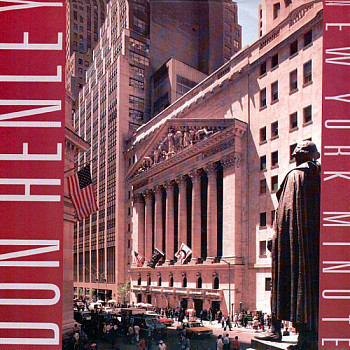 In a New York minute
Everything can change
In a New York minute
Things can get pretty strange
Life moves so fast in the Big Apple that even the clock can't keep up with the frantic pace. While the rest of the world experiences the luxury of a 60-second minute, a "New York minute" is near instantaneous, or, as former Tonight Show host Johnny Carson put it, "the time it takes for the light in front of you to turn green and the guy behind you to honk his horn."
At least, that's how people who live far from The Empire State see it. The phrase gained popularity in the Southern US in the '80s, with Texans in particular favoring it as a jab at speedy New Yorkers who lack the grace of slow-moving Southerners. The sentiment was shared in Tennessee: In 1985, country singer Ronnie McDowell hit the Top 10 with "In A New York Minute," singing, "I'd make love to you in a New York minute and take my Texas time doing it."
Don Henley, a Texas native, brought the phrase mainstream in his solo hit "New York Minute" from the 1989 album The End Of The Innocence. Instead of using the phrase to take potshots at the city that never sleeps, Henley tells a cautionary tale, set on an autumn day in New York, of how life can change in an instant.
Earlier in the decade, Henley also aired out "Dirty Laundry," an idiomatic tabloid takedown that went to #3 on the Hot 100.
"New York Minute" Songfacts
Born Under A Bad Sign
Heard in: "Born Under A Bad Sign" by Albert King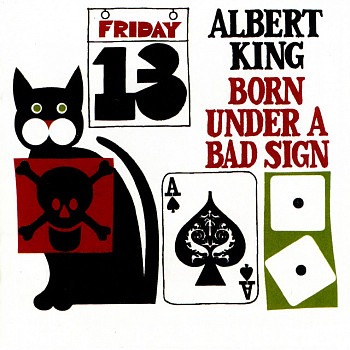 Born under a bad sign, been down since I began to crawl
If it wasn't for bad luck, I wouldn't have no luck at all
In the 1986 comedy Ferris Bueller's Day Off, the title teen complains about his inherent bad luck as he hacks into the school system to change his number of absences, saying, "I asked for a car, I got a computer. How's that for being born under a bad sign?"
Actually, as the audience soon learns, Ferris gets all the breaks and rarely suffers the consequences of his actions - unlike Albert King. In his 1967 classic "Born Under A Bad Sign," the bluesman links his lifelong bad luck to the day he was born under a bad sign, referring to the astrological signs that predict our fate based on the alignment of the stars and planets.
Astrology was a big deal in the '60s when William Bell and Booker T. Jones wrote the title song for King's debut Stax release. It was Bell's idea to tap into the craze and write an astrological blues number, and he coined the title phrase.
While the saying is most associated with its song of origin, which was covered by Cream the following year, it made the Top 40 of the Hot 100 in 1980 when it opened the Whitesnake hit "Fool For Your Lovin'," where David Coverdale sings:
I was born under a bad sign
Left out in the cold
"Born Under A Bad Sign" Songfacts
Nick Of Time
Heard in: "Nick Of Time" by Bonnie Raitt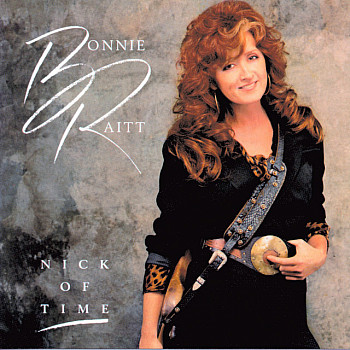 I found love, baby
Love in the nick of time
"Nick of time" was already a well-worn phrase by the time Bonnie Raitt used it as the title of her 1989 album and its lead single. According to World Wide Words, it dates back to the 1580s when the phrase "in the nick" referred to the precise moment something had to be done. The addition of "time" to the expression came shortly after, and it became a popular adage to reflect a sense of urgency in getting a task completed before it was too late.
But Raitt explored another interpretation of the phrase in her song, which is a reflection on aging. "The double-edged meaning was apparent," she explained. "'Nick,' as in just in the nick of time, and also the wear and tear of time and the nicks it leaves on the body and the spirit."
The album came just in the nick of time for the singer, who spent the early half of the decade getting sober and trying to land a record deal after being dropped by Warner Bros. Nick Of Time was her first Capitol Records effort and a huge success. In went to #1 in the US and earned her a slew of Grammys, including Album of the Year and Best Female Pop Vocal Performance for the title tune.
"Nick Of Time" Songfacts
Dirty Work
Heard in: "Dirty Work" by Steely DanI'm a fool to do your dirty work
Oh yeah
"Dirty Work" is a phrase that's changed meaning over time. It was introduced by an American sociologist named Everett Hughes, who in 1962 published an essay called "Good People and Dirty Work" to explain why ordinary German citizens tolerated Nazi atrocities.
From their 1972 debut album, Steely Dan's "Dirty Work" uses the phrase as a proxy for infidelity; the guy in the song is the secret lover of wealthy married woman, and he doesn't feel good about it. Walter Becker and Donald Fagen of Steely Dan, the self-professed "robber barons of rock and roll," likely got the phrase from a 1966 song by the blues musician Little Joe Blue called "Dirty Work Going On," which used it in the same context.
These days, thanks to Mike Rowe and his Dirty Jobs TV series, we think of "dirty work" as the unglamorous, often unseen jobs most people would never do, like working at meat-packing plants or embalming bodies for funerals. Or murdering rivals - Tony Soprano sings along to "Dirty Work" in an episode of The Sopranos.
"Dirty Work" Songfacts
Freak Flag
Heard in: "If 6 Was 9" by Jimi HendrixBut I'm gonna wave my freak flag high, high.
Wave on, wave on
The '60s counter-culture anthem "If 6 Was 9" gives voice to a generation that refuses to live by anyone else's standards. But for Jimi Hendrix, that individualist stance sets the Afro-ed guitarist apart from long-haired hippies ("If all the hippies cut off their hair, I don't care, I don't care") just as much as the white-collared conservatives that sneer at him on the street. He's not interested in copying anyone, but letting his "freak flag," a symbol for his uniqueness, fly high for all to see.
The song first appeared on the Jimi Hendrix Experience's second album, Axis: Bold As Love, in 1967. Two years later, it was included on the soundtrack to Easy Rider, another countercultural touchstone that tapped into the free-spirited hippie mentality.
The term "freak flag" also caught on. In "Almost Cut My Hair," a 1970 song from Crosby, Stills, Nash & Young, shaggy-haired David Crosby considers shearing his mane but decides against it, for fear of fitting in with the establishment he rails against. For Crosby and his contemporaries, long hair is their freak flag. He sings:
But I didn't and I wonder why
I feel like letting my freak flag fly
And I feel like I owe it, to someone, yeah
Champagne Problems
Heard in: "Champagne Problems" by Taylor SwiftHer picture in your wallet
You won't remember all my
Champagne problems
"Champagne problems" (or "Sham pain problems") are small issues that don't mean much in the grand scheme of things - previously referred to as first-world problems before Swift dropped her bubbly-themed hit in 2020.
But the situation in the song is anything but frivolous for a pair of college sweethearts whose relationship unravels ahead of a marriage proposal. He was planning to crack open a bottle of Dom Perignon to celebrate the engagement with family and friends, but didn't count on his girlfriend leaving him before he could even pop the question. She assures him he'll be better off not having to deal with her mental health issues, which she sadly dismisses as "champagne problems."
Although Swift popularized the phrase, she wasn't the first to use it. Meghan Trainor, Katy Perry, and Joe Jonas all released tracks with the same title. Even Marilyn Manson incorporated the saying in his 2020 cut "Half-Way & One Step Forward."
It's possible the phrase was inspired by a Tom Waits quote that was actually a 19th-century toast: "Champagne for my real friends, real pain for my sham friends." It also showed up as a song title on Fall Out Boy's 2005 album, From Under The Cork Tree.
"Champagne Problems" Songfacts
Helter Skelter
Heard in: "Helter Skelter" by The BeatlesLook out, helter skelter
She's coming down fast
The term "Helter Skelter," which is used to describe a chaotic situation, was well known in the UK by the time The Beatles released a song of the same name on The White Album in 1968. It was the name of a popular amusement park ride where thrill-seekers would climb up the inside of a high tower and zip down the outside spiral on a mat. In the rock-and-roll number, Paul McCartney likens an exhilarating romance to a go on the twisty ride.
But the phrase took on a more sinister meaning in the summer of 1969. Cult leader Charles Manson claimed he heard messages in The Beatles' music about an impending race war in the US and called the scenario "Helter Skelter." When his followers carried out the murders of California couple Leno and Rosemary LaBianca, they scrawled the misspelled phrase on the refrigerator in their victims' blood.
"Helter Skelter," the song and the phrase, was never able to shake the harrowing connection with the brutal murders, especially when a famous book about the case borrowed it for its title.
"Helter Skelter" Songfacts
Maneater
Heard in: "Maneater" by Hall & Oates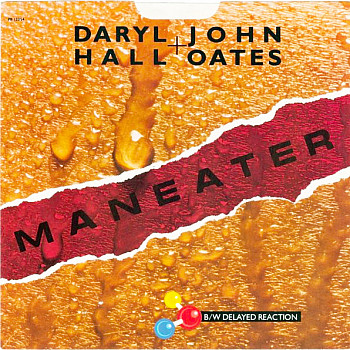 (Oh-oh, here she comes) Watch out boy she'll chew you up
(Oh-oh, here she comes) She's a maneater
Before the turn of the 20th century, the term "maneater" was reserved for cannibals or tigers with a taste for human flesh. But men were also being devoured by a different kind of predator: women. In 1906, a new definition for "maneater" emerged, describing a femme fatale with a voracious appetite for the opposite sex, a love 'em and leave 'em type whose charms always hide ulterior motives - the female equivalent of a womanizer.
Although the nickname has been floating around for more than a century, we're willing to bet you can't hear "man-eater" without "oh-oh here she comes" coming to mind. Hall & Oates famously delivered the warning in their 1982 chart-topper "Maneater." The woman in question, "a she-cat tamed by the purr of a Jaguar," favors luxury over love and will use her feminine wiles to get the goods from unsuspecting men.
According to John Oates, the song isn't really about a woman at all. In a 2014 interview, he claimed it was a commentary about New York City in the decadent '80s. "It's about greed, avarice, and spoiled riches," he explained. "But we have it in the setting of a girl because it's more relatable. It's something that people can understand."
Nelly Furtado took a cue from Hall & Oates in 2006 with her own #1 hit titled "Maneater," with Timbaland playing the victim of her vixen persona. But according to Furtado, she was after his mind, not his money: "'Maneater' is like an analogy of how I got to consume Tim and his crew's creative energy, and put that into the album."
"Maneater" Songfacts
Are there more phrases you learned about in songs? Let us know in the comments.
August 5, 2022
Further reading:
Grammar In Lyrics quiz
Songs with made-up words in the title
More Song Writing