So many peculiar songs bubbled into the mainstream in the '90s that the "alternative" tag quickly became meaningless. But a few songs from that decade stand out for their inscrutability, and we're going to explain them... to the extent they can be explained.
We're not talking about acts like Radiohead, Tool, Nirvana, and Björk, which specialize in the obtuse. These are songs that have sometimes baffled their own writers, yet still became hits. The ones you hear while waiting at the checkout line in the grocery store and think, this is one strange song.
At the end of each writeup you'll find a link to the Songfacts entry where you can get more of the story and read some rather intriguing comments.
We're not talking about acts like Radiohead, Tool, Nirvana, and Björk, which specialize in the obtuse. These are songs that have sometimes baffled their own writers, yet still became hits. The ones you hear while waiting at the checkout line in the grocery store and think, this is one strange song.
At the end of each writeup you'll find a link to the Songfacts entry where you can get more of the story and read some rather intriguing comments.
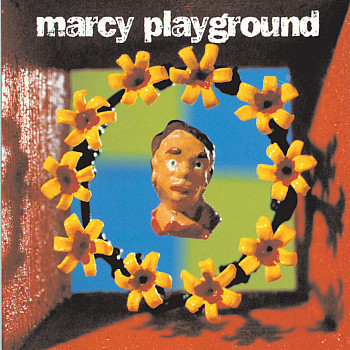
"Sex And Candy" by Marcy Playground
1997
In platform double suedeYeah there she was
Like disco lemonade
Perhaps you've heard the story of how "Smells Like Teen Spirit" got its title. Kathleen Hanna of the group Bikini Kill spray painted "Kurt Smells Like Teen Spirit" on Kurt Cobain's bedroom wall, a reference to Cobain's ex-girlfriend Tobi Vail (also in Bikini Kill), who wore Teen Spirit deodorant.
Lusty smells were also in the air for John Wozniak, who in the late '80s was dating a girl at Bryn Mawr College near Philadelphia. Her roommate came in one day and said, "It smells like sex and candy in here."
Wozniak remembered the line and wrote the song "Sex And Candy" a few years later around 1993. In 1996, he formed Marcy Playground and included it on their self-titled debut album, released a year later on Capitol Records. The lyric is full of the kind of disjointed phrases that often enter the cerebrum though the aid of hallucinogens: "double cherry pie," "platform double suede," "disco lemonade."
"When I was very young I experimented with drugs, but when I was writing these songs, I wasn't high," Wozniak said in a Songfacts interview. "But it sounds like I was high."
It sure does, and Capitol figured the song was just a quirky album cut. But then the first two singles stiffed and radio stations started playing "Sex And Candy." Another victory for the weird.
The song was released as a single and spent 15 weeks at #1 on the Modern Rock chart. As for what the song is about, Wozniak started to tell us, then came clean. "It's just about seeing some sexy girl and then falling in love," he said. "And then asking a dumb question to yourself... well, it's not even asking a question. It's just – I don't know!! I don't know. I'm just gonna be straight up honest. I don't know."
"Sex And Candy" Songfacts
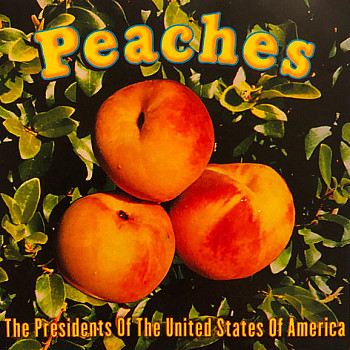
"Peaches" by The Presidents of the United States of America
1995
Peaches come from a canThey were put there by a man
In a factory downtown
Seattle wasn't all grunge in the '90s. A countervailing force was The Presidents of the United States of America, with their tasty hit "Peaches."
Why are we singling this one out over novelty numbers from the era like "Three Little Pigs" by Green Jelly and "Barbie Girl" by Aqua? Because it has mystery. And because The Presidents made a much bigger cultural impact.
"Peaches" is about a guy who moves to the country, eats a lot of peaches, and takes a nap. But maybe it has a much deeper meaning. Perhaps a commentary on the sterilized, processed world we've been assimilated into where peaches come from a can, not a tree. To find out, we spoke with POTUSA frontman Chris Ballew, who gave us the explainer. Turns out drugs were involved.
Ballew was waiting for a bus when a homeless man came by muttering, "I'm moving to the country, I'm gonna eat a lot of peaches." That became the chorus, but the verses were inspired by a different incident.
"I had taken some hallucinogenic drugs and gone to a girl's house that I had a crush on," he said. "I was intending to tell her how I felt but she wasn't home, so I sat in her yard under a peach tree, having a psychedelic experience smashing peaches in my fist, literally like I say in the song, and watching the juice dribble and watching the ants run around. She never showed up, so I never got to tell her, but I bottled it and turned it into that song."
The Presidents of the United States of America had the good fortune of being from Seattle in the early '90s when record labels were signing just about every band from the area hoping they'd stumble onto the next Pearl Jam. "Peaches" was released on their debut album, which included another very strange hit, "Lump." That album sold 3 million copies and earned them a gig playing a live concert on MTV in front of Mount Rushmore on Presidents' Day, 1996.
These days, Chris Ballew is a very popular purveyor of kids' music, performing under the name Caspar Babypants. His songs include "My Pants Are On Vacation" and "My Flea Has Dogs."
"Peaches" Songfacts
"Stay" by Shakespears Sister
1992
You better hope and prayThat you make it safe back
To your own world
This space oddity was a modest hit in America, rising to #4, but it was aces in the UK, where it stayed at #1 for eight weeks.
It starts off sounding like a standard love song of the "I'll follow you anywhere" variety. But midway through the song, that sweet voice gives way to a more sinister singer, and we realize we're not on Earth. It becomes quite ominous:
Only time will tell
If you can break the spell back
In your own world
Shakespears Sister is the duo of Siobhan Fahey, who you remember from Bananarama, and Marcella Detroit, who made her name as a backup singer for Bob Seger before joining Eric Clapton - she co-wrote his hit "Lay Down Sally" and his gem "The Core." Detroit has the higher voice and plays the protagonist before Fahey comes in like a Star Trek villain.
Inspiration for the song came from Cat-Women Of The Moon, one of many B-grade sci-fi movies of the 1950s, the decade before our species traveled to space for real. We've seen it posted on YouTube with this description: "Astronauts travel to the moon where they discover it is inhabited by attractive women."
Shakespears Sister planned to make an entire album with accompanying videos around the Cat-Women Of The Moon concept, using footage of the film in the project and mingling the songs with the score from the film, composed by Elmer Bernstein. They wrote "Stay" and a few other songs for it (including "Goodbye Cruel World" and "Catwoman"), but their record company was less than enthusiastic about the project so they never bought the rights to the film and scuttled the concept. They did make a very intriguing music video though, with Fahey glittering in black from head to toe as she comes for the soul of Detroit's sleeping beauty.
"Stay" Songfacts
"Kiss From A Rose" by Seal
1994
But did you know that when it snowsMy eyes become large
And the light that you shine can be seen?
We didn't know this one was so unusual until we launched Songfacts in 1999 and saw the deluge of comments about it. Is it about drugs? The afterlife? Aging? There are many theories, and Seal has stayed mum, proffering only that it was inspired by "some kind of relationship."
Even what Seal is singing in a key line to the song is a mystery, although we cracked that case. Is it:
"kiss from a rose on the grey"
or
"kiss from a rose on the grave"
David Sancious, who toured with Seal on keyboards, told us it's definitely "grey," per a conversation he had with Seal.
So we have that to work with, but the song remains very much open to interpretation, which is how Seal wants it.
"Kiss From A Rose" was barely noticed when it was released on Seal's self-titled album in 1994, but the next year it was used in the movie Batman Forever and became a huge hit, going to #1 over a year after the album came out. Like the other songs here, it's a very unconventional hit. It's in 3/4 waltz time, which is used in only a handful of hits (Billy Joel's "Piano Man" is one), and it has an oboe solo. The more likely hit from the movie was "Hold Me, Thrill Me, Kiss Me, Kill Me" by U2, but that one only went to #16.
"Kiss From A Rose" Songfacts
"Standing Outside A Broken Phone Booth With Money In My Hand" by Primitive Radio Gods
1996
You swim like lions through the crestAnd bathe yourself on zebra flesh
You might not recognize this song from its unwieldy title, which never shows up in the lyrics. It's the one that swirls through a sample of B.B. King singing, "I've been downhearted baby, ever since the day we met," on top of a steady beat adorned with church bells, little synthesizer flourishes, and a story of a woman who takes a plane from Baltimore to Bourbon Street.
Primitive Radio Gods is Chris O'Connor, who recorded "Standing Outside A Broken Phone Booth" in 1991 in a garage studio as part of an album called Rocket. No one seemed interested in releasing it, so he took a job as an air traffic controller at LAX, but in 1994 he tried again, mailing copies of the album to various record companies. This time, "Phone Booth" got the attention of an A&R man at Fiction Records, which led to a deal with a Columbia Records imprint called Ergo.
O'Connor isn't the kind of guy who can do press or make himself available to the public. We managed to track him down for an enlightening Q&A in 2015 where he told the story behind the song and explained what became of Primitive Radio Gods. He created it as a way to learn how to use a sampling keyboard he had just bought. The lyric, he says, is about "A light that never goes out," and the title was filched from a 1978 Bruce Cockburn song called "Outside A Broken Phone Booth With Money In My Hand."
Columbia got the song placed in the Jim Carrey movie The Cable Guy and commissioned a video, which Chris made while he was still working his day job as an air traffic controller (he called in sick so he could do the shoot). The song was released in 1996 and ran to #1 on the Modern Rock chart. Chris put together a band so they could tour, which for a new act in the '90s with a hit single meant making promotional appearances during the day, playing a gig at night, then repeating the process the next day in a different city. He describes the cycle as "one part Spinal Tap, one part deer in the headlights, and one part good old fashioned bloodletting."
To make it stop, Primitive Radio Gods released a song called "Motherf--ker" as their next single. They were soon dropped from their label and banished. "The corporations are here to feed the beast, which is us," he explained. "We want cheap, plastic shit we can bury somewhere in a few days so we can buy something else. Consumption, which used to be a nasty disease, has been magically transformed into the ultimate economic model, and everyone is in on the take. The only thing in question now is how much of the corporate cut is levied to the king and his court, and how much is levied to the pawns working in the trenches. Pawns are cheap, and kings are priceless, so the king gets more. And frankly I feel sorry for him... Do you know how expensive a golden parachute is these days?"
"Standing Outside A Broken Phone Booth" Songfacts
Tracy Bonham - "Mother Mother"
1996
I'm freezing, I'm starvingI'm bleeding to death, EVERYTHING'S FINE!
The distinction in "Mother Mother" isn't an inscrutable lyric, but a violin. And a scream.
Tracy Bonham's mother was understandably worried about her when she left home to pursue a life in music. On phone calls, she was always asking: How are you doing? Are you staying out of trouble? You know, mom stuff. Tracy was a wreck, but she didn't want her parents to know that, so she placated them by saying all was well.
In the song, we hear Bonham's inner dialogue as she tells her mom what's really going on: She's hungry, dirty, losing her mind. Then comes that famous scream, drenched in sarcasm: EVERYTHING'S FINE!
"I have a hard time communicating in real life and I'm a people pleaser," Bonham told us. "I want to make sure everybody's OK, especially my mother."
Singers have screamed on hit songs, but not while playing the violin. Bonham was classically trained and uses the instrument in this song, adding a tinge of Psycho to the air.
On the strength of her demo tape, Bonham got a big-time deal with Island Records, which released "Mother Mother" on her debut album, The Burdens Of Being Upright, in 1996. In the '90s, rockers needed a backstory to show how they paid their dues, part of the obsession with struggle and authenticity that permeated the decade (Chuck Klosterman expounds on this in his book The Nineties). So Island hacked her bio, including a juicy talking point about how Bonham earned acclaim with an independent EP, which was sort of true: Island hired an indie label to release the EP, cheekily called The Liverpool Sessions, in 1995, simply so it would exist.
The plan worked. The song shot to #1 on the Modern Rock chart - it was 17 years before another female solo artist reached the top (Lorde with "Royals" in 2013).
When "Mother Mother" took off, it posed two problems for Bonham: She was expected to play the violin on all her songs, and she had to perform that blood-curdling scream over and over. She toured a lot over the next few years, (including at Lilith Fair), but didn't release her next album until 2000 because record company churn kept it in purgatory. By that time, teen pop and nu-metal had taken over.
Bonham later became a mother herself, and in 2021 released an album called Young Maestros Vol. 1 that teaches kids through music.
"Mother Mother" Songfacts
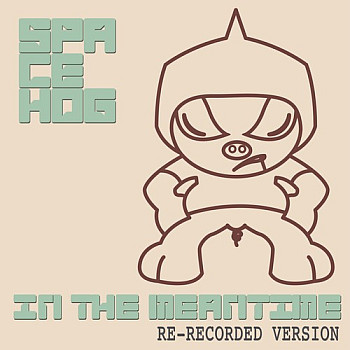
Spacehog - "In The Meantime"
1995
Well that sounds fine so I'll see you sometimeGive my love to the future of the humankind
Only the '90s could produce a band called Spacehog, which was led by two brothers from England: Royston and Antony Langdon. Antony had already formed the band when Royston, the lead singer and primary songwriter, joined him in New York in 1994. A year later, they released their first album, along with their big (and only) hit, "In The Meantime." It's an uplifting, albeit cryptic number, with a chorus that goes:
We love the all the all of you
Where lands are green and skies are blue
Royston, a deep thinker, put lots of idea fragments together to form the lyric. In a 2018 Songfacts interview, he summed it up: "It's using some kind of metaphor of a worldly or inner-worldly search for the end of isolation, and the acceptance of one's self is in there. At the end of the day it's saying whatever you gotta do, it's OK, it's alright."
So that explains the lyric, but what's that crazy noise going on in the beginning of the song? In England, that was a common sound: telephone interference, which happened when lines got crossed. That sound was sampled from a song by the Penguin Cafe Orchestra called "Telephone And Rubber Band," which as the title suggests, is based on the sounds of a telephone and rubber band. Avant-garde, yes?
So how did Royston find this oddity? He had one of those friends, Paul we'll call him because that's his name, who had a rather eclectic record collection that included the Penguin Cafe Orchestra, a British group that only the most cultured listeners in America would be aware of.
Spacehog is intertwined with one of the strangest (and truest) stories in rock, the one about how Steven Tyler's daughter Liv was raised to believe Todd Rundgren was her dad. Royston married Liv Tyler in 2003 and toured with Rundgren after they split in 2008.
"In The Meantime" Songfacts
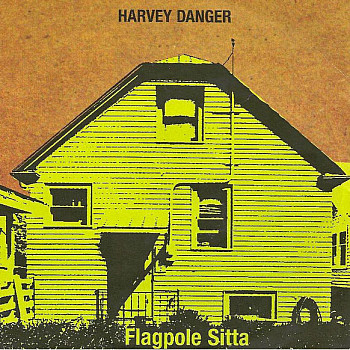
"Flagpole Sitta" by Harvey Danger
1997
Put me in the hospital for nervesAnd then they had to commit me
You told them all I was crazy
They cut off my legs, now I'm an amputee
Flagpole sitting wasn't really a thing in the '90s. Back in 1924, an aerial stuntman named Arthur "Shipwreck" Kelly climbed atop a flagpole on a dare and stayed there for 13 hours and 13 minutes. The feat inspired a wave of attention-seeking copycats across the country, along with a hit single 70 years later.
If the name "Flagpole Sitta" doesn't jog your memory, the angst-fueled chorus probably will:
I'm not sick but I'm not well
And I'm so hot 'cause I'm in hell
At first glance, there isn't much of a correlation between a long-forgotten fad from the Jazz Age and a post-grunge earworm from the '90s alt-rock scene by a new Seattle band called Harvey Danger. The group, fronted by Sean Nelson, was formed at the University of Washington in 1992 when four journalism students pulled a name from a bit of graffiti on the newsroom wall and decided to make music together. There was already a spotlight on Seattle as grunge exploded into the mainstream thanks to acts like Nirvana, Soundgarden, and Pearl Jam. But that was a big part of the problem. The alt-rock scene beneath their feet was being commodified by the rest of the world as an edgy trend for wannabes who wanted to pierce their tongues and call themselves rebels. The band struggled with their need for authenticity and their desire for success. That's where flagpole sitting comes in.
"It was sort of about people wrestling with the idea of wanting to be authentic while both not being authentic and expressing themselves in a way that made authenticity sound idiotic," Nelson told Stereogum in 2017. "So I thought, what is a conspicuous example of a trend that once existed and exists no more?"
No one really knew what "Flagpole Sitta" was supposed to be about, which led to lots of misguided tongue-piercings thanks to Nelson's ironic lyric:
I wanna pierce my tongue
It doesn't hurt, it feels fine
Still, the acerbic track became an alt-radio staple when Harvey Danger released it as the lead single from their 1997 debut, Where Have All The Merrymakers Gone? Poised for stardom, the band got to work on their follow-up album, King James Version, but corporate red tape delayed its release and prevented them from touring, which effectively tanked their momentum. The band took a hiatus until 2005 when they issued their third and final album, Little By Little...
"Flagpole Sitta" Songfacts
Honorable Mentions:
Mmm Mmm Mmm Mmm by Crash Test Dummies
Justified And Ancient by The KLF
"Counting Blue Cars" by Dishwalla
January 24, 2023
"Flagpole Sitta" section written by Amanda Flinner
More Song Writing